Carbon Neutral Pet Bags: Offsets vs Real Cuts
A carbon neutral claim on a pet bag programme means the calculated emissions across a defined boundary have been reduced as far as practicable and the remainder offset through purchased credits. It does not mean the bag was made without emissions. Our production team supports footprint calculation for wholesale programmes at MOQ 500 pieces per colourway, with samples in 6-10 working days.
This is the most aggressively scrutinised claim in the sustainability list, and buyers should approach it with eyes open. Regulators in several markets have acted against carbon neutral product claims that relied on offsets without adequate disclosure, and the exposure sits with whoever publishes the claim.
The defensible sequence is reduction first, offsets second, disclosure throughout. Buyers who invert that sequence - calculating a footprint, buying cheap credits and printing a mark - are the ones facing challenge. Commercial terms for pet bag programmes are MOQ 500 pieces per colourway, samples in 6-10 working days after tech pack confirmation, bulk production 35-50 days, inspection at AQL 2.5, FOB Xiamen, T/T 30/70.
Two commitments should be made before any credit is purchased: document the reductions actually achieved, and fix the calculation boundary in writing. Reduction first is what survives regulatory scrutiny, and a boundary agreed in advance prevents the recalculation disputes that otherwise surface at the first verification cycle.
The boundary decision is the one buyers most often defer, and deferring it costs a season: a claim built on an undocumented boundary has to be recalculated before it can be verified, and recalculation requires activity data from a production period that has already passed.
Pet bag sample cost is normally credited against the first production order, which makes Material & Technology review the expensive step rather than the sampling itself. Pet carrier sample cost rises with hardware changes, so lock the hardware before the second sample round.
What a Carbon Neutral Claim Actually Means
A carbon neutral claim asserts that net emissions attributable to a defined subject are zero over a defined period. The definition has three components and each one is a place where claims go wrong: the subject must be defined, the boundary must be stated, and the offsetting mechanism must be disclosed. A claim missing any of the three is incomplete rather than false, but incomplete claims are the ones that attract enforcement.
The distinction between a product claim and an organisation claim matters here. An organisation claim covers a company's own operations over a year. A product claim covers the emissions attributable to a unit of product across its life cycle stages, which is far harder to calculate and far easier to challenge. Pet bag buyers should assume the product claim is the harder one and resource it accordingly.
Offsetting does not remove emissions. It funds activity elsewhere that is expected to avoid or remove an equivalent quantity. The atmospheric outcome depends entirely on the quality of the credit, and credit quality varies enormously, which is why price per tonne varies by an order of magnitude. Buyers should treat a very low price as a signal rather than a bargain.
Disclosure is the component most often omitted. A defensible claim states what was measured, what was reduced, what was offset, and what credit type was used. Publishing the mark without that disclosure is the pattern regulators have acted against, and it is also the pattern that damages a brand's credibility when challenged.
Buyers should also understand the timing. A product claim is normally made against a period and then re-verified. A claim made once and repeated indefinitely without recalculation becomes stale as the supply chain, the energy mix and the freight pattern change underneath it.
Setting the Calculation Boundary for a Pet Bag
The boundary determines the number, and the boundary is a decision rather than a fact. A cradle-to-gate boundary covers raw material through to the factory gate. Cradle-to-grave adds distribution, use and end of life. Partial boundaries covering only manufacturing, or only freight, produce smaller numbers and weaker claims.
For a pet bag programme, the honest and defensible choice is usually cradle-to-gate with a clear statement of that scope, because the downstream stages are outside the manufacturer's knowledge or control. A buyer's own logistics team can add distribution data to extend the boundary if the claim needs to cover it.
Within the boundary, the emission sources are: fibre and fabric production, hardware and trim production, dyeing and finishing energy, cut-and-sew energy, packing materials, and inbound and outbound freight to the agreed delivery point. Each is estimable from activity data - kilowatt hours, kilograms of material, tonne-kilometres of transport.
Allocation is the technical trap. A factory running many products must allocate its energy use across them, and the allocation method changes the result. Buyers should require the method to be stated, because a favourable allocation can understate a product's footprint substantially without being technically wrong.
Data quality deserves explicit treatment. Primary data from the actual facility is materially better than industry average factors, and buyers should ask which was used. Our production team supplies activity data for the manufacturing stage so that buyers can calculate with primary rather than average values, which produces a more defensible result.
Sensitivity analysis is worth running once. Because the boundary and the allocation method are decisions, a buyer should calculate the result under at least two reasonable methods to see how much the number moves. If it moves a great deal, the claim is fragile and should be presented with the range rather than as a point figure; if it barely moves, the claim is robust.
Buyers should also record the boundary decision and the reason for it. A reviewer asking why the boundary stops at the factory gate should find a documented rationale rather than an undocumented choice, and the rationale is straightforward to write once and reuse across the programme.
Where the Emissions Actually Sit
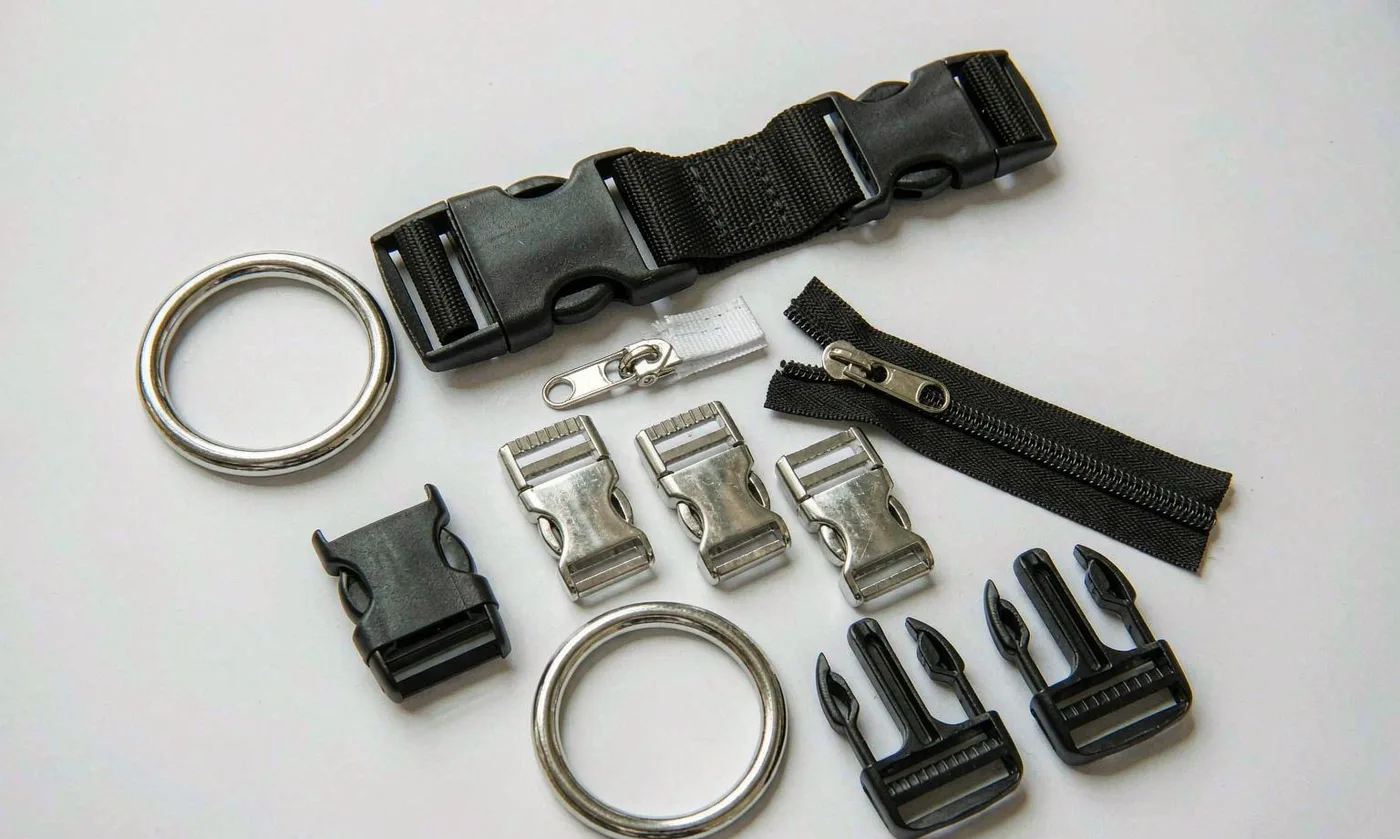
Buyers frequently assume the manufacturing stage dominates and discover otherwise once the calculation is done. For a textile product, the largest single contributor is usually material production rather than assembly, because fibre and fabric creation is energy intensive while cutting and sewing are not.
The second significant contributor is wet processing: dyeing, washing and finishing consume thermal energy and water treatment. A heavily finished or coated construction carries more than a plain one, which is a useful specification lever for buyers who want to reduce rather than offset.
Assembly contributes comparatively little in energy terms, though it matters for other reasons. Freight contribution depends heavily on mode: sea freight is low per unit, air freight is high, and a decision to air-ship part of a programme to protect a delivery date can dominate the entire footprint of that shipment.
Packaging is small but not negligible, particularly where individual polybags and printed cartons are specified. Buyers reducing packaging weight or switching to recycled carton content make a real if modest reduction, and it is one of the easier changes to implement.
The table below sets out the pattern with indicative ranges and the lever available at each stage. Ranges are indicative because they vary with construction, energy source and freight mode; the point is the ordering rather than the precise figures.
| Stage | Indicative share | Main driver | Practical reduction lever |
|---|---|---|---|
| Fibre and fabric | Largest single share | Material type and weight | Recycled content, lighter construction |
| Dyeing and finishing | Significant | Thermal energy, wet processes | Fewer finishes, lower-temperature dyeing |
| Hardware and trim | Moderate | Metal content, plating | Lighter hardware, fewer components |
| Cut and sew | Small | Electricity at assembly | Energy efficiency at site level |
| Packaging | Small | Carton and polybag weight | Recycled cartons, reduced polybag |
| Freight | Varies widely | Mode and distance | Sea over air, consolidated loading |
Reduction First: What Can Genuinely Be Cut
Reduction is the part of the sequence that survives scrutiny, and it is also the part that improves the product economics. Several of the available levers reduce cost and emissions simultaneously, which makes them easy to justify internally.
Material choice is the largest lever. Recycled polyester carries a materially lower footprint than virgin polyester because it avoids the polymerisation step, and it is available in the constructions pet bag programmes use. Specifying recycled shell fabric, lining and webbing reduces the largest line in the calculation.
Weight reduction is the second lever and it works twice: less material means less material emission, and lighter cartons mean lower freight emission per unit. A construction review that removes unnecessary interlining, heavy coating or oversized hardware frequently reduces cost at the same time.
Finish reduction is the third. Each wet process carries energy and water treatment cost. Buyers specifying finishes by habit rather than by requirement can often drop one or two without any change in field performance, and should test that assumption on a sample before committing.
Freight mode is the fourth and it is entirely under the buyer's control. Sea freight is dramatically lower per unit than air. The discipline is planning: a programme planned early enough to ship by sea avoids the air-freight decision that quietly dominates a footprint calculation. Our production team plans against the 35-50 day bulk schedule precisely so buyers are not forced into air freight to recover a late start.
Energy source at the manufacturing site is a fifth lever, and it sits with the supply chain rather than the buyer. Buyers can ask about it, and suppliers investing in on-site generation or in certified renewable supply can document it. Where a buyer is selecting between partners, that question is a legitimate differentiator.
A sixth lever is worth adding because it costs nothing and is frequently overlooked: order consolidation. Every additional production run carries setup energy, additional sampling and its own freight pattern. Consolidating releases into fewer, larger runs reduces all three, and it improves unit pricing at the same time, which makes it the rare lever with no trade-off at all.
Buyers should also look at returns and destructive testing. Samples shipped by air for approval, and returns shipped back across continents, generate emissions out of proportion to their commercial importance. Approving samples from digital photography where the decision allows it, and handling returns regionally rather than internationally, removes emissions that no one has counted and that no one needs.
Offsets: Types, Prices and Quality Differences
Offset quality is the variable that determines whether a claim is defensible, and price is the most accessible proxy for quality. Credits from projects with rigorous methodologies, independent verification and durable removal trade at a substantial premium over credits from projects with weaker assurance. A very low price per tonne almost always indicates weak additionality or weak permanence.
The two broad categories are avoidance credits and removal credits. Avoidance credits fund activity that prevents emissions that would otherwise occur, such as renewable generation displacing fossil generation. Removal credits fund activity that extracts carbon from the atmosphere, such as afforestation or engineered removal. Removal is generally regarded as the more durable category and trades accordingly.
Additionality is the concept buyers should interrogate. A credit is additional only if the funded activity would not have happened anyway. Projects that would have been built regardless produce credits that represent no real atmospheric benefit, and those credits are the cheapest on the market.
Permanence is the second concept. A forestry credit stores carbon in biomass that can burn, be harvested or disease. A durable removal stores it in a form expected to persist. Buyers making a long-term claim should weigh permanence heavily, because a reversed credit after the claim period undermines the assertion retroactively.
Registry and retirement matter operationally. Credits should be purchased from a recognised registry and retired against the buyer's claim, with the retirement record retained as evidence. A purchase without retirement is not an offset, because the credit remains available for someone else to claim.
Buyers should also consider the procurement route. Purchasing directly from a registry, through a broker, or as part of a portfolio involves different cost structures and different levels of transparency over which project the money reached. Where the claim will be published, the route that produces the clearest retirement record is worth a modest premium.
Contract structure matters as well. A buyer committing to a multi-year programme can sometimes secure a fixed credit price for the period, which simplifies budgeting. The trade-off is exposure if prices fall, and most buyers are better served by annual purchasing with a price review than by a long fixed commitment in a volatile market.
Cost per Unit and Who Carries It
Offset cost per unit is small in absolute terms and easy to model once the footprint is known. The calculation is: footprint per unit multiplied by price per tonne. Because a pet bag's footprint is a modest number of kilograms and credit prices are quoted per tonne, the resulting per-unit figure is typically cents rather than dollars.
That arithmetic is worth doing before committing, because it clarifies the decision. The cost is rarely prohibitive; the real costs are the footprint calculation, the verification and the ongoing administration. Buyers budgeting only for credits will under-resource the programme.
Who carries the cost depends on who makes the claim. If the brand makes the claim, the brand buys the credits and the cost sits in its overhead. If the claim is made at product level with supplier involvement, the cost may be passed through as a line on the invoice, which has the advantage of transparency.
Pass-through pricing should be evidenced. A buyer paying for offsets should receive the retirement record, not just a statement that offsets were purchased. That document is what substantiates the claim, and it should be held with the same discipline as a test report.
Credit price volatility should also be planned for. Prices move with demand and with methodology changes, so a multi-year programme should not be quoted at a fixed per-unit credit cost. Buyers should review the price at each calculation cycle and adjust, rather than discovering a shortfall at renewal.

Verification and Claim Rules
Verification is what separates a defensible claim from a marketing statement. An independent reviewer assesses the calculation boundary, the activity data, the reduction measures and the offset retirement, then issues a statement. Buyers should engage that review before publishing rather than after.
Independent verification bodies operating in this space include testing and certification organisations such as SGS, and buyers should select one with recognised accreditation for greenhouse gas statements. A verification statement from an unaccredited party provides little protection.
Claim wording should follow the disclosure principle. State the boundary, the period, the reduction achieved and the offset mechanism. Avoid absolute phrasing that implies zero emissions were produced, because the claim is about netting rather than elimination.
Advertising rules in several jurisdictions now restrict carbon neutral claims made solely on the basis of offsetting, and a number of enforcement actions have followed. Buyers shipping into the EU and the United States should check current guidance before publishing, and should expect the rules to tighten further.
The system-level counterpart to a claim is a management system. A supplier operating an environmental management system certified to recognised ISO standards is better placed to supply the primary activity data a credible calculation requires, and that data quality is what makes the resulting claim defensible.
Buyers should also consider who is named as the claiming entity. Where a brand publishes a claim based on data supplied by a manufacturing partner, the brand carries the exposure and the partner holds the evidence. That asymmetry should be resolved contractually: the buyer should have the right to the underlying activity data and to the verification statement, not merely to a headline figure.
Retention periods matter for the same reason. A claim may be challenged years after publication, and the supporting calculation should be retained for at least as long as the product remains in market. Buyers should specify a retention period in their own document management rules rather than relying on the supplier's default practice.
Buyer Decision Framework
The decision of whether to pursue a carbon neutral claim should be made on a structured basis rather than on competitive pressure. Four questions resolve most cases.
The first is whether the channel rewards it. Some retail and institutional buyers score suppliers on climate documentation and will reward a verified statement. Others are indifferent. Where the account is indifferent, the same budget produces more value spent on product improvement.
The second is whether the buyer can obtain primary data. A calculation built on industry averages is weaker and more expensive to defend than one built on measured activity data from the actual facility. Buyers should confirm data availability before committing to a claim that requires it.
The third is whether reduction has genuinely been attempted. A claim built on offsets alone is the pattern under regulatory scrutiny. Buyers who can document material changes, weight reductions or freight mode changes have a claim that survives challenge, and those changes usually save money.
The fourth is whether the organisation can sustain the administration. Footprint calculation, credit purchase, retirement, verification and re-calculation recur annually. A programme that starts well and lapses in year two is worse than no programme, because the stale claim remains in market.
Where all four answers are positive, the claim is worth pursuing and should be built reduction-first. Where one or more is negative, the honest alternative is to make the reduction without the claim, which delivers the environmental benefit, avoids the compliance exposure, and frequently improves unit economics. Our related briefings on offset programmes and environmental management systems cover adjacent mechanisms.
Freight, Packaging and the Buyer-Controlled Share
Two of the largest levers in a pet bag footprint sit entirely with the buyer rather than with the supply chain, which is worth emphasising because buyers often look to the manufacturer for reductions they control themselves. Freight mode and packaging specification are decided on the buyer's side of the relationship and both move the number materially.
Freight is the larger of the two. Sea freight is dramatically lower per unit than air, and the difference is large enough that a single air-freighted shipment can exceed every other stage of that programme combined. The lever is calendar discipline: a programme planned inside the 35-50 day bulk window ships by sea by default, and one started late ships by air by necessity.
Consolidation is the second freight lever. Part-full containers carry the same fixed port and handling emissions for fewer units, so the per-unit figure rises as fill falls. Buyers consolidating several SKUs into one sailing, or coordinating with another importer to fill a container, reduce both cost and footprint with a single decision.
| Reduction lever | Owner | Emission effect | Cost effect | Implementation effort |
|---|---|---|---|---|
| Recycled content | Buyer specification | Large | Small premium | Moderate |
| Weight reduction | Buyer specification | Moderate to large | Usually saves | Moderate |
| Finish reduction | Buyer specification | Moderate | Usually saves | Low |
| Sea over air freight | Buyer planning | Very large | Saves substantially | Planning only |
| Consolidated loading | Buyer logistics | Moderate | Saves | Low |
| Right-sized packaging | Buyer specification | Small to moderate | Saves | Low |
Packaging is the quicker win. Right-sizing cartons to the product reduces fibre use and increases container fill at the same time, which is why it usually saves money. Reducing polybag gauge, removing void fill and specifying recycled carton content are all changes that need no product requalification and no new supplier, and they can be implemented on the next order.
The pattern across the table is worth noting: most of the available reductions either save money or cost very little. The expensive reductions are the minority. A buyer who has not worked through the low-cost levers before purchasing credits is buying the most expensive reduction available while leaving the cheapest ones on the table.
Order and quality terms
- MOQ 500 pieces per colourway; samples in 6-10 working days
- Bulk production 35-50 days after approval; AQL 2.5 inspection standard
- T/T 30/70 terms, FOB Xiamen, full document set per shipment
People Also Ask
What does carbon neutral mean for a product?
That emissions within a stated boundary have been reduced where practicable and the remainder offset, with the boundary, period and offset mechanism disclosed.
Is carbon neutral the same as net zero?
No. Carbon neutral commonly refers to a product or period netted through offsets; net zero usually refers to a longer-term organisational target with deep reductions before offsetting.
How is a product carbon footprint calculated?
By multiplying activity data such as kilowatt hours, material kilograms and tonne-kilometres by emission factors, across a defined boundary, with the allocation method stated.
Do recycled materials lower the footprint?
Generally yes, because recycled polyester avoids the polymerisation step. It is the single largest reduction lever available in a pet bag programme.
Should offsets be bought before reducing?
No. Reduction first is the sequence that survives scrutiny and it frequently saves money. Offsetting alone is the pattern regulators have acted against.
What evidence proves an offset was purchased?
A retirement record from a recognised registry, showing the credit was permanently withdrawn against the claim and cannot be claimed by another party.
Frequently Asked Questions
Does carbon neutral mean the bag produced no emissions?
No. It means emissions within a stated boundary were reduced where practicable and the remainder offset through purchased credits. The claim is about netting, not elimination.
Which boundary should a pet bag programme use?
Cradle-to-gate is the usual defensible choice, covering material through factory gate, with the scope stated. Downstream stages can be added where the buyer holds the distribution data.
What is the largest emission source in a pet bag?
Usually material production rather than assembly. Fibre and fabric creation is energy intensive while cutting and sewing are comparatively light, which surprises buyers who assume manufacturing dominates.
Can air freight dominate the footprint?
Yes. Air freight is dramatically higher per unit than sea freight, and a decision to air-ship to recover a late start can exceed every other stage combined. Early planning avoids the decision.
How much do offsets cost per unit?
Modest in absolute terms: footprint per unit multiplied by the price per tonne. The larger costs are the footprint calculation, verification and annual administration.
Are cheap carbon credits acceptable?
Rarely. A very low price per tonne usually indicates weak additionality or weak verification. Buyers should treat price as a quality signal rather than a bargain.
What is the difference between avoidance and removal credits?
Avoidance credits fund activity preventing emissions that would otherwise occur; removal credits extract carbon from the atmosphere. Removal is generally regarded as more durable.
What does retirement mean in offsetting?
The credit is permanently withdrawn from the registry against the buyer's claim. A purchase without retirement leaves the credit available for someone else to claim.
Is a carbon neutral claim legally restricted?
Increasingly yes. Several jurisdictions restrict claims based solely on offsetting, and enforcement actions have followed. Buyers should check current guidance before publishing.
Who should verify the claim?
An accredited independent body with recognised competence in greenhouse gas statements. Verification should be obtained before publication, not after.
How often must the calculation be repeated?
Annually, or whenever the supply chain, energy source or freight pattern changes materially. A claim repeated without recalculation becomes stale underneath.
Is it better to reduce without claiming?
Often yes. Reduction delivers the environmental benefit and frequently reduces cost, without the compliance exposure or the annual administrative burden of maintaining a claim.
Talk to QUANZHOU JUNYUAN BAGS about a wholesale pet bag order: MOQ 500 pieces per colourway, samples in 6-10 working days, bulk production in 35-50 days under AQL 2.5 inspection.
Get a free quote Request a sample