OEKO-TEX Pet Bags: Textile Safety for Wholesale Buyers
OEKO-TEX certification on a wholesale pet bag programme means every component - shell, lining, mesh, webbing, foam, zipper tape, thread and printed label - has passed laboratory screening against a restricted substance list. Pet bags are tested under Standard 100, with skin-contact panels held to Class II limits and any item intended for very young users held to Class I. Our production team orders testing at MOQ 500 pieces per colourway and issues sample documentation within 6-10 working days.
This briefing is written for buyers sourcing pet bags at scale, not for retail consumers. The commercial question is simple: which certificates does your channel actually require, and what do they cost per unit once amortised across a production run? OEKO-TEX Standard 100 is the most frequently requested textile-safety document in pet bag programmes, and it is also the most frequently misunderstood. It tests chemistry, not construction, and it says nothing about load capacity or seam strength.
Our production team plans certification at the quotation stage rather than after sample approval, because adding a restricted-substance test late in the cycle can push a programme past a retail delivery window. Standard terms are MOQ 500 pieces per colourway, samples in 6-10 working days after tech pack confirmation, bulk production 35-50 days after sample approval, and pre-shipment inspection at AQL 2.5 on FOB Xiamen terms with T/T 30/70. Buyers who lock the certificate scope before the deposit release avoid the re-testing fees that most frequently erode landed margin.
The parameter set is worth agreeing in writing as well, because laboratories price by the number of components and colourways submitted. A buyer who declares the full bill of materials up front receives an accurate testing quote; one who submits late receives a revised one.
Wholesale pet carrier vet visits and wholesale pet carrier grooming lines are small-basket, high-repeat business, while Material & Technology decides whether one shell can serve both. Wholesale pet carrier travel and wholesale pet carrier camping units need opposite vent geometry, so a single pattern rarely covers both.
What OEKO-TEX Standard 100 Tests in a Finished Pet Bag
OEKO-TEX Standard 100 is a laboratory test of an assembled article against a restricted substance list, and buyers who treat it as a factory audit end up paying for documents that do not answer the compliance question their channel is asking. The parameter catalogue is revised each year and currently screens for azo colorants, formaldehyde, extractable heavy metals, phthalate plasticisers, PFAS compounds, nickel release, chlorinated phenols, and pesticide residues on natural fibres. Limits are not uniform: they tighten by product class, so the same fabric can pass for one end use and fail for another.
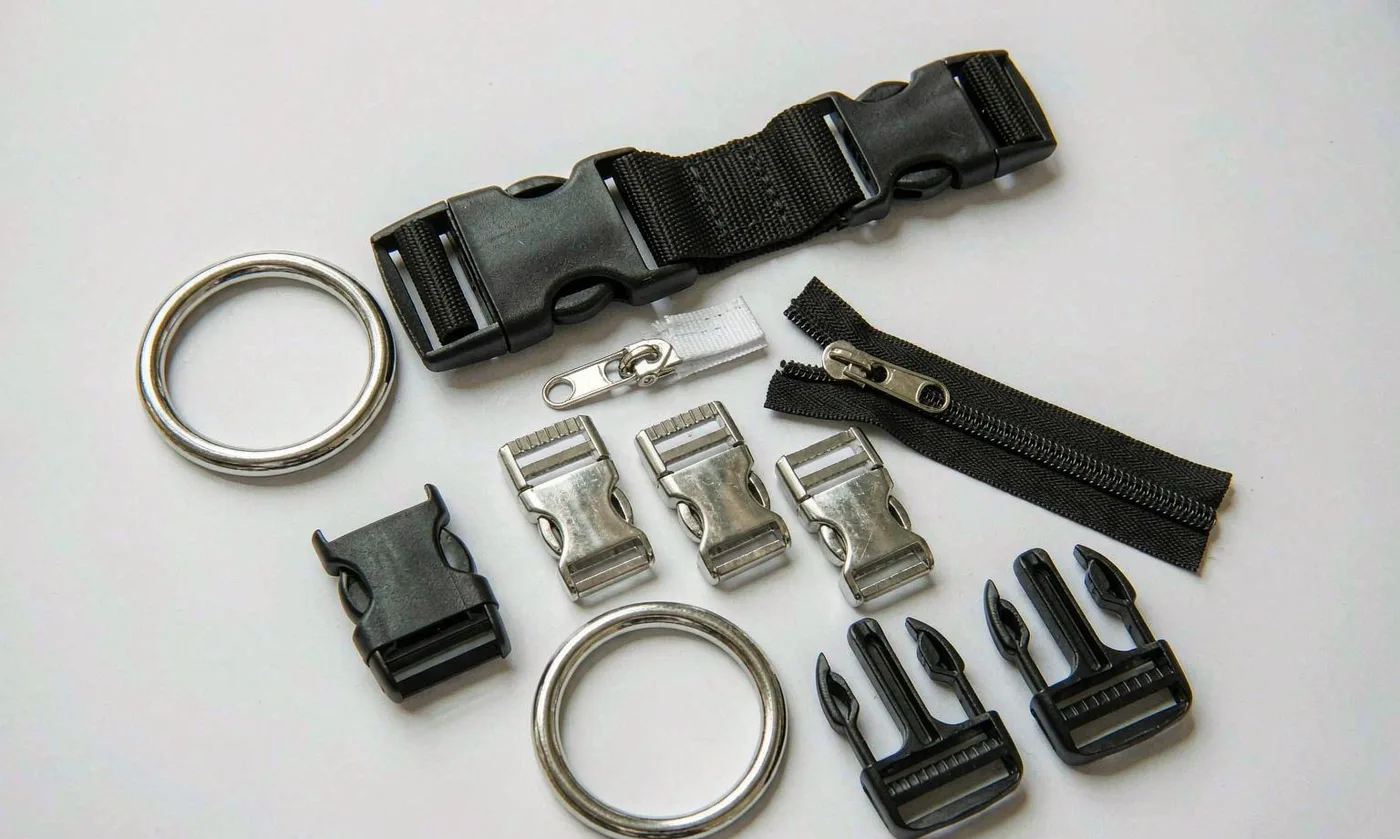
A pet bag is a multi-component assembly, which is precisely why the certificate carries weight in wholesale negotiation. The test sample submitted to the laboratory includes the outer shell, interior lining, ventilation mesh, webbing straps, foam or EVA padding, zipper tape and slider, side-release buckles, elastic binding, hook-and-loop tape, sewing thread, and any printed or woven brand label. Each of those inputs is assessed individually, then the assembled article is assessed for cross-contamination. One unvetted trim - most often a dyed webbing or a coated puller - is enough to fail an otherwise clean bill of materials.
Buyers should also understand what the test does not do. Standard 100 does not measure tensile strength, abrasion cycles, colour fastness to rubbing, hydrolytic stability of a PU coating, or the structural performance of a handle under load. Those are separate test reports, governed by bodies such as AATCC and ASTM International, and they belong in a different folder of the technical file. Mixing the two categories in a supplier questionnaire is a common and expensive error.
From a sourcing standpoint, the practical value of Standard 100 is that it converts a vague marketing claim into a numbered, dated, verifiable document with a defined scope. That scope is what a retail buyer's compliance team will read. If the scope does not name your article, your fabric construction and your colour range, the certificate is decorative.
The parameter catalogue is revised annually, and buyers running multi-season programmes should treat the revision as a scheduled engineering event rather than an administrative renewal. A substance added to the list in a given year can move a component from passing to failing with no change to the component itself. Because certificates are issued against a stated version of the standard, a renewal application submitted after the revision date is assessed against the new limits. Inventory manufactured under the previous version is rarely withdrawn, but every new production run must meet the current version, so the renewal calendar should be read against the production calendar rather than the sales calendar.
Product Classes: Where Pet Bags Actually Sit
Standard 100 assigns four product classes, and the class determines the limit values applied to the test results. Class I covers articles for babies and toddlers up to 36 months and carries the strictest limits. Class II covers articles with direct and prolonged skin contact. Class III covers articles without significant skin contact. Class IV covers furnishing and decorative materials. A pet bag programme is not automatically one class; the correct class depends on the claim you intend to make and the way the product is merchandised.
Most wholesale pet bag programmes are specified at Class II, because inner lining panels, shoulder straps and carry handles sit against the handler's skin for extended periods. Buyers selling into nursery-adjacent channels or making any infant-facing claim should expect Class I, which tightens formaldehyde limits substantially and changes the acceptable dyestuff pool. That single decision can remove several low-cost reactive dyes from the approved list and move unit cost up by a measurable margin.
The trap is under-specifying at quotation and re-specifying after the retail buyer objects. Moving from Class II to Class I after lab dips are approved forces a re-test, a fresh certificate, and often a new dye lot - three costs that no one budgeted. Our production team asks buyers to declare the target class in the tech pack, because the certificate is issued against the declared article, not against the factory.
There is also a commercial argument for specifying one class above the regulatory floor. A Class II certificate at a modest premium gives a mid-market brand room to move into a stricter channel later without re-engineering the bill of materials. Buyers running a rolling annual programme typically find that the incremental testing spend is recovered within two seasons through avoided re-certification.
Class selection also changes the sourcing conversation upstream. Mills hold certificates for their own fabric articles, and those certificates state the class achieved. A fabric certified only at Class III cannot be used in a Class II programme without article-level testing at the stricter limit, which moves the risk from the mill to the bag assembly. For commodity constructions this is rarely a problem, because mainstream mills certify at Class II as a matter of course. It becomes a real constraint when a buyer specifies a speciality weave, a printed substrate or a heavy coated fabric that the mill has only ever certified at the lower class.

The Bill of Materials Risk Map
When a pet bag fails Standard 100, the failure is almost always traceable to a low-value component rather than the main fabric. Experienced buyers therefore build a risk map of the bill of materials before placing the order, ranking each input by the probability that it will fail and by the cost of substituting it. The main shell fabric is usually low risk if it is sourced from a mill with a current certificate. The high-risk items are consistent across programmes.
Dyed webbing and binding tape sit at the top of the list. These are frequently purchased from a trim sub-supplier with no certificate pedigree, and disperse dyes on polyester tape are a recurring source of azo findings. Foam and EVA padding follow, because blowing agents and flame-retardant residues can trigger screening failures. Printed labels and heat-transfer logos are a third cluster, particularly where plastisol inks are used. Coated zipper tape and painted metal pullers complete the usual set.
The mitigation is a component-level certificate requirement written into the purchasing specification. Rather than asking for one certificate covering the finished bag, ask for valid Standard 100 or Eco Passport documentation on each purchased input, then submit the assembled article for a confirmatory test. The confirmatory test is cheaper than a failure, and it produces the article-level certificate the channel requires.
Our production team maintains approved trim schedules per programme for exactly this reason. When a buyer changes a buckle colour or substitutes a cheaper webbing mid-season, the change is routed through the same screening path as the original component. Silent substitutions are the single largest source of certificate invalidation in long-running wholesale pet bag programmes, and they are entirely avoidable with a written change-control clause.
Trim components introduce a second commercial constraint alongside chemistry: minimum order quantity. A certified webbing or a compliant coated puller may carry a trim-side minimum of several thousand metres or pieces, which does not align neatly with a 500-piece bag run. The practical resolution is either to accept the trim supplier's standard colour and finish so the component comes from open stock, or to consolidate the trim requirement across several bag styles in the same programme. Buyers who specify a bespoke trim colour for a single small style routinely discover that the trim minimum, not the bag minimum, is what actually governs the order.
Cost Structure and Who Pays for Testing
Certification cost should be modelled per unit, not per order, because that is how it behaves in a margin calculation. A Standard 100 test on a multi-component pet bag typically runs a few hundred US dollars per article family, with surcharges for each additional colourway beyond the first few and for any additional article added to the same certificate. The certificate is valid for twelve months and must be renewed, which means the cost recurs annually whether or not you reorder.
Amortisation is where programme size matters. Spread across a 500-piece first run, a modest test fee can add a visible amount to landed cost per unit. Spread across an annual programme of several thousand pieces across two or three reorders inside the same certificate year, the same fee becomes a rounding error. This is the arithmetic that justifies consolidating colourways rather than fragmenting a programme into small, separately certified runs.
The second cost is failure. If the first submission fails, the laboratory fee is spent, the component must be replaced, and the clock restarts. On a bulk schedule of 35-50 days after sample approval, a re-test can absorb two to three weeks of that window. Buyers working to a fixed retail delivery date should build a contingency week into the schedule specifically for this event.
Who pays is negotiable and should be settled in writing. Some wholesale arrangements place certification cost with the supplier as a condition of the programme; others treat it as a buyer-funded pass-through shown as a separate line on the proforma invoice. The second model is more transparent and usually cheaper, because the buyer sees the actual laboratory invoice rather than a rounded allocation.
There is also a timing asymmetry worth planning around. Testing fees are incurred once per certificate year, but the benefit accrues to every shipment made inside that year. A buyer placing one large order captures the full benefit in a single landed-cost calculation; a buyer placing four smaller orders across the same year captures it four times for the same fee. This is the clearest numerical argument for consolidating release schedules, because fewer and larger production runs improve both the unit cost of manufacturing and the amortisation of compliance overhead.
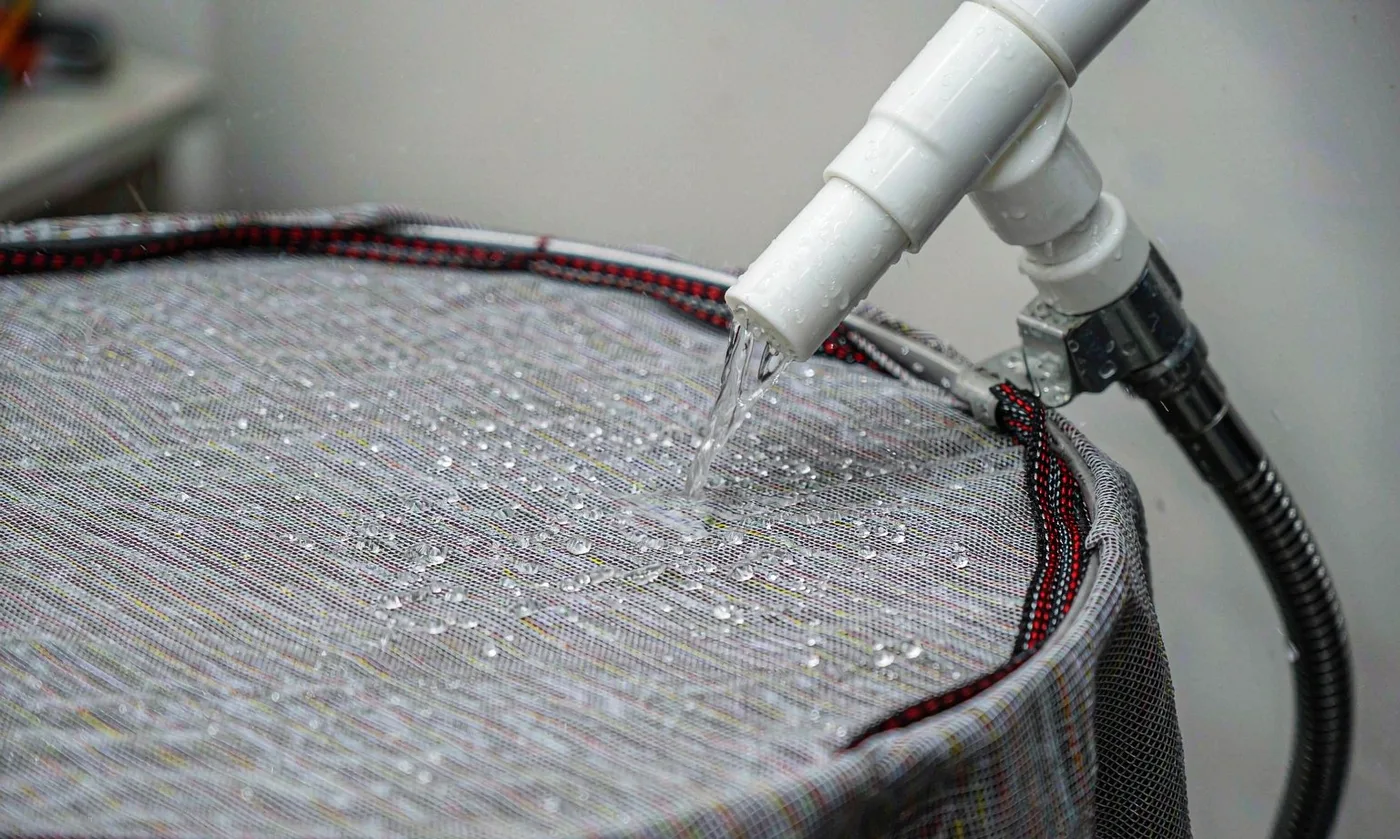
Certificate Verification Before You Release a Deposit
A certificate is only as good as its scope, and certificate fraud in textile sourcing generally takes the form of a genuine document applied to an article it does not cover. Verification takes ten minutes and should be routine. The steps are stable across issuing institutes and do not require a laboratory background.
First, confirm the certificate number and issuing institute on the document, then validate it through the issuing body's online verification tool. Second, read the scope line carefully: it should name the article category in terms that match your product, list the fibre compositions covered, and state the product class. Third, check the validity dates against your production and delivery schedule, since a certificate that expires mid-shipment creates a documentation gap at customs or at the retailer's intake desk. Fourth, confirm that the certificate holder is an entity in your actual supply chain rather than a mill three tiers upstream.
Buyers should also request the underlying test report, not only the certificate. The report shows the individual parameter results, the laboratory name, and the sample description. Where a supplier offers only the certificate, the usual reason is that the sample description on the report does not match the article being quoted. Requesting the report is a low-cost way to test supplier transparency early in the relationship.
Independent verification bodies such as SGS can be engaged for a confirmatory pre-shipment sample test if the volume justifies it. On a first order from a new supply partner, that confirmatory test is cheap insurance relative to a rejected container or a delisting.
A second verification issue arises when the certificate holder is a fabric mill rather than the assembly partner. Mills legitimately certify their own fabric articles, and that mill certificate is useful input evidence, but it does not cover the assembled bag, because the bag contains components the mill never saw. Buyers should treat a mill certificate as component documentation and still require the article-level certificate covering the finished product. Where a supply partner offers only mill certificates, the gap is almost always in trim, coating or printing applied downstream of the mill.
OEKO-TEX Against REACH, CPSIA and Prop 65
Buyers frequently ask whether one certificate substitutes for another. It does not, and the three regimes have different legal standing. REACH is European Union regulation with legal force; CPSIA is United States legislation with legal force; California Proposition 65 is a state-level right-to-know law with a private-enforcement mechanism. OEKO-TEX is a private voluntary standard with no legal force but very high market recognition. The overlap is substantial, the gaps are real, and a well-built technical file contains all of the applicable documents rather than one.
The table below sets out how the regimes compare for a pet bag programme. The column that matters commercially is enforcement: a retailer's compliance team will reject a shipment for a missing regulated declaration far faster than for a missing voluntary certificate, but a marketplace listing may be suppressed for a voluntary claim that cannot be substantiated.
| Requirement | Legal status | Typical scope on pet bags | Enforcement trigger |
|---|---|---|---|
| OEKO-TEX Standard 100 | Voluntary, private | All components, chemistry only | Retailer or marketplace policy |
| EU REACH Annex XVII / SVHC | Mandatory regulation | Substances in articles above threshold | Customs, market surveillance |
| US CPSIA | Mandatory legislation | Lead, phthalates in accessible parts | Customs, CPSC recall |
| California Prop 65 | State right-to-know | Listed substances, warning duty | Private litigation |
| AATCC / ASTM performance | Voluntary test methods | Strength, colour fastness, abrasion | Buyer specification |
The practical reading: OEKO-TEX is a screening instrument that catches most REACH-relevant substances early and cheaply, which is why it is worth having even where it is not legally required. It is not a substitute for a REACH declaration where the EU market is the destination, and it does not discharge a CPSIA testing obligation for the US market. Buyers should confirm which regime applies to each destination market and request the matching document set at quotation.
Authoritative reference points for those regimes include the European Chemicals Agency at ECHA and the US Consumer Product Safety Commission at CPSC. Both publish the current substance lists that drive laboratory screening parameters.
Two further regimes deserve a note for buyers shipping into several regions. Great Britain operates its own REACH-style regime following EU exit, and declarations prepared for the European Union are not automatically accepted for the UK market, so a separate declaration is normally required. California Proposition 65 operates differently again: it imposes a warning duty rather than a substance ban, and the practical exposure comes from private enforcement rather than from customs. A pet bag that passes Standard 100 can still require a Prop 65 assessment where a listed substance exceeds the safe-harbour level, which is why the two documents are requested together for US programmes.
Testing Windows and Production Scheduling
Certification has a calendar, and the calendar interacts with the production schedule in ways that surprise first-time buyers. Laboratory turnaround for a Standard 100 submission on a multi-component pet bag is typically a couple of weeks once the sample and the completed declaration form arrive, and it lengthens during peak season when testing capacity is constrained. That window sits inside the wider sample and bulk timeline rather than alongside it.
The efficient sequencing is to submit for testing in parallel with sample construction rather than after sample approval. Because the test sample and the approval sample are built from the same bill of materials and the same dye lot, there is no technical reason to wait. Our production team routinely releases the laboratory submission while the buyer is still evaluating the physical sample, which removes the testing window from the critical path and protects the 35-50 day bulk schedule.
Colour range is the main scheduling variable. Each distinct colourway introduces a distinct dye formulation, and laboratories surcharge beyond the first few colours on a certificate. Buyers launching a wide seasonal palette should either consolidate to a smaller set of certified core colours with the remainder as a later extension, or budget explicitly for the wider certificate. Consolidating is usually the better commercial decision for a first season.
Reorders inside the certificate validity year are the cheapest possible units from a compliance standpoint: the document already exists, the dye lots are already approved, and the incremental cost is zero provided the bill of materials has not changed. This is a strong argument for planning an annual programme around a stable core construction with limited seasonal variation, rather than re-engineering the bag every season.
Retained reference samples solve a recurring problem in reorders. Laboratories require a physical sample for article testing, and if the approved sample from the original run has been discarded or shipped onward, the submission has to be rebuilt from current production. Holding sealed reference samples from each certified run, labelled with the dye lot and the certificate number, allows a renewal or a confirmatory test to be submitted without rebuilding anything. It also provides the evidence base if a retail buyer challenges a result after delivery.
Channel Requirements and Documentation Packs
Different routes to market ask for different evidence, and the differences are sharp enough to influence how a buyer specifies the programme. A European pet specialty chain typically requires a REACH declaration plus a recognised voluntary certificate, and its intake team will read the scope line. A US marketplace typically requires a children's product certificate only where the item is expressly marketed to children, plus substantiation for any safety claim made in the listing copy. A Japanese distributor will often ask for a different set again, tied to the JIS framework and to importer-specific requirements.
The recurring failure is a listing claim that outruns the documentation. A product page stating that the bag is free from harmful substances needs a document behind that statement, and the document should be the article-level certificate matching the colourway shipped. Marketplace compliance teams increasingly request the file rather than the badge, and a supplier that can supply the file promptly protects the listing.
A well-assembled documentation pack for a wholesale pet bag programme contains: the article-level Standard 100 certificate with scope, the underlying test report, a REACH declaration for EU destinations, a CPSIA test report where applicable, the component-level certificates for the high-risk trim items, and the pre-shipment inspection report at AQL 2.5. Assembling that pack once per article family and reusing it for reorders costs very little and shortens every subsequent intake conversation.
Buyers should also plan for the renewal. A certificate that expires while inventory is in transit creates a gap between the shipped goods and the document set, which is exactly the situation a retail compliance team will flag. Diarising renewal against the certificate expiry date, rather than against the reorder date, keeps the pack continuous. See our related briefings on quality management systems and third-party testing for the wider documentation framework.
Large retailers increasingly route documentation through supplier compliance portals rather than email, and the portal submission carries its own lead time. Document upload, buyer-side review and approval can occupy a week or more, and portals frequently reject files that ignore a required naming convention or omit the scope page. Building that week into the pre-delivery schedule avoids the situation where goods arrive at a distribution centre before the certificate is visible in the buyer's system. Buyers should confirm at programme start whether the destination retailer uses a portal and which file format it requires.
Why brands source here
- Pet bag programmes run since 2014; founding team in sewn goods since 2004
- SGS-verified production floor of 4,950 m² with 137 workers across 7 lines
- Monthly capacity of 200,000 units, audited to BSCI and ISO 9001
People Also Ask
What does OEKO-TEX Standard 100 test for?
It screens every component of an assembled textile article against a restricted substance list covering azo dyes, formaldehyde, heavy metals, phthalates, PFAS and nickel release, with limits set by product class.
How much does OEKO-TEX certification cost per unit?
Cost depends on article complexity and colourway count. The meaningful calculation is amortisation across the annual programme, since the certificate must be renewed every twelve months regardless of order frequency.
Is OEKO-TEX the same as GOTS?
No. GOTS governs organic fibre content and social criteria across the supply chain, while OEKO-TEX Standard 100 is a chemical safety test of the finished article. Programmes often hold both.
Do pet bags need Class I certification?
Only when marketed with an infant-facing claim. Standard pet bag programmes are specified at Class II, which covers prolonged skin contact with the handler.
Can I verify an OEKO-TEX certificate online?
Yes, through the issuing institute's verification tool using the certificate number. Buyers should also read the scope line to confirm the article and colourway match the goods being shipped.
Does OEKO-TEX expire?
Yes, after twelve months. Renewal matters because the restricted substance list is revised annually and a newly added parameter can change a previously passing result.
Frequently Asked Questions
Is OEKO-TEX certification legally required to import pet bags into the EU?
No. It is a voluntary private standard. Legal requirements come from REACH and, depending on the article, from other EU product legislation. OEKO-TEX is widely requested by retailers because it screens many REACH-relevant parameters in one test.
Which product class should a wholesale pet bag programme declare?
Class II is the usual specification for pet bags, because lining panels and straps have prolonged skin contact with the handler. Class I is required only where an infant-facing claim is made, and it materially tightens formaldehyde and dyestuff limits.
Does one certificate cover every colourway in a range?
Not automatically. Certificates cover a defined number of colourways, with surcharges beyond that. Each additional colour introduces a new dye formulation, so buyers consolidating a palette reduce both testing fees and scheduling risk.
How long does OEKO-TEX testing take on a pet bag?
Laboratory turnaround is typically around two weeks from submission of the sample and declaration, lengthening in peak season. Submitting in parallel with sample construction keeps the test off the critical path of the bulk schedule.
What is the difference between Standard 100 and Eco Passport?
Standard 100 tests the finished article. Eco Passport tests chemical inputs such as dyestuffs and auxiliaries before they enter production. Both are useful: input screening prevents failures, article testing produces the certificate a retailer recognises.
Can a supplier certificate be used by the buyer's own brand?
Yes, provided the certificate scope names the article, construction and colourway being shipped. If the buyer rebrands the same article, the scope normally still applies, but the buyer should confirm the certificate holder relationship in writing.
Does OEKO-TEX cover physical performance such as seam strength?
No. It is a chemical screening standard only. Tensile strength, abrasion resistance and colour fastness are covered by separate test methods issued by AATCC and ASTM and must be requested as separate reports.
How often must the certificate be renewed?
Annually. The parameter catalogue is revised each year, so renewal is not purely administrative: a substance newly added to the list can change a previously passing result.
Who is responsible for testing cost on a first order?
It is negotiable. Either the supplier includes it in the unit price or it appears as a separate pass-through line on the proforma invoice. The pass-through model is more transparent because the buyer sees the actual laboratory invoice.
What happens if the first submission fails?
The offending component is identified, substituted and re-tested. The fee for the first submission is not refunded, and the re-test consumes part of the production window, which is why a contingency week should be built into the schedule.
Can recycled polyester pet bags be OEKO-TEX certified?
Yes. Recycled inputs are eligible, but the recycled stream carries additional screening attention because of potential contamination in feedstock. Buyers should expect to provide more detailed input documentation for recycled content.
Is a certificate number enough evidence for a marketplace listing?
Usually not. Marketplaces increasingly request the underlying test report showing individual parameter results and the sample description. Requesting the report at quotation is a simple way to assess supplier transparency.
Talk to QUANZHOU JUNYUAN BAGS about a wholesale pet bag order: MOQ 500 pieces per colourway, samples in 6-10 working days, bulk production in 35-50 days under AQL 2.5 inspection.
Get a free quote Request a sample