Pet Bag Design Registration: Industrial Design Guide
Industrial design registration protects the visible shape of a pet bag: silhouette, panel layout, vent geometry, strap proportion. A national filing typically costs 700-2,000 US dollars and registers in 1-9 months, and drawings must be frozen before bulk production starts its 35-50 day run.
Design registration is the workhorse protection for a sewn pet bag, and it is the one most often filed too late. The right covers appearance, which is where most of the commercial value in the category sits, and it is fast and cheap relative to a utility filing. The constraint is not cost but timing: drawings have to be final and the application submitted while the design is still confidential. Programs run at MOQ 500 pieces per colourway, samples take 6-10 working days, bulk takes 35-50 days after approval, and goods ship after inspection to AQL 2.5. Public disclosure happens at launch, so the filing window is the short period between specification freeze and first listing. This guide sets out what an industrial design right covers, how drawings should be prepared and when they must stop changing, the national, regional, and international routes available and how to sequence them, renewal and portfolio timing, how the right overlaps with trademark and copyright, and how to enforce it at fairs, on platforms, and at the border. It closes with a budget model for protecting one assortment rather than a whole catalogue.
Pet bag sample cost is normally credited against the first production order, which makes Market & Business Strategy review the expensive step rather than the sampling itself. Pet carrier sample cost rises with hardware changes, so lock the hardware before the second sample round.
What an Industrial Design Right Covers for Pet Bags
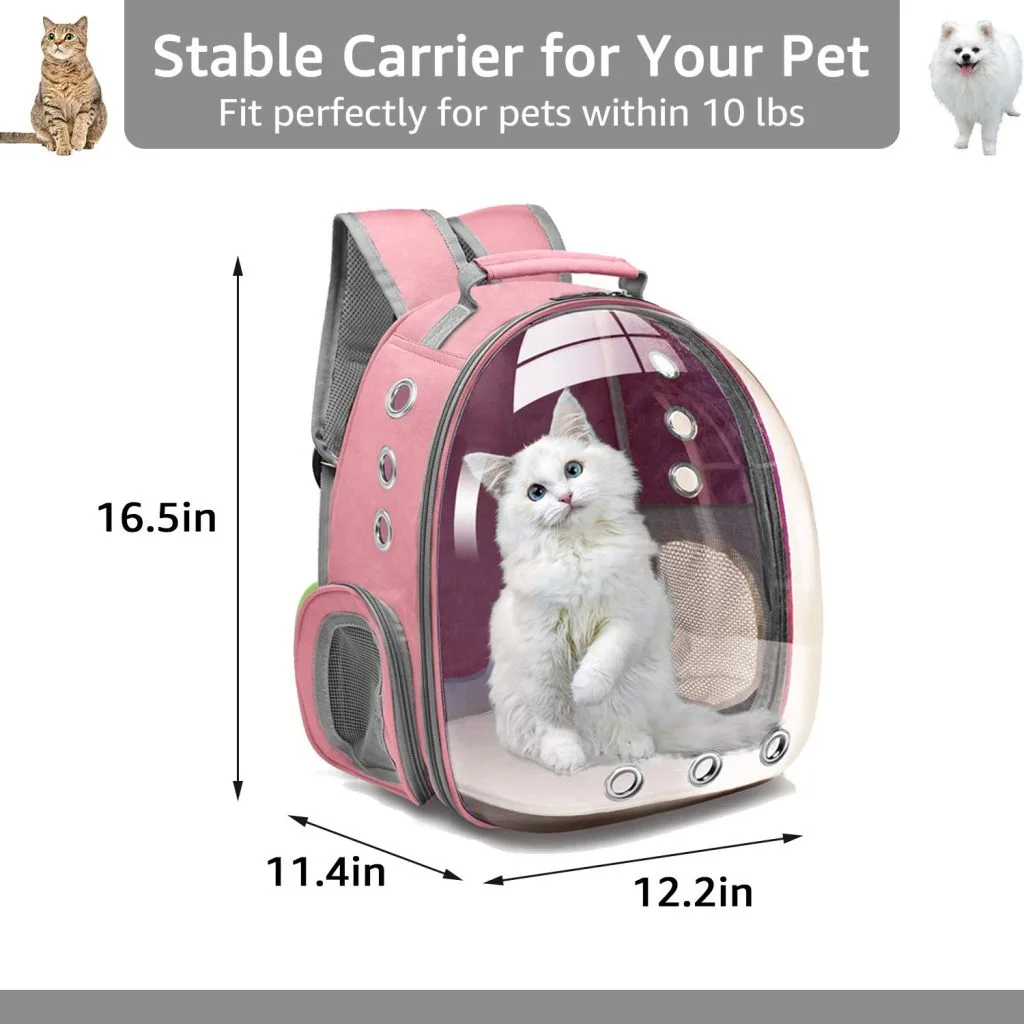
An industrial design right protects the appearance of a product: its lines, contours, shape, texture, and ornamentation, judged through the eye of an informed user. For a pet bag that means the silhouette, the panel division and proportion, the geometry and placement of ventilation openings, the shape and proportion of straps and handles, hardware styling as it contributes to overall appearance, and any surface ornamentation that is part of the product rather than a graphic applied to it.
It does not cover function. If a feature exists to make the bag work, its protection is a utility matter, and a design right will not stop a competitor achieving the same function with a different appearance. The boundary is the same separability reasoning that divides copyright from design, and it matters because filing the wrong instrument wastes the budget.
It also does not cover the brand. A logo on a bag is a trademark matter; the bag's shape around the logo is a design matter. Buyers routinely assume one filing covers both and discover otherwise during an enforcement attempt.
The standard for validity is novelty and individual character, and the test is whether the design produces a different overall impression on an informed user compared with earlier designs. That test is more forgiving than a patent's novelty test, which is why design rights are obtainable for products that would never qualify for a utility filing. Small but coherent differences in proportion and layout can be enough.
The informed user test is the practical standard and it is more generous than buyers expect. The comparison is made against the existing design corpus through the eyes of someone familiar with the category, which means a design can be valid even where individual features are known, provided the overall impression differs.
That standard suits pet bags particularly well, because differentiation in this category is usually achieved through proportion and combination rather than through any single novel element. A buyer who understands this stops looking for a breakthrough feature and starts documenting what makes the whole product recognisable.
It also means the design corpus matters. Where a market is crowded with similar products, the overall impression threshold is harder to clear, and buyers should expect filings to be narrower in effect even where they are valid.
An industrial design right protects how a pet bag looks, judged as a whole impression, and it is the only protection that matches the way customers actually recognise a product in this category.
Drawings and the Specification Freeze Point
Design applications stand or fall on their drawings, because the drawings define the scope of the right. Everything shown is claimed; anything not shown is not. Buyers who file with casual photography or partial views end up with a right narrower than the product, and the narrowness is discovered only when it is enforced.
The correct set is consistent orthographic views: front, rear, both sides, top, and bottom, plus a perspective view, all showing the same embodiment with identical proportions. Broken lines or disclaimers should mark features not claimed. Consistency is the whole discipline, because inconsistent views can invalidate a registration.
This requirement creates a hard operational deadline. Drawings can only be prepared once the design stops changing, and in a pet bag program that is the point at which the approved sample is signed off. Because sampling takes 6-10 working days and bulk production 35-50 days, the freeze happens roughly two months before goods are public, and that is the filing window.
Buyers should plan for one iteration of drawing revision rather than assuming a single pass is final. Sample approval often produces small proportion changes, and a drawing set prepared from pre-approval drawings may not match the shipped product. Filing from the approved sample, not from the concept sketch, avoids the mismatch.
Colour should be handled deliberately. Where colour is part of the claimed design, it must be shown; where it is not, filing in monochrome gives broader coverage across colourways. For a program that will run multiple colourways of one shape, monochrome filing is usually the better commercial choice.
Finally, buyers should keep the drawing set with the product file. The registration, the approved sample, and the drawings should agree, and that agreement is what an enforcement action will test.

National, Regional, and International Filing Routes
Three routes exist and they are not mutually exclusive. A national filing is made directly in one country's office and is the simplest and often fastest option when a buyer sells in one or two markets. A regional filing covers a group of countries through one application, which is efficient where the buyer sells across a region such as the European Union. An international system allows a single deposit to designate multiple member markets, which is efficient for wider portfolios.
Sequencing should follow commercial reality. File first in the market where the goods will be listed first and where enforcement is administrative rather than judicial. Use the priority period, generally six months from the first filing, to decide on extensions based on early sell-through rather than on the plan as it stood at launch.
Deferment is a useful and underused feature in some systems. A registered design can be kept unpublished for a period, which keeps the appearance confidential while giving the owner a priority date. For a buyer who wants protection before a launch but does not want the design publicly searchable yet, that is the right instrument, and worth asking counsel about.
Examination practice differs materially between offices. Some examine novelty substantively; others register on formalities and leave validity to be tested in enforcement. A registration from a formalities-only office is cheaper and faster but less reliable, and buyers should not treat all certificates as equivalent.
| Route | Coverage | Typical cost band | Typical timeline | When to use it |
|---|---|---|---|---|
| National filing | One country | 700-2,000 US dollars | 1-9 months | One or two core markets; fastest to register |
| Regional filing | A group of countries | 1,200-3,500 US dollars | 1-6 months | Selling across a single trading region |
| International deposit | Designated member markets | 1,500-6,000 US dollars depending on designations | 3-12 months | Three or more markets with committed distribution |
| Deferred publication | Varies by office | Usually a small surcharge | Registration immediate, publication deferred | Protection wanted before a public launch |
The international deposit system is administered within the framework of the intellectual property and trade agreements overseen by the World Trade Organization, which is why a single deposit can designate multiple member markets rather than requiring a separate national filing in each. Buyers should still confirm local examination practice, because designation does not guarantee identical treatment across offices.
Cost planning should account for the second stage as well. Designated offices may require translation, local representation, or additional fees after the initial deposit, and those amounts are the difference between an accurate budget and one that runs short halfway through the process.
Route choice is a function of how many markets the goods will actually be listed in, and the priority period exists so that decision can wait for early sell-through data.
Term, Renewal, and Portfolio Timing
Design terms are long relative to product lifecycles, typically running 15 to 25 years depending on jurisdiction, with renewal at intervals and often a maximum term after which the right expires. That duration is far longer than any pet bag style will sell, which has two consequences for portfolio management.
The first is that renewal decisions should be commercial rather than automatic. A design covering a discontinued style should be allowed to lapse. Renewing out of habit slowly fills a portfolio with dead assets and consumes budget that should go to current ones.
The second is that the portfolio should be reviewed against the assortment, not against filings. The useful question each season is which current styles carry a registered design and which do not, and whether the unprotected ones are the ones competitors would copy. That review typically reveals that filings cluster on launch-year styles while later bestsellers go unprotected.
Deferral of spend is legitimate and often correct. Filing on the anchor SKU at launch and staging extensions on the priority year converts an upfront bet into a staged one, and it aligns protection spend with demonstrated demand rather than with forecast demand.
Buyers should also diary the renewal dates in the same calendar as trademark renewals. Design rights lapse through missed deadlines far more often than they are lost through invalidity, and a lapsed design cannot support a takedown.
Buyers should separate the durable from the seasonal. A signature element that survives redesigns deserves long-term maintenance; a seasonal style does not. Sorting the portfolio into those two groups at the annual review makes renewal decisions quick and defensible.
Where a registration covers a design that has been superseded by a revised version, the buyer should consider whether the revised version needs its own filing. A materially different appearance is not protected by the earlier registration, and the gap is invisible until the newer product is copied.
Renewal administration should sit with whoever owns the trademark calendar, because the two portfolios share deadlines, evidence requirements, and the same failure mode. Running them together costs little and prevents the most common cause of loss.
Overlap with Trademark, Copyright, and Utility Rights
A single pet bag usually carries four different rights at once, and buyers should know which is which. The shape is protected by the design right. The brand name and logo are protected by trademark. Surface prints, packaging artwork, and manual text are protected by copyright. A genuinely functional mechanism, if any, is protected by a utility patent.
The overlap matters because enforcement routes differ. A competitor copying the shape is met with the design right. A competitor using the brand is met with the trademark. A competitor lifting the print or the photography is met with copyright. Each has a different process, a different evidence requirement, and a different speed, and buyers who hold only one are stuck when the copying takes a different form.
It also matters because the rights have different lifetimes and different costs. A trademark can last indefinitely with use and renewal; a design right expires at a fixed maximum term; copyright outlasts both. A brand is therefore the durable asset and the design is the seasonal one, which is the correct way to weight a protection budget over several years.
There is one area where the overlap creates a decision rather than a checklist: a feature that is both ornamental and functional. A ventilation opening, for example, is functional in that it passes air and ornamental in its geometry. The right answer is usually to protect the geometry as design and to leave the function unprotected unless it is genuinely inventive, which our companion guide on utility patent strategy covers in full.
Buyers should record this mapping for each SKU in one line: shape filed where, brand filed where, artwork registered where. One page per season prevents the gaps that appear when protection is handled piecemeal.
The overlap also creates opportunities for efficiency. A single evidence pack, a single renewal calendar, and a single annual review can cover all four rights, and most buyers who handle them separately end up duplicating work and missing items in one system or the other.
Buyers should note that the rights are enforced by different bodies with different standards of proof. A copyright claim requires proof of copying, a design claim compares overall impression, and a trademark claim considers confusion as to source. Choosing the right claim is often more important than the strength of the evidence.
Where a single act infringes several rights, buyers can usually assert them together. That is efficient, but it should be done deliberately, because a failed claim on one right can weaken the credibility of the others in the same proceeding.
Design Leakage at the Production Base and at Fairs
Design rights are lost before they are filed more often than they are lost in examination, and the loss happens through ordinary commercial exposure. A sample shown at a trade fair, a product photographed in a supplier showroom, a listing published before filing, or a design sent to three facilities for comparative quotation all constitute disclosure in many jurisdictions.
The controls are contractual and behavioural. Contractual controls require confidentiality over drawings and samples, prohibit showroom display and supplier-owned listings, restrict subcontracting, and require return or destruction of files and tooling. Behavioural controls are simpler: do not shop a design around before filing, and do not display pre-launch product publicly.
Where comparative quotations are genuinely needed, they should be sought on a generic specification that omits the distinguishing design features, or under signed confidentiality. Both are normal practice and neither delays the program meaningfully.
Our production team operates under documented development terms covering exactly this, with drawings and samples held under access control at the SGS-verified production base. Buyers should ask any partner facility to confirm its position in writing before sending distinguishing designs, because the answer determines whether the filing is still available.
Independent verification is available without travel. Documented process control under BSCI and ISO 9001 certified systems, confirmed through SGS audit and inspection services, gives a buyer evidence that access restrictions are real rather than asserted.
Where a buyer must share a design before filing, a dated confidentiality record is the minimum protection. Recording what was disclosed, to whom, and under what terms does not prevent misuse, but it converts a later dispute from one party's word against another's into a documented position.
Enforcement at Fairs, Online, and at the Border
Design rights are enforced administratively more often than judicially, and that is what makes them good value. Three channels matter. Trade fairs in several jurisdictions operate an ex parte seizure procedure in which a registered design holder can have infringing exhibits removed during the show. It is fast, visible, and it works only with a registration in hand, which is another argument for filing pre-launch.
Online platforms are the high-volume channel. Most marketplaces operate a design or intellectual property complaint process that accepts a registration number and removes listings. The process is administrative, relatively quick, and recoverable if the complaint was wrong, which makes it proportionate for ordinary listing-level copying.
The border is the highest-value channel. Recorded design rights allow customs to detain suspected infringing shipments, stopping goods before they enter commerce. Recordation requires the registration to exist first, and it is the single strongest reason to treat filing as a pre-launch task rather than a post-launch one.
Buyers should prepare one evidence pack that serves all three: certificate, drawings as filed, product images, and a channel authorisation list. Assembled once and updated each season, it reduces each enforcement action to a submission.
Proportionality should be decided in advance. A single listing is a complaint. A pattern of copying across channels is a campaign. A container of counterfeit goods is a customs matter and possibly litigation. Deciding the escalation path before it is needed keeps the response commercial.
Fair enforcement deserves particular attention for buyers who exhibit. The procedure is fast and visible, but it is strictly procedural: the registration must be in force for that jurisdiction, the documents must be complete, and the timing window is short. Preparing the pack before travelling is what makes it usable.
Buyers should also decide how public to be. Removing a competitor's exhibit is effective and it is noticed within the trade, which can deter others but can also create commercial friction. Deciding the policy before the show avoids a decision taken in the moment.
Finally, enforcement should be recorded and reviewed. A log of actions taken and outcomes achieved shows whether the portfolio is delivering value and supports the renewal decisions described earlier in this guide.
Budgeting a Design Portfolio for One Assortment
A sensible first-season design portfolio is small. For a three-SKU assortment, the usual answer is one design filing on the anchor SKU in the primary market, possibly a second on the SKU carrying the range's signature visual element, and extensions decided on the priority year. That is a modest sum against the value of the opening order, and it protects the assets that carry the range.
The protection budget should be expressed as a line in the program cost rather than discovered later. A buyer who budgets it can choose deliberately; one who does not tends to file nothing, or to file in a panic after a copy appears, when the options are narrower and the cost higher.
The second budget line is evidence. Drawing preparation, dated photography, and sample approval records are small costs that make enforcement possible, and they are usually already being incurred for other purposes. Capturing them in a reusable pack is a matter of organisation rather than spend.
Third is maintenance: renewal diaries, annual portfolio review, and extension decisions. These are administrative costs measured in hours, and they are what prevent the portfolio from either lapsing or filling with dead assets.
Two internal guides extend this into the adjacent decisions. Our notes on design patent and IP planning set the overall sequencing, and the piece on brand registration covers the asset that outlives the design itself.
A first-season design portfolio is one filing on the anchor SKU plus staged extensions, budgeted as a program line and maintained on the same calendar as the trademark portfolio.
Why brands source here
- Pet bag programmes run since 2014; founding team in sewn goods since 2004
- SGS-verified production floor of 4,950 m² with 137 workers across 7 lines
- Monthly capacity of 200,000 units, audited to BSCI and ISO 9001
People Also Ask
What does an industrial design registration cover?
The visible appearance of the product: silhouette, panel division and proportion, vent geometry, strap and handle proportion, and surface ornamentation that is part of the product. It does not cover function or the brand.
How much does design registration cost?
Typically 700-2,000 US dollars for a national filing, 1,200-3,500 for a regional filing, and more for a multi-market international deposit, with registration commonly in 1-9 months depending on the office.
When should the design application be filed?
After sample approval and before any public disclosure. Because sampling runs 6-10 working days and bulk 35-50 days, that is roughly two months before goods are listed, which is the practical filing window.
What drawings are needed?
Consistent orthographic views of one embodiment: front, rear, both sides, top, bottom, plus a perspective view, with disclaimed features marked. Inconsistent views can invalidate a registration, and anything not shown is not protected.
How long does a registered design last?
Typically 15-25 years depending on jurisdiction, subject to renewal. That far exceeds a style lifecycle, so renewal decisions should be commercial rather than automatic.
Should colour be claimed?
Usually not for multi-colourway programs. Filing in monochrome gives broader coverage across colourways; claiming colour narrows the right to what is shown.
How is a registered design enforced?
Administratively: marketplace complaints, trade fair seizure procedures, and customs recordation to detain shipments. All three require the registration to exist before the infringement appears.
Frequently Asked Questions
Can I file after showing the product at a trade fair?
Some jurisdictions allow a short grace period after disclosure by the designer, but relying on it is risky. The safe sequence is to file before the show, or to use deferred publication where the office offers it.
Is one registration enough for a three-colourway style?
Usually yes if filed in monochrome, since colourways are versions of the same shape. Claiming colour would require separate consideration for each variant.
What if a competitor changes one panel detail?
The test is overall impression on an informed user, not identity. A trivial change will not escape a valid registration, which is why the informed-user standard suits this category better than a patent claim would.
Do all offices examine novelty?
No. Some examine substantively and some register on formalities, leaving validity to be tested in enforcement. Certificates from formalities-only offices are faster and cheaper but less reliable.
What is deferred publication?
A mechanism in some systems where a registered design is kept unpublished for a period, giving a priority date without making the appearance publicly searchable. It suits pre-launch filing.
How many designs should a first assortment file?
Usually one on the anchor SKU and possibly one on the signature visual element, with extensions decided on the priority year. Filing the whole catalogue is rarely proportionate.
Can a design right cover hardware?
Hardware contributes to overall appearance and is covered to that extent. A distinctive buckle shape might also be separately protectable, but functional hardware features are not design subject matter.
What happens if the registration lapses?
There is no right to enforce. Lapses usually occur through missed renewal deadlines rather than through invalidity, which is why the renewal diary matters more than the filing.
Should I file before or after packaging artwork is printed?
The design filing concerns the product and is independent of packaging, but both belong before launch. Packaging artwork is a copyright matter covered in our copyright guide.
Does design registration delay production?
No, if sequenced correctly. Preparation happens during the 6-10 working day sampling window and the application is filed before the 35-50 day bulk run, so production proceeds uninterrupted.
Can a supplier be prevented from showing my design?
Yes by contract. Confidentiality terms should prohibit showroom display and supplier-owned listings, and buyers should confirm the position in writing before sending distinguishing drawings.
What should the evidence pack contain?
The certificate, drawings as filed, product photography, and an authorised channel list. Assembled once and updated each season, it reduces each enforcement action to a submission.
Talk to QUANZHOU JUNYUAN BAGS about a wholesale pet bag order: MOQ 500 pieces per colourway, samples in 6-10 working days, bulk production in 35-50 days under AQL 2.5 inspection.
Get a free quote Request a sample