Pet Bag FOB: Shipping Terms, Cost Split and Risk
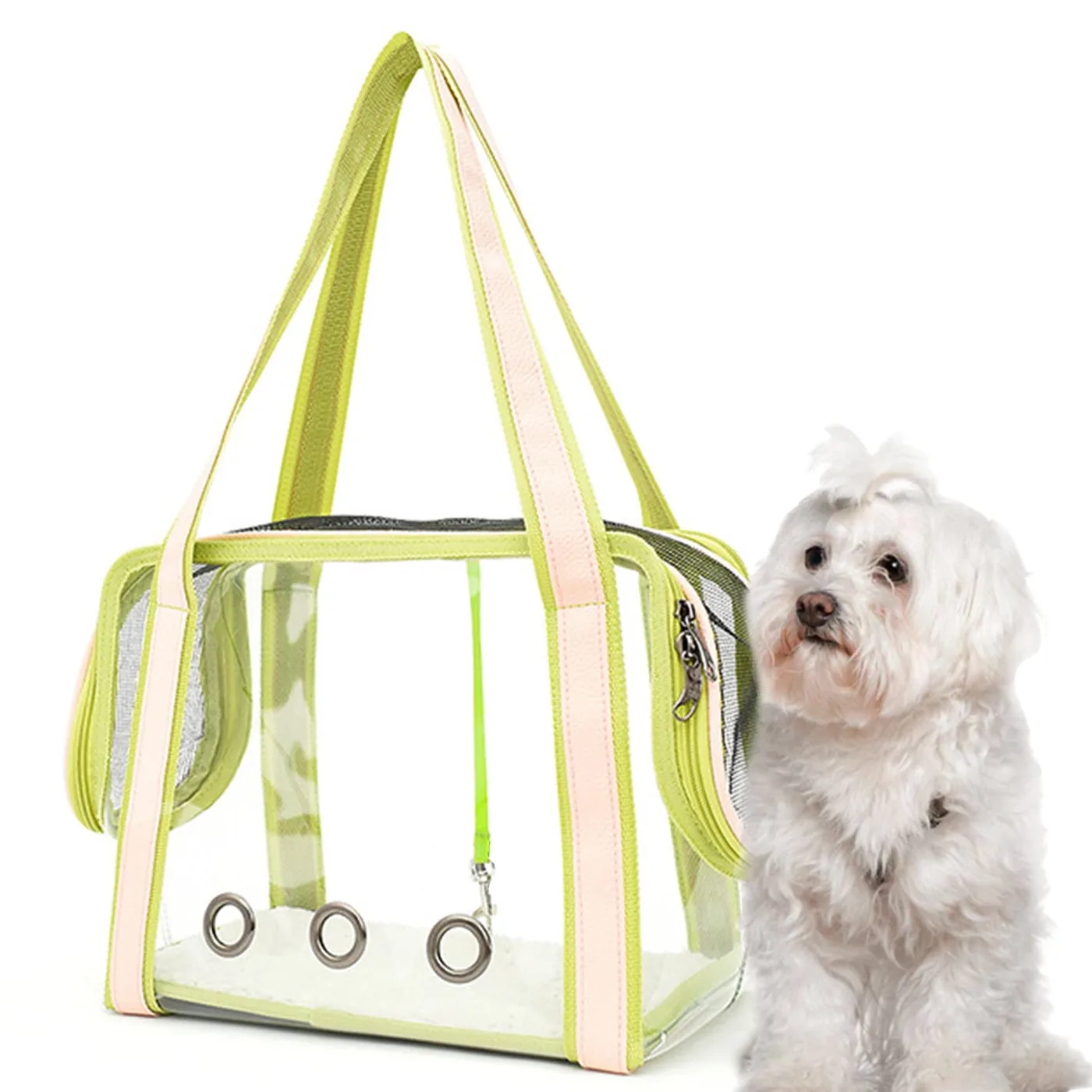
FOB Xiamen means the seller delivers the goods on board the vessel you nominate at Xiamen and clears them for export, while you pay and control everything from that point onward: ocean freight, insurance, destination charges, duties and inland delivery. Risk transfers when the goods pass onto the vessel, and the term is the default for pet bag programmes at MOQ 500 per colourway with bulk production in 35-50 days.
FOB is the standard shipping term for wholesale pet bag orders and it is chosen for one reason above all others: it gives the buyer control of the freight. The seller's obligation ends when the goods are loaded on board the vessel the buyer nominated and export clearance is complete. Everything after that point, including the choice of carrier, the routing, the insurance and the destination handling, belongs to the buyer. That control is the commercial value, and it is why importers with any logistics capability prefer FOB to a term that bundles freight into the supplier's price. Our production team runs pet bag programmes at MOQ 500 pieces per colourway, with samples in 6-10 working days and bulk in 35-50 days after approval, inspected to AQL 2.5 before release, and goods are delivered to the nominated vessel at Xiamen under FOB terms with T/T 30/70 payment. What buyers get wrong is rarely the definition; it is the boundary. Arguments arise over who pays terminal handling, when risk actually passed, what happens when the buyer's vessel is late, and whether the seller's obligation includes getting the goods to the port. This article sets out the obligations on each side, the exact transfer point, what the FOB price does and does not include, why booking control matters more than the nominal freight saving, how FOB compares with EXW and CIF, the disputes that recur and how to prevent each, the documentation flow, and the cases where FOB is the wrong choice.
Pet bag moq is quoted per colourway, not per order, so Market & Business Strategy planning decides how many shades a launch can carry. A pet bag wholesale price that looks attractive at 500 units often shifts once the dye-lot minimum is added, and pet bag sample cost is normally credited back against the first production run.
What FOB Obligates Each Party to Do
FOB, or Free On Board, is one of the eleven trade terms published by the International Chamber of Commerce, and it applies only to sea and inland waterway transport. Naming the port is not optional: a contract that says FOB without naming the port is incomplete, because the entire cost structure depends on where the seller's obligation ends.
The seller's obligations are four. First, deliver the goods on board the vessel nominated by the buyer at the named port, within the agreed period. Second, clear the goods for export and complete the formalities required to do so. Third, provide the commercial invoice and any evidence of delivery the contract requires. Fourth, give the buyer notice that the goods have been delivered on board, together with any information the buyer needs to arrange insurance.
The buyer's obligations mirror them. The buyer nominates the vessel and the carrier, contracts for carriage from the named port, pays freight and all costs from the point of delivery onward, arranges insurance if it wants cover, and handles import clearance, duties and onward delivery.
Two obligations are shared and are the source of most friction. Loading is nominally the seller's cost under the classic reading of the term, but terminal handling charges at the origin port are frequently billed separately to the buyer by the terminal or the carrier. Parties should allocate them explicitly in the contract rather than relying on the default.
Notice is the second shared obligation and it matters more than it appears. The seller must notify the buyer that goods are on board, and the buyer must notify the seller of the vessel, the loading berth and the cut-off in sufficient time. A failure on either side can convert an orderly loading into demurrage or a missed sailing.
Buyers should also note what FOB does not cover: it is not a door-to-door term, it does not include insurance, and it does not make the seller responsible for anything that happens after goods pass onto the vessel, including a casualty in the port before departure.
FOB requires the seller to load, clear export and give notice, and the buyer to nominate the vessel, contract carriage and carry every cost and risk from the point of delivery onward.
Where Risk Transfers and Why the Practice Differs from the Theory
Theoretically, risk under FOB passes when the goods are on board the nominated vessel. In practice the transfer point is where the parties' documents say it is, and the gap between the two is where claims are lost.
The classic formulation refers to the ship's rail, which is a useful image and an awkward boundary, because goods can be damaged while being lifted, while sitting on the quay, or in the terminal before loading. Modern standard terms resolve this by making delivery on board the trigger, but the parties remain free to agree a different point, and many contracts do so without noticing.
The practical consequence is that the buyer should arrange marine insurance to attach from the point the goods leave the seller's custody rather than from the point they are loaded. The gap is short in distance and significant in exposure, because a container dropped in the terminal before loading is a real and not uncommon event.
Evidence matters as much as timing. The document that normally marks delivery is the on-board bill of lading, and the date on it is the date risk passed in most disputes. A buyer should require an on-board notation rather than a received-for-shipment document, because the latter does not evidence that goods were actually loaded.
Delay changes the analysis. Where the buyer's vessel fails to arrive on time, or where the vessel is unable to take the goods, risk can transfer early once the goods have been clearly set aside and the buyer has been notified. Buyers who assume they remain protected until loading in that scenario are relying on a rule that does not apply.
Insurance is the practical answer to all of the above. Because FOB places no obligation on the seller to insure, the buyer must arrange cover and should scope it to begin at the factory gate or at the container yard rather than at the ship's rail. The cost of that extension is small relative to the exposure it removes.
Risk under FOB passes on board the nominated vessel, evidenced by the on-board bill of lading, but buyers should insure from the point goods leave the seller's custody because the gap before loading is real exposure.
The Cost Split: What Is Inside Your FOB Price
An FOB price looks like a single number and is in fact a stack, and buyers who do not know what is in the stack cannot compare quotations or forecast landed cost. The usual contents are fewer than buyers assume and the exclusions are where the surprises live.
Inside the price: the manufactured product at the agreed specification, inspection to AQL 2.5 before release, packing to the approved pack-out specification, inland transport from the production site to the port of Xiamen, export customs clearance and documentation, terminal handling at origin, and loading on board the nominated vessel.
Outside the price, and the buyer's cost: ocean freight from Xiamen to the destination port, marine insurance unless separately arranged by the seller, destination terminal handling, customs clearance at import, duties and taxes, inland delivery from the destination port, and any customs broker or documentation fee.
Three items sit in a grey zone and should be named. The first is origin terminal handling, which some suppliers include and others pass through. The second is the cost of a container that is not filled, where the buyer pays for space that the goods do not use. The third is any storage or demurrage arising from a late vessel nomination or a delayed export clearance.
Payment terms sit alongside the price rather than inside it. Under T/T 30/70, the deposit is paid to start production and the balance is typically due against documents or before release, and buyers should confirm whether release is triggered by the balance payment or by loading, because that determines who holds the goods while a payment clears.
Buyers modelling landed cost should build it forwards rather than backwards: FOB price, plus freight, plus insurance, plus destination charges, plus duty at the correct classification, plus inland delivery, plus a contingency. Working backwards from a target retail price produces optimistic freight assumptions and, eventually, a margin problem.
| Cost element | Under FOB Xiamen | Notes |
|---|---|---|
| Product and packing | Seller | Includes AQL 2.5 inspection before release |
| Inland transport to port | Seller | From production site to Xiamen |
| Export clearance | Seller | Including export documentation |
| Origin terminal handling | Usually seller | Confirm; sometimes billed to buyer |
| Loading on board | Seller | Evidenced by on-board bill of lading |
| Ocean freight | Buyer | Buyer also nominates the carrier |
| Marine insurance | Buyer | No obligation on seller; arrange from factory gate |
| Import duty and clearance | Buyer | Depends on classification and origin rules |
| Destination inland delivery | Buyer | Port or terminal to warehouse |
An FOB price includes product, packing, inland transport to port, export clearance and loading; freight, insurance, destination charges, duties and inland delivery all sit with the buyer.
Who Books the Vessel and Why That Control Is the Point
The defining advantage of FOB is not price. It is that the buyer chooses and controls the carrier, the routing, the service level and the relationship, and every one of those has commercial consequences that outlast a single shipment.
Freight rate is the obvious one. A buyer with their own forwarder or carrier contract pays a negotiated rate rather than a supplier's marked-up one, and the difference on a container of bulky pet bags is material because this category is volume-heavy rather than weight-heavy. Chargeable weight on a light, bulky product means the buyer is paying for space, and space is exactly what a buyer with volume can negotiate.
Visibility is the second. Under FOB the buyer receives booking confirmations, sailing schedules and status directly, rather than through a supplier who has no incentive to report a delay promptly. For a buyer managing a seasonal landing date, direct visibility is worth more than a small freight saving.
Control of routing is the third. A buyer can choose a direct service over a transhipment, accept a longer transit for a lower rate, or pay for a faster service when a stockout looms. Under a seller-arranged term the buyer inherits whatever was chosen, usually the cheapest option that met the contract.
Claims handling is the fourth and the least appreciated. When cargo is damaged or delayed, a buyer who contracted the carrier has a direct claim; a buyer who did not is pursuing a claim through an intermediary who has no contractual obligation to help.
The obligation that comes with the control is real: the buyer must nominate a vessel in time, meet the cut-off, and communicate it clearly. Buyers who take FOB for the control and then fail to book promptly create the one scenario where FOB costs more than a seller-arranged term, because storage and missed-sailing charges land on them.
FOB is chosen for control of carrier, routing, visibility and claims rather than for price, and the obligation that comes with it is nominating a vessel and meeting the cut-off on time.
FOB Compared with EXW and CIF for Pet Bag Programmes
Three terms cover most wholesale pet bag transactions, and the choice between them is a decision about where the buyer wants the boundary to fall. Each has a clear best case and each has a failure mode.
EXW places the least obligation on the seller: goods are made available at the seller's premises and the buyer does everything else, including export clearance. It looks attractive because the price is lowest, and it is a poor choice for a buyer without an entity or an agent able to complete export formalities in the country of origin. The practical failure mode is a buyer who cannot get the goods out of the country because they cannot complete export clearance.
CIF adds freight and insurance to the seller's obligation while keeping risk transfer at the same point as FOB. It is convenient and it is the most commonly misunderstood term in the group, because buyers assume that a seller who pays freight and insurance has also taken the risk. They have not; risk still passes on board, and the seller's insurance obligation is a minimum cover rather than a full one.
FOB sits between the two and is the default for a reason. The seller handles what they are best placed to handle, being export clearance and delivery to a Chinese port, and the buyer handles what they are best placed to handle, being ocean carriage, insurance and import.
The comparison that matters for this category is freight behaviour. Pet bags are bulky and light, so freight is driven by volume rather than weight, and the party controlling the booking controls a genuinely significant cost. That argues for FOB or EXW over CIF for any buyer with logistics capability, and for CIF or DDP only where the buyer has none.
Buyers should also consider who bears the consequence of a freight market move. Under FOB the buyer bears it and also captures the benefit when rates fall. Under CIF the seller prices the risk of that move into the unit price, which is a cost the buyer pays whether or not rates rise.
EXW offers the lowest price and the most buyer obligation, CIF adds freight and minimum insurance without moving the risk point, and FOB splits obligation at the port where each party is best placed to act.
The Disputes That Recur and How to Prevent Each
FOB disputes are remarkably consistent, and almost all of them are preventable with a clause in the purchase order rather than a conversation after the fact. Five account for the large majority.
The first is origin charges. The buyer receives an invoice from the terminal or forwarder for handling the seller was supposed to cover. Prevention is a single line naming which origin charges are included in the FOB price, listing terminal handling, documentation and any export inspection fee explicitly.
The second is the late vessel. The buyer nominates a sailing that is missed, or fails to nominate in time, and storage charges accrue while the goods sit at the port. Prevention is a stated free-storage period and a stated consequence, agreed before the goods move rather than when they are already waiting.
The third is the damaged-in-transit claim where neither party insured the gap. Prevention is the buyer's own marine policy attaching at the factory gate, which costs little and removes the argument entirely.
The fourth is a dispute about whether risk had passed when damage occurred, usually involving goods damaged in the terminal before loading. Prevention is an on-board bill of lading requirement, so that the moment of delivery is documented rather than inferred.
The fifth is a documentation mismatch, where the commercial invoice, packing list and bill of lading disagree on quantity, description or value, and clearance is delayed at destination. Prevention is a documentation set agreed at order placement and checked before the vessel sails.
None of these requires a lawyer. Each requires one sentence written before the order is placed, which is the cheapest risk management available in international sourcing.
The five recurring FOB disputes concern origin charges, late vessel nomination, the uninsured pre-loading gap, proof of when risk passed, and documentation mismatch, and each is prevented by a clause written before the order.

Documentation and the Export Side Under FOB
Export formalities sit with the seller under FOB, but the buyer depends on them completely, and the documentation set is the mechanism by which both sides prove performance. Buyers should specify the set rather than accept whatever is produced.
The minimum set is a commercial invoice, a packing list, an on-board bill of lading, and any export declaration required by the origin country. Where the destination market requires it, a certificate of origin is added, and for certain preferential tariff treatments a specific form of origin evidence is required instead of a generic certificate.
Accuracy across the set matters more than any single document. Quantities, carton counts, descriptions and values must agree, because customs authorities compare them, and a discrepancy delays clearance and can trigger an examination. A buyer should require the set for review before the vessel sails rather than after.
Classification deserves attention at this stage. The duty the buyer pays at destination is determined by the classification declared on import, and that declaration must be consistent with the commercial description used on export documents. Errors here are the buyer's to correct and are expensive to correct late.
Trade and customs frameworks vary by destination and change over time, and buyers shipping to multiple markets should verify current requirements through the World Trade Organization and national customs authorities rather than relying on a previous season's paperwork.
Product compliance documents travel alongside the trade set: test reports for the destination market, labelling files and any marking requirements. These are not shipping documents, but a shipment that arrives complete and non-compliant has the same commercial outcome as one that does not arrive, and they should be checked against the approval sample before release.
The export side is the seller's obligation but the buyer's dependency, and the documentation set should be specified, reviewed before sailing, and consistent across invoice, packing list, bill of lading and origin evidence.
When FOB Is the Wrong Term for a Buyer
FOB is the default and it is not universal. Four situations argue for a different term, and recognising them avoids the most expensive kind of logistics learning.
The first is a buyer with no freight capability and no forwarder relationship. FOB gives that buyer a carrier to nominate, a cut-off to meet and a claim to pursue, none of which they are equipped to handle. A first-time importer shipping one container is often better served by a delivered term, paying for the service and learning the mechanics before taking them on.
The second is a small shipment. Below roughly a consolidated pallet, the buyer's own freight arrangement is frequently more expensive than the supplier's consolidated rate, because the supplier is moving volume every week. Air or courier consolidation inside a supplier-arranged term is usually the better answer for samples and small reorders.
The third is a market with complex import formalities the buyer does not understand. In that case the value is not in controlling freight but in having someone who can clear the goods, and a duty-paid term transfers that problem to a party experienced in solving it.
The fourth is an urgent shipment where speed matters more than cost and control. A seller with a standing forwarder relationship can often move faster than a buyer arranging a booking from scratch, and the premium is worth paying when a stockout is the alternative.
The general rule is that FOB suits a buyer who ships regularly, has a forwarder, and wants control. It suits nobody as a way of avoiding the decision, and a buyer who chooses it without the capability to exercise the control has taken on risk without taking on the benefit. Buyers comparing terms should read our notes on CIF cost, insurance and freight and on delivered duty paid before fixing the term in a contract.
FOB is wrong for a buyer with no freight capability, for very small shipments, for markets with unfamiliar import formalities, and where speed matters more than control.
Production capability
- SGS-verified production space of 4,950 m², 149 machines, 7 assembly lines
- Pet bag output since 2014 from a 137-person team
- 200,000 units shipped monthly under BSCI and ISO 9001 systems
People Also Ask
What does FOB Xiamen mean for a pet bag order?
The seller delivers the goods on board the vessel you nominate at Xiamen and completes export clearance. You pay and control ocean freight, insurance, destination charges, duties and inland delivery from that point.
Does FOB include shipping to my country?
No. FOB covers costs up to and including loading on board at the origin port. Ocean freight, insurance, import duty and destination delivery are all the buyer's cost.
Who arranges insurance under FOB?
The buyer. FOB places no insurance obligation on the seller, so the buyer should arrange marine cover and scope it to attach when goods leave the seller's custody rather than at loading.
When does risk transfer under FOB?
When the goods are on board the nominated vessel, normally evidenced by an on-board bill of lading. Where the buyer's vessel is late, risk can transfer earlier once goods are set aside and notice is given.
Is FOB cheaper than CIF?
The FOB price is lower because it excludes freight and insurance, but total landed cost depends on the buyer's freight rate. Buyers with a forwarder contract usually land FOB cheaper than CIF.
What charges should the FOB price include at origin?
Product, packing, inland transport to port, export clearance, terminal handling and loading. Confirm terminal handling explicitly, because it is the item most often passed to the buyer.
What happens if my nominated vessel is late?
Storage and possibly demurrage charges accrue, and risk may transfer early once the goods are clearly set aside. Agree a free-storage period and a stated consequence before the goods move.
What are the standard commercial terms?
MOQ 500 pieces per colourway, samples in 6-10 working days, bulk in 35-50 days after approval, AQL 2.5 inspection, T/T 30/70 terms, FOB Xiamen.
Frequently Asked Questions
Is FOB valid for air freight?
No. FOB applies to sea and inland waterway transport only. Air shipments should use FCA, which places delivery with the carrier at a named place and works for any mode.
Should I accept a received-for-shipment bill of lading?
Require an on-board notation instead. A received-for-shipment document does not evidence that goods were loaded, which matters because loading is the point risk passes.
Who pays terminal handling at origin?
Normally the seller under FOB, but it is frequently billed separately by the terminal or carrier. Name it in the purchase order rather than relying on the default.
How should I insure an FOB shipment?
With your own marine policy attaching at the factory gate or container yard, not at loading. The pre-loading gap is short in distance and real in exposure.
Does the seller hold the goods until my balance is paid?
Whatever the contract says. Under T/T 30/70 terms, confirm whether release is triggered by the balance payment or by loading, because that determines who holds the goods while a payment clears.
What documents should I require?
Commercial invoice, packing list, on-board bill of lading and export declaration as a minimum, plus a certificate of origin where the destination requires one. Review the set before the vessel sails.
Why do pet bags cost more to ship than they weigh?
Because freight on a light, bulky product is charged on volume rather than weight. Chargeable weight is calculated on whichever is greater, and for this category that is almost always volume.
Can I use my own forwarder under FOB?
Yes, and that is the main advantage of the term. You nominate the vessel and carrier, receive booking and status directly, and hold a direct claim if something goes wrong.
What is the risk of choosing FOB without logistics capability?
You take the obligation without the benefit: a carrier to nominate, a cut-off to meet and a claim to pursue. A delivered term is usually better for a first-time importer.
Should the commercial description match the import classification?
Yes. A mismatch between the commercial description on export documents and the classification declared on import invites examination and delays clearance.
Is a certificate of origin always required?
No, but where preferential tariff treatment is claimed a specific form of origin evidence is required instead of a generic certificate, and it must be requested before shipment.
How do I compare an FOB quote with a CIF quote?
Add freight, insurance, destination charges, duty and inland delivery to the FOB price and compare landed totals. Comparing the unit prices alone is not a like-for-like comparison.
Talk to QUANZHOU JUNYUAN BAGS about a wholesale pet bag order: MOQ 500 pieces per colourway, samples in 6-10 working days, bulk production in 35-50 days under AQL 2.5 inspection.
Get a free quote Request a sample