Pet Bag Inspection: Pre-Shipment Checklist and Cost
A pre-shipment inspection is the last verification before a finished pet bag lot is packed and released, covering quantity, workmanship, function, dimensions, labelling and packing against the approved sample. It is normally run when production is 100 percent complete and at least 80 percent packed, samples are drawn to AQL 2.5, and a standard assignment costs USD 200 to 400 per man-day plus travel.
Pre-shipment inspection is the only quality control that happens while the goods can still be fixed cheaply, and it is the last point at which a buyer has any leverage. Our production team runs pet bag programmes at MOQ 500 pieces per colourway, with samples in 6-10 working days and bulk production in 35-50 days after approval, and goods are released against an inspection to AQL 2.5 before the container is loaded. Five decisions determine whether the inspection is worth the fee: when it is scheduled, who performs it, what is on the checklist, how the sample is drawn, and what happens when it fails. Buyers who answer all five get a report they can act on. Buyers who book an inspection without a checklist get a generic report describing someone else's priorities, and a failed lot discovered at the loading bay costs a booking rather than a fee. The inspection is not the control; it is the verification that the control worked.
Buy dog carriers and buy cat carriers enquiries usually arrive from two different channels - one from pet specialty, one from general merchandise - and Market & Business Strategy has to serve whichever basket is larger. Buy pet carriers in a single colourway first, then extend the shade range on the reorder.
Where Pre-Shipment Inspection Sits in the Order Timeline
Timing is the difference between a useful inspection and an expensive formality. A pre-shipment inspection is meaningful only when the goods are finished and substantially packed, because packing defects are a large share of the findings and cannot be assessed on loose units in the sewing area.
The standard trigger is production 100 percent complete and at least 80 percent packed. Below that threshold the inspector is looking at a production floor rather than at a shipment, and the packing and labelling findings, which are among the most commercially damaging, are simply unavailable.
The position in the schedule matters commercially as well as technically. Inspection should be booked with enough margin before the container booking that a failed lot can be reworked and re-inspected without missing the vessel. A three-day margin is a reasonable minimum for a soft goods programme.
Relationship to sampling is worth stating clearly. The approved sample from the 6-10 working day sampling window is the reference against which the bulk is judged, and the inspection is meaningless without a physical approved sample present at the inspection location.
Relationship to bulk production is equally specific. Bulk runs 35-50 days after approval, and the inspection sits at the end of that window, not during it. An inspection conducted mid-production is a different service with a different purpose.
The booking lead time for third-party inspection is longer than most buyers expect. In the main sourcing regions a slot is typically available within two to five working days, but during peak season it can be longer, and booking late is the most common cause of a compressed schedule.
Report turnaround should be specified. A verbal indication on the day and a written report within one working day is the normal service level, and the written report is the document a buyer needs before releasing payment.
The final planning point is the release gate itself. Payment terms commonly tie the balance to inspection acceptance, and the inspection date therefore drives the cash cycle as well as the shipping schedule.
The Four Inspection Types and When Each Applies
Pre-shipment inspection is one of four standard services and is not always the right one. Choosing the wrong type produces a report that arrives too early or too late to be useful, and the choice depends on where the risk actually sits in a given programme.
Initial production check, sometimes called an IPC, happens when the first units come off the line. It compares early output against the approved sample and catches a systematic misunderstanding of the specification before the whole lot is made. It is the highest-value inspection for a new style.
During production inspection, or DUPRO, is conducted when 20 to 50 percent of the lot is complete. It confirms that quality is holding mid-run and gives time to correct a drift before the remaining units are made. It suits large or long-running lots.
Final random inspection, or FRI, is the pre-shipment inspection proper, run on a finished and largely packed lot. It is the standard requirement for release and the one most buyers mean when they say inspection.
Container loading supervision, or CLS, verifies what actually goes into the container: carton count, carton condition, container condition, loading pattern and seal number. It addresses a category of problem, short shipment and substitution, that no product inspection can catch.
Combination patterns follow from the risk. A new style with a new supplier justifies an IPC plus an FRI. A large repeat order justifies a DUPRO plus an FRI. A high-value shipment with a history of short shipments justifies an FRI plus a CLS.
| Type | Timing | What it catches | Cost relative to FRI | When to specify |
|---|---|---|---|---|
| Initial production check | First units off the line | Specification misunderstanding, wrong materials | Similar | New style or new supplier |
| During production | 20 to 50 percent complete | Quality drift mid-run | Similar | Large or long lots |
| Final random inspection | 100 percent made, 80 percent packed | Finished quality, packing, labelling | Baseline | Every release |
| Container loading supervision | At loading | Short shipment, substitution, loading damage | Lower | High value or poor history |
| Sorting or rework supervision | After a failed lot | Effectiveness of the correction | Per day | After any failure |
Cost is modest for all of these relative to the order value, and the question is not whether to inspect but which combination suits the risk. A programme spending a low single-digit percentage of order value on inspection is spending appropriately.
The point most buyers miss is that an IPC is cheaper than a failure. Finding a systematic specification error on day three of a fifty-day run costs a correction; finding it at final inspection costs the lot.
Independent providers structure all four services the same way, and inspection companies such as SGS will quote any combination against a named checklist and sampling plan.
Building the Checklist: What Gets Checked on a Pet Bag
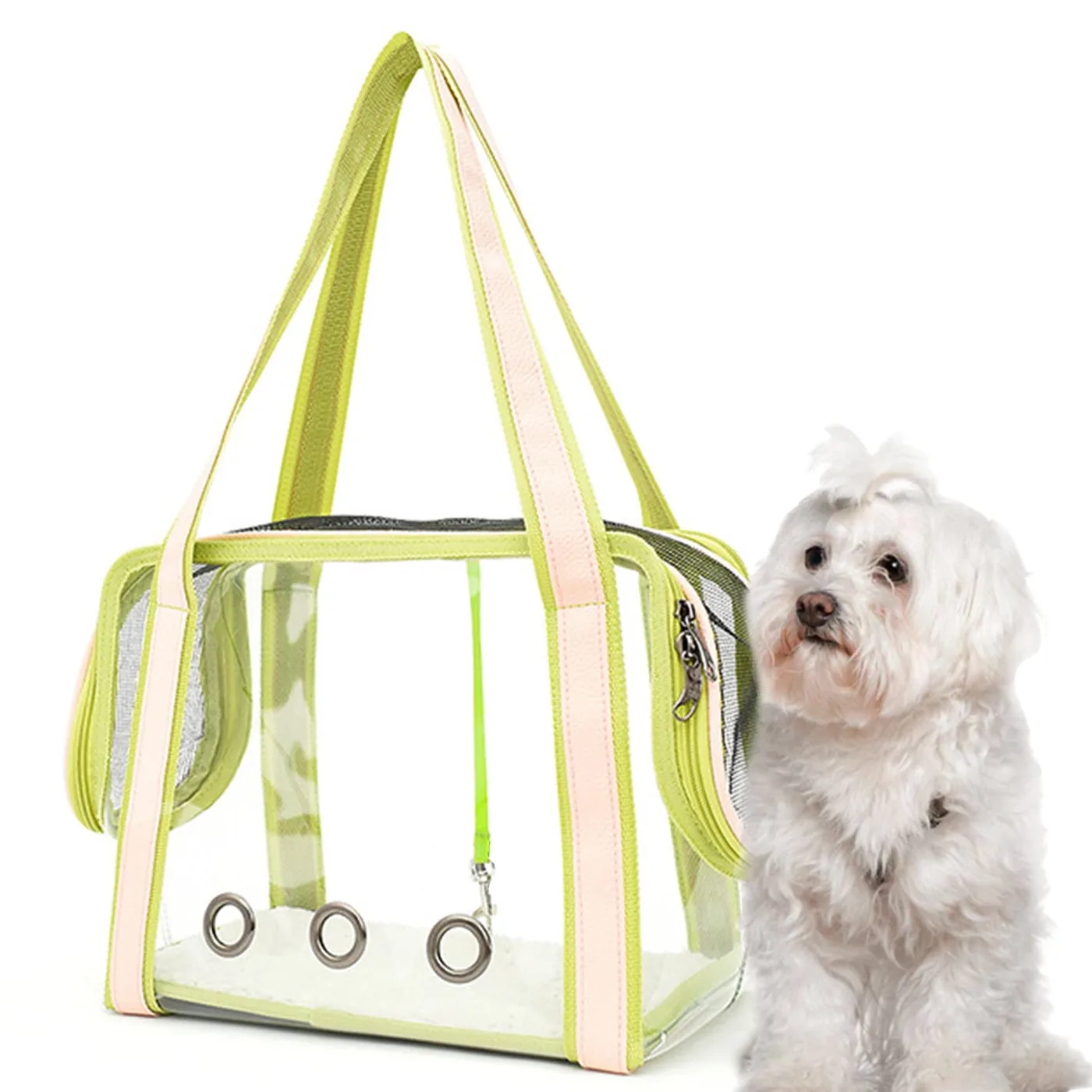
The checklist is the product. An inspection without a written checklist inspects whatever the inspector happens to notice, and two inspections of the same lot by different people will produce different results. A checklist makes the service reproducible.
Quantity comes first and is the most basic finding. Carton count, pieces per carton, and total against the packing list, verified by opening a defined number of cartons rather than by counting cartons and trusting the label.
Workmanship is the largest block. Stitch quality and consistency, seam allowance, thread ends, panel alignment, symmetry, cleanliness and the absence of damage are the standard items, and each should have an acceptance description rather than a grade.
Function is the block that protects the customer. Every zip through its full travel, every buckle and clip through a cycle, every adjustable strap through its range, the tether attachment and the closure system under load. Each is a pass or fail condition.
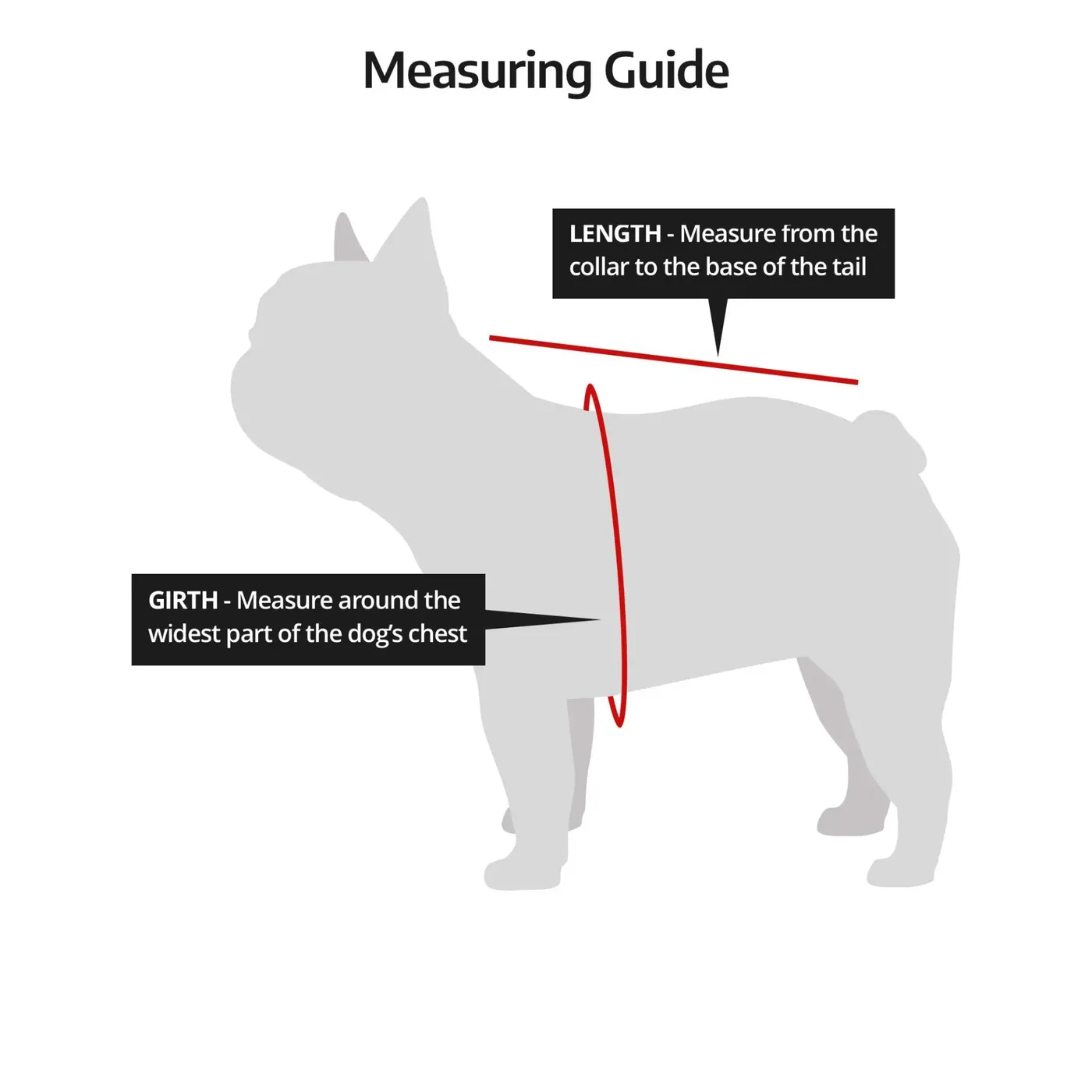
Dimensions are checked against the specification with tolerances. Overall dimensions, strap length at its adjustment range, interior volume where specified, and the folded or packed dimension that determines carton fit.
Materials and components are verified against the approved sample. Fabric handle and shade, webbing width, hardware finish and type, mesh specification and the presence of any specified certified component. Where a material certificate was required, the reference should be recorded.
Branding and marking covers the logo application, the care label, the hang tag, the barcode and any compliance marking. This block produces a disproportionate share of retailer rejections and should be checked against the approved artwork rather than against a description.
Packing covers the polybag, the carton, the carton markings, the packing method, the carton weight and the presence and correct version of any insert. A missing instruction manual is a defect and should be counted as one.
Safety characteristics close the list. Ventilation area where specified, absence of sharp edges or protruding hardware, and the security of any small component that could detach. These are the critical defect candidates and they belong on the checklist explicitly.
Sampling, AQL and Reading the Report
The sample is drawn at random from the presented lot and sized by the plan, not by convenience. Random selection is the procedural requirement that makes the result meaningful, and an inspector who inspects the units nearest the door is not sampling.
The lot must be homogeneous. A single style and colourway from a single production period, presented in full, is a valid lot; a partial presentation or a mixture of colourways is not, and a valid inspection cannot be conducted against it.
The plan is the standard one: ISO 2859-1 or its equivalent, general inspection level II, with AQL 0 for critical, 2.5 for major and 4.0 for minor. Stating the plan in the booking instruction removes any argument about sample size later.
Classification of findings is the judgement that determines the outcome, and it depends entirely on the definitions agreed in advance. A defect classification list attached to the checklist is what makes the accept and reject numbers meaningful.
The report should contain the plan, the sample size, the findings by class with counts, photographs of each finding, the measurements taken, and a clear pass, fail or pending conclusion. Six elements, and a report missing any of them is incomplete.
A pending conclusion is common and should be understood rather than feared. It usually means a measurement or a confirmation is outstanding, and it ordinarily resolves within a day. It is not a pass.
Photographic evidence is the part a buyer should insist on. Photographs of findings, of the packing, of the carton markings and of the product against the approved sample allow an independent view of severity and are the basis of any commercial negotiation afterwards.
The measurement record matters for the next season. Dimensional data from the inspection, filed by lot, shows whether a specification is being held consistently or drifting, and that history is more useful than any single result.
Who Inspects: In-House, Third-Party or Retailer-Nominated
Three arrangements exist and they serve different purposes. In-house inspection is conducted by the supplier's own quality team, third-party inspection by an independent company, and retailer-nominated inspection by a body the retailer designates.
In-house inspection is continuous and free at the margin, and it is the only arrangement that can control a process rather than verify a lot. Its weakness is independence, and a buyer should not treat an internal pass as equivalent to an independent one.
Third-party inspection is independent, reproducible and produces a document a third party will accept. It is the standard arrangement for a release decision and the one most wholesale programmes should use, with the fee priced into the order.
Retailer-nominated inspection appears where the retailer imposes it, typically for a own-brand or a high-volume programme. It is not negotiable, it usually carries the retailer's own checklist, and a failure carries consequences beyond the immediate order.
The layered arrangement is what competent programmes run: continuous in-house control during production, plus an independent final inspection for release. The first reduces defects, the second verifies the reduction.
Independence has a cost that should be acknowledged. A third-party inspector working to a written checklist has no discretion to accept a deviation the buyer would have accepted, which increases the rejection rate on borderline cosmetic issues.
Consistency between inspectors is a real issue even within one company. Different inspectors classify cosmetic findings differently, and a programme that cares about cosmetics should invest in photographic limit samples rather than rely on consistency.
Accreditation and scope are worth checking where a report will be shown to a third party. Established providers such as SGS operate to recognised accreditation, and the resulting report carries weight with retailers and authorities that an unaccredited one may not.
Where the destination market imposes product safety requirements, the checklist should reflect them, and the framework published by the CPSC is a reference point for US-facing programmes.
Cost and Timing of an Inspection
Inspection cost is quoted per man-day and is driven by location, duration and any travel. A standard soft goods assignment in a major sourcing region commonly falls in the range of USD 200 to 400 per man-day, with travel and any special testing charged separately.
One man-day covers a normal lot. A single style in a single colourway at a few thousand units is a one-day assignment; a multi-style, multi-colourway shipment may need two or more inspectors or a second day, and the quote should reflect the actual scope.
Testing is a separate cost line and can exceed the inspection. Where the checklist requires a physical test, colour fastness, seam strength, a hardware cycle test or a substance screen, laboratory fees apply and turnaround is longer than the inspection itself.
Booking lead time affects cost as much as schedule. A short-notice booking during peak season can carry a premium, and scheduling inspections as part of the production calendar rather than at the end of it avoids both the premium and the delay.
The cost of not inspecting is the comparison that matters. A failed container discovered at destination carries return freight, duty exposure, handling and a relationship cost that dwarfs the inspection fee by a wide margin.
Payment linkage is the practical control. Where the balance payment is released against inspection acceptance, the inspection fee is effectively insurance on the balance, and the comparison is between a few hundred dollars and a five-figure exposure.
Frequency should be matched to risk rather than habit. A programme with a stable supplier and a mature style may justify reduced inspection; a new style or a new supplier justifies more, and the switching rules under the sampling standard provide the framework.
Our production team coordinates inspection scheduling with the production calendar so that the assessment happens at the right point rather than at the convenient one, and so a failure still leaves room for correction inside the 35-50 day bulk window.
The Findings That Fail Pet Bag Shipments Most Often
Failure patterns are stable across the category, and knowing them lets a buyer weight the checklist rather than treating every item equally. Six findings account for most failed lots.
Workmanship inconsistency is the most frequent. Stitch quality varying across the lot, skipped stitches in a difficult operation, and thread ends left untrimmed are the classic findings, and they cluster where an operation is hard or where output was pushed.
Hardware function is the most severe. A zip that catches, a buckle that slips under load, or a clip that does not latch fully is a functional failure and usually a major or critical finding depending on where the hardware sits.
Shade variation between components is the finding that surprises buyers. A shell and a lining, or a webbing and a binding, from different dye lots can differ visibly in assembly even where each matches its own standard. Assembled shade matching is a distinct check.
Labelling and marking errors are the most commercially damaging relative to their cost. A wrong barcode, a missing origin marking, an incorrect care symbol or an out-of-date compliance text makes an otherwise sound unit unsaleable in the destination market.
Packing defects dominate retailer rejections. Incorrect carton count, wrong carton markings, missing inserts, poor folding producing creasing, and inadequate polybagging are all packing findings and all preventable with an end-of-line check.
Dimensional drift is the quiet failure. A bag assembled consistently a centimetre out of tolerance passes every visual check and fails the retailer's shelf module or the customer's expectation, and it is found only if dimensions are actually measured.
Prevention is cheaper than detection for all six. Component qualification addresses hardware, a limit sample addresses workmanship and shade, artwork approval addresses labelling, and an end-of-line check addresses packing.
Recording findings by defect code and reviewing the distribution each season is what turns the inspection from a gate into an improvement loop. The codes that recur are the ones the specification needs to address.
Inspecting Pet Bag Specific Risks: Air Travel, Vehicle Use and Safety Marks
A generic soft goods checklist does not cover the risks specific to a pet bag, and a buyer commissioning an inspection should add the characteristics that belong to this category rather than to bags in general. Three areas deserve explicit checklist entries.
Ventilation is the first and it is a measurable characteristic. Where a specification states a ventilation area or a mesh panel proportion, it should be measured rather than eyeballed, because a panel that looks generous can be substantially blocked by lining or trim behind it. A blocked ventilation panel is a safety issue rather than a cosmetic one.
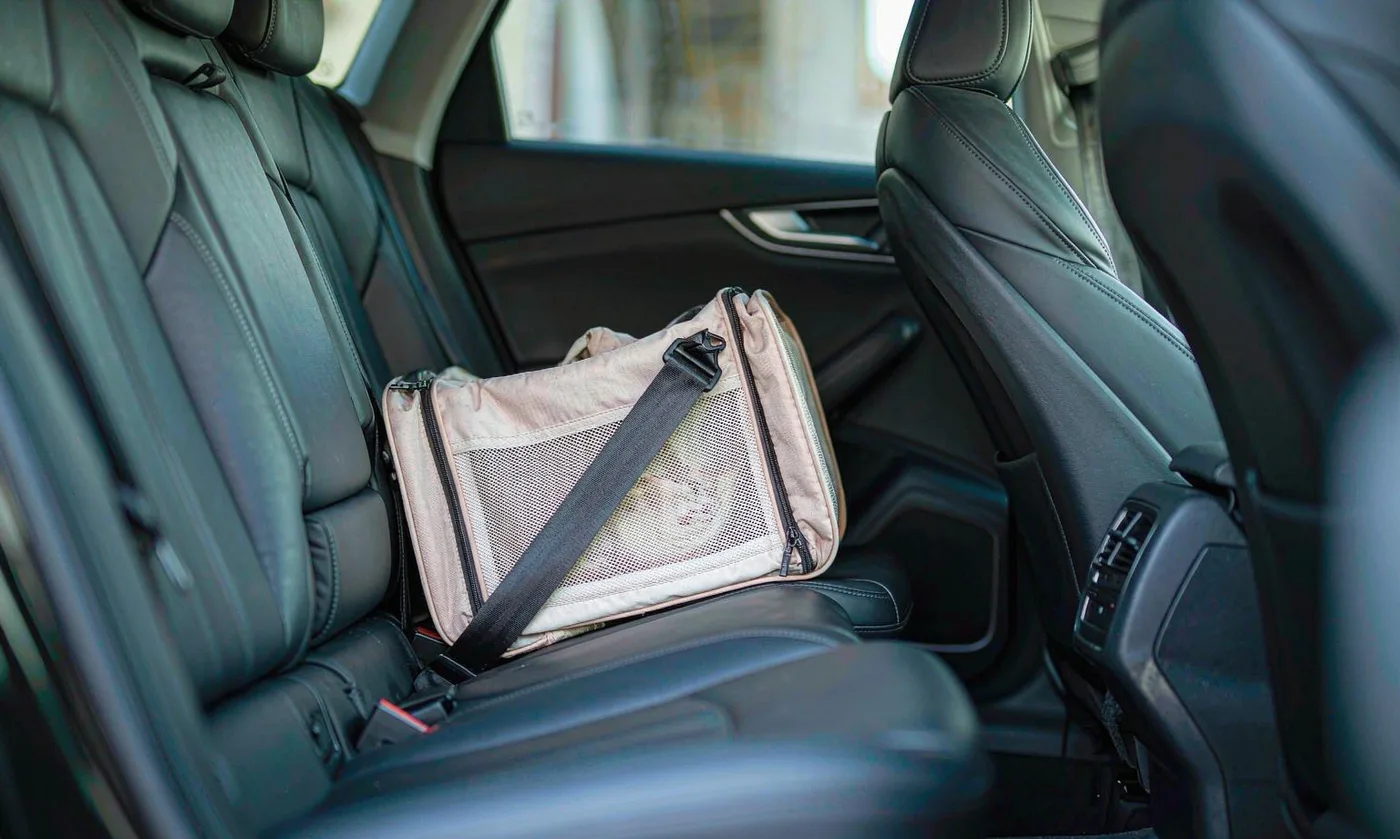
Restraint and attachment is the second. An internal tether or attachment point carries a live load, and it should be pull-tested at incoming or in-process rather than at final inspection, where a failure means the finished unit is already made. Where the bag is intended for in-vehicle use, the securing point deserves the same treatment.
Compliance marking is the third and the one most often missed. The origin marking, the material declaration, the care content and any market-specific statement should each appear as a checklist line with a pass or fail criterion against approved artwork, not as a general appearance check.
Air travel adds a specific dimension worth checking where the product is marketed for it. Airlines apply their own dimensional and construction requirements, and the published guidance from the FAA and the live animal regulations maintained by IATA are the references a buyer should cite. An inspection can verify the dimensions the specification claims but not the airline's acceptance, which is the customer's responsibility.
Small parts deserve a checklist line because they are a critical defect category. A detachable component that could be swallowed or that leaves a sharp edge is a critical finding, and a pull test on each trim and hardware element catches it.
Weight capacity should be verified where it is stated. A bag carrying a stated maximum should be loaded to that figure and inspected for strap slip, seam opening or hardware deformation, and the result recorded rather than assumed from the material specification.
The buyer's responsibility is to supply the checklist content. An inspection company will apply a competent generic standard; only the brand knows its own claims, and a claim on the packaging that the inspection does not check is an unchecked risk.
Adding these six lines to a checklist costs nothing and converts a general inspection into one that actually covers the product.
After the Report: Release, Rework, Reject or Accept With Allowance
A report produces a decision and there are four options, each with a different cost and a different effect on the schedule. Deciding among them is a commercial judgement informed by the counts, not by the pass or fail stamp alone.
Release is straightforward where the sample is comfortably within the acceptance numbers and the photographs show nothing systematic. It authorises packing completion, container loading and the balance payment.
Rework applies where the findings are concentrated in a correctable characteristic. Sorting for a specific defect, re-stitching an operation, replacing trim or re-packing are all viable, and the reworked lot is then re-inspected, commonly at tightened inspection.
Reject applies where the failure is systemic or where the defect is critical. A wrong material across the lot, a safety-related failure, or a fundamental construction error cannot be sorted economically, and the lot is remade.
Acceptance with an allowance is the commercial option for minor findings. The buyer accepts the lot at a reduced price reflecting the rework or downgrading they will absorb, and the allowance typically falls in the low single digits of invoice value.
The decision should be made against the schedule as well as the quality. A rework that fits inside the remaining window before the booking is a good decision; a rework that misses the vessel may cost more in air freight or lost shelf dates than the allowance would have.
Documentation of the decision protects both parties. A written acceptance, a stated allowance, or a stated rejection reason, referencing the report and the clause relied on, prevents the argument resurfacing at payment.
Corrective action follows every failure. A root cause, an action with an owner and a date, and a verification on the next lot are the three elements, and without the verification the same finding will recur.
Timing closes the loop with the production calendar. Samples in 6-10 working days, bulk in 35-50 days after approval at MOQ 500 pieces per colourway, and a rework and re-inspection cycle must be planned inside that window rather than discovered at the end of it.
Production capability
- SGS-verified production space of 4,950 m², 149 machines, 7 assembly lines
- Pet bag output since 2014 from a 137-person team
- 200,000 units shipped monthly under BSCI and ISO 9001 systems
People Also Ask
What is a pre-shipment inspection?
A verification carried out on a finished and largely packed lot before release, covering quantity, workmanship, function, dimensions, materials, marking and packing against the approved sample.
Why inspect at 80 percent packed?
Because packing and labelling findings are a large share of commercially damaging defects and cannot be assessed on loose units in the production area.
How is the inspection sample chosen?
At random from a homogeneous lot, sized by the named sampling plan. Units nearest the door are not a random sample and invalidate the result.
Can an inspection catch everything wrong with a shipment?
No. It checks a defined list against a defined specification by sampling. Characteristics not on the checklist and failures appearing after use are outside its scope.
Should I inspect every order?
Match frequency to risk. A mature style with a stable supplier may justify reduced inspection; a new style or supplier justifies an initial production check plus a final inspection.
What is container loading supervision for?
Verifying carton count, carton and container condition, loading pattern and seal number. It addresses short shipment and substitution, which no product inspection catches.
Do I need laboratory testing as well?
Where the checklist requires a measurable property, yes. Colour fastness, seam strength, hardware cycling and substance screening are laboratory services billed separately.
Frequently Asked Questions
When should a pre-shipment inspection be carried out?
When production is 100 percent complete and at least 80 percent packed. Below that threshold packing and labelling findings, which cause most retailer rejections, cannot be assessed.
How much does a pet bag inspection cost?
Commonly USD 200 to 400 per man-day in a major sourcing region, with travel charged separately and laboratory testing quoted as a separate line.
How many units are inspected?
Whatever the named plan requires, typically ISO 2859-1 at general inspection level II: 125 units for a lot of 1,201 to 3,200, accepting up to 7 major findings at AQL 2.5.
What is the difference between DUPRO and final inspection?
DUPRO runs at 20 to 50 percent complete and catches drift while there is time to correct it. Final inspection runs on a finished, packed lot and is the release gate.
Do I need container loading supervision?
Where the shipment is high value or there is a history of short shipments, yes. It is the only service that verifies carton count and container seal.
Can I use the supplier's own inspection report?
For process control yes, for release it is weaker. An independent report is reproducible and is accepted by retailers and payment reviewers without further question.
What is an acceptance with allowance?
A commercial settlement where the buyer accepts a lot with minor findings at a reduced invoice value, typically in the low single digits, reflecting the rework or downgrading they will absorb.
How long does the report take?
A verbal indication on the day and a written report within one working day is the normal service level, and the written report is what a buyer needs before releasing payment.
What are the most common pet bag inspection failures?
Workmanship inconsistency, hardware function, shade variation between components, labelling and marking errors, packing defects and dimensional drift.
Should dimensions actually be measured?
Yes. A bag assembled a centimetre out of tolerance passes every visual check and fails the retailer's shelf module, so measurement must be on the checklist.
What happens after a failed inspection?
Release stops, the lot is contained, the root cause is identified and the goods are reworked or remade, then re-inspected, commonly at tightened inspection.
Is a pending result the same as a pass?
No. It ordinarily means a measurement or confirmation is outstanding and usually resolves within a day. Do not release against it.
How should I weight the checklist?
Weight it to the failure pattern: hardware function and safety characteristics as critical, labelling and packing as commercially severe, and general workmanship against a photographic limit sample.
Talk to QUANZHOU JUNYUAN BAGS about a wholesale pet bag order: MOQ 500 pieces per colourway, samples in 6-10 working days, bulk production in 35-50 days under AQL 2.5 inspection.
Get a free quote Request a sample