Pet Bag Target: Chain Store Supplier Requirements
A chain pet bag program starts at MOQ 500 units per colourway and only clears line review when packaging data, labelling and compliance files are already correct: GS1 UPC on every selling unit, scannable carton markings, a Prop 65 assessment for the US market and a written AQL 2.5 acceptance standard. Budget 6-10 working days for samples and 35-50 days for bulk production, quoted FOB Xiamen on T/T 30/70. In a chain account a missing document does not cost margin, it costs the season.
This guide is written for sourcing teams preparing wholesale pet bags for a mass chain rather than for a niche retailer, because the two require different evidence long before price is discussed. A pet bag supplier hoping to serve this channel is judged on four things: whether the vendor file is complete, whether the carton survives the distribution centre, whether freight arrives inside the promised window, and whether the article still looks sellable after six months on a fixture. Everything in the quote flows from those four.
MOQ 500 per colourway is the practical entry point, because the chain will ask for one consistent colour standard across the whole run and below that quantity dye-lot control becomes a liability rather than a saving. Samples take 6-10 working days from confirmed artwork, and bulk takes 35-50 days once the pre-production sample is signed. Every lot ships against AQL 2.5 with a documented pre-shipment report. Our production team works from an SGS-verified production base of 4,950 square metres operating seven lines with 149 machines and 137 operators, roughly 200,000 pieces a month, enough headroom for a full chain rollout without pulling capacity from other programs.
A wholesale dog carrier order and a wholesale cat carrier order rarely share one mould, so the Market & Business Strategy decision has to be locked before tooling money moves. Wholesale pet carriers built on a single shared shell platform let a buyer cover both species from one fabric purchase, which is usually where the first real saving appears.
How a mass chain account actually buys pet bags
Understanding the buying calendar matters more than understanding the product in this channel. A mass chain works in seasonal line reviews rather than in continuous purchasing. The buyer decides the assortment once or twice a year, allocates fixture space by module, then expects the supplier to deliver into dozens of distribution centres on a fixed schedule. If you approach this account with a made-to-order mindset you will lose it in the first meeting, because the chain is buying a logistics and compliance service wrapped around a sewn article.
A typical line review opens four to six months before the set date. The buyer issues a request for quotation against a target retail price rather than against a specification. The quoting pet bag manufacturer is then asked to reverse-engineer a cost structure: how much construction survives at the target retail price, whether the feature set has to be trimmed, and whether a higher selling unit count per carton will pay for itself in freight. Suppliers who answer only with a unit price rarely win, because the buyer is solving for margin per fixture square foot, not for unit cost.
Purchase orders, once issued, are only partly a forecast. Chains issue commitments against an estimated demand curve and then re-order or cancel according to weekly sales. Suppliers must therefore hold either inventory or capacity. Import programs usually push that risk onto the vendor through long lead times and ocean consolidation, while domestic packaway programs push it into warehouse space. Deciding which risk you can carry is a finance decision made before the quote is submitted.
The chain also runs a strict distinction between national-brand SKUs, its own private brand, and the small seasonal programs that fill the modular gaps. Bulk pet bags entering this channel usually arrive as either open-stock assortment or as a feature program tied to a fixture reset. Each route has different economics and different evidence requirements, so clarify which one you are quoting before you cost anything.
One structural point deserves emphasis at quotation stage. Because the lead time from confirmation to a distribution centre can run four months or more, the quote you submit is effectively a fixed-price commitment against future fabric, labour and freight markets. Ask which prices can be re-opened and which are locked, and understand whether a currency or raw-material clause exists in the vendor agreement. Suppliers who quote without knowing that answer end up absorbing volatility they never priced.
Vendor onboarding gates that come before any quotation
Before price has any meaning, the account will open a vendor file. Onboarding asks for a legal entity with clean incorporation records, banking details that reconcile with the entity name, tax documentation for the importing market, and contact points for quality, logistics and compliance. Failures here are administrative but fatal: vendors have lost entire programs because the bank account country did not match the entity country in the payment system.
Insurance is the next gate. A US chain typically requires a certificate of general liability insurance with limits measured in millions of dollars, naming the retailer as additional insured, plus product liability coverage that survives beyond the first shipment. Some programs also ask for a bond or for recall insurance. These are line items in your cost model, not afterthoughts, and they must be quoted and budgeted before the first PO rather than discovered during vendor set-up.
Social compliance is the gate that removes unprepared suppliers fastest. Chains want a recognised audit against a social standard, and an expired or unrecognised report means the file sits incomplete. Our partner facilities maintain ISO 9001 quality management certification alongside BSCI social compliance reporting, which covers the two documents most frequently requested at this stage. Keep both current: re-auditing mid-season delays new SKU set-up by weeks.
Finally comes technical capability: a supplier profile that states machinery, monthly capacity, product categories, export markets served, and third-party laboratory relationships. Chains read this document to judge whether you can scale, and they cross-check it against the audit report. Overstating capacity here creates a problem later when the PO doubles and the schedule cannot absorb it.
UPC, carton markings and labelling data a DC will reject otherwise
A distribution centre does not read your product; it reads your data. Every selling unit needs a GTIN obtained through GS1 in the brand owner's name, printed as a scannable UPC-A symbol with sufficient quiet zone and verified by a grading report rather than by eye. A symbol that scans at the packing table but fails on the DC's conveyor costs more in chargebacks than the entire labelling budget.
Case packs carry a second layer of data: the SSCC-18 serial shipping container code, contents, quantity, country of origin, weight and dimensions in imperial units, and any applicable handling marks. Carton dimensions must match what was filed in the item set sheet, usually within a small tolerance, because slotting in the warehouse was calculated from those numbers. A carton 2 cm taller than filed can invalidate a pallet pattern and be refused at receiving.
Origin marking must be legible on the article and usually on the retail packaging as well, phrased in the form required by the importing customs authority. Care labelling, fibre content where relevant, and any required warnings follow the market's labelling rules. For California destinations, suppliers routinely complete a Proposition 65 assessment on the materials rather than waiting for a retailer request, because a warning question raised after production is far more expensive than one answered during development.
Hang tags, inserts and polybags each introduce their own compliance and environmental questions. Several chains now restrict certain plastic packaging types and require recycled content declarations. Decide the packaging bill of materials at the same time as the product specification, then file every part number in the item set sheet so that any later substitution is visible to the buyer rather than a surprise at receiving.
Verification deserves a named owner and a small dedicated budget. A professional barcode verifier grading every new print condition costs very little against a program of this size, and the resulting reports are exactly what a quality team requests after the first scanning complaint. Our production team records grading results per artwork version so repeat orders can be compared rather than re-invented.
Routing, OTIF and the chargeback line hidden in your margin
On-time in-full performance is where most new suppliers lose money in year one. Chains measure whether the full quantity arrived inside the delivery window, at the right distribution centre, on the right carrier, with the correct advanced shipping notice. Performance is scored, reported, and financially clawed back. A program can look profitable on paper and lose money once the metrics are applied.
Understanding the routing guide is essential. Some chains buy on a collect basis and control the ocean freight themselves, nominating carriers and consolidation points. Others insist on prepaid terms where the supplier manages freight and insurance. Each model changes who absorbs the delay risk and who pays detention. Read the guide before quoting, then quote Incoterms that match it rather than defaulting to a standard term that leaves you owning a cost you never priced.
EDI is the plumbing behind the scorecard. The retailer transmits purchase orders and expects shipping notices and invoices electronically in defined transaction sets. New vendors frequently underestimate how long it takes to map, test and certify those transactions with a third-party network. Start this work in parallel with the sample round, not after the PO, because an uncertified connection stops every invoice even when the goods have arrived.
Build a reserve into the unit cost. Experienced suppliers in this channel cost a chargeback allowance into every quote, typically low single digits of invoice value, then manage operations aggressively to keep it unused. Treat it as a real cost, not as a contingency to be deleted under price pressure, and track it separately so you can see whether specific DCs or product lines generate the losses.
Cost structure: where a MOQ 500 program holds or breaks
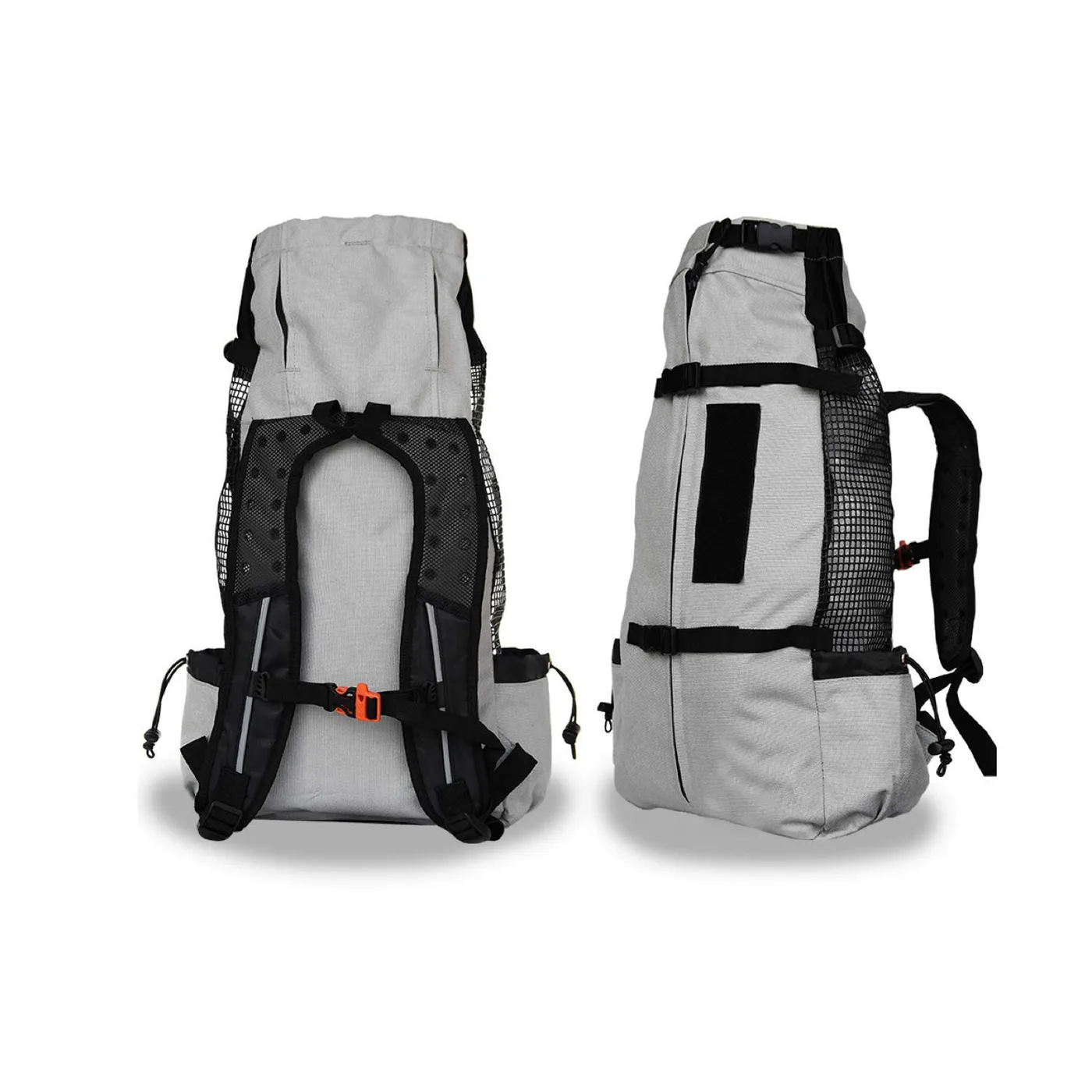
A wholesale pet bag quote for a chain is assembled, not guessed. Material is usually the largest single component, driven by shell fabric, lining, mesh specification, hardware grade and packaging. Cutting waste and labour follow, then overhead recovery, factory margin, testing amortisation, freight and duty. Understanding which levers actually move the number is the difference between a quote you can defend and a guess you will later regret.
The single most effective lever is usually SKU consolidation rather than unit price negotiation. Running a colourway in multiple sizes shares fabric purchasing, cutting markers and machine set-up across a larger total quantity, which lowers blended cost more reliably than discount chasing. The table below shows how the structure typically behaves across order tiers for one comparable specification.
| Cost driver | 500 pcs / colourway | 1,500 pcs / colourway | 5,000 pcs / colourway |
|---|---|---|---|
| Fabric purchase lots | Spot buying | Mill lot | Planned mill run |
| Cutting marker efficiency | Baseline | +3-5% | +6-9% |
| Line set-up amortisation | High per unit | Medium | Low |
| Testing cost per unit | High | Medium | Low |
| Tooling / screen charges | Full absorption | Shared | Minimal |
| Recommended action | Test the market | Full rollout | National program |
Freight is the second lever and the one most often mispriced. A bulkier pet bag can cost more to ship than to make once volumetric weight is applied, especially for air shipments tied to a launch date. Reducing packed carton height by even a small margin often pays more than trimming fabric weight, which is why packaging engineering belongs in the sourcing conversation rather than in artwork review.
Finally, price the compliance calendar. Third-party laboratory testing reports expire and programs require renewal. Audit bodies charge for renewals. Insurance premiums rise with volume. A quote that ignores these recurring costs will look competitive in year one and unprofitable by year three, which is precisely when the account becomes strategic.
Working capital deserves the same treatment as unit cost in a program of this profile. Payment timings across the channel rarely align with supplier obligations: fabric mills want deposits, workers are paid monthly, and the retailer may settle long after delivery. Our agreements run T/T 30/70 with the balance against documents, which means modelling how long money sits in inventory before it returns. Multiply that cycle time by the number of seasons you intend to run, and the financing cost becomes visible in the decision.
Which construction specs survive a planogram reset
Chains reset fixtures regularly, and every reset is a competition for space. Articles that survive have three qualities: they sell through at the expected rate, they look identical to the approved sample six months later, and they do not generate returns. Construction decisions should therefore be made with shelf life and handling in mind, not just with first-impression appeal.
Start with the shell. A woven polyester or nylon in the 400D to 600D range resists abrasion in the carton, on the fixture and in the customer's car far better than lighter fashion fabrics, while remaining affordable at mass retail price points. Reinforcement at stress points, bound internal seams, and hardware specified by cycle-tested supplier rather than by catalogue photograph all reduce the field failure rate that drives returns.
Colour consistency is a quiet killer in this channel. If a replacement order ships a slightly different shade, the retailer sees the article as defective even when no defect exists. Lot control with retained reference swatches, approved under standardised lighting, prevents the most common dispute between a pet bag factory and a chain quality team. Request retained samples from every bulk lot for exactly this reason.
Feature count deserves restraint. Every added pocket, strap or accessory raises unit cost, packing time and the chance of a defect, and rarely raises the selling price proportionally at these price points. The most durable chain programs concentrate specification spend on structure, closure reliability and cleanability rather than on decorative complexity.
Ventilation, cleanability and escape resistance deserve a written standard even though this channel rarely publishes one. Pet articles attract scrutiny from store associates and customers alike, and our pet bag factory teams answer those questions with defined mesh aperture, wipe-down lining specification and closure pull-force numbers rather than with reassurance.

Compliance files and test evidence requested before shipment
Two bodies of evidence are requested: that the product meets the regulations of the importing market, and that the factory meets the social and quality standards of the retailer. Neither substitutes for the other. A strong social audit does not help a missing lead result, and clean chemical testing does not satisfy a labour compliance reviewer.
On product compliance, chains typically request current third-party laboratory test reports covering the applicable chemical and physical requirements of the destination market, a material declaration identifying every component, and a conformity certificate signed by the responsible party. Reports should be issued by a recognised laboratory with accreditation visible on the document itself, and typically remain acceptable for a defined period unless the specification changes.
Physical testing is equally important for pet articles and often neglected. Seam strength, strap anchorage, zipper cycle endurance and mesh integrity should be tested before the first bulk order rather than after a field complaint. Standardised ASTM test methods give buyer and supplier a common reference, which removes arguments about whether a failure is real. When a defect claim arrives from store level, having those baseline reports already on file shortens resolution from weeks to hours.
Our partner facilities maintain current third-party inspection and testing relationships so that reports can be produced per program rather than per request. Build these into the quotation as a defined deliverable with a stated validity period, and calendar the renewal dates the moment the first shipment sails.
From sample request to shelf: the calendar that protects launch date
Timeline failures lose more programs than quality failures, because a late arrival usually cannot be recovered within the season. Working backwards from the in-store date is the only reliable planning method. Take the date the fixture resets, subtract the receiving and trucking window, subtract ocean transit and customs clearance, subtract the production window, subtract the sample approval cycle, and whatever remains is the date you must have started.
Sampling is the first compressible stage and the most dangerous to compress. Our production team returns development samples in 6-10 working days from confirmed specification, with the pre-production sample following any corrections. Buyers should expect at least one correction round: artwork shifting by a few millimetres or hardware substitution for availability is normal, and building one buffer round into the calendar prevents panic-driven approval of a sample that is nearly right but not quite.
Bulk production then runs 35-50 days depending on fabric availability, order size and whether any component requires tooling. That range is deliberate: a first production order with new materials sits at the upper end, while a repeat program against existing components sits near the lower end. Ask your supplier which end of the band your order occupies, and why, rather than accepting a single optimistic number.
Every lot closes with statistical inspection against AQL 2.5, documented with photographs, measurement records and carton counts, followed by loading supervision. Book the vessel only after the inspection report is clear, not before, since a failed inspection with a booked vessel produces exactly the air freight decision that destroys program margin.
Assortment architecture: how many SKUs the fixture really supports
Assortment width is a financial decision dressed up as a merchandising one. Every additional SKU multiplies working capital, testing cost, packaging artwork, item set-up work and the risk of a slow seller that the buyer will cut mid-season. Seasoned suppliers propose the narrowest assortment that covers the demand curve, then expand only when sell-through data justifies it.
A practical rule for a first season is to cover two or three size bands with one construction platform and one colour story, rather than five designs that each carry their own tooling and compliance file. Shared platforms mean shared components, shared test reports for the base construction and a single set of packing instructions, all of which reduce both cost and error rate. Later seasons can add features on top of a platform the chain already trusts.
The buyer's view of assortment is fixture arithmetic. A modular bay offers a defined number of facings, and each SKU consumes facings in proportion to expected sales. Proposing eight SKUs for four facings guarantees that four of them will be cancelled after the first review, along with whatever inventory you prudently held against them. Ask for the planogram count before finalising the line plan.
Packaging configuration is the last piece of the architecture. Case pack quantity should follow how the DC picks and how the store shelves: a case that is too large forces unpacking work at store level, and a case too small multiplies handling touches. Confirm whether the program requires shelf-ready packaging, a display shipper, or plain cartons, because that choice changes cost, freight volume and receiving protocol together.
Order and quality terms
- MOQ 500 pieces per colourway; samples in 6-10 working days
- Bulk production 35-50 days after approval; AQL 2.5 inspection standard
- T/T 30/70 terms, FOB Xiamen, full document set per shipment
People Also Ask
Why do chain stores require social compliance audits?
Because the retailer carries reputational risk for working conditions in its supply chain, and a recognised audit converts that risk into documented evidence that can be re-verified.
What is OTIF and why does it affect margin?
On-time in-full measures whether the ordered quantity arrived within the agreed window. Poor scores trigger financial recovery against invoices, which can erase margin even when the goods eventually sell.
Do I need my own UPC codes for retail?
Yes. Barcodes must be issued to your brand through GS1 so they resolve to the correct owner. Reusing borrowed codes creates retail scanning and listing conflicts that are difficult to unwind.
How early should EDI testing start?
In parallel with the first sample round. Certification takes time and every later invoice depends on the mapping being approved by the retailer's network provider.
What is a packaway program?
An arrangement where the chain buys early and stores inventory for a defined season, shifting working capital and warehousing responsibility toward one party according to the negotiated terms.
Should packaging be tested alongside the product?
Yes. Cartons bear stacking loads, handling abuse and humidity. Pre-shipment packaging testing prevents receiving damage that would otherwise be charged back as a supplier fault.
Frequently Asked Questions
What is the minimum order for a chain store pet bag program?
Plan from MOQ 500 units per colourway. Below that level dye-lot consistency becomes unreliable, which chains treat as a defect rather than a variation. Trial volumes below the standard minimum can sometimes be arranged on a development basis with a cost premium.
How long does sample development take for wholesale pet bags?
Development samples take 6-10 working days from a confirmed specification, assuming standard components. Tooled hardware or printed fabric development adds time, so those choices should be made early if the launch date is fixed.
Which Incoterm suits a large retail chain best?
It depends on the routing guide. Chains that control their own ocean freight usually specify FCA or FCA-related terms; others accept FOB shipment. Most programs in this profile quote FOB Xiamen, and the choice should mirror who controls the main carriage risk.
Who pays for third-party laboratory testing?
Usually the supplier builds it into the unit price, with the brand covering any additional retailer-specific tests outside the standard scope. Clarify ownership of the reports, since some agreements require the retailer to be named or receive copies directly.
What happens if a carton label fails to scan at the DC?
The shipment is typically refused or reworked at the supplier's expense, often with additional handling charges. Investing in symbol verification before shipment costs a fraction of one rejected receiving appointment.
How much should be reserved for chargebacks?
Experienced suppliers reserve a low single-digit percentage of invoice value, then work to reduce it. Track it by destination and product line so recurring problems become visible rather than absorbed silently.
Can several size SKUs share one colourway to reduce cost?
Yes, and it is usually the most effective cost lever available. Sharing fabric purchases, markers and line set-up across a size range lowers blended unit cost more reliably than negotiating discounts.
How often do social compliance audits need renewal?
Most recognised audit programs operate on annual or semi-annual cycles, and many retailers refuse files where the report is near expiry. Calendar renewals at least two months before lapse.
What sea freight transit time should be planned from Xiamen?
Plan a conservative ocean window to the destination port plus customs clearance and inland trucking. Rather than quoting a single number here, ask your freight partner for a door-to-DC estimate based on the current schedule and add a buffer.
Is product liability insurance mandatory?
Effectively yes for this channel. Chains set minimum limits and require the retailer to be named as additional insured, and certificates are re-verified periodically throughout the relationship.
How are replacement orders handled if demand exceeds forecasts?
Re-orders against retained patterns and approved components run faster than new development, typically nearer the lower end of the standard band. Retaining reference samples from the original lot protects colour continuity.
What causes most first-season failures in this channel?
Missing or expired compliance documentation, unrealistic sampling calendars, and a unit cost model that ignored freight, testing and chargeback exposure. Price is rarely the deciding factor once these are handled well.
Talk to QUANZHOU JUNYUAN BAGS about a wholesale pet bag order: MOQ 500 pieces per colourway, samples in 6-10 working days, bulk production in 35-50 days under AQL 2.5 inspection.
Get a free quote Request a sample