Pet Stroller Attachment: Stroller Compatible
A wholesale pet stroller attachment is specified by adjustable strap reach, two-layer retention hardware and a declared working load kept below about 2.5 kg for handle-mounted formats. MOQ 500 pieces per colorway applies; indicative pricing runs USD 3.90-10.80 FOB. Reach matters more than nominal bar diameter, because grip foam, split handles and telescoping collars decide whether an interface actually sits square.
Treat this as an interface product, not a container. Lower price comes from reducing strap specification, webbing width or reinforcement layers, none of which appear in a photograph, and each of which produces migration or sudden release once contents are added. Write down reach values, release hardware grades and cold-condition force figures before quoting. Our standard framework is MOQ 500 pieces per colorway, prototype rounds of 6-10 working days, mass production across 35-50 days following written approval, and release inspection at AQL 2.5 with defects ranked by consequence. Payment runs T/T 30/70 against documents on an FOB Xiamen quotation. Assembly is managed by our production team through an SGS-verified production base together with partner facilities holding BSCI and ISO 9001 documentation. Publish the chassis matrix you validated rather than claiming universal coverage; that single decision prevents most compatibility disputes before they start.
Wholesale pet bags uk and wholesale pet bags australia share most of the same test file, but Pet Bag Types & Styles still has to be matched to the retailer's own checklist. Pet bags wholesale china terms are usually quoted FOB, so pet bags import export cost is a separate line the buyer has to model.
Where Accessory Duty Ends and Passenger Duty Begins
A stroller attachment organises things: bottles, leads, waste bags, a folded rain cover, sometimes a small basket beneath the seat. It is not the enclosure that carries the animal, and permitting merchandising imagery to blur that boundary creates both an safety exposure and a returns problem nobody budgeted for.
Draw the line in the specification document. State supported contents, maximum carried mass, permitted mounting position, and explicitly note that no animal is to be placed in the accessory. Your compliance reviewer can then defend the listing, and photography guidelines become a matter of enforcing an agreed rule rather than arguing taste.
Three formats dominate requests. A rain-cover pouch is light, cheap and practically unnoticeable on shelves. A handle organiser sells in volume because it solves a universal annoyance. A structured under-seat basket carries more but raises centre-of-mass questions that deserve careful treatment.
Channels value these differently. Stroller brands prefer co-ordinated add-ons that match existing trim, accepting narrower compatibility in exchange for perfect visual integration. Omnichannel retailers want general fitting and will accept a plainer look. Deciding in advance prevents artwork being designed twice.
Stroller programmes also benefit from accessory families rather than isolated articles. A pouch, an organiser and a small cooler sharing one interface platform reduces development repetition, spreads tooling across more units and gives retailers a coordinated shelf story. Buyers often overlook that advantage when negotiating each item separately.
Typical pricing lands between USD 3.90 and 10.80 FOB, heavily influenced by mounting hardware rather than shell fabric. Two articles with identical panels can differ substantially once strap systems, buckles and reinforcement sheets are counted, so always compare mounting detail before judging any quotation.
Under-seat baskets deserve slightly different treatment. Supported from below rather than hung from the bar, they tolerate greater mass but interact with braking and rear access. Where the programme includes one, request protection against heel contact and check that the basket does not strike the rear axle over compressed surfaces.
Scope rule: Write supported contents, mass limit and mounting position into the enquiry, and say plainly that the accessory never carries the animal.Reading Handlebar Geometry Across the Installed Base
Compatibility arguments usually start with a diameter figure, then fail on shape. Handle sections may be round, flattened oval, split into two vertical grips, wrapped in thick foam, or telescoping with a collar in the middle. If reach matters more than the nominal size, several Fit depends on several variables acting together, not on one measurement.
Collect a reference set before development begins: measure external circumference at the mounting zone for each target model, note grip material and hardness, record any crossbar or latch nearby, and photograph the fold sequence. Those four inputs determine whether an interface will sit square or twist under its own contents.
Foam grips deserve particular attention because they compress. A strap tensioned tight on firm rubber may slide on soft foam within minutes, especially once condensation or hand cream lubricates the surface. Silicone-backed webbing or a thin friction liner beneath the mounting path costs little and solves the majority of these complaints.
Split handles raise a different issue: two separate mounting points sharing load unevenly. Either provide individual loops per side or design a bridging yoke that equalises tension. Avoid single-point solutions on split geometry, since they rotate immediately and generate reviews describing poor quality when the real problem is layout.
Finally, check what else occupies the bar. Cup holders, phone mounts and brake levers all claim space, and an accessory that displaces them will be returned regardless of its own build quality. Mapping available width before development is faster than discovering the conflict through reviews.
Geometry rule: Measure circumference, grip hardness, adjacent hardware and fold clearance rather than quoting a single diameter, and always check what already occupies the bar.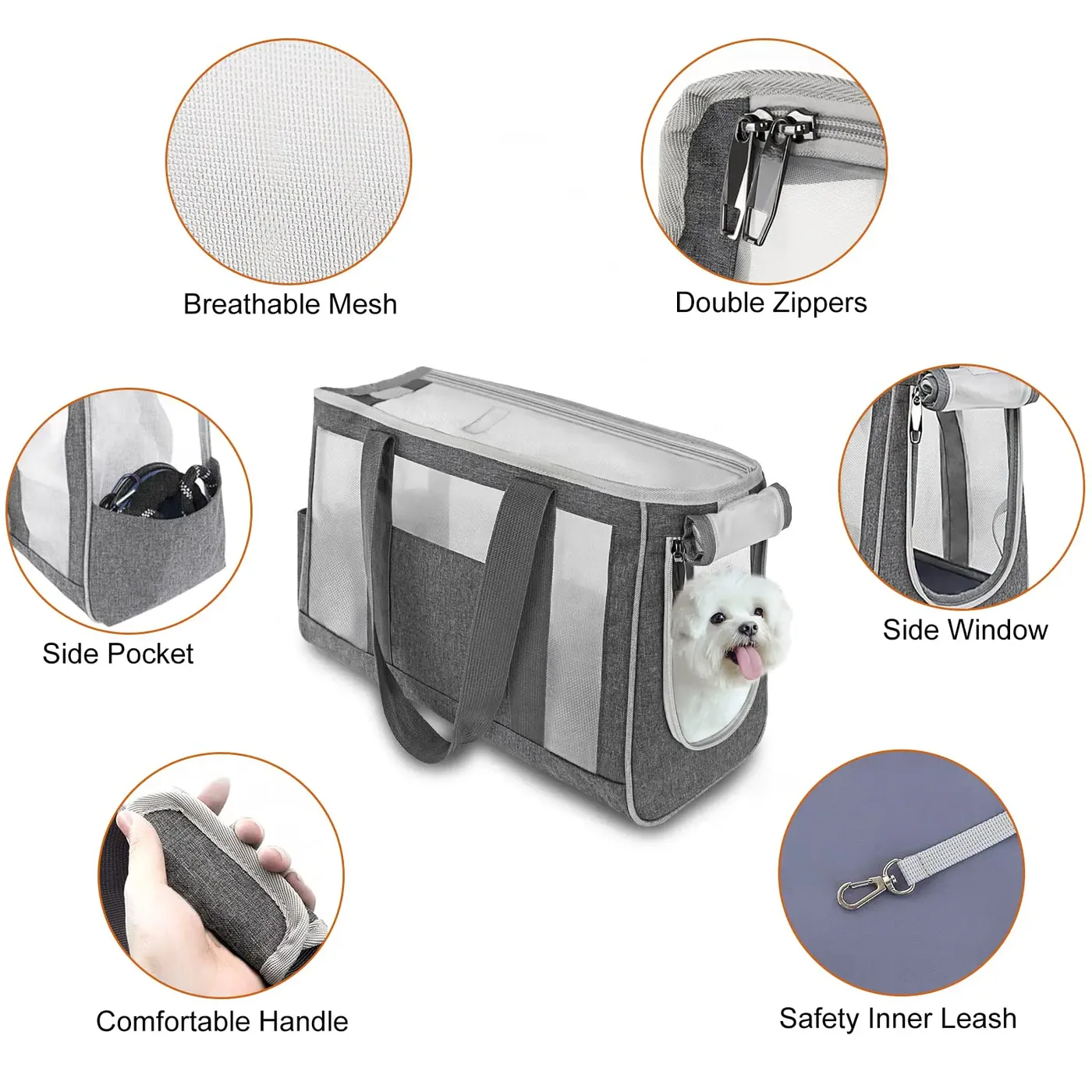
Writing an Interface Specification Around Reach and Grip
The single most useful sentence in this category describes adjustable reach: how much bar circumference the strap accommodates at full extension and full retraction. Everything else follows from that pair of values, because they define the installed population you can honestly claim to support.
Next come three secondary requirements. Rotation resistance governs whether the accessory stays upright when loaded asymmetrically. Slip resistance along the bar axis stops lateral travel. Fold tolerance determines whether it remains attached while the chassis collapses, which many customers expect even though designers rarely intend it.
Each requires a test rather than an adjective. Rotation can be checked by hanging a known mass at the outermost pocket and measuring angular displacement. Slip can be checked by cycling the loaded stroller across a threshold repeatedly and recording travelled distance. Both are cheap, repeatable, and suitable for final inspection.
| Interface class | Bar shape covered | Effective strap reach | Anti-rotation method | Release hardware | Indicative FOB |
|---|---|---|---|---|---|
| Loop and elastic hem | Round or lightly oval | Ninety to one hundred and forty millimetres circumference | Friction liner only | None, slides off | USD 3.90-5.20 |
| Adjustable webbing plus side release | Round, oval, telescoping with collar | Eighty to two hundred millimetres | Twin lower anchor points | Single buckle, one hand | USD 5.60-8.20 |
| Four-point reinforced mount | Split grips and wide chassis rails | One hundred and sixty to three hundred millimetres | Bridging yoke plus lower tether | Two buckles, tool free | USD 8.40-10.80 |
| Brand-matched clamp | One declared chassis only | Fixed to model tolerance | Keyed geometry | Quick-release lever | USD 7.20-9.60 |
Colour matching deserves early discussion, because trim rarely matches across suppliers even when both quote the same reference. Send a physical swatch rather than a Pantone number, agree tolerance under daylight rather than showroom lighting, and record approved alternatives for later seasons when initial dye lots become unavailable.
Note the compromise visible in every row: broader coverage costs money in webbing, buckles and labour, while a brand-matched fixture is cheaper to build yet tied to one chassis number. Most open-market sellers find the second row the commercial sweet spot, and few ever need the fourth.
Interface rule: Define adjustable reach first, then specify rotation and slip resistance as measurable values with named checks at both sampling and final release.Quick-Release Hardware: Convenience Against Retention
Buyers want tool-free fitting; engineers worry about spontaneous detachment. Both are reasonable, and the reconciliation lies in choosing hardware whose release requires a deliberate action rather than a tug. A side-release buckle squeezed between thumb and forefinger qualifies; a magnet or simple hook generally does not.
Request two independent retention layers wherever the load case permits. A friction grip prevents slow migration, while a positive mechanical lock prevents sudden drop. Layers that fail independently behave much better than a single clever mechanism, because a worn friction liner alone rarely sends an accessory to the pavement.
Buckle grade deserves scrutiny because quotations often hide substitution here. Specify the size, the resin type and a pull-off figure measured on the finished assembly, then keep a retained reference buckle with the golden sample. Inspectors can then compare hardware lots at final release without needing laboratory access.
Cold behaviour separates adequate hardware from excellent hardware. Polyamide becomes noticeably stiffer in winter, and a buckle that releases cleanly indoors can prove difficult near freezing, prompting customers to force it. If your market includes cold regions, ask for release force figures across a temperature range rather than at laboratory conditions only.
Finally, plan the replacement pathway. Standard buckle sizes are stocked everywhere and protect the customer from discarding an otherwise sound unit for want of a small part. That consideration costs nothing during development and materially influences how a brand is perceived after two winters.
Finally, agree replacement and service policy with your manufacturing partner before listing. Nobody plans two years ahead during development, yet custom hardware colours disappear and small revisions accumulate. A documented agreement covering part availability, minimum sparing quantities and last-time-buy notice converts a future crisis into routine administration.
Labelling helps here too. Print the buckle size and spare part reference inside the article where owners can find it, rather than only in a warehouse system. Those small details turn a frustrated customer into one who orders replacement hardware and keeps buying the range.
Release rule: Demand deliberate two-finger release, two independent retention layers, declared hardware grades and cold-condition force data before approving samples.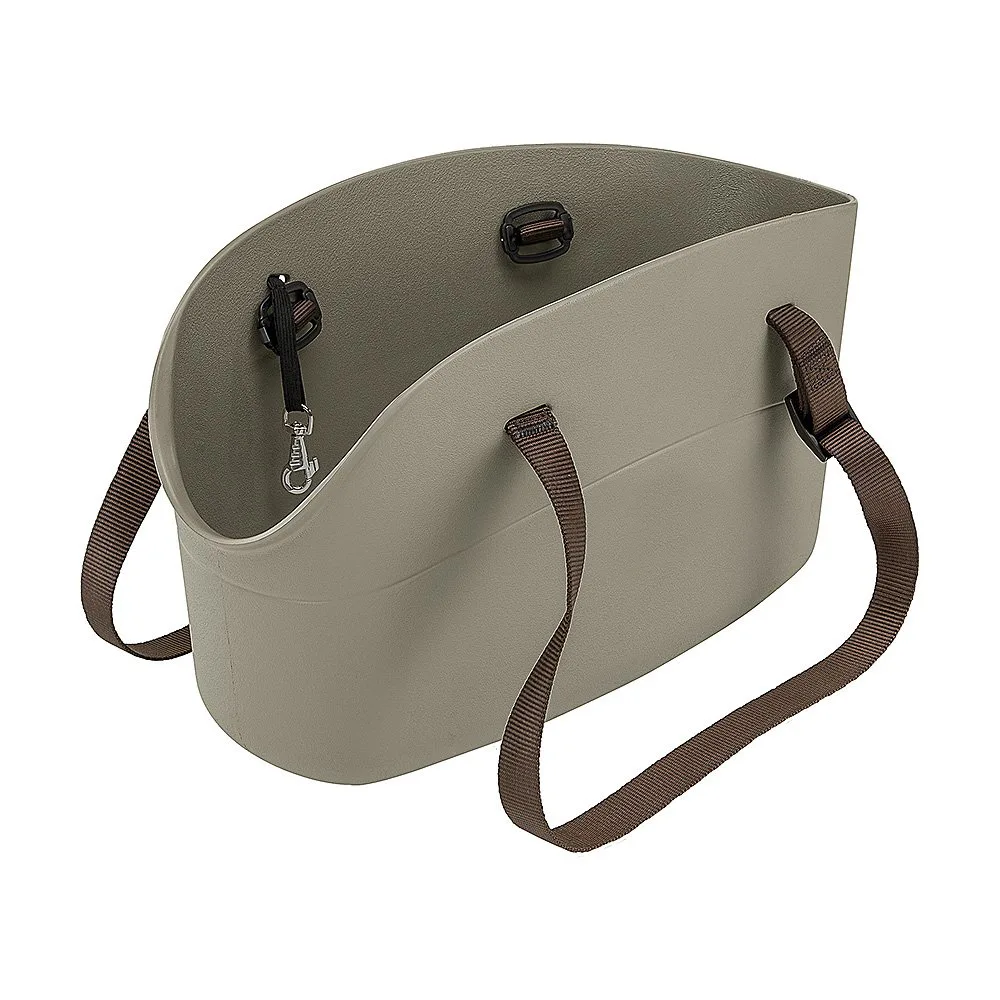
Load Limits, Leverage and Tipping Behaviour
Mass alone tells you little on a stroller because leverage dominates. Half a kilogram hanging far behind the axle applies considerably more tipping force than a heavier item sitting close to the bar. Layout position therefore belongs in the instruction document alongside any numeric limit.
Adopt a conservative default. As a working assumption, keep declared capacity below two and a half kilograms for handle-mounted items unless the chassis maker states otherwise, and lower it where pockets hang deeply. Conservative figures reduce both accidents and the customer disappointment that follows an overloaded attachment ripping.
Test three states rather than one: parked with weight inside, moving across a kerb, and empty with the animal removed from the cabin. The third case surprises people, because a stroller balanced by an occupant can become light at the back once the occupant steps out.
Warning placement matters as much as the number. Print the limit near the mounting illustration on the retail pack and repeat it on a sewn label near the attachment point, where parents will encounter it during fitting. Two placements cost pennies and demonstrate diligence should anyone question the design.
Instruction wording can partly offset these risks. A short sentence advising customers to remove the accessory before lifting a chassis for stairs prevents injuries harder to design away. Sellers dislike instructive copy, yet clear guidance consistently reduces both incidents and liability discussions afterwards.
Also consider brake and latch access. An accessory obscuring a foot brake or fold catch creates a genuine hazard, and this is discovered late far too often. Add brake clearance to the fit checklist for every target chassis, with photographs retained as evidence.
Leverage rule: Publish a conservative mass limit, test parked, moving and empty-with-occupant-removed states, and verify brake and latch access for every declared chassis.Reaching Contents With One Hand Occupied
Real usage involves one hand on the handle, sometimes holding a lead, sometimes holding a child. Design reviews should therefore begin by asking what can be retrieved without stopping, rather than by counting pockets. Volume for its own sake rarely survives that question.
Three openings usually outperform six: one secure main compartment with a covered top for valuables, one open elasticated zone for bottles, and one shallow slip pocket for frequently used items. Further divisions add labour cost while making none of the openings easier to reach under motion.
Retention needs checking with actual contents rather than with nothing inside. A bottle weighing about half a kilogram will leap from a shallow pocket crossing a kerb. Elasticated lips, slightly tapered profiles and a modest depth all help, but only trial reveals which combination genuinely works for your article.
Magnetic or snap closures deserve caution. They are quiet and quick, yet anything not fully closed remains invisible to a parent looking ahead. Where a fastener is used, add a visual cue indicating closure state, because nothing frustrates customers more than discovering later that something was never actually secured.
Reflective detail deserves a mention even here, since many of these articles are used near dusk. A narrow piping line along the outer pocket edge costs little, supports visibility arguments and photographs well. Keep it outside any wet zone so adhesion survives repeated cleaning without edge lift.
Finally, keep hard objects away from soft ones. Keys scratch phone screens and metal attachments abrade fabric linings. A simple divider protecting personal devices from hardware is a small cost that prevents recurring complaints about damaged items rather than damaged accessories.
One further consideration concerns product photography. Show the accessory fitted to a chassis rather than floating attractively, since most compatibility disputes begin with mismatched expectations set by imagery. A clear fitting shot costs nothing extra during a studio session and materially reduces misunderstandings about what the customer is buying.
Access rule: Limit pockets to three purposeful openings, validate retention with real contents in motion, and never let a fastener close without a visible state cue.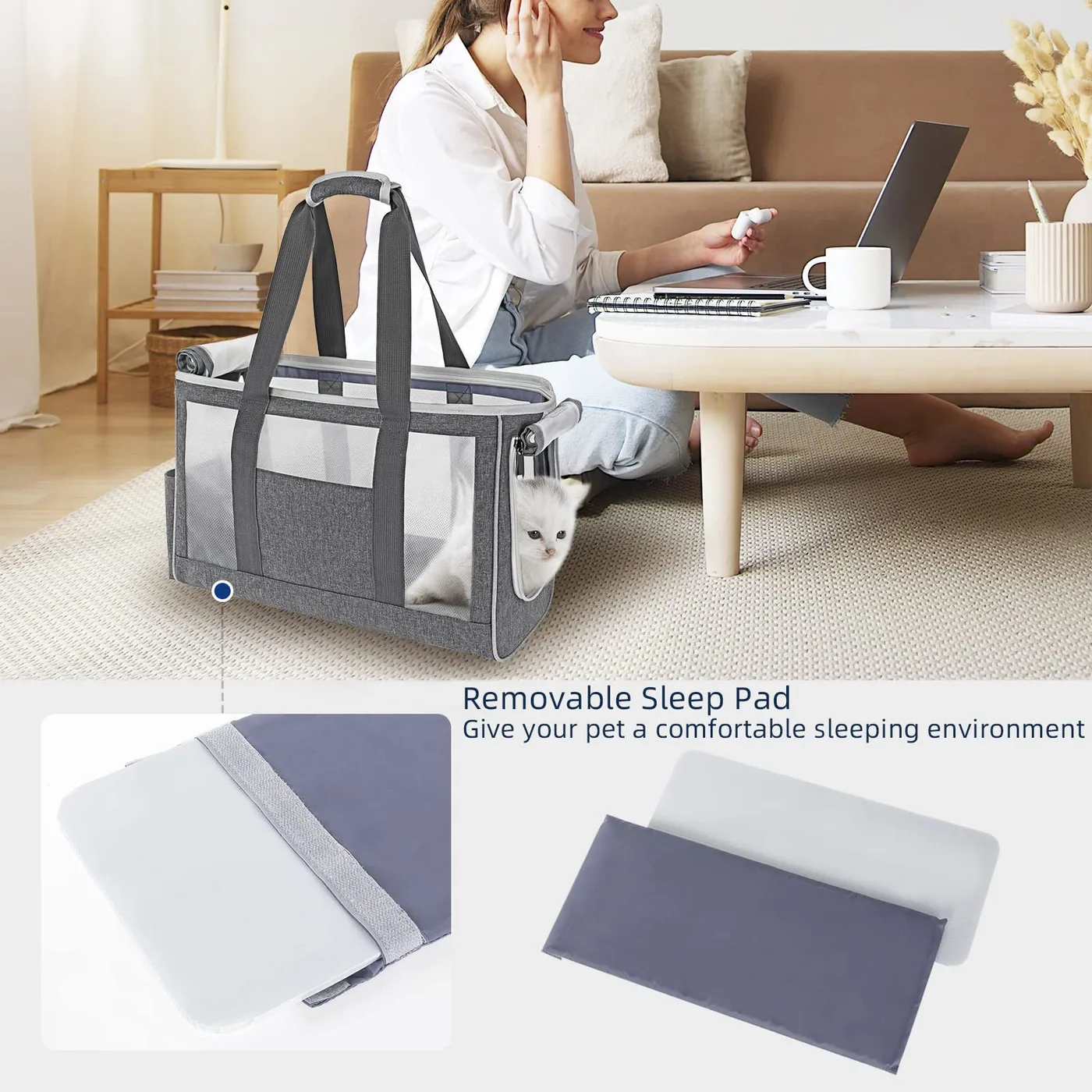
Weather Exposure and Testing the Finished Assembly
Fabrics ratings mislead when quoted alone. Water enters through zipper tapes, needle holes and the top line of a pocket long before it penetrates a coated face, so an article built from showerproof cloth can still soak its contents. Testing must therefore be performed on the complete assembly rather than on swatches.
Specify a simple spray exposure appropriate to the intended use, plus a defined duration and observation criteria. Agree beforehand what counts as acceptable dampness, because arguments afterwards consume more time than the trial ever did. Ultraviolet exposure and colour transfer deserve the same treatment for sun-facing panels.
Hardware corrosion usually appears next. Buckles, springs and any metal trim sit outdoors through wet seasons, and inexpensive plating produces visible rust within weeks, staining adjacent fabric. Salt spray evaluation is inexpensive and quickly separates hardware finishes that merely look identical in a showroom.
Regulatory context should be recorded in the technical file as well. Reference expectations published by the Consumer Product Safety Commission and the consensus methods catalogued by ASTM International, along with process records under ISO 9001 quality management. Name the specific destination requirement in the purchase terms, since general references never satisfy a compliance reviewer.
Weather rule: Test complete assemblies rather than fabric swatches, set pass criteria before the trial starts, and evaluate hardware finishes separately from appearance.Validating Samples Across a Declared Chassis Matrix
One reference stroller cannot justify a general fitting claim, and customers discover this quickly. Build a matrix covering at least three distinctly different geometries, ideally including one model you intend to exclude. Testing an exclusion is uncomfortable but produces honest packaging copy.
Document three follow items per chassis: installation time measured with one hand, angular displacement under loaded conditions and clearance during folding. Those three figures convert an opinion into evidence, and they give inspectors a repeatable check should a future batch raise questions.
Photograph every approved installation position from the same angles used later in instructions. Those images carry dual purpose: they become your artwork source and your installation reference, keeping a catalogue consistent with what was actually validated. Nothing invites complaints faster than instructions describing a position nobody tested.
Sample rounds should be planned deliberately. Expect 6-10 working days for each once artwork and reference items are confirmed, and budget two rounds whenever a new mounting system is involved. Trying to compress them into one usually reappears as late changes, which are far more expensive than a week.
Retail staff influence outcomes here more than expected, since many purchases follow a demonstration in store. Supply a short card describing the three matrix positions and the exclusion list; it costs little, prevents demonstration errors and reduces the number of units returned as incompatible after somebody fitted them incorrectly.
Once approved, freeze webbing length, buckle part numbers and reinforcement geometry as controlled values, and keep one fully fitted unit assembled in the reference file. Reorders twelve months later can then be verified against something physical rather than against a description written hurriedly at approval.
Matrix rule: Validate three distinct geometries including an exclusion, record installation figures per chassis, and freeze every mounting dimension after approval.Quotation Structure and Defect Classification
Ask for seven cost lines before negotiating anything: shell fabric, lining, labour, webbing, buckles, reinforcement sheet and retail pack. Accessory quotations arrive compressed more often than most, and important substitutions hide inside that compression. A single blended number gives you nothing to compare once a revision arrives.
Protect three items during any discount discussion: webbing grade, buckle specification and reinforcement layer. These govern retention and rotation resistance, so removing them converts a reliable article into something that slowly migrates along the bar. Sacrificing print coverage, hangtag stock or carton strength achieves savings without functional consequences.
Release inspection should use AQL 2.5 with classification by consequence rather than by visibility. Asymmetric strap lengths, buckles failing to engage and sewn reinforcement missing a layer deserve higher severity than a minor print register error, because the former produces a moving hazard while the latter merely looks imperfect.
Inspectors need simple tools and straightforward limits. Provide a gauge for strap length, a reference buckle sample, and photographs of correct reinforcement placement. Without those, even a diligent inspector applies garment tolerances to load-bearing features, which is how functional defects pass unnoticed repeatedly.
Finally, plan volume deliberately. Minimum order per colorway is realistic at 500 pieces, production occupies 35-50 days following written approval, and payment moves T/T 30/70 against documents on FOB Xiamen terms. Standard webbing colours support that window; custom dyed material may extend it, so decide early.
Where a programme intends to run across several seasons, ask for a component reservation agreement instead. Reserving webbing lot, buckle reference and approved fabric colour for a defined repurchase period avoids the slow specification drift that otherwise forces redesign in year three, usually at the worst possible moment in the calendar.
Cost rule: Compare seven itemised lines, protect the three retention-related ones, and supply inspectors with physical gauges rather than only descriptions.Production capability
- SGS-verified production space of 4,950 m², 149 machines, 7 assembly lines
- Pet bag output since 2014 from a 137-person team
- 200,000 units shipped monthly under BSCI and ISO 9001 systems
People Also Ask
Is this the same product as a pet stroller cabin?
No. The cabin carries the animal and is engineered accordingly; this accessory organises belongings around it. Confusing the two encourages unsafe photography and unfounded claims, so keep the distinction explicit in specifications, artwork guidelines and listing copy.
Why do prices vary so much for similar-looking organisers?
Mounting hardware drives most of the difference. Webbing grade, buckle quality and reinforcement layers cost considerably more than shell fabric, yet none are visible in photographs. Comparing only the panel appearance reliably leads buyers toward articles that migrate down the bar in use.
What is a realistic unit cost before freight?
Expect roughly USD 3.90-10.80 FOB. Rain-cover pouches sit at the bottom, mid-range organisers occupy the centre, and structured baskets or brand-matched clamps reach the upper band. Judge offers only after each is broken into fabric, labour, webbing, hardware and packing lines.
Should seasonal brand-matched fittings be developed?
Only where volume justifies tooling. A model-specific clamp fits beautifully and costs little per unit, but ties inventory to one chassis lifecycle. Open-market sellers nearly always do better with adjustable systems supporting several handle shapes instead.
Do cheap attachments damage stroller handles?
Poor ones do. Hard buckles rubbing foam through daily walks leaves permanent marks, and narrow webbing concentrates pressure exactly where hands rest. Specify wider load-spreading paths and smooth hardware backs, then inspect sample units for transferred marks after cycling.
How many pockets make commercial sense?
Three purposeful openings usually outperform six shallow divisions. A covered main compartment, an elasticated bottle zone and one slip pocket cover most needs while keeping labour and pattern cost controlled. Additional divisions raise unit cost without improving accessibility during walking.
Can the accessory be washed?
Requirements should be validated rather than assumed. Coatings, printed panels and hardware finishes all behave differently under machine cycles, so state permitted agents, temperature and drying method, and verify them on complete units rather than relying on fabric datasheets.
Frequently Asked Questions
How many stroller models should we test before claiming compatibility?
At least three with genuinely different handle geometry, and ideally one you plan to exclude. Testing something that does not fit produces honest packaging copy and avoids claiming universal coverage that no single strap range can support.
What should the declared weight limit be?
Stay conservative. Below two and a half kilograms for handle-mounted articles unless the chassis maker states otherwise, lower for deep hanging pockets. Remember that leverage matters more than mass, so also specify where contents sit rather than only how heavy they are.
Can the accessory remain attached while the chassis folds?
Sometimes, but never assume it. Add fold clearance to the fit checklist and photograph results for each chassis. An article that jams the latch will be returned regardless of construction quality, so either design for clearance or instruct removal clearly on packaging.
Which order quantity and schedule should we plan around?
MOQ 500 pieces per colorway represents the standard entry point, with mass production across 35-50 days following written sample approval. Prototype rounds take 6-10 working days each. Stock webbing colours support that calendar, whereas custom-dyed material frequently extends it.
Are magnetic closures acceptable?
Only with a visible state cue. Anything that can appear closed while remaining partly open creates avoidable complaints. Where speed matters, choose a side-release buckle instead and print closure confirmation on the instruction panel so handlers learn what a secure fit looks like.
How do we stop straps sliding on foam grips?
Use silicone-backed webbing or add a friction liner beneath the mounting path, then verify by cycling a loaded chassis over thresholds. Slip tests reveal migration that static inspection never shows, and the material upgrade costs considerably less than handling returns.
What payment and delivery terms apply?
T/T thirty percent deposit, seventy percent against documents, quoted FOB Xiamen. Other Incoterms can be arranged, though request them as a separate landed proposal so comparisons stay meaningful rather than mixing freight into an ex-works figure.
Can this be consolidated with unrelated pet lines?
Yes, provided ex-factory dates, carton marking and inspection booking are coordinated. Model space by packed cube; electric accessories are light but bulky, and cartons commonly reach container limits well before standard weight thresholds are approached.
What goes into the golden sample file?
A physically fitted unit, the measurement sheet, photographs of approved installation positions per chassis, full component list with codes, sealed swatches, buckle references, artwork, labels, packing method and any test results named in purchase terms.
Do we need laboratory evidence for a simple organiser?
Evidence proportionate to the claim is sensible. Load retention, rotation resistance and basic chemical documentation are inexpensive and support marketplace onboarding. Publishing stated working values without any supporting result creates unnecessary exposure for a low-cost article.
Who approves warning wording on the retail pack?
Your compliance team does. We supply print files, dimensioned diagrams and physical proofs, but the destination-specific wording remains your responsibility as importer. Agreeing this division early prevents late relabelling that otherwise consumes production time.
Can buckles be replaced if damaged later?
That depends on specifying standard sizes during development. Standard items are stocked widely and let customers replace a part rather than discard a sound unit. Proprietary mouldings may look neater yet create an ongoing dependency that rarely benefits anybody after launch.
How is the final inspection level applied?
AQL 2.5 with defects classified according to consequence. Asymmetric straps, non-engaging buckles and missing reinforcement outrank cosmetic variation. Provide gauges and reference photographs so inspectors can verify functional features rather than applying generic soft-goods tolerances.
Talk to QUANZHOU JUNYUAN BAGS about a wholesale pet bag order: MOQ 500 pieces per colourway, samples in 6-10 working days, bulk production in 35-50 days under AQL 2.5 inspection.
Get a free quote Request a sample