BIS Certified Pet Bags: Which India Standards Apply
A finished fabric pet bag is not covered by any mandatory Indian product standard that would require certification today, so there is no India-specific approval blocking an ordinary shipment. Indian Standards do reach its inputs - fabric, webbing, zippers and dyes - and those have their own written specifications that either side can cite in a purchase order. Where a bag carries mains electronics, the separate electronics registration scheme engages, and that typically adds 10-18 weeks.
Indian purchasing teams ask about certification in a way that alarms first-time exporters, partly because the wording is unfamiliar and partly because the answer genuinely differs by component. The distinction that resolves most confusion is between the finished article and its inputs. Nothing requires a licence to make or import a pet bag; several Indian Standards describe the materials a pet bag is made of, and those are the levers a buyer actually has. Use them well and they improve quality control; ignore them and there is no measurable consequence at the border.
The second distinction is between voluntary conformity and mandatory schemes. India has been extending mandatory coverage through administrative orders, so today's voluntary position can change - which is why a specification should cite standard numbers rather than rely on a snapshot of policy. This page sets out the mapping, the realistic cost and calendar, and how to write it into an order. Standard terms apply throughout: MOQ 500 pieces per colourway, samples in 6-10 working days, bulk production in 35-50 days, inspection to AQL 2.5, T/T 30/70 and FOB Xiamen.
Choosing a pet carrier supplier or a pet bag supplier comes down to the same three checks: a named production base, a test file that matches the destination market, and a price list that states what is excluded. An own-brand launch usually fails on the second check rather than the first, because the file gets assembled after the order instead of before it.
Mapping a Finished Pet Bag Against the Indian Standards Catalogue
The Indian standards system is organised by product family, which means the first task is not certification but classification. A pet bag is a made-up textile article, and India's catalogue covers made-up textile articles, the fabrics they are cut from, and the hardware assembled into them. Each family has written specifications describing test methods and acceptance criteria, and those specifications are usable by either party whether or not any scheme compels them.
This is good news for buyers, because a written specification is far more enforceable than a general instruction to make something durable. Instead of asking for strong webbing, you cite a specification; instead of asking for non-toxic dye, you cite a limit and a method. Arguments about quality then become arguments about measurement, which are resolvable, rather than arguments about adjectives, which are not.
The mapping exercise should be done once per platform and stored with the tech pack. List every input, note which Indian standard (or alternative recognised specification) covers it, record the required test and the acceptance figure, and leave a column for the evidence actually held. That single table becomes the quality annexe for every subsequent order, and it scales better than any narrative description.
- Shell and lining fabric. Construction, mass, tear and tensile behaviour.
- Webbing and straps. Width, breaking load, elongation under stated load.
- Zippers and sliders. Cycle count, lateral strength, puller attachment.
- Coatings and laminates. Adhesion, hydrolysis resistance, substance limits.
- Dyes and prints. Fastness to rubbing, washing and light, restricted substances.
There is a commercial dividend too. Indian importers and marketplace partners assess suppliers partly on documentation quality, because their own risk depends on it. A file that already answers questions about lots, methods and accepting limits signals a supplier who will not create problems downstream, and it shortens the negotiation over who funds verification.
The value is practical rather than legal. None of these rows creates an approval obligation, but every row gives an Indian distributor something to accept rather than something to argue about - and acceptance is what delays or accelerates a listing.
Voluntary Conformity Versus Mandatory Schemes
Two very different regimes share the same acronym, and mixing them produces either panic or false comfort. Under the voluntary route a manufacturer may adopt a standard and, having demonstrated conformity, use the associated mark under licence. Adopting it is a commercial choice, not a legal duty, and refusing it blocks nothing at the border.
Under a mandatory route, the government brings an entire product family into compulsory coverage by administrative order. From the notified date, covered goods cannot be made, imported or sold without certification. This is the mechanism through which India has progressively widened compulsory coverage, and it is why a product that is unrestricted this year may not be next year.
For sewn pet goods the mandatory route has historically stayed away, focusing instead on categories with identifiable safety hazards. Pet procurement therefore sits in a comfortable position today and should not assume that position is permanent. A sensible posture is to build quality systems quietly - documented inputs, tested lots, traceable batches - so that if a family does move into compulsory coverage later, the factory already holds most of the evidence the new regime would demand.
Reading the boundary correctly also shapes what you promise a buyer. Claiming certification you do not hold is a serious commercial error in this market, because Indian partners verify rather than accept, and a discrepancy discovered during onboarding tends to end the discussion rather than reopen it. Claiming nothing and producing clean, lot-referenced evidence is safer and, in practice, faster.
Electronics behave differently and immediately. Where a pet bag includes a mains adapter, driver or controller, the relevant compulsory scheme for electronics engages, with a registration route, a local representative requirement and far longer timelines. Buyers planning a powered SKU for India should assume a two-to-four month pre-production phase rather than the two-to-six weeks an ordinary bag needs.

Writing Standards Into the Purchase Order Rather Than Chasing Marks
Buyers ask, understandably, whether the bag can carry a certification mark. For made-up textile articles the honest answer is that the useful mark is on materials, not on the finished product, and chasing a finished-goods mark is usually a detour. The productive alternative is to write standard references into the purchase order so that quality is defined rather than merely discussed.
A specification clause has three parts and each is essential. It names the standard and the edition, because results depend on version. It states the acceptance figure, because pass and fail only mean something against a threshold. And it names the sampling rule, because a single tested yard says nothing about a two-thousand-piece order. Missing any part leaves the clause decorative.
| Input | Standard reference | Acceptance figure | Sampling rule | Evidence held |
|---|---|---|---|---|
| Shell fabric | Construction and tensile method cited by edition | Stated minimum load and elongation | Per dye lot | Report number and date |
| Webbing | Breaking load and elongation method | Stated minimum with stated strap width | Per production batch | Report plus reel identity |
| Zipper | Cycle and lateral strength method | Stated cycles without functional loss | Per hardware batch | Component declaration |
| Dyed fabric | Fastness methods for rub, wash, light | Minimum grading per method | Per dye lot | Report tied to shipped lot |
| Restricted substances | Limit list and test method | Pass against agreed list | Per dye lot | Report tied to shipped lot |
Two drafting habits pay off repeatedly. First, require that the report references the lot actually shipped, not a generic sample; this single sentence eliminates the most common weak evidence problem. Second, require the supplier to notify any change of sub-supplier for a listed input, so that the quality annexe stays accurate without anyone having to remember anything.
What an Indian Distributor Demands at Onboarding
A large Indian retail or e-commerce partner does not read Indian standards more carefully than you do; it reads them through its own onboarding checklist, which is usually stricter and more specific than the law. Expect three clusters of requests: quality documentation, commercial documentation and packaging data.
Quality documentation means evidence for the claims in your artwork. Fibre composition, water resistance wording, washability, load capacity and any statement about safety or hygiene must each trace to data. Where a claim has no data because nobody thought to fund the test, the cheapest remedy is removing the claim - which costs nothing and avoids a listing suspension later.
Commercial documentation is where Indian programmes most often stall, and it has nothing to do with standards: an importer code, a tax registration, bank details that reconcile, and a declared relationship between the overseas seller and any local representative. Buyers should assemble this weeks before the first shipment, because delays here are administrative rather than technical and therefore impossible to expedite with money.
One further request arrives more often than buyers expect: a declaration that no material of animal origin is used where a vegetarian claim appears anywhere in the artwork or listing copy. Indian retail takes these classifications seriously, and a claim made casually by a listing copywriter can force repacking of an entire shipment. The remedy is a single line in the artwork approval checklist confirming that every claim on the pack traces to a document in the file.
Packaging data completes the set: carton weights and dimensions, unit barcodes that scan, label artwork including importer details, and the maximum retail price declaration where applicable. Note the last item carefully - India requires pack-level price information, which is a printing detail agreed long before the cartons are sealed, and it is one of the most common causes of delayed shelf availability after goods have already cleared.
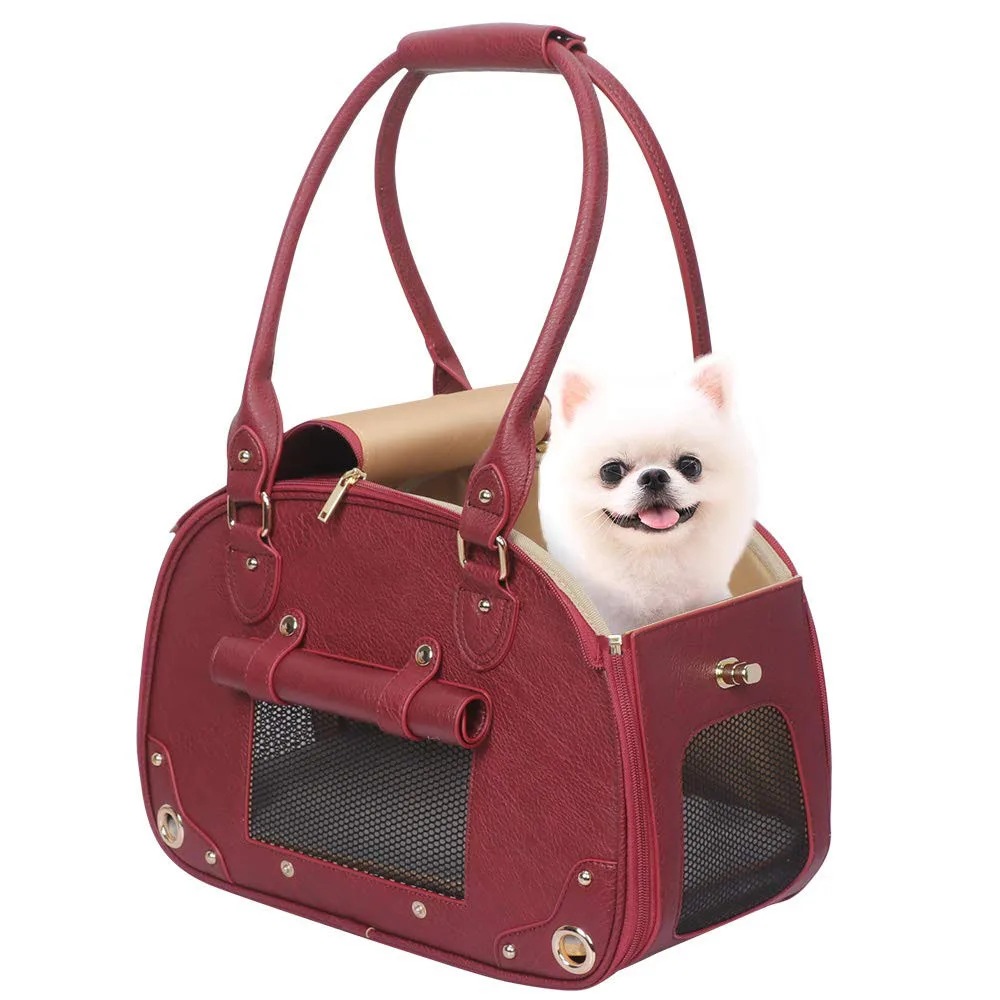
Cost and Calendar: What the Two Routes Really Cost
Price behaviour differs sharply between the written-specification route and any compulsory scheme. The first is essentially documentation cost: organising existing test data, adding any missing lines and presenting it cleanly. The second is project cost: registration, local representation, factory assessment and shipment-by-shipment consignment evaluation.
| Route | Fixed cost (USD) | Calendar | Per unit at 2,000 | Recurring? |
|---|---|---|---|---|
| Written specification only | 200 - 900 | 1 - 3 weeks | 0.10 - 0.45 | Per design change |
| Added third-party verification | 600 - 1,800 | 2 - 4 weeks | 0.30 - 0.90 | Per lot where required |
| Electronics registration | 3,000 - 9,000 | 10 - 18 weeks | 1.50 - 4.50 | Renewal plus factory checks |
| Voluntary licence and mark use | 2,000 - 6,000 | 8 - 16 weeks | 1.00 - 3.00 | Annual fees and surveillance |
The calendar column is the one to manage. Our production cycle requires 6-10 working days for samples and 35-50 days for bulk after approval; every route above sits outside those windows and must be planned around them. Adding three weeks of documentation work to a programme that was already scheduled to the day is exactly how a season slips.
Sequencing then falls out naturally. Three months out, agree the specification and the quality annexe, and start anything that needs third-party verification. Two months out, approve samples and lock total. Six weeks out, book the production slot so material arrives with the plan rather than after it. The applied discipline is simply that documentation leads the order rather than following it.
A useful rule for sellers: quote shipping dates only after the evidence plan is agreed, not after the goods are made. Nothing delays an order more reliably than finished cartons waiting for a number that should have been requested eight weeks earlier.
Two Sourcing Patterns Into India Compared
Buyers serving the Indian market generally choose between importing finished pet bags and importing components for domestic conversion. The choice interacts with cost, lead time and the relevance of any certification question, so it is worth setting out plainly.
Importing finished bags concentrates quality control with one production partner, keeps per-unit costs competitive at volume, and gives access to materials and tooling unavailable locally. The trade-off is lead time and exposure to any policy change affecting imports, including duty movements that can alter landed cost between quotation and arrival.
Domestic conversion - importing fabric or components and finishing locally - reduces landed duty exposure on certain inputs, shortens replenishment cycles dramatically, and can make the difference between restocking in three weeks and restocking in eleven. The trade-off is distributed quality control: unless the same written specification is enforced at the converting site, the benefits are lost to variation.
For most wholesale programmes starting out, finished imports are correct. They let a buyer prove demand with minimum capital and maximum simplicity. Converting locally becomes attractive once a single platform has stable, repeated volume - the point at which a three-week replenishment advantage outweighs the cost of managing two facilities.
A hybrid pattern is increasingly common and worth naming explicitly: import finished goods for the core assortment, and hold a small local finishing capability for the fastest-moving SKU only. This buys replenishment speed where it earns margin while keeping quality centralised where it matters most. The trap is running two quality cultures - avoided easily by shipping the same written specification, and preferably the same critical components, into both channels.
Either way, the quality annexe travels with the specification rather than the factory, which is a good argument for building it properly from the first order. Notes on duty and landed cost planning help quantify the comparison before committing.
Where a Standard Reference Improves Real Quality
There is a temptation to treat specifications as paperwork that exists to satisfy a distributor. That misses the operational benefit, which is measurable. Written acceptance figures change behaviour on the line, because they turn a subjective judgement into a checkable one.
Consider strap assembly. Without a number, reinforcement is adjusted until it looks right, and it looks right differently to different people. With a stated minimum load and a stated cycle count, the bar-tack length and stitch density become engineered rather than habitual, and inspection can be sampled against the same figure. Returns attributable to strap separation typically fall sharply once the figure exists, simply because variation is no longer invisible.
Two conditions make this work. First, the figures must be reachable by the equipment actually available, which is why they should be agreed with the production team rather than copied from a competitor's specification sheet. Second, findings must feed back into the tech pack, so that a passing result today remains passing after the next material substitution.
The same applies to colour and chemistry. A stated fastness grade with a named method ends arguments about whether a shade is acceptable, because grading happens against a standard rather than against opinion. A stated restricted-substance list with a named limit stops the slow substitution of a cheaper print paste, because any batch can be checked.
None of this requires anybody to hold a licence. Many of the most useful reference points are published by recognised bodies rather than by governments - for example the AATCC textile test methods and the criteria maintained by OEKO-TEX - and independent verification from laboratories such as SGS makes the result defensible to any party.
Planning for Policy Movement Without Panicking
Compulsory coverage in India moves through administrative notifications, and this is the single most misreported aspect of selling into the country. Buyers read a headline about a new order and assume their category is closed. In most cases the order covers a narrowly defined family, has a lead time measured in months before it takes effect, and explicitly scopes by specification rather than by product description.
The sensible response is monitoring rather than reaction. Assign someone to read new notifications quarterly, against one question: does this reference a specification our products rely on? If the answer is ever yes, there is usually several months of grace, which is ample time to evaluate options because the evidence base already exists.
Preparedness is the difference between disruption and inconvenience. Programmes with documented inputs, tested lots and traceable batches can absorb most changes by extending existing evidence. Programmes without them have to start from zero, under time pressure, at the moment everyone else is also starting from zero - which is when testing laboratories are busiest and least flexible.
This framing also settles the internal argument about whether to test voluntarily. The cost of holding good evidence continuously is low; the cost of assembling it under a deadline is high. Buy an insurance policy, not a lottery ticket.
Working the Programme With Us
India-bound programmes run on the same schedule as any other destination: MOQ 500 pieces per colourway, with size splits inside one style counted toward the threshold, and several colourways permitted within a single order. Samples take 6-10 working days from a confirmed tech pack, bulk production takes 35-50 days from sample approval, and pre-shipment inspection runs to AQL 2.5, with the buyer or their nominated agency welcome to attend.
The letter of credit route deserves a mention because Indian banks apply document scrutiny strictly. Because our terms are T/T 30/70 with no documentary credit, buyers avoid reconciliation delays entirely; where a buyer insists on credit terms anyway, the packing list must be generated from the final inspection count so that no discrepancy arises between declared and loaded quantities. Our production team supplies the standard document set - bill of materials with named inputs, lot-referenced chemical reports, hardware declarations, origin information, packing list and marking photographs - alongside the goods rather than after them, which removes the most frequent cause of delayed availability.
Because the evidence plan is built from the same quality annexe as the production specification, adding a standard reference later is a matter of updating one table rather than reopening a file. Buyers who send us their distributor's checklist at quotation stage typically receive revised costs within one or two rounds rather than several, and that saved round is usually worth more than any discount negotiated later. Buyers who send us their distributor's checklist at quotation stage typically receive revised costs within one or two rounds rather than several.
To keep the first cycle predictable, send four things at enquiry stage: quantities per size and colourway, a target landed cost rather than a target unit price, the distributor's onboarding checklist if one exists, and any finite delivery window. Those four inputs let us quote freight-complete costing and a realistic calendar in one round. Enquiries that arrive with only a photograph typically require three or four further exchanges before the same numbers can be produced, and each exchange costs precious time on the calendar before a single metre of fabric is cut.
A framework for keeping that documentation stable over time is described in ISO 9001 quality management. Related reading here includes textile safety labelling and classification, both of which interact with this plan.
Production capability
- SGS-verified production space of 4,950 m², 149 machines, 7 assembly lines
- Pet bag output since 2014 from a 137-person team
- 200,000 units shipped monthly under BSCI and ISO 9001 systems
People Also Ask
Does a written standard reference actually improve quality?
Yes. A stated figure turns subjective judgement into a checkable one, which stabilises stitch density, reinforcement length and hardware choice across reorders instead of letting them drift between operators.
What should a quality annexe contain?
One row per input: standard reference with edition, acceptance figure, sampling rule and the report actually held. The table then serves as the quality annexe for every subsequent order on that platform.
How do we handle a claim on artwork with no test behind it?
Remove the claim. Deleting unsupported wording costs nothing and prevents a later listing suspension, whereas defending it requires evidence you did not fund.
Is India different from Europe on textile evidence?
The structure differs more than the substance. Both accept lot-referenced reports on recognised methods, so one evidence pack built to the strictest method generally serves both markets.
What happens if the supplier changes a sub-supplier?
Require written notification for every listed input, then decide from the change-control list whether new evidence is triggered. Without that clause, substitutions pass silently until a failure appears.
Can we prepare for future mandatory coverage cheaply?
Yes, by holding documented inputs, tested lots and traceable batches continuously. Programmes that do can extend existing evidence; those that do not start from zero under pressure.
Frequently Asked Questions
Is certification mandatory for wholesale pet bags sold in India?
Not for finished fabric pet bags. No compulsory order currently covers that family, so ordinary shipments move without India-specific product approval. Indian Standards do cover many of the materials used, and those are best cited in the purchase order.
Can our pet bag carry an Indian standard mark?
Generally the useful marks belong to materials rather than to made-up textile articles. Chasing a finished-goods mark is usually a detour; writing standard references into the specification delivers quality improvement immediately.
What changes if the bag has electronics?
The electronics registration route engages, which requires local representation and factory assessment. Budget 10-18 weeks and several thousand dollars, all of it before final configuration enters production.
How much should we budget for evidence work?
For the specification route, roughly USD 200-900 of fixed documentation cost and one to three weeks. Independent verification, where a distributor requires it, typically adds USD 600-1,800.
Do Indian distributors accept overseas test reports?
Usually yes when the method is recognised and the report references the lot actually shipped. Reports tied to a generic sample rather than to the shipped lot are the most common reason an onboarding is delayed.
What administrative items delay Indian programmes most?
Importer codes, tax registration, bank reconciliation and declared seller relationships. These are administrative rather than technical, so additional spending cannot expedite them - start them weeks before the first shipment.
Is retail price printing really required on the pack?
Yes, pack-level price declaration is required in India. It is a printing detail agreed long before cartons are sealed, and one of the most frequent causes of delayed shelf availability after goods have cleared.
Should we import finished bags or convert domestically?
Start with finished bags: lower capital, simpler control, better unit economics at volume. Move to domestic conversion once one platform has stable repeat volume and a three-week replenishment advantage matters.
Do we need to test voluntarily?
It is the cheaper posture. Continuous evidence costs little per lot; assembling it under a deadline costs a great deal, and testing capacity is least flexible exactly when everyone needs it simultaneously.
How often does compulsory coverage change?
Often enough to warrant quarterly monitoring, but rarely enough to justify alarm. New orders generally carry months of lead time and scope by specification rather than by product description.
Can several colourways sit inside one 500-unit order?
Yes. The minimum applies per colourway, mixed colourways are permitted in one order, and size splits within a single style count toward the threshold.
Who may attend pre-shipment inspection?
The buyer or any agency they nominate. Our standard is AQL 2.5, and we recommend attendance when a new platform is being released.
What evidence do you supply as standard?
Bill of materials with named inputs, lot-referenced chemical reports, hardware declarations, origin information, packing list and photographs of every marking position - delivered with the goods rather than after them.
Talk to QUANZHOU JUNYUAN BAGS about a wholesale pet bag order: MOQ 500 pieces per colourway, samples in 6-10 working days, bulk production in 35-50 days under AQL 2.5 inspection.
Get a free quote Request a sample