Pet Bag Affiliate Marketing: Commission and Margin
A workable commission for a pet bag program runs 8-15 percent of order value for content affiliates and 3-6 percent for coupon and loyalty placements, because the mid-market pet bag carries a gross margin of roughly 45-60 percent and must still absorb return handling, payment fees and freight. Below 8 percent content publishers deprioritise the SKU; above 20 percent the channel stops self-funding once returns are netted.
Affiliate commission is not a marketing percentage, it is a deduction from contribution margin that must be modelled before the SKU is quoted. Our production team supplies branded pet bag programs at MOQ 500 pieces per colourway, with samples in 6-10 working days and bulk production in 35-50 days after approval, inspected to AQL 2.5 before release, and the cost structure built on those terms decides what a commission band can support. Four variables set the ceiling: landed unit cost after duty and freight, the return rate specific to pet bags, the payment and marketplace fees already taken before affiliate earnings are calculated, and the share of affiliate-driven orders that are genuinely incremental rather than intercepting traffic that would have converted anyway. A pet bag that lands at USD 11.40 and retails at USD 49 supports a very different program from one landing at USD 18.60 at the same retail price. Model contribution per net unit first, then set commission, and the channel will still be profitable at the end of the season.
Pet bag retail buyers and pet bag wholesale business owners look at the same unit cost from opposite ends, and Market & Business Strategy is where those numbers meet. Pet bag procurement teams normally fix quality first and negotiate price second, which is why pet bag supplier selection is really a documentation exercise.
What Affiliate Economics Ask of the Product Specification
Affiliate-driven traffic behaves differently from search or retail traffic, and the specification has to answer to it. Visitors arriving from a review site have usually read three paragraphs of opinion and skipped the images, which means conversion depends on whether product copy answers the questions the reviewer could not. That puts pressure on the specification to be published in full.
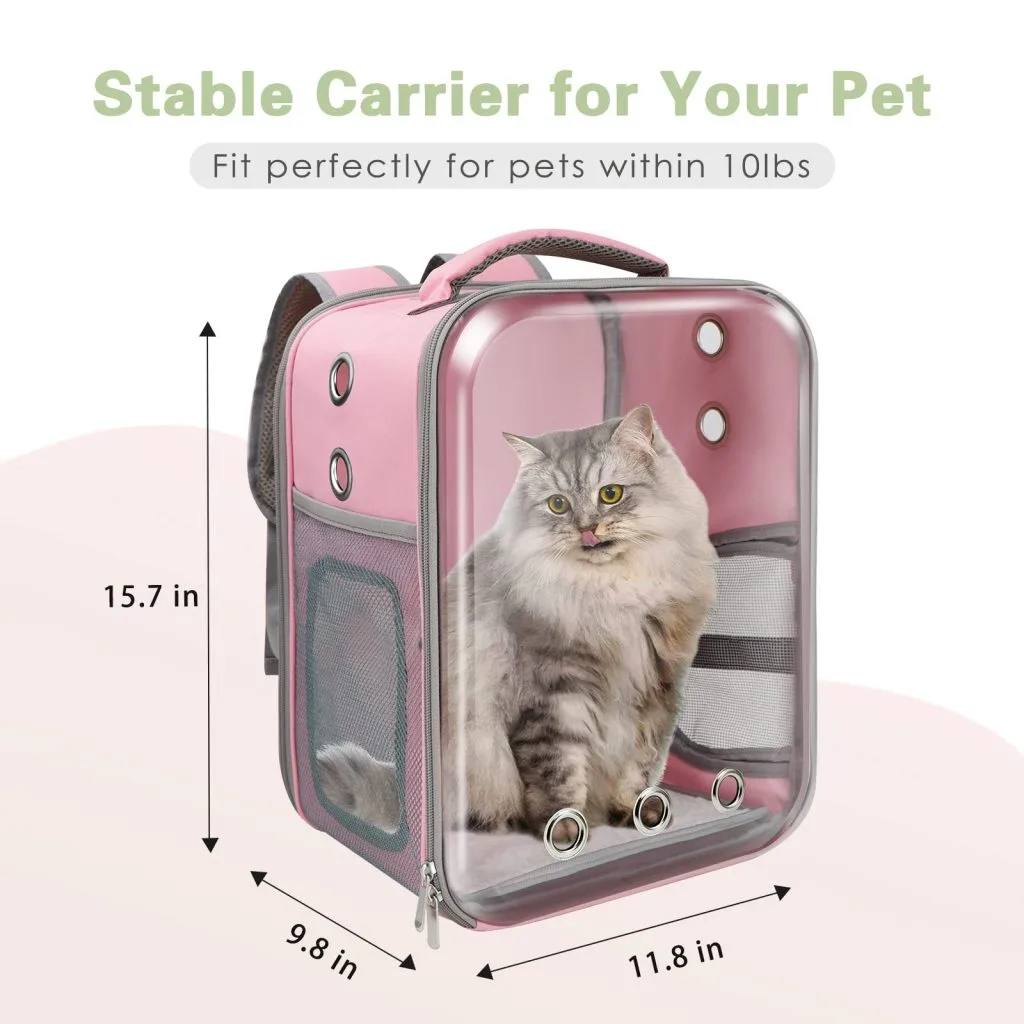
The practical implication is that the tech pack and the listing must agree. Internal floor dimensions, usable height, recommended animal weight range, shell and lining composition, removable liner presence, care instructions and hardware type should all be visible on the page. Where they are missing, the visitor does not assume; they leave.
The second implication is specification stability. An affiliate link points at a SKU that may live for two years, and every change to fabric, colour name or dimension invalidates content written earlier. Buyers should treat any change that alters the published dimension set as a change requiring affiliate notification, not merely a revision note.
The third implication concerns what happens when the specification changes silently. A supplier swapping to a lighter mesh or a different hardware finish without notice creates a mismatch between a well-ranked review and the delivered product, and the resulting reviews are worse than silence. Locking specification through a documented approval with the production team protects the channel.
Specification depth is therefore the cheapest form of support a brand can give an affiliate: it converts opinion traffic without paying for it.
Specification documentation also shortens every downstream conversation. When a publisher asks whether a model can be washed, whether the lining detaches, or which size suits a 7 kg animal, a written answer taken from the approved specification sheet takes minutes and appears in print accurately. Without it, the publisher writes their own interpretation, and that interpretation becomes the reference against which returns and complaints are later measured.
Commission Bands Against Real Pet Bag Margins
Commission is usually set by copying whatever the last brand paid, which ignores that a pet bag carries a different cost structure from a supplement or a toy. Pet bags are bulky relative to their price, attract size-related returns, and are often purchased once rather than replenished, so lifetime value arguments that justify high commission elsewhere do not transfer cleanly.
The calculation should run from landed unit cost upward. Take a landed cost including duty and inland freight, add fulfilment and payment fees, add a return allowance at the observed rate for the category, and only then apply commission against the remainder. The resulting figure - contribution per net unit - is what funds the band.
| Line | Budget tier | Mid tier | Premium tier |
|---|---|---|---|
| Retail price | USD 32 | USD 49 | USD 89 |
| Landed unit cost | USD 9.80 | USD 13.60 | USD 26.40 |
| Fulfilment and payment | USD 4.10 | USD 5.30 | USD 7.60 |
| Return allowance at 9% | USD 2.90 | USD 4.40 | USD 8.00 |
| Contribution before commission | USD 15.20 | USD 25.70 | USD 47.00 |
| Supportable commission at 30% of contribution | USD 4.55 | USD 7.70 | USD 14.10 |
| Commission as % of retail | 14% | 16% | 16% |
The table is illustrative but the shape is real: because fulfilment and return costs scale with price, percentage-of-retail bands compress margin fastest at the budget end. A flat 20 percent band that is comfortable on a premium unit can be unprofitable on an entry unit.
A citable rule for planning documents: set commission as a share of contribution rather than a share of retail, and revise the band whenever landed cost moves more than 5 percent.

Feed Hygiene, Identifiers and Catalogue Integrity
Affiliate networks move data, not products, which makes catalogue hygiene a revenue function. Every SKU entering an affiliate feed needs a stable identifier, a clean title, a canonical image set, current availability and a price that matches the destination. When these drift, publishers stop linking.
The identifier layer matters most. Product codes assigned internally should never be reused across seasons, and any variant structure - size, colourway, hardware finish - should be represented consistently, because inconsistent variant grouping produces duplicate rows that split performance history and confuse tracking.
Where barcodes are used for marketplace reconciliation, the familiar retail numbering schemes handled under global standards are described in overview by ISO governance of management systems, but the operational point is simpler: one barcode per physical variant, recorded once, never reassigned. Barcode and UPC requirements for pet bag listings are covered separately in related guidance.
Availability data is the second recurring failure. Affiliate traffic directed to an out-of-stock SKU is worse than no traffic, because it burns publisher trust as well as the click. Buyers should agree restock forecasting with the production team on a rolling basis and set feeds to suppress SKUs whose next delivery cannot be confirmed.
Price accuracy closes the set. A feed showing a lower price than the destination creates a mismatch complaint and often a reversal of the commission; a feed showing a higher price suppresses conversion. Automated synchronisation beats manual updates in every case we have seen.
Image URLs deserve the same discipline as pricing. Publishers cache images, hotlink them, and sometimes republish them into comparison layouts, so each variant needs a permanent asset address that never silently redirects. When an image path changes without notice, broken tiles appear inside published articles and the publisher is unlikely to fix them promptly, which means the SKU keeps losing clicks long after the technical problem has been forgotten.
Returns, Reversals and Attribution Windows
Pet bags generate returns for reasons that have nothing to do with quality, and an affiliate program absorbs those costs. The dominant causes are expectation mismatch about size, the animal refusing to enter the bag, and a buyer discovering the unit does not fit their airline's underseat allowance. None are defects, all are returnable.
The mitigation is upstream. Return rates drop measurably when listings publish internal dimensions alongside a weight chart rather than a breed list, when a scale image shows the bag next to a known object, and when the airline-use claim is stated conservatively. Each of those is a specification and photography decision made before the affiliate program starts.
Commission mechanics then need to reflect the return reality. Most networks reverse commission on returned orders within the return window, but the practical question is window length. A 30-day attribution window with a 30-day return window means a meaningful share of earnings are clawed back a month later, which distorts cash forecasting for both brand and publisher.
The commission compromise most programs settle on is a shorter return window stated clearly in the listing, combined with a commission hold of roughly fifteen days beyond the return window before payout. This aligns both parties toward fewer returns rather than merely accounting for them.
A citable planning rule for affiliate terms: every day added to the return window is a day added to commission uncertainty, so set the window from measured category behaviour rather than from competitive imitation.
Finally, brands should separate affiliate-driven returns from overall returns in reporting. If affiliate traffic returns at materially higher rates than average, the problem is usually a publisher overselling size or a mis-set expectation, and it is fixable by feed rather than by product change.
Two further mechanics deserve documentation before launch. The first is how partial returns of multi-unit orders are treated: a customer buying two sizes to compare will return one, and the policy should state whether commission reverses on the whole order or only on the returned unit. Mixed baskets are common enough in pet categories that this single rule can move channel profitability by several points.
The second is handling of exchanged rather than refunded orders. An exchange retains revenue but adds a second outbound shipment, so the practical treatment most brands adopt is commission on the original order with a shared contribution toward the exchange leg, agreed in writing with the network.
Asset Packs: What Publishers Need to Convert
A publisher asked to write about a pet bag will do so from whatever material is available, and the quality of that material is visible in the conversion rate months later. Supplying a structured asset pack is low-cost and consistently under-done.
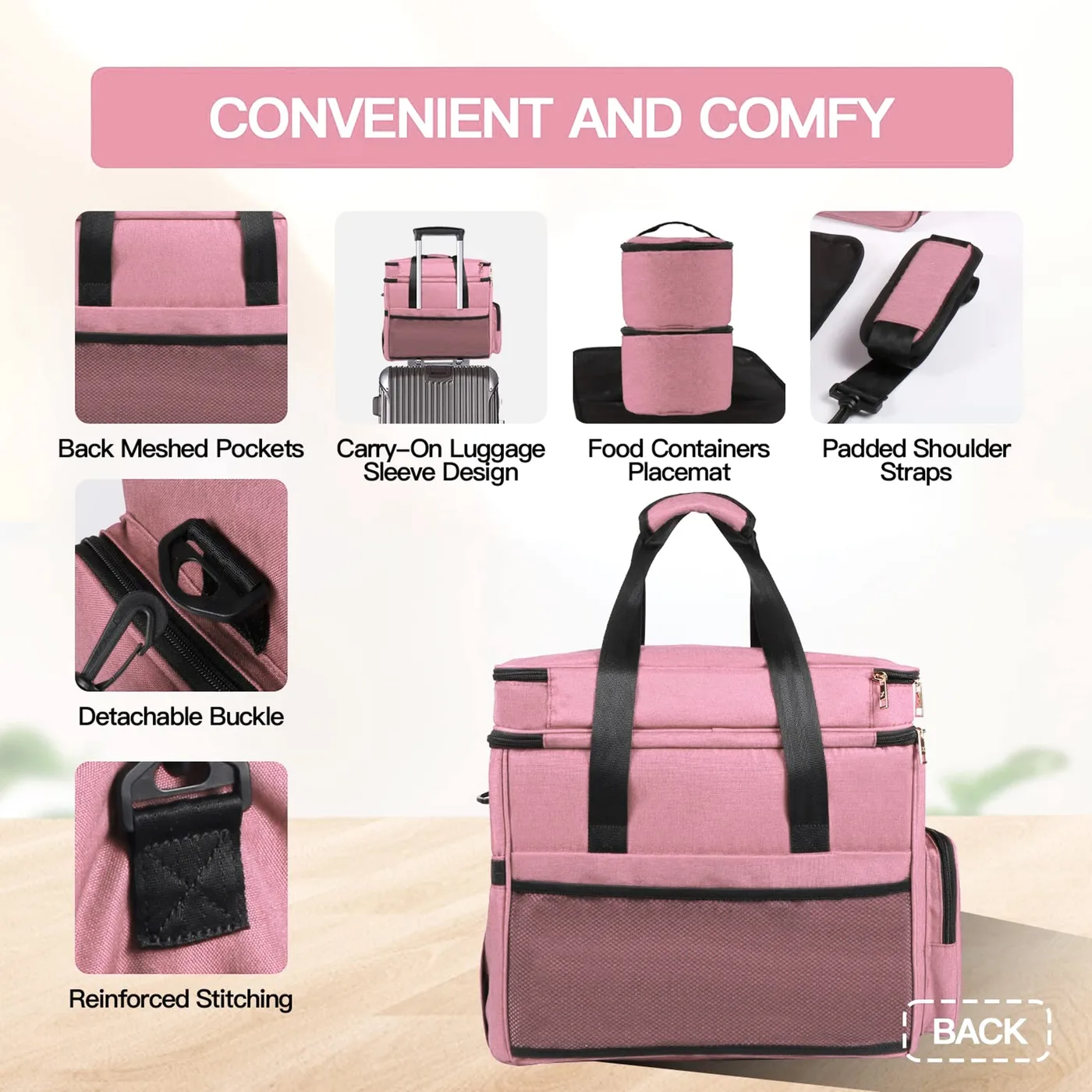
Five assets cover most needs. The first is a scale image set: the bag photographed beside a reference object of known size, from front, side and three-quarter angles, against a neutral background. Scale confusion is the single largest driver of size-related returns.
The second is an interior image showing the base panel with a measuring tape visible along two axes. This answers the question behind most pet bag hesitation - will my animal actually fit - better than any dimension table.
The third is a fabric and hardware close-up at sufficient resolution for inspection of weave and finish, together with the stated composition. Publishers covering material quality need something to describe beyond adjectives.
The fourth is a fit chart stating recommended animal weight range per size, alongside the measurements used to derive it. This lets a publisher qualify readers before they click, raising conversion even as it lowers volume.
The fifth is a plain-language care and compliance statement: washing instructions, maximum load, ventilation notes, and what the product is not intended for. Responsible publishers include this, and it protects the brand.
Assets should be served from a stable address and versioned. When a pack is replaced mid-season without notice, old assets persist inside published articles and the mismatch eventually surfaces as a return.
One additional asset earns disproportionate attention: a short silent video of the bag being opened, placed base-down and adjusted, with no music and no cuts. Publishers embed this more often than any still image because it answers assembly and shape questions that photographs cannot, and in affiliate-driven reviews it is frequently the element that moves a hesitant reader to check dimensions rather than abandon the page.
Coupon Control, Price Integrity and MAP Boundaries
Affiliate channels and discount mechanics have a relationship that needs managing, because unchecked coupon distribution converts a working price architecture into a permanent markdown. Pet bags are particularly exposed: once a code is widely circulated, the discounted price becomes the reference price in buyers' minds.
The instrument for control is a minimum advertised price policy with stated floors, plus a defined list of publishers permitted to distribute codes. Coupon and loyalty affiliates typically accept lower commission in exchange for code access, and limiting that access keeps the list short.
Code leakage is the operational problem. Codes distributed to one network appear on aggregator sites within days, and unauthorised distribution both erodes margin and contaminates attribution, because orders that would have occurred anyway get credited to the aggregator. Single-use or creator-bound codes reduce leakage substantially and are supported by most networks.
Tracking integrity depends on how codes are credited. Where a code is applied at checkout with last-click attribution, every aggregator that displayed the code claims the sale. Rules should be agreed in advance: either first-touch attribution for code-driven orders, or a rule that credits only the publisher whose link was clicked.
Finally, the pricing arithmetic should be revisited whenever landed cost changes. A discount floor set when units landed at USD 12 may be unprofitable once duty or freight moves landed cost to USD 14, and the floor should move with it rather than staying fixed by habit.
One further control is worth writing into the policy: which channels may promote at all. Excluding marketplace and auction formats from the policy is common practice, because published price anchors there are difficult to contain once a discounted sale has been recorded publicly.
Selecting Publishers Against Product Fit
Affiliate recruitment usually optimises for reach, and for pet bags that is close to meaningless. Reach in a general deals audience converts badly on a considered purchase where fit is uncertain, while a small specialist site with highly engaged readers converts several times better at a fraction of the traffic.
Four screening criteria work better than audience size. Topic alignment is the first: does the publisher actually cover pet travel, small-animal care or airline travel equipment, or is the site a general deals aggregator with a pet category page.
The second is content depth in the relevant category. A publisher with eight substantive articles about animal transport has earned audience trust that transfers; one with a single listicle has borrowed it.
The third is audience geography. Pet bag specifications such as airline cabin dimensions differ by carrier and region, so a predominantly European audience is a poor fit for an underseat-suitability claim built around North American carriers, and vice versa.
The fourth is return behaviour where it can be observed. Some networks expose return rates by publisher, and publishers whose referred orders return far above average are usually overstating fit or stripping context from the listing.
Recruitment should start with ten to twenty publishers rather than an open network. Open approval generates low-quality placements, trademark bidding problems, and a long tail of links that need monitoring, none of which repay the effort.
Tiered commission works better than a single flat band once recruitment matures. A base band for all approved publishers, a higher band for those consistently converting above a defined threshold, and occasional negotiated rates for publishers who place a SKU in permanent buying-guide content recognises that link placement value varies by an order of magnitude rather than by a few percent.
Terms should also be reviewed on a fixed calendar rather than on demand. A quarterly review tied to actual contribution per referred order lets the band move with landed cost, season and return performance, and it prevents the slow drift in which a rate agreed during launch economics persists long after those economics changed.
Network Fees, Payout Flow and Contract Mechanics
Commission is not the only amount leaving the brand. Network transaction fees, currency conversion, cross-border payment charges and the administrative cost of processing publisher invoices all sit on top, and together they commonly add 15-30 percent to the headline commission figure. A 12 percent band therefore behaves like a 15 percent band in practice.
The network layer is the first of these. Most networks levy a transaction fee calculated as a percentage of the commission or of the order value, sometimes both, and SaaS-based networks add a monthly platform charge that is immaterial at scale but significant for a program with twenty publishers.
Payout geography is the second. A brand paying publishers across three regions absorbs currency spreads and per-transfer charges, and these are usually passed through rather than embedded. Consolidating monthly rather than paying per transaction reduces fixed transfer costs materially, though it requires publishers to accept longer payout cycles.
The third is tax documentation. Publisher tax forms must be collected and validated before payment in most jurisdictions, and missing documentation stalls payout and irritates exactly the publishers worth keeping. Brands running multi-market programs should expect to handle several different forms and should not treat this as a trivial administrative task.
Attribution disputes form the fourth cost, and it is the one least often budgeted. When a brand runs affiliates alongside marketplaces, paid search and email, multiple parties will claim the same order. Written attribution rules - first touch, last non-direct, or a defined hierarchy - reduce dispute volume substantially, and the rules must be distributed before the program starts rather than argued afterwards.
A practical recommendation for procurement teams: model total channel cost as commission multiplied by 1.2 to 1.3, then test whether the resulting number still clears the contribution target set at the quotation stage.
Seasonal Peaks and Inventory Commitment
Affiliate programs are seasonal in a way purchasing plans often are not, because publisher behaviour clusters around gift periods, holiday travel peaks and new-year fitness and organisation content. The resulting demand spikes arrive on a schedule that is known in advance, and inventory should be committed to match.
The trap is timing mismatch. A publisher with a strong audience will publish two to four weeks before the peak buying window, which means stock has to be physically in the destination market before the article appears, not merely produced. Working back from a mid-November peak against a 35-50 day bulk schedule, ocean transit and customs clearance puts purchase orders around six months earlier.
Volume sizing during peaks is the second decision. A promoted SKU that sells out costs more than the margin on a small overstock, because the affiliate traffic does not pause - it converts a competitor's listing, and the publisher will notice and move on. Holding 15-25 percent additional safety stock during known windows is usually the better error.
The third consideration is variant concentration. Peaks sell the two most-photographed colourways disproportionately, so a safety stock plan that spreads buffer evenly across a wide variant matrix will stock out on the winners and overstock the rest. Buffers should follow historical variant mix.
Trade considerations also shape cross-border commitments. Changes in duty treatment or documentation requirements can alter landed cost between quoting and arrival, and both are monitored through the framework maintained by the World Trade Organization. A contingent buffer in the landed-cost model protects the commission band when those change.
Order and quality terms
- MOQ 500 pieces per colourway; samples in 6-10 working days
- Bulk production 35-50 days after approval; AQL 2.5 inspection standard
- T/T 30/70 terms, FOB Xiamen, full document set per shipment
People Also Ask
What is affiliate commission in pet bag wholesale terms?
A deduction from contribution margin per net unit, set after landed cost, fulfilment, payment fees and expected returns rather than as a flat share of retail price.
Why do affiliate-driven pet bag returns run high?
Mainly fit uncertainty. The animal's acceptance of a confined space and the buyer's airline expectations are both unknowable at purchase, so clear measurements reduce returns.
Should variants be separate affiliate SKUs?
Yes. Separate rows per size and colourway keep performance history clean and prevent duplicated rows splitting conversion data.
How often should affiliate feeds refresh?
Availability and price daily at minimum. Stale availability directs paid traffic at stocked-out SKUs, which costs both the click and publisher trust.
Do coupon sites deserve the same commission as content sites?
Usually lower. Coupon placements typically accept 3-6 percent against the 8-15 percent content publishers command, reflecting their role in intercepting rather than creating demand.
What is a reasonable attribution window?
Thirty days is common, paired with a return window of similar length and a payout hold beyond it, so that clawbacks do not distort later cash reporting.
Frequently Asked Questions
What commission should a pet bag brand pay affiliates?
Generally 8-15 percent of order value for content publishers and 3-6 percent for coupon and loyalty placements. Anything above 20 percent rarely self-funds once returns and fees are netted.
How is contribution per net unit calculated?
Landed unit cost plus fulfilment and payment fees plus a return allowance at the observed category rate, subtracted from retail. Commission is then set as a share of the remainder rather than of retail.
Why do returns matter so much in pet bag affiliate programs?
Size expectation and animal acceptance drive returns that are not quality defects, and networks typically reverse commission on returned orders within the return window.
Should commission be paid on returned orders?
Most networks reverse it. The practical lever is window length; aligning a shorter return window with a payout hold of about fifteen days beyond it keeps cash forecasting honest.
What belongs in an affiliate asset pack?
A scale image set, an interior image with visible measurements, a fabric and hardware close-up with composition stated, a size-to-weight fit chart, and a care and compliance statement.
How many publishers should a new program approve?
Ten to twenty well-screened ones. Open approval generates poor placements, trademark bidding and a monitoring burden that outweighs the incremental sales.
How should social media dynamics be weighed in recruitment?
Audience geography and topic depth matter more than follower counts, because fit claims such as underseat suitability are carrier- and region-specific.
How does a minimum advertised price policy fit an affiliate program?
It sets the floor below which codes cannot be distributed and shortens the authorised code list, protecting reference price while the program runs.
What causes coupon code leakage?
Publishers distributing codes to aggregator sites. Single-use or creator-bound codes limit leakage and prevent last-click attribution from crediting aggregators for attributable sales.
When should purchase orders be placed for a peak-season promotion?
Roughly six months before the buying window, allowing for approval, a 35-50 day bulk schedule, transit and customs, plus two to four weeks for publishers to publish ahead of the peak.
How much safety stock suits a promoted SKU?
Typically 15-25 percent above forecast during known windows, concentrated in the two best-converting colourways rather than spread evenly across all variants.
What makes a publisher a poor fit despite large traffic?
A general deals audience with shallow category content, mismatched audience geography, and referred orders returning well above the program average.
Talk to QUANZHOU JUNYUAN BAGS about a wholesale pet bag order: MOQ 500 pieces per colourway, samples in 6-10 working days, bulk production in 35-50 days under AQL 2.5 inspection.
Get a free quote Request a sample