Pet Bag Price Points: Premium vs Budget Tiers
Budget, mid and premium pet bags differ by roughly USD 2.40-3.10, USD 5.20-6.80 and USD 11.50-16.00 ex-works respectively, and the gap is driven by shell fabric weight, hardware grade and reinforcement rather than by branding. A defensible wholesale assortment needs all three tiers, with the mid tier carrying 45-55 percent of units and the premium tier carrying 30-40 percent of gross margin.
Price tiering is the single most consequential decision in a wholesale pet bag programme, because it fixes the cost structure, the channel set and the margin profile simultaneously - and because it is very hard to change afterwards without re-specifying the entire range. This page sets out what genuinely separates the tiers, where the money goes in each, how a three-tier assortment should be proportioned, and how to negotiate tier pricing without quietly degrading the product.
The framing throughout is wholesale rather than retail: the question is not what a shopper will pay but what a buyer should pay per unit to hit a shelf price with adequate margin after freight, duty, markdown and returns. Our production team works to standard terms on every tier: MOQ 500 pieces per colourway, samples in 6-10 working days, bulk production in 35-50 days after approval, pre-shipment inspection to AQL 2.5, T/T 30/70 and shipment FOB Xiamen. The tier discussion below sits on top of that baseline.
Buy dog carriers and buy cat carriers enquiries usually arrive from two different channels - one from pet specialty, one from general merchandise - and Market & Business Strategy has to serve whichever basket is larger. Buy pet carriers in a single colourway first, then extend the shade range on the reorder.
What Actually Separates a Budget Pet Bag From a Premium One
The difference between tiers is frequently described as branding, and that description is wrong. Branding determines what a shopper pays; specification determines what a buyer pays, and the two are only loosely coupled. A wholesale buyer needs to understand the specification side because that is where the negotiation happens.
Three inputs account for most of the ex-works gap. Shell fabric weight and finish come first: a lighter woven with a basic coating sits at the budget end, a heavier woven with a durable water-repellent finish and better abrasion resistance sits at the top. Hardware grade comes second: generic zippers and clips versus branded or tested equivalents with cycle data behind them. Structural reinforcement comes third: whether load paths are bar-tacked, whether the base is stiffened, and whether straps are anchored into the frame rather than into a face panel.
Everything else is comparatively cheap. Colourway, print method, lining pattern and packaging move the visual position of a product substantially while moving the cost very little - which is precisely why they are the right levers for a buyer who needs a premium-looking product at a mid-tier price.
- Budget tier. Light shell, generic hardware, minimal reinforcement, simple packaging.
- Mid tier. Mid-weight shell, tested hardware, reinforced load paths, printed hang tag.
- Premium tier. Heavy shell with finish, branded hardware, full reinforcement, retail carton.
A useful test for tier assignment is the returns question. If a product is likely to fail in use within a season, it belongs at the budget tier with pricing that assumes replacement rather than at the mid tier with pricing that assumes durability. Assigning tiers honestly at the outset prevents the most expensive outcome of all: a mid-tier price with a budget-tier failure rate.
Buyers should also resist the temptation to define tiers by shelf price alone. Retail prices are set by channel positioning and promotional cadence, and the same physical product can sit at two different price points in two different channels. Define tiers by specification first and let price follow.
The Cost Drivers Behind Each Tier
Understanding where money goes inside a tier is what turns a price negotiation from a contest into an engineering exercise. Four cost blocks make up the ex-works price: materials, conversion, testing and compliance, and packing.
Materials dominate and behave differently by tier. At the budget end, materials are roughly 55-60 percent of ex-works and conversion around 30 percent; at the premium end, materials fall to about 45-50 percent while conversion rises because reinforced construction takes longer to sew. Testing and compliance are close to fixed in dollar terms across tiers, which means they represent a far larger share of a budget unit than of a premium one - an asymmetry with real consequences.
| Cost block | Budget | Mid | Premium | Scalable |
|---|---|---|---|---|
| Shell fabric and coating | USD 0.85 - 1.20 | USD 1.90 - 2.60 | USD 4.20 - 6.10 | Yes |
| Lining, mesh and webbing | USD 0.40 - 0.65 | USD 0.75 - 1.10 | USD 1.40 - 2.20 | Yes |
| Hardware | USD 0.35 - 0.55 | USD 0.85 - 1.30 | USD 2.10 - 3.40 | Yes |
| Cutting and sewing labour | USD 0.55 - 0.80 | USD 1.00 - 1.40 | USD 2.00 - 2.90 | Partly |
| Testing allocation per unit | USD 0.30 - 0.90 | USD 0.25 - 0.70 | USD 0.20 - 0.55 | No |
| Packing and retail carton | USD 0.15 - 0.30 | USD 0.35 - 0.60 | USD 0.80 - 1.40 | Yes |
| Indicative ex-works total | USD 2.40 - 3.10 | USD 5.20 - 6.80 | USD 11.50 - 16.00 |
The testing row is the one buyers should study. Because a chemical screen costs roughly the same whether the bag is cheap or expensive, it consumes a far larger share of a budget unit. At 500 units the allocation can exceed a dollar per piece; at 5,000 units it falls to cents. This is a structural argument against small orders at the budget tier, where the compliance load can exceed the fabric differential between tiers.
Conversion costs deserve a second note. Reinforced construction is slower, and slower construction reduces the number of units a line can produce per day. During peak season that capacity effect, rather than the material cost, is what pushes a premium programme into a longer lead time - a point worth planning around rather than discovering.
Building a Three-Tier Wholesale Assortment
A three-tier assortment works because it serves three different buying jobs: entry price for trial, mid tier for the core repeat purchase, and premium for the customer who has already decided the category matters. Getting the proportions right matters more than getting any individual tier right.
The usual mistake is over-weighting the budget tier. It looks safe because the unit cost is lowest, but it produces the weakest repeat rate, the highest return rate, and the smallest absolute margin per transaction - three effects that compound against a buyer over a season. A second mistake is over-weighting premium, which produces excellent margin per unit and thin volume, leaving fixed costs poorly amortised.
A workable starting proportion for a general assortment is roughly 20-25 percent budget, 45-55 percent mid, and 20-30 percent premium by unit. In gross margin terms the shape inverts: the premium tier commonly delivers 30-40 percent of gross margin on a fifth of the units, which is the arithmetic that justifies carrying it at all.
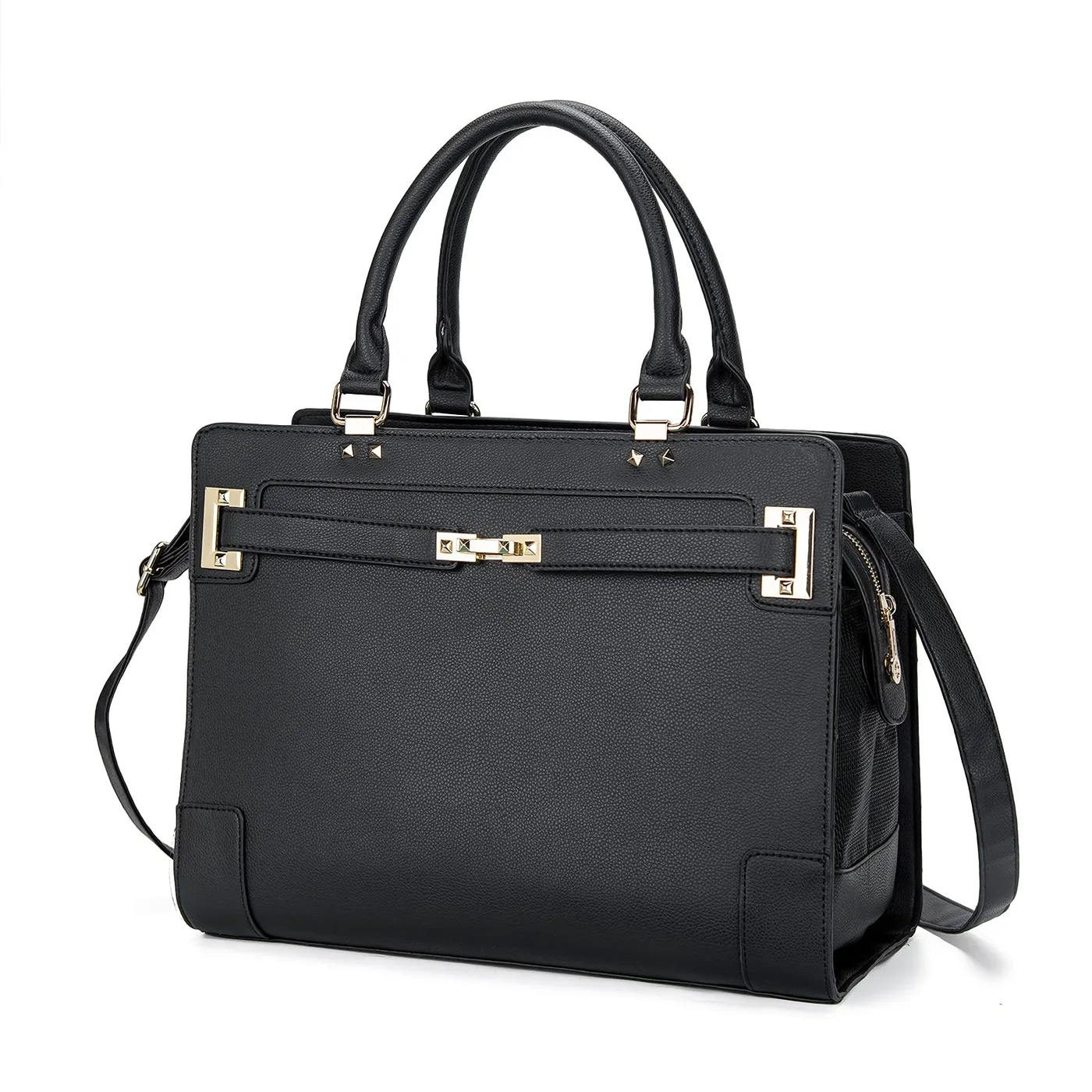
Colourway strategy should then vary by tier rather than being uniform. Budget tiers carry one or two proven shades, because every additional shade at the bottom of the range is inventory risk without pricing power. Premium tiers carry three or four, because shade variety is part of what the price is for. Mid tiers sit between, usually at two or three.
Finally, keep the tiers visually distinct at shelf. If a budget unit and a mid unit look alike, the customer buys the cheaper one and the mid tier loses its reason to exist. Distinct shell finishes, distinct hardware finishes and distinct packaging are cheap ways to make tier separation legible without changing the cost structure materially.
The same distinction should extend to the product itself rather than only to its packaging. A visible hardware finish difference between tiers is cheap, durable and legible at close range, whereas a shell colour difference alone tends to disappear under retail lighting. Two senses of difference - finish and packaging - are usually enough to stop a customer trading themselves down.
Where Margin Is Made and Lost by Tier
Margin behaviour differs sharply by tier, and a buyer who applies one margin rule across an assortment will systematically misprice at least one tier. The drivers are return rate, markdown rate and the fixed-cost allocation already described.
Budget tiers carry the highest return and complaint rate, and returns are expensive out of proportion to the unit price because handling and reverse logistics are roughly fixed per incident. A budget unit returned once has typically consumed its entire margin contribution and then some. This is why budget pricing must be set assuming a return rate, not assuming perfection.
Premium tiers carry the lowest return rate and the highest markdown exposure. They sell through more slowly, and when they do not sell they are marked down from a high base, so a single slow premium SKU can erase the margin contributed by several fast ones. Premium pricing therefore needs volume realism more than confidence.
Mid tiers are the workhorse and the least forgiving of error, because competition is densest there. They sell predictably, return modestly and markdown rarely, which means their margin is essentially a function of buying discipline - landed cost, order size and specification stability - rather than of positioning.
| Indicator | Budget | Mid | Premium |
|---|---|---|---|
| Share of units | 20-25 percent | 45-55 percent | 20-30 percent |
| Share of gross margin | 10-15 percent | 45-55 percent | 30-40 percent |
| Return rate exposure | Highest | Moderate | Lowest |
| Markdown exposure | Low | Moderate | Highest |
| Fixed cost per unit | Highest share | Moderate | Lowest share |
| Colourways advised | 1-2 | 2-3 | 3-4 |
The practical conclusion is that margin management is tier-specific. Budget tiers are managed by controlling returns, premium tiers by controlling buy depth, and mid tiers by controlling landed cost. A single blanket margin target will overprice one tier and underprice another.
Matching Tier to Channel Requirements
Each tier has a natural channel, and forcing a tier into the wrong one produces predictable disappointment. Matching them properly is cheaper than any amount of promotional support.
Budget tiers suit high-turnover channels where the purchase is opportunistic: discount variety chains, marketplace entry listings and promotional endcaps. These channels reward availability and price legibility, and they punish anything that looks over-engineered for the ask.
Mid tiers suit specialist pet retail and general merchandise chains, where the buyer wants a defensible quality story and a price that sits comfortably inside a considered purchase. This is the widest channel set and the one where most wholesale volume actually clears.
Premium tiers suit specialist independents, veterinary-adjacent retail and direct channels where a specification story can be told in full. They do not suit price-comparison environments, because the premium is invisible there and the product simply looks expensive.
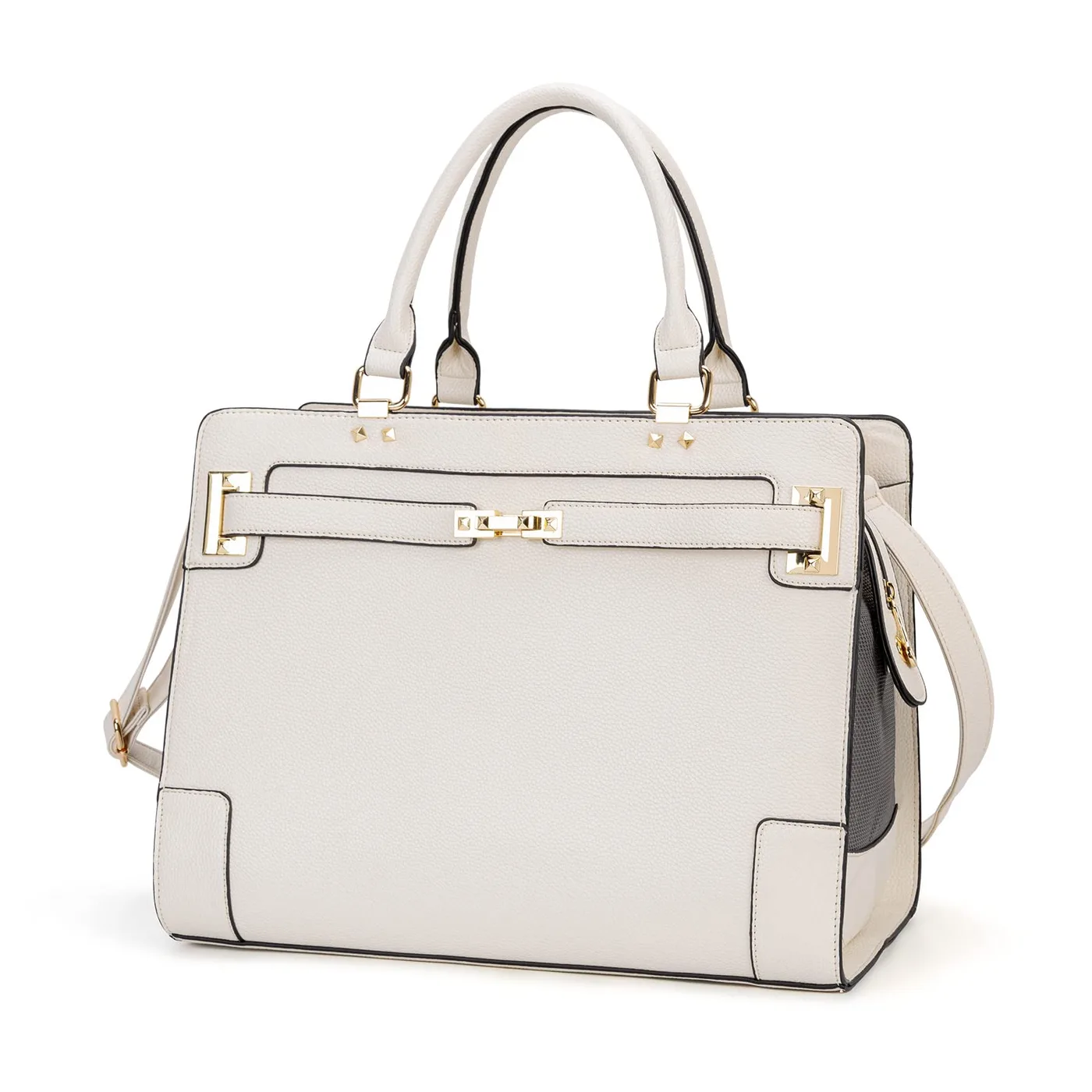
Marketplace placement deserves its own note. Online, tier separation has to be visible in imagery rather than in hand-feel, so premium listings need photography that shows hardware detail, stitch density and interior structure. Budget listings should not try to look premium - a mismatch between imagery and delivered product is the fastest route to a review-driven collapse.
Finally, watch the channel's own onboarding requirements by tier. Premium placements frequently carry stricter documentation and packaging expectations, which is a fixed cost that only pays off if the volume justifies it - reinforcing the point that tier, channel and order size are one decision rather than three.
Material declarations are increasingly part of that onboarding set, particularly at the premium end where a channel wants an assurance about textile inputs rather than a general statement of quality. Referencing a recognised textile safety scheme such as OEKO-TEX gives a reviewer a named framework instead of an assertion, which shortens the review and reduces the chance of a rejection.
Delivery windows are the other channel variable worth planning around. Premium placements frequently specify narrower delivery windows than budget ones, which means the freight choice for a premium tier is driven by reliability rather than by rate. Paying slightly more for a predictable service is usually correct at the top of the range and rarely correct at the bottom.
MOQ and Order Structure Across Tiers
The colourway minimum of 500 pieces applies equally at every tier, but its commercial effect differs sharply, because a 500-unit commitment represents a very different dollar exposure at USD 2.40 than at USD 14.00. Planning order structure by tier is therefore an exercise in risk allocation rather than in rule-following.
At the budget tier, the minimum is rarely the binding constraint - container efficiency is. A budget unit packs small, so 500 pieces may fill a fraction of a container and the per-unit freight becomes the dominant cost. The efficient move is to combine tiers inside one container, letting a premium order subsidise the freight economics of a budget one.
At the premium tier, the minimum is usually the binding constraint and should be treated as a working-capital decision. Three or four colourways at 500 each is a substantial commitment in a slow-turning tier, and the safer structure is two colourways at a deeper size split, building shade variety in the second season once sell-through data exists.
Size splits help at every tier because they count toward the threshold inside a single style. A buyer can therefore offer small, medium and large without tripling the commitment, which matters particularly at the premium end where size availability drives conversion.
Mixed-tier consolidation is the technique worth mastering. Because sampling, testing, documentation and booking behave like tooling, combining tiers into a single shipment and a single document set spreads those fixed costs across the whole order. The result is a blended landed cost that is better than the sum of its parts - and a blended margin that is more defensible than any single-tier calculation suggests.
Negotiating Tier Pricing Without Degrading Quality
The most common way a price target is met is by quietly degrading the product, and the most common way a buyer discovers it is through returns in the second season. Avoiding that outcome requires negotiating the right variables in the right order.
Start with the variables that are cheap: colourway count, print method, packaging format, hang tag specification and carton configuration. These move the visual position and the logistics cost substantially while leaving durability untouched, and they are where most of the available negotiating room actually sits.
Move next to order structure. Consolidating tiers, consolidating destinations, deepening a size split rather than adding a colourway, and committing to a second-season repeat all create genuine cost room because they reduce fixed-cost allocation and improve line utilisation. This is real savings rather than a price concession.
Treat materials as the last resort, and when they must move, move them visibly. Reducing shell weight by a defined amount with an agreed abrasion result is a defensible change; swapping to an unnamed equivalent is not, because nobody can predict where it will fail. Agree the substitution in writing with the test result attached.
Never trade hardware grade silently. Zippers, buckles and clips are the components most often returned, and a saving of a few cents on hardware is routinely outweighed by the cost of the returns it generates. If hardware must change, change it together with a cycle-test result rather than on price alone.
The discipline that makes all of this work is a frozen specification at sample approval. Every post-approval change triggers re-quoting, re-testing and often a fresh sample round, and on a 35-50 day window a change approved in week five can push an entire season. Freezing early is the cheapest margin protection available.
How Tier Choice Interacts With the Production Calendar
Tier choice is usually treated as a commercial decision with production consequences, when it is more accurately a production decision with commercial consequences. The tier determines how long the product takes to make, and during peak season that determines whether it arrives at all.
Reinforced premium construction is slower. More panels, bar-tacked load paths, stiffened bases and heavier shells all add sewing time, and sewing time is what a line has least of when capacity is tight. A premium platform can therefore occupy a materially larger share of a 35-50 day window than a budget platform of similar size, which matters when both are competing for the same slot.
The scheduling response is to book against a confirmed sample approval date rather than an intended one. Samples take 6-10 working days, which is fast enough to finalise a tier decision before capacity is committed, and a buyer who resolves tier questions during sampling protects both the slot and the specification.
Colourway count interacts with the same constraint. Each additional shade requires a setup change on cutting and sewing, and setups consume line time without producing units. At the budget tier, where margin per unit is thinnest, that consumption is the difference between a viable order and a marginal one - which is the production-side argument for keeping budget tiers narrow.
Pack-out varies by tier and affects freight planning rather than production time. Heavier premium units with retail cartons occupy more container space per piece than flat-packed budget units, so a mixed-tier container needs carton modelling at costing rather than at booking. Because the packing list is generated from the final inspection count, that modelling can be done with real figures rather than estimates.
A practical scheduling rule follows: reserve premium capacity first. Premium units consume the most line time and carry the greatest markdown exposure if they arrive late, so scheduling them ahead of budget units protects the tier with the most at stake. Budget units are faster to make and more forgiving of a compressed window.
Where a programme spans tiers, one consolidated production slot beats several small ones for the same reason that one consolidated shipment beats several: setups, inspections and documentation are fixed per run rather than per unit. Consolidating tiers into a single run is therefore both a cost decision and a calendar decision, and it is usually the single easiest improvement available to a multi-tier programme. Premium placements, by contrast, frequently require a fuller document set, and requesting that set at quotation stage is what turns it into rows in one table rather than a second development round.
Sampling strategy should follow the same logic. Because samples take 6-10 working days, a multi-tier programme can evaluate the mid and premium specifications in parallel rather than sequentially, resolving both before capacity is committed. Evaluating them one after the other costs an extra cycle and, during peak season, frequently costs the slot as well.
Working Terms, Inspection and the Document Set
Production terms apply identically across tiers. MOQ is 500 pieces per colourway, mixed colourways are permitted within one order, and size splits inside a single style count toward the threshold. Samples take 6-10 working days from a confirmed tech pack, bulk production takes 35-50 days after sample approval, and pre-shipment inspection runs to AQL 2.5. Buyers and nominated agencies may attend, which we recommend whenever a new tier platform is released.
The document set ships with the goods: bill of materials with named inputs, lot-referenced chemical and colour fastness reports, hardware declarations with cycle data, origin information, a packing list generated from the final inspection count, and photographs of every marking position. Because it is produced during inspection rather than reconstructed after loading, it reflects what actually shipped - which matters most at the premium tier, where a channel partner will check.
Tier-specific documentation deserves one note. Premium placements frequently ask for more: fuller hardware data, packaging sustainability declarations and occasionally a witnessed result. Send those requirements at quotation stage so they become rows in one table rather than a second development round.
Terms are T/T 30/70 with shipment FOB Xiamen. Our SGS-verified production base operates to ISO 9001 quality management principles, with BSCI social compliance auditing in place. Related reading covers margin analysis by tier, bulk order structure and who buys at each tier.
Tier-specific carton marking is worth planning early. Clear outer identification of tier, style and colourway prevents the most common warehouse error in a mixed-tier container - a premium unit picked into a budget shipment - which is expensive to detect and more expensive to correct downstream.
Buyers should also agree how tiers are identified during inspection. Naming the tier on the inspection specification ensures the correct acceptance criteria are applied, because a premium unit and a budget unit are not judged against the same tolerances.
Why brands source here
- Pet bag programmes run since 2014; founding team in sewn goods since 2004
- SGS-verified production floor of 4,950 m² with 137 workers across 7 lines
- Monthly capacity of 200,000 units, audited to BSCI and ISO 9001
People Also Ask
How do we assign a product to the right tier?
Assign by specification and expected durability, not by target shelf price. If a product is likely to fail within a season it belongs at the budget tier with pricing that assumes replacement.
What makes tiers legible at shelf?
Distinct shell finishes, distinct hardware finishes and distinct packaging. If budget and mid look alike, the customer buys the cheaper one and the mid tier loses its reason to exist.
Why is a blanket margin target a mistake?
Because return rate, markdown rate and fixed-cost allocation differ by tier. One target overprices one tier and underprices another.
Should premium tiers carry more colourways?
Yes, because shade variety is part of what the premium price is for. Budget tiers should stay narrow because shade variety there is risk without pricing power.
How does online tier separation work?
Through imagery rather than hand-feel. Premium listings need hardware and stitch detail; budget listings should not imitate premium or reviews will collapse.
What is the safest first premium order?
Two colourways with a deeper size split, not four colourways at minimum depth. Build shade variety in the second season once sell-through data exists.
Which cost is most often omitted from tier pricing?
Fixed administrative cost per shipment, which behaves like tooling and can exceed the fabric differential between tiers at 500-unit volumes.
Frequently Asked Questions
What is the ex-works price gap between pet bag tiers?
Roughly USD 2.40-3.10 at the budget tier, USD 5.20-6.80 at the mid tier and USD 11.50-16.00 at the premium tier. The gap is driven by shell weight, hardware grade and reinforcement rather than by branding.
Which single input moves tier cost most?
Shell fabric weight and finish, followed closely by hardware grade. Structural reinforcement is third and matters more at the premium end because it increases sewing time as well as material use.
How should units be proportioned across tiers?
A workable start is 20-25 percent budget, 45-55 percent mid and 20-30 percent premium by unit. In gross margin terms the shape inverts, with premium delivering 30-40 percent of margin.
Why does the budget tier carry the highest return risk?
Because lighter shells and generic hardware fail earlier, and reverse logistics cost is roughly fixed per incident. Pricing a budget tier must assume a return rate rather than perfection.
Which tier carries the greatest markdown exposure?
Premium. It sells through more slowly and marks down from a high base, so one slow premium SKU can erase the margin contributed by several fast ones.
How does testing cost affect tier economics?
Testing is close to fixed in dollar terms, so it consumes a far larger share of a budget unit than a premium one. At 500 units the allocation can exceed a dollar per piece.
How many colourways should each tier carry?
Budget 1-2 proven shades, mid 2-3, premium 3-4. Every additional shade at the bottom of a range is inventory risk without pricing power.
Can tiers be combined in one container?
Yes, and they should be. Mixed-tier consolidation spreads sampling, testing, documentation and booking costs across the whole order, improving blended landed cost.
Do size splits count toward the minimum?
Yes. Size splits inside a single style count toward the colourway threshold, so small, medium and large can be offered without tripling the commitment.
Which channel suits each tier best?
Budget suits discount and promotional channels; mid suits specialist pet and general merchandise chains; premium suits independents and direct channels where a specification story can be told.
How do we hit a price target without degrading quality?
Trade colourway count, print method and packaging first, then order structure, then materials with an agreed test result. Never trade hardware grade silently.
Should specification be frozen at sample approval?
Yes. Post-approval changes trigger re-quoting, re-testing and often a fresh sample round, which on a 35-50 day window can push a season.
How long do samples and bulk take?
Samples take 6-10 working days from a confirmed tech pack; bulk takes 35-50 days after sample approval, with pre-shipment inspection to AQL 2.5.
What payment and shipping terms apply?
T/T 30/70 with shipment FOB Xiamen, applicable identically across tiers. Premium placements may carry additional documentation requirements worth declaring at quotation stage.
Talk to QUANZHOU JUNYUAN BAGS about a wholesale pet bag order: MOQ 500 pieces per colourway, samples in 6-10 working days, bulk production in 35-50 days under AQL 2.5 inspection.
Get a free quote Request a sample