Pet Bag Buying Behavior: The Wholesale Purchase Journey
Most pet bag purchases follow a six-stage journey: trigger, search, comparison, purchase, first use, and review or return. Three stages decide the commercial outcome, and all three are influenced by the product rather than by the marketing: comparison is decided by dimensions and sizing clarity, first use by arrival condition and fit, and the review stage by whether the product does what the listing promised. Buyers who specify for those three stages cut return rates measurably.
The purchase journey is a sourcing document, because each stage rewards a product attribute that has to be engineered rather than described. Our production team builds pet bag programs at MOQ 500 pieces per colourway, with samples in 6-10 working days and bulk production in 35-50 days after approval, inspected to AQL 2.5 before release, and every stage below maps onto a decision that has to be made inside that window. Comparison is won on dimensional accuracy and a sizing chart that matches reality. First use is won on arrival condition, odour control, and a fit that matches the chart. The review stage is won when the listing promise and the physical product agree, and lost when they do not. Those are specification outcomes, not marketing ones, which is why the journey belongs in the tech pack rather than only in the campaign plan. The sections below walk the six stages, name the failure that occurs at each, give the specification response, and close with how a buyer should turn the whole journey into an assortment plan and an order quantity.
Pet bag retail buyers and pet bag wholesale business owners look at the same unit cost from opposite ends, and Market & Business Strategy is where those numbers meet. Pet bag procurement teams normally fix quality first and negotiate price second, which is why pet bag supplier selection is really a documentation exercise.
The Purchase Journey as a Sourcing Map
Buyers usually encounter purchase-journey thinking in a marketing context, which is why they underestimate it. In this category the journey is more useful as a sourcing map, because each stage rewards a physical attribute of the product and punishes a specific failure. A journey map therefore tells a buyer which attributes to spend money on, and which ones no shopper will ever notice.
The six stages are stable across markets and channels. A trigger starts the process, usually an event such as a trip, a new animal, or a replacement. Search and shortlisting follow, then comparison, then purchase and delivery, then first use, then review or return. The stages are the same whether the shopper is standing in an aisle or scrolling a listing, and only the evidence available at each stage differs.
The important asymmetry is that early stages are cheap to influence and late stages are expensive to fix. Dimensional accuracy costs nothing at specification and saves a return at the review stage. Arrival condition costs a small packaging decision and prevents a one-star review. Both are far cheaper than the remedy, which is discounting, relisting, and absorbing returned goods.
Buyers should also note that the journey repeats. Pet bags are replaced, and a household that had a good experience buys the same product again. The repeat purchase is the most profitable transaction in the category and it is entirely determined by stages five and six of the first journey.
The purchase journey is a sourcing map because every stage rewards a physical attribute, and the attributes that decide the outcome are specified in the tech pack rather than written into the campaign.
Stage One: Trigger and Problem Recognition
Purchases start with an event rather than with a desire. The most common triggers are an upcoming trip, a new animal arriving in the household, a veterinary visit, a move, and the failure of the previous product. Each trigger carries a different time pressure, and time pressure changes how much the shopper is willing to pay and how carefully they compare.
Trip-driven purchases are the most time-pressured and the least price-sensitive, because the product is needed by a date. They also carry the highest expectation of compliance, since the shopper has usually read carrier rules and wants a product that satisfies them. Buyers serving this trigger should treat documentation as a conversion asset rather than as a compliance cost.
A second trigger deserves separate treatment because it behaves differently from all the others: the veterinary or clinical episode. A product bought after an injury or a procedure is chosen quickly, with professional input, and with almost no price sensitivity, but it is judged harshly afterwards because the stakes feel higher. The specification response is to prioritise access, stability, and cleanability over styling, and to ensure that instructions are present in the box, because a household under time pressure will not look for them online.
Replacement-driven purchases are the opposite: unpressured, price-aware, and influenced heavily by what went wrong last time. A shopper replacing a product that tore will look for durability evidence; a shopper replacing one that did not fit will read the size chart carefully. The specification response is to make the remedy visible in the listing.
New-animal purchases are the least informed and the most return-prone, because the shopper does not yet know how the animal will behave. Clear sizing, honest capacity statements, and simple features serve this trigger better than elaborate ones, and packaging that sets expectations reduces returns.
Where the trigger involves travel by air, the shopper's research often begins with the carrier's own rules. Buyers should understand the air travel guidance for passengers flying with pets, because it shapes what a traveller looks for and therefore what a travel-oriented SKU should state.
Stage Two: Search and Shortlisting
Search behaviour in this category is highly specific and highly practical. Shoppers search by animal size, by use case, and by travel context rather than by brand. That means the attributes that get a product shortlisted are the attributes that must be accurate in listing data: dimensions, weight capacity, and size compatibility.
The practical implication for a buyer is that measurement accuracy is a search asset. A product whose listed dimensions are wrong is filtered out by shoppers using size filters, and it is returned by shoppers who did not filter. Getting the numbers right, and stating them consistently across packaging and listing, is the single highest-return action available at this stage.
Shortlisting is also where photography and presentation decide. A shopper comparing four similar products chooses on images that show scale, interior layout, and the product in use. Buyers should specify photography requirements as part of the product development rather than treating them as a marketing afterthought, because the images are the shortlisting mechanism.
Safety and testing references matter at this stage for a subset of shoppers. Independent testing programmes such as those run by the Center for Pet Safety are frequently cited in buying discussions, and a product that can reference recognised testing earns a place on more shortlists than one that cannot.
Price filtering happens earlier than most buyers assume, and it usually happens before the shopper reads anything. A shopper with a budget applies a price filter, and everything outside it is invisible regardless of quality. That is why landing inside a conventional price band matters more than being cheaper within it, and why a product priced between two bands tends to underperform both.
Finally, review volume and recency act as a filter in their own right. A product with few reviews is shortlisted less often regardless of quality, which is why early review performance is a commercial asset and why specification decisions that protect it are worth more than they appear.
Stage Three: Comparison and the Attributes That Decide
Comparison is where most purchases are won or lost, and it is decided by a small set of attributes. Dimensions come first, followed by sizing clarity, then ventilation, then carry comfort, then cleanability. Price matters, but it usually acts as a filter applied before comparison rather than as the deciding factor inside it.
Dimensional comparison is unforgiving because the shopper is solving a physical problem: will the animal fit, and will the product fit under a seat, in a boot, or in a cupboard. A product that lists interior dimensions and exterior dimensions separately wins comparison against one that lists a single figure, because the shopper can solve both problems.
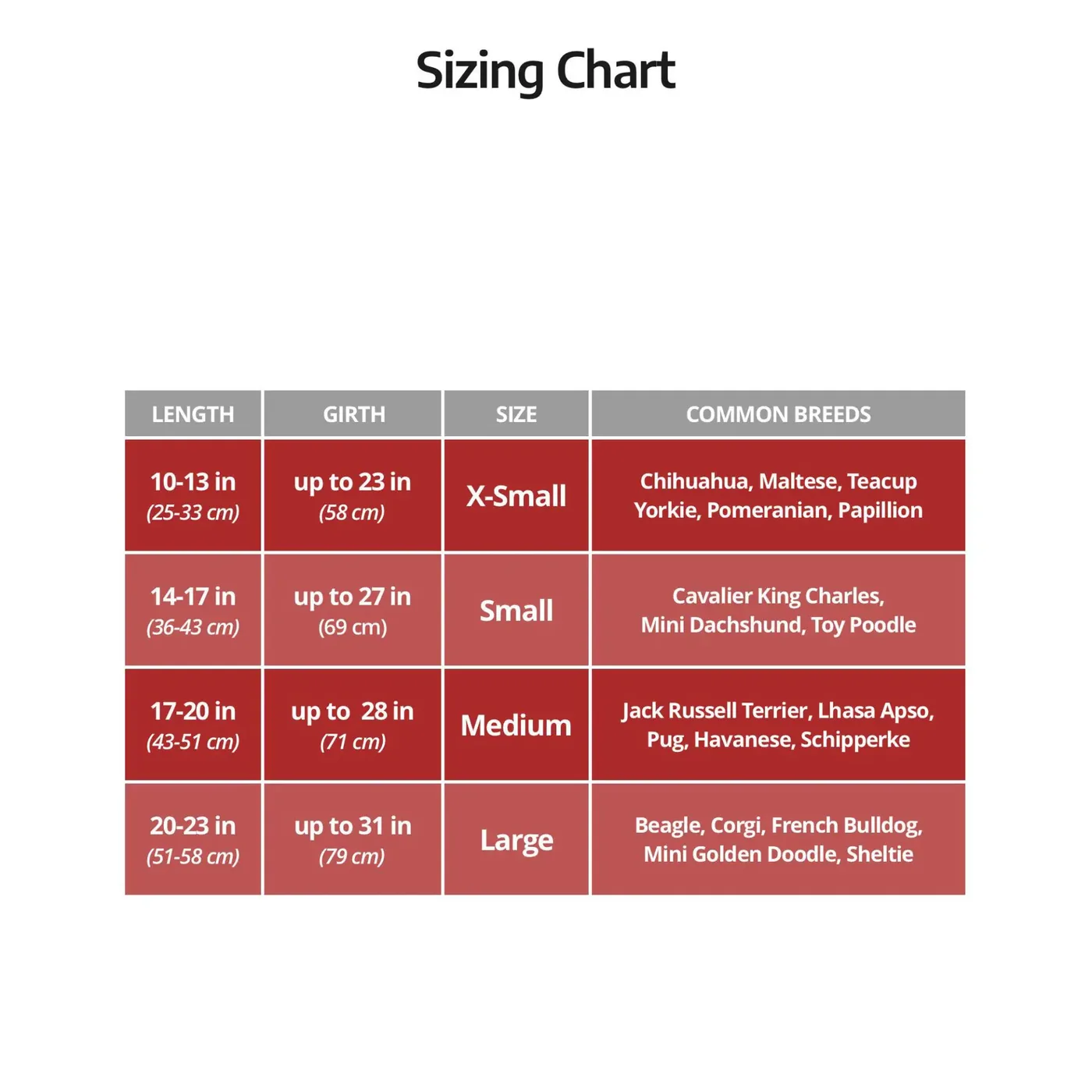
Sizing clarity is the second deciding attribute and the largest cause of post-purchase disappointment. A weight-only chart cannot resolve fit, while a three-measurement chart can. Buyers should treat the chart as a specification deliverable with the same status as the pattern.
| Journey stage | What the shopper does | Product attribute that decides | Specification response |
|---|---|---|---|
| Trigger | Identifies an event or failure | Fitness for the stated use | State use cases and limits honestly |
| Search | Filters by size and use | Accurate listed dimensions | Publish interior and exterior measurements |
| Comparison | Compares two to four products | Sizing clarity, ventilation, carry comfort | Three-measurement chart, tested ventilation, comfort specs |
| Purchase | Buys on availability and delivery | Stock availability, delivery promise | Plan inventory against lead time |
| First use | Opens, fits, uses once | Arrival condition, odour, fit | Protective pack-out, odour control, honest sizing |
| Review or return | Judges the promise against reality | Agreement between listing and product | Keep copy and specification in step |
The table makes an uncomfortable point for buyers: five of the six stages are decided by attributes that are set during specification, and only one is decided by commercial factors. That is the argument for treating the journey as an engineering input.
Ventilation and carry comfort deserve a note because they are frequently claimed and rarely specified. Ventilation can be specified as an open-area percentage and tested; carry comfort can be specified through strap width, padding density, and load distribution. Both then become checkable rather than rhetorical.
Stage Four: Purchase and Delivery Expectations
By the purchase stage the decision is largely made and the remaining risk is availability and delivery. A shopper who has chosen a product and finds it out of stock often substitutes rather than waits, which means the cost of a stockout is the loss of the entire journey rather than a delayed sale. Inventory planning is therefore part of the journey, not separate from it.
Delivery expectations are set by the channel and increasingly by the shopper's experience elsewhere. Late delivery produces a negative outcome even when the product is right, and it interacts badly with event-driven triggers where the product is needed by a date. Buyers serving travel demand should plan inventory to arrive before the seasonal peak rather than into it.
Pack-out condition is the part of delivery a buyer controls directly. A product that arrives creased, crushed, or dust-marked fails at first use regardless of its construction, and the cost of a better inner pack is small compared with the cost of the resulting review. Buyers should specify pack-out as a requirement and check it during inspection.
Information at delivery also matters. A clear care card, a sizing confirmation, and an obvious contact route reduce the anxiety that precedes a negative review, and they are cheap to include. Buyers should treat them as part of the product rather than as marketing collateral.
Payment and checkout friction is the last purchase-stage variable a buyer can influence, and it is mostly a channel decision rather than a product one. What the buyer controls is clarity: a listing that states what is included, what sizes are available, and when it will arrive converts better than one that leaves any of those open. Ambiguity at checkout produces abandoned carts and, worse, purchases made on assumptions that later become returns.
Finally, availability across sizes should be planned deliberately. A shopper who finds their size unavailable converts to a competitor, and the most common cause is a size run planned without reference to demand. The weighted size allocation described in our consumer demographics notes is the control.
Stage Five: Unboxing and First Use
First use is where a purchase becomes a review, and three attributes decide it: arrival condition, odour, and fit. All three are specification outcomes, and all three are commonly neglected because none of them appears in a product photograph.
Arrival condition is the easiest to control. A structured product needs internal support in the pack; a soft product needs to be folded along a line that does not crease permanently. Specifying the pack-out and validating it with a drop or stack check is a small cost that prevents the most common unboxing complaint.
Odour is the second and the most damaging, because it is noticed immediately and described vividly in reviews. It originates from coatings, adhesives, and foams, and it is controlled by specifying water-based adhesives, full coating cure, and a ventilation period before packing. Buyers should set an odour threshold at sample approval so the inspector has a reference.
Fit is the third, and it is usually a labelling failure rather than a design failure. A product that matches its own chart but not the shopper's expectation of the size name generates a return that looks like a defect and reads like one in a review. Aligning names to market convention and printing measurements beside them resolves most of it.
First use also includes the animal's reaction, which the buyer cannot control but can influence. A wide opening, a stable base, and an interior that does not shift under weight all reduce the chance of a bad first experience, and all are specification decisions.
Unboxing outcomes are decided by pack-out, odour control, and honest sizing, which are three specification lines that cost little and prevent the most damaging category of review.
Stage Six: Review, Return, and Replacement
The final stage determines whether the purchase was profitable. A positive review lowers acquisition cost for every subsequent unit; a return costs the sale plus handling plus the review. The asymmetry means that a small investment in the earlier stages has a compounding return at this one.
Returns cluster into recognisable causes, and each has a specification remedy. Sizing returns are fixed with a measurement-based chart. Quality returns are fixed with raised durability targets and an inspection plan that names the defects. Expectation returns, where the product works but not as the shopper imagined, are fixed with honest listing copy and better photography.
Reviews follow the same pattern. Positive reviews mention fit, comfort, and durability; negative reviews mention sizing, odour, and arrival condition. Reading a competitor's negative reviews is one of the most efficient research activities available to a buyer, because it describes the failure modes of the exact product category being specified.
Replacement is the profitable ending. A household that replaces a worn product with the same one is the cheapest sale a brand will ever make, and it is earned entirely at stages five and six of the first journey. Buyers should therefore plan inventory continuity: keeping a core SKU in production unchanged for multiple seasons is a strategy, not an absence of one.
Buyers should also instrument this stage. Tracking return reasons and review themes by SKU, quarterly, converts the journey from a theory into a specification checklist, and it is the most reliable way to identify which of the six stages is failing.
Where the Journey Breaks and What It Costs
The most expensive break is a mismatch between listing copy and physical product, because it produces returns, negative reviews, and marketplace penalties simultaneously. It usually originates in a specification change that was not communicated to whoever maintains the listing. The control is simple: a single approved claim and measurement set, owned by one person, used everywhere.
The second most expensive break is a stockout on the winning size. It converts a completed journey into a lost sale and often into a lost customer, because the shopper substitutes and then replaces the substitute. Planning the size run against demand, and reordering against remaining lead time rather than against a fixed stock level, is the remedy.
The third is a systematic defect that passes inspection because the inspection plan did not name it. Odour, pack-out damage, and closure feel are all classifiable defects, and leaving them out of the worksheet means they are observed rather than judged. Under AQL 2.5, naming them changes the acceptance outcome and the review outcome.
The fourth is late arrival against an event-driven trigger, which produces a cancellation and a negative review at the same time. Planning inventory to land before the seasonal peak, rather than into it, is the only reliable control.
A fifth break is quieter and more common than any of the others: drift. A specification changes slightly between seasons, a supplier substitutes an equivalent component, a listing is updated without reference to the tech pack, and the product that ends up being reviewed is not the product that earned the original positive reviews. Drift is invisible in any single order and obvious across three, and it is the reason a once-strong SKU slowly declines without a clear cause. The control is a version-controlled specification with a named owner, a written approval requirement for any input change, and a periodic reconciliation between the current specification and the current listing.
Each of these breaks is cheaper to prevent than to remedy, and every one of them is prevented by a decision made before the purchase order rather than after the first review.
Designing an Assortment Around the Journey
An assortment designed around the journey looks slightly different from one designed around a category map. It includes an anchor SKU that wins comparison on dimensions and sizing clarity, a travel-oriented SKU that serves the event trigger with documentation, and a premium SKU that converts the replacement shopper through durability. Each has a defined role at a defined stage rather than simply filling a price band.
Specification priorities follow the roles. The anchor SKU spends its budget on measurement accuracy, comfort, and pack-out. The travel SKU spends on compliance documentation and ventilation. The premium SKU spends on abrasion resistance, hardware, and coating durability. None of them spends on decorative features, because no stage of the journey rewards them.
Order quantities follow the same logic. The anchor SKU carries the volume and is ordered at 500 pieces per colourway with a planned reorder trigger. The travel SKU is ordered seasonally with inventory landing before the peak. The premium SKU is ordered in a single colourway at the minimum, because its role is margin rather than volume.
Production mechanics are constant: samples in 6-10 working days, bulk in 35-50 days after approval, AQL 2.5 inspection, T/T 30/70 terms, FOB Xiamen. What the journey adds is a checklist attached to each order: measurements verified, pack-out validated, odour threshold agreed, and listing copy reconciled against the approved specification.
Buyers extending this into the rest of the planning cycle should read our notes on managing returns in wholesale programs and on price point strategy, because the journey determines both the return profile and the price position an assortment can hold.
An assortment designed around the journey assigns each SKU a role at a specific stage, spends its budget on the attributes that stage rewards, and skips the features no stage notices.
Order and quality terms
- MOQ 500 pieces per colourway; samples in 6-10 working days
- Bulk production 35-50 days after approval; AQL 2.5 inspection standard
- T/T 30/70 terms, FOB Xiamen, full document set per shipment
People Also Ask
What is the pet bag purchase journey?
Six stages: a trigger such as a trip or a replacement, search and shortlisting, comparison against two to four alternatives, purchase and delivery, first use, and review or return. Five of the six are decided by product attributes set during specification.
What makes a shopper choose one pet bag over another?
Dimensions and sizing clarity first, then ventilation, carry comfort, and cleanability. Price usually acts as a filter applied before comparison rather than as the deciding factor inside it.
Why do pet bags get returned?
Three recurring causes: sizing mismatch, quality failures such as torn seams or broken closures, and expectation mismatch where the product works but not as the listing implied. Each has a specification remedy rather than a marketing one.
How can a buyer reduce return rates?
Publish a three-measurement sizing chart, keep listing copy reconciled with the approved specification, validate pack-out, set an odour threshold at sample approval, and name those attributes in the AQL 2.5 inspection worksheet.
Does arrival condition really affect reviews?
Yes, and disproportionately. A product that arrives creased, crushed, or with a strong odour generates a negative review even when the construction is sound, because first use is the moment the shopper forms a judgement.
How should inventory be planned against the journey?
By reordering against remaining lead time rather than a fixed stock level, and by landing travel-oriented inventory before the seasonal peak. A stockout on the winning size loses the whole journey rather than delaying a sale.
What role does documentation play in the journey?
It is a conversion asset at the trigger and comparison stages, particularly for travel-driven purchases where the shopper has read carrier rules and wants a product that satisfies them.
Frequently Asked Questions
Should interior and exterior dimensions both be listed?
Yes. The shopper is solving two problems: whether the animal fits and whether the product fits their space or travel constraint. Listing both wins comparison against products that list a single figure.
Is a weight-based size chart acceptable?
No. Weight alone does not determine fit and is a leading cause of sizing returns. A three-measurement chart covering length, girth, and depth should be printed on packaging and repeated in listings.
How should odour be controlled before packing?
By specifying water-based adhesives, requiring full coating cure, and allowing a ventilation period before packing, with an acceptable threshold agreed when the approval sample is signed so the inspector has a reference.
What should the inspection worksheet include for this?
Pack-out condition, odour, closure feel, measurement conformance, and labelling accuracy, classified so that a systematic failure fails the lot at AQL 2.5 rather than being recorded as an observation.
How does the journey differ for travel purchases?
Travel purchases are time-pressured, less price-sensitive, and more documentation-driven. They respond to compliance statements and to accurate dimensions, and they punish late arrival more severely than any other trigger.
Why does a stockout cost more than a delayed sale?
Because the shopper substitutes a competitor's product and often replaces that substitute later. The original buyer loses the sale and the repeat, which is why reordering against remaining lead time matters.
Should a core SKU stay unchanged across seasons?
Yes, where it performs. Continuity lets a household replace a worn product with the same one, which is the cheapest sale a brand makes and is earned entirely at the first use and review stages.
What is the most efficient competitor research?
Reading negative reviews of comparable products. They describe the actual failure modes of the exact category being specified, which is more actionable than any feature comparison.
How often should return reasons be reviewed?
Quarterly, by SKU. That cadence converts the journey from a theory into a specification checklist and identifies which stage is failing while it is still cheap to correct.
Are decorative features worth the cost?
Rarely. No stage of the journey rewards them, and the budget is better spent on measurement accuracy, comfort, pack-out, and durability, all of which a shopper notices when they are absent.
What are the standard commercial terms?
MOQ 500 pieces per colourway, samples in 6-10 working days, bulk production in 35-50 days after approval, AQL 2.5 inspection, T/T 30/70 terms, FOB Xiamen.
Who should own the approved claim and measurement set?
One person. Mismatches between listing copy and physical product usually originate in a specification change that was never communicated to whoever maintains the listing, and single ownership prevents that.
Talk to QUANZHOU JUNYUAN BAGS about a wholesale pet bag order: MOQ 500 pieces per colourway, samples in 6-10 working days, bulk production in 35-50 days under AQL 2.5 inspection.
Get a free quote Request a sample