Pet Bag SOP: Standard Operating Procedure for Buyers
An SOP, or standard operating procedure, is the written instruction describing how a specific operation is performed, who performs it, with what equipment and to what acceptance criterion. In a wholesale pet bag programme the operations that need one first are cutting, hardware setting, strap assembly and packing, and each SOP carries a version number, an owner and a training record.
SOPs are the least glamorous document in a quality system and the most predictive of whether a reorder will match the first order. Our production team runs pet bag programmes at MOQ 500 pieces per colourway, with samples in 6-10 working days and bulk production in 35-50 days after approval, releasing goods against inspection to AQL 2.5 with the operations behind that result documented. Four elements make an SOP real: it is written for the person doing the work, it carries a version and an owner, it is used in training, and someone checks that the line follows it. Buyers never read these documents, and they should not need to; what they should ask is which operations have one, when each was last revised, and what happens when an audit finds the line doing something else. A programme that can answer those three questions has a controlled process. One that cannot is relying on the skill of whoever happens to be on the line that week, which is the largest uncontrolled variable in soft goods manufacturing.
Pet bag market size is reported three different ways depending on whether carriers, travel bags and accessories are bundled, so Market & Business Strategy planning should pick one definition and stay with it. Pet bag market report figures are useful for board decks and of little use for MOQ planning.
What an SOP Is For in a Contract Programme
An SOP exists to make an operation repeatable by a competent person who has not done it before. That is the whole purpose, and every other use of the document is secondary.
The commercial reason a buyer should care is reorder consistency. A pet bag ordered in season two is made by a line whose composition has changed, and the difference between a matching reorder and a disappointing one is usually whether the method was written down or lived with the people who have since moved on.
The quality reason is variation reduction. Two operators performing an operation differently produce two distributions of output, and the spread between them is defect generation. A written method narrows the spread.
The training reason is speed. A new operator trained against a written method reaches acceptable output faster than one learning by observation, and the difference is measurable in the defect rate of the first week.
The audit reason is evidence. When a buyer or a retailer asks how an operation is controlled, the answer is a document that can be produced, read and compared with what the line is doing. No document means no answer.
The liability reason is narrow but real. Where a safety-relevant characteristic depends on an operation, the record that the operation was specified, taught and checked is the evidence that reasonable care was taken.
SOPs are not a substitute for skill. A difficult operation still needs a skilled operator; the document ensures the skill is applied in the same way every time rather than reinvented per person.
They are also not a substitute for a specification. The specification states what the product must be; the SOP states how the operator achieves it. Confusing the two produces a document that describes a target without describing a method.
Structure and Writing Rules That Get Followed
Most SOPs are written to satisfy an auditor rather than to be used, and the test of a usable one is whether an operator would rather read it than ask a colleague. Five rules produce that document.
Write for the operator, in the operator's language, at the operator's reading level. A document written in quality-management English is a document nobody reads on the line.
Keep it to one page where possible. A single operation, one page, numbered steps, with a photograph or diagram for each critical step, is the format that gets used. A four-page document gets filed.
State the acceptance criterion at the point of work. The operator needs to know what good looks like at their station, not at final inspection, and a photograph of an acceptable and an unacceptable result at the station is the most effective form.
Name the equipment, the setting and the tool. A stitch density, a temperature, a pressure, a gauge or a jig should be stated as a value, because a value can be checked and an adjective cannot.
Include the reaction rule. What the operator does when the result is out of criterion, stop, segregate, call the supervisor, is the step that turns an instruction into a control.
| SOP element | What it contains | Why it matters | Common omission |
|---|---|---|---|
| Purpose and scope | Which operation and which styles | Prevents use on the wrong product | No scope, applied too broadly |
| Equipment and settings | Machine, tool, jig, values | A value can be checked | Adjectives instead of numbers |
| Numbered steps | The method in order | Repeatable by a new operator | Steps implied rather than stated |
| Acceptance criterion | What good looks like at the station | Control at the point of work | Only final inspection criteria |
| Photographs | Acceptable and unacceptable result | Removes interpretation | Text description only |
| Reaction rule | Stop, segregate, escalate | Turns instruction into control | None stated |
| Version and owner | Revision, date, approver | Currency and accountability | No owner, no revision date |
Photographs deserve emphasis because they do the work that prose cannot. A picture of a correctly set buckle, at the station, from the operator's viewpoint, resolves in one second what a paragraph describes imperfectly.
Validation is the closing step. A new or revised SOP should be run on the line and the output checked before it is issued, because a method that reads well and produces defects is worse than no method.
The buyer's interest in the writing rules is indirect but real: a programme whose SOPs contain values and photographs produces a narrower output distribution, which shows up as a lower defect rate at inspection to AQL 2.5.
Which Operations Need a Written SOP First
Writing SOPs for everything at once is a project that never finishes. The effective approach is to sequence by risk, starting with the operations whose failure is severe, invisible at final inspection, or dependent on individual skill.
Cutting comes first because it is the origin of dimensional variation. Panel dimensions, grain direction, notch placement and pattern alignment on a printed fabric all originate here, and an error propagates through every subsequent operation.
Hardware setting comes next because the consequence is severe. A buckle, a tether anchor or a strap end that is incorrectly positioned or incompletely secured is a safety-relevant defect, and it is frequently invisible in a finished unit.
Strap and webbing assembly follows because it carries load. Stitch pattern, stitch count, seam allowance and the securing of the free end determine whether a load-bearing element holds, and the failure is both severe and latent.
Closure installation, zips and latches, follows because it is function-critical and skill-dependent. A zip set with incorrect tension or incorrect end treatment fails in use and passes every visual check.
Packing comes last in the sequence but not last in importance. The packing SOP covers folding method, polybag, insert placement, carton count and carton marking, and it prevents the administrative defects that dominate retailer rejections.
Inspection itself needs an SOP, and this is the one buyers should ask to see. How the sample is drawn, how findings are classified, and how the decision is recorded should be a written method rather than an inspector's habit.
Material receiving needs one too. What is checked on each incoming delivery, against what reference, with what tolerance and what action on failure, is an operation like any other.
The sequencing principle is simple: write the SOP for the operation whose failure would be most expensive first. Everything else follows in order of consequence.
Version Control, Approval and Distribution
An SOP without version control is a liability, because an out-of-date method posted at a station is worse than no method. Three disciplines keep the document set trustworthy.
Version identification is the first. Every SOP carries a revision number and a date, in the document and on the posted copy, so that any copy found anywhere can be traced to its currency.
Approval is the second. A named approver for the method and, where the operation affects a safety or compliance characteristic, a second approval. Electronic or signed, the point is that someone is accountable for the content.
Distribution control is the third and the one that fails most often. The current revision must be at the station and the superseded revision must be physically removed. Old copies in a drawer, on a phone or on a noticeboard are how a wrong-version error happens.
A distribution list closes the loop. A record of which stations hold which revision allows a change to be rolled out and confirmed, rather than assumed to have happened.
Change triggers should be stated. A specification change, a material change, an equipment change, a recurring defect or a validated improvement each force a revision, and a document that has not changed in three years is usually a document nobody uses.
Revision history should be retained. A short table at the end of each SOP recording the revision, the date, the change and the approver costs nothing and answers the question of what changed and when.
Withdrawal of a superseded operation is the step buyers never see and should ask about. When an operation is discontinued, its SOP should be withdrawn and removed from stations rather than left to be discovered.
The framework for this discipline is the documented information control described in the quality management standard published by ISO, and aligning to it satisfies most retailer audit expectations without extra effort.
Training, Competency and the Operator Record
An SOP that has not been used in training is a document, not a control. The link between the written method and the person performing it is the training record, and it is what converts a method into a capability.
Training should be against the document. The operator reads or is taken through the SOP, performs the operation under supervision, and is assessed against the acceptance criterion at the station. Three steps, recorded.
Competency assessment should be practical rather than verbal. The operator produces units, the units are checked against the station criterion, and the result is recorded. Asking whether someone understands is not an assessment.
The record itself is short: operator name, operation, SOP revision trained against, date, assessor and result. Six fields, one line per operator per operation, and it is the document an auditor asks for first.
Re-training triggers should be defined. A revised SOP, a move to a different operation, an extended absence, or a defect traceable to that operation each require re-training, and the trigger list prevents the gap that appears when a method changes and the operator does not.
Cross-training is a resilience measure with a quality benefit. An operation performed by several trained people is less exposed to absence, and the existence of a second trained operator is a strong signal that the method is documented rather than personal.
The buyer rarely sees these records and should not need to, but should ask one question: which operations have trained operators recorded, and how recent is the most recent training on each. The answer reveals how much of the process is actually controlled.
Our production team treats the training record as part of the production release, so a lot is not started on an operation without at least one operator recorded as competent against the current SOP revision.
External verification of the competency system is available where a retailer requires it, and assessment providers such as SGS include training and competency records within the scope of a supplier audit.
SOP, Work Instruction and Control Plan Are Different Documents
Three document types are routinely confused, and the confusion produces documents that do the wrong job. Each has a distinct audience, scope and level of detail.
An SOP describes an operation end to end. It covers the scope, the equipment, the method, the acceptance criterion and the reaction rule, and its audience is the operator and the supervisor. One document, one operation.
A work instruction is narrower and more granular. It describes a single step or a single workstation task, often as a visual card with minimal text, and it sits at the station where that step is performed. It is the document an operator glances at.
A control plan sits above both. It lists, for a product, every characteristic that must be controlled, where it is controlled, how often, by what method, and what happens on failure. Its audience is the quality function and the buyer's engineer.
The relationship is hierarchical and useful. The control plan identifies what matters, the SOP describes how each relevant operation achieves it, and the work instruction puts the critical step in front of the operator.
The control plan is the document a buyer should ask for, because it is a single page that shows the whole quality strategy for a product. A supplier that can produce one understands the product's risks.
Confusion produces two familiar failures. An SOP written at control-plan level is too abstract for an operator, and a work instruction written at SOP level is too long to be read at a station.
Alignment between the three should be checked on every revision. A control plan listing a characteristic that no SOP addresses is a gap, and an SOP describing a method the control plan does not monitor is a wasted control.
Where a characteristic is measurable, the control plan should name the test method as well as the criterion, and the textile and materials methods published by AATCC are the usual reference for soft goods characteristics.
Auditing SOP Compliance on the Line
A document set is a claim; compliance auditing is the test. The purpose of the audit is not to find fault but to discover the gap between the written method and the performed method, because that gap is where defects live.
The method is observation against the document. An auditor stands at the station with the SOP and watches the operation, checking each step, each setting and the acceptance judgement. Ten minutes per operation is usually enough.
Common findings are predictable and worth listing: the posted revision is not the current one, a machine setting differs from the stated value, a step is skipped because it is slower, and the operator's acceptance judgement differs from the documented criterion.
The skipped-step finding is the most instructive, because it usually indicates that the method is impracticable as written. The correct response is to investigate why, not to discipline the operator, and often the SOP is the thing that needs changing.
Findings need the same treatment as any nonconformity: root cause, action, owner, date and verification. An audit that produces a list without actions is an exercise in documentation.
Frequency should be scheduled and risk-weighted. Critical operations and operations with a recent defect history are audited more often, and a rotation covering all operations over a defined cycle keeps the whole set current.
Unannounced auditing has a role and should be used sparingly. Its value is that it observes the normal method rather than the prepared one, and a programme that only ever audits on notice is auditing a performance.
Buyer access to SOP compliance auditing is a reasonable request and a strong signal. A supplier willing to let a buyer's representative observe an operation against its own SOP is confident in the system; one that refuses is telling the buyer something.
The link to output is the point of the exercise. Operations with verified compliance produce a narrower output distribution, which is what lowers the defect rate found at final inspection to AQL 2.5.
What an SOP Should Say About the Pet Bag Specific Risks
A generic sewing SOP transfers to a pet bag without difficulty and leaves the category's own risks unaddressed. The operations that carry this product's specific consequences need explicit lines in the method rather than an assumption of general competence.
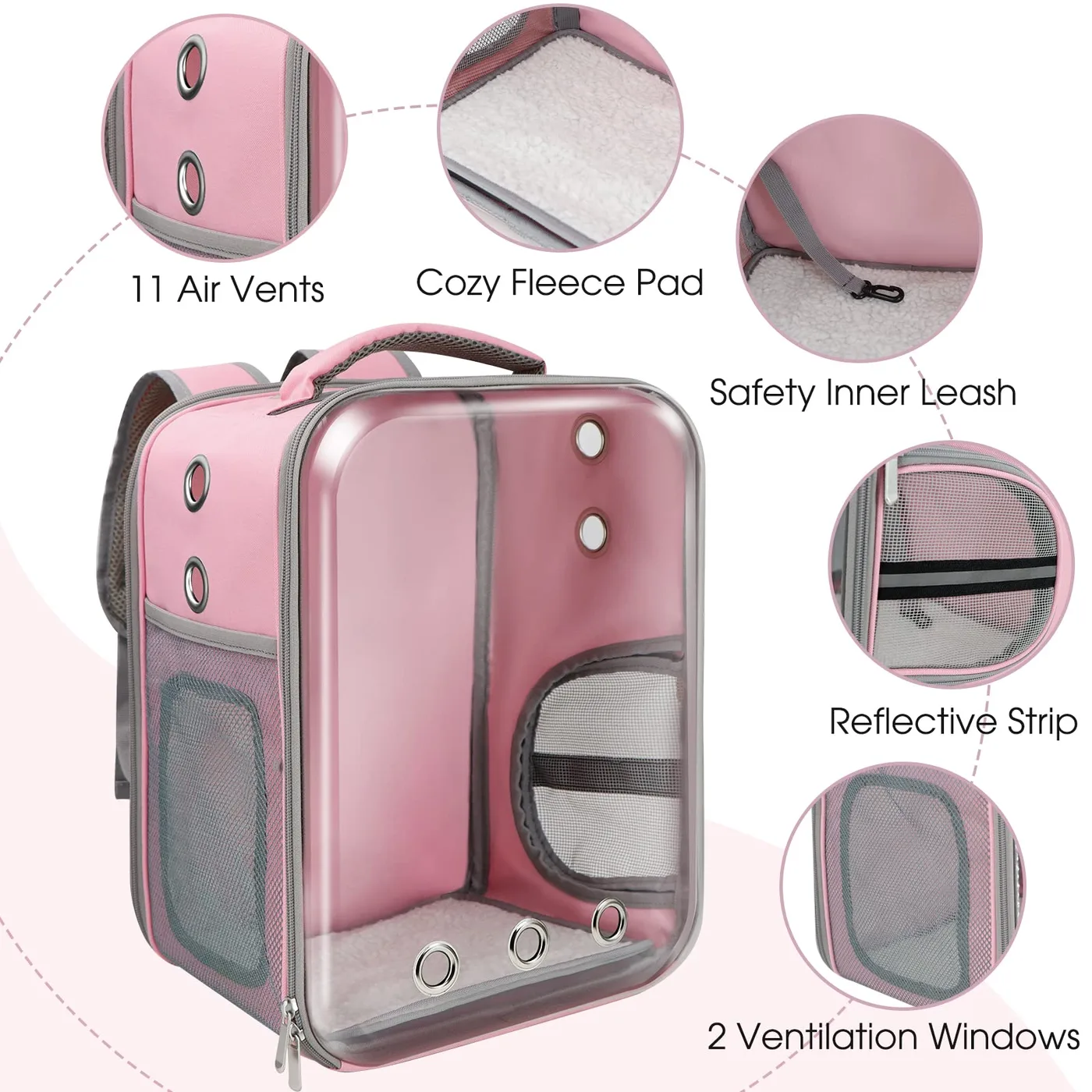
Ventilation panel installation needs a stated method and a stated check. Where the mesh is backed by lining or trimmed with binding, the method should state how much open area must remain and how the operator confirms it, because an over-zealous trim operation silently reduces ventilation.
Restraint and tether attachment needs the tightest method in the set. Stitch pattern, stitch count, seam allowance, the securing of the free end and the pull test force should each be a stated value, with a stated frequency, because the consequence of a failure is a safety event rather than a return.
Hardware orientation is small and consequential. A buckle or a clip installed reversed functions poorly or not at all, and a photograph at the station showing correct orientation is the whole control.
Liner installation affects the cleanability claim. A removable liner that is installed with an inaccessible seam, or a coated liner punctured at a stitch line, defeats the claim the packaging makes, and the method should state both the seam position and the stitch specification.
Weight-bearing strap assembly deserves its own SOP rather than sharing one with decorative webbing. Stitch density, bar-tack placement and the treatment of the free end differ, and treating a load path as decorative trim is a specification failure expressed as an SOP failure.
Marking application needs a content check at the station, not only at incoming. The correct label for the destination market, applied to the correct position, is an operation like any other and should have an acceptance photograph.
The pattern across all six is the same: any claim the product makes is an operation that needs a method. A washability claim, a weight claim, a ventilation claim and a material claim each trace back to a specific step on the line.
Where a claim involves a measurable property, the SOP should name the test method and the criterion, and the textile methods published by AATCC are the usual reference for the fabric-related claims in this category.
Digital SOPs, Evidence and Buyer Access
Paper SOPs at a station are proven and cheap, and they have one structural weakness: distribution control. When a method changes, every paper copy has to be found and replaced, and one missed copy is a wrong-version error.
Digital SOPs solve distribution. A screen at the station shows the current revision by definition, revision history is automatic, and a change takes effect simultaneously everywhere. The weakness is access: a screen that is switched off or a station without one is worse than paper.
Photographic and video content is where digital wins decisively. A short video of the correct method, viewed at the station, communicates a difficult operation better than any written step, and it is the strongest training tool available in soft goods.
Version evidence improves too. A digital system records which revision was displayed when, and can record which operator acknowledged which revision, which is a stronger training record than a signature on paper.
Integration with production data is the further step. Where an SOP system records the check results at each station, the data becomes in-process control data automatically, and the patrol sheet is produced as a by-product.
Buyer access is the commercial question. A buyer does not need to read the SOPs, but a programme that can show a current document set, with revision dates and training records, on request, is demonstrating control without a factory visit.
The practical compromise most programmes reach is hybrid: paper work instructions at the station for the critical visual steps, and a controlled digital master holding the SOPs, the revision history and the training records.
The judgement a buyer should make is about currency rather than technology. Ask for the revision dates of the SOPs covering cutting, hardware setting and packing. Three dates, and their recency tells a buyer whether the document set is living or decorative.
Timing closes the practical loop: samples in 6-10 working days and bulk production in 35-50 days after approval at MOQ 500 pieces per colourway, with the SOP set finalised during the sampling window so the bulk line runs to a written method from the first unit.
Production capability
- SGS-verified production space of 4,950 m², 149 machines, 7 assembly lines
- Pet bag output since 2014 from a 137-person team
- 200,000 units shipped monthly under BSCI and ISO 9001 systems
People Also Ask
What does SOP stand for?
Standard operating procedure: the written method for a specific operation, including equipment, settings, steps, acceptance criterion and reaction rule.
Why do SOPs matter in contract manufacturing?
Because the line composition changes between orders. A written method is what makes a season two reorder match the season one result.
How many SOPs does a production line need?
One per operation, sequenced by risk. Start with cutting, hardware setting, load-bearing assembly, closures and packing, then extend to receiving and inspection.
Who should write an SOP?
Someone who knows the operation, reviewed by the quality function, and validated on the line before issue. A method that reads well but produces defects is not finished.
What makes an SOP usable?
Operator language, one page, numbered steps, photographs at the station, stated values rather than adjectives, and a reaction rule.
Is an SOP the same as a control plan?
No. The control plan lists what must be controlled across a product; the SOP describes how one operation achieves it.
How do I know SOPs are actually followed?
Compliance auditing: observe the operation against the document, record the gaps, and close each finding with a root cause, action and verification.
Frequently Asked Questions
What is an SOP in manufacturing?
A written instruction describing how a specific operation is performed, by whom, with what equipment and settings, to what acceptance criterion, and what to do when the result is out of criterion.
Which pet bag operations need an SOP first?
Cutting, hardware setting, strap and webbing assembly, closure installation and packing, sequenced by consequence. Material receiving and inspection need one as well.
How long should an SOP be?
One page where possible, with numbered steps and a photograph for each critical step. A longer document gets filed rather than used.
What is the difference between an SOP and a work instruction?
An SOP covers an operation end to end for the operator and supervisor. A work instruction is a narrower visual card for a single step at the station.
What is a control plan?
A document listing every characteristic that must be controlled for a product, where it is controlled, how often, by what method and what happens on failure. It is the one page a buyer should ask for.
How is SOP version control maintained?
A revision number and date in the document and on the posted copy, a named approver, a distribution list, and physical removal of superseded copies from every station.
What should a training record contain?
Operator name, operation, the SOP revision trained against, date, assessor and a practical result assessed against the station acceptance criterion.
Why do operators skip steps in an SOP?
Often because the method is impracticable as written. Investigate why before treating it as a discipline issue; the document frequently needs changing.
How often should SOP compliance be audited?
On a scheduled, risk-weighted rotation, with critical operations and operations with a recent defect history audited more often, including some unannounced checks.
Should SOPs be digital or on paper?
Usually both. Digital for the controlled master, revision history and training records; paper or screen work instructions at the station for critical visual steps.
Can a buyer ask to see the SOPs?
A buyer rarely needs to read them, but should ask which operations have one, when each was last revised, and what happens when an audit finds a difference.
What is a reaction rule?
The instruction telling the operator what to do when a result is out of criterion: stop, segregate, escalate. It is what turns an instruction into a control.
When should the SOP set be finalised?
During the sampling window, so the bulk line runs to a written method from the first unit rather than improvising for part of the run.
Talk to QUANZHOU JUNYUAN BAGS about a wholesale pet bag order: MOQ 500 pieces per colourway, samples in 6-10 working days, bulk production in 35-50 days under AQL 2.5 inspection.
Get a free quote Request a sample