Pet Kitten Bag: Bulk Starter Kit Sourcing Guide
A wholesale kitten bag is a 5-10 litre contained-carry product where the controlling specification is escape resistance, quoted at MOQ 500 pieces per colour and FOB Xiamen USD 4.80-9.20 per unit. Buyers should specify a two-stage closure, claw-tested mesh and a seam strength figure rather than comparing on volume and price. Samples take 6-10 working days; bulk production takes 35-50 days.
Executive summary for kitten product buyers. Cats escape. That is the whole design problem, and it is why kitten bags are specified differently from puppy bags even though the channels and the price points are similar. A dog pushes against a closure; a cat looks for a gap, tests it with a paw, and works the zip tape with its claws. A closure that is adequate for a puppy of the same weight will lose a determined cat within a minute, and the resulting complaint is always about safety rather than about quality.
Commercial baseline: MOQ 500 units per colour, samples in 6-10 working days, bulk production 35-50 days after sample approval and deposit, inspection to AQL 2.5 plus a closure endurance and seam strength gate, payment T/T 30/70 against FOB Xiamen. Ventilation area, mesh specification and closure type should all be written into the tech pack with test methods, because they are the three items most often substituted in a competitive quote. Our production team sources these through an SGS-verified production base operating to BSCI and ISO 9001 and records closure-cycle and seam test data per run. Buyers who define the closure clearly at specification stage receive quotes that are directly comparable; buyers who leave it open receive quotes that look similar and perform very differently.
Where to buy pet bags wholesale is less a question of directory listing than of Pet Bag Types & Styles verification - ask for the test report before the price list. Pet bag wholesale vendors who can name the fabric mill will usually also name the failure mode, which is the fastest way to separate a real programme from a catalogue.
Why kitten containment is a different engineering problem
The instinct when specifying a kitten bag is to take a puppy bag and make it smaller. That approach produces a product that fails in a specific and predictable way. A cat does not test a closure by pushing; it tests by probing. It will find the zip garage, the gap at the end of a binding, the loose corner of a mesh panel, and it will work at it with claws and teeth until something gives. A containment specification has to assume a persistent, flexible, motivated animal rather than a heavy one.
The second difference is the claw. Cat claws puncture and snag in a way that dog nails do not, which makes mesh specification and seam construction far more important here. A decorative mesh with a loose weave will snag, tear and then open, and the failure is progressive: the animal enlarges the hole faster than an owner notices it. Mesh for this category should be specified by weave density and by a puncture or snag resistance figure, not by appearance.
The third difference is behaviour inside the bag. A kitten in a carrier is often frightened, and a frightened cat tries to exit upwards and backwards. That makes top openings and rigid or semi-rigid structures riskier than a soft bag with a controlled opening, and it is why many experienced buyers in this category prefer a soft body with a top-opening zip that the owner controls rather than a front entry the animal can push through.
The fourth difference is hygiene. Kittens travel to veterinary appointments and occasionally have accidents in transit. A wipeable or removable interior is not a premium feature here; it is the difference between a product that is used again and one that is abandoned in a cupboard.
- Assume a probing, persistent animal rather than a pushing one.
- Specify mesh by weave density and snag resistance, not by appearance.
- Prefer an owner-controlled opening over an animal-pushable one.
- Specify a wipeable or removable interior as standard.
- Test the closure under load, not just for smooth operation.
That final item is the one most often skipped. A zip that runs smoothly on a bench tells a buyer nothing about whether a cat can work it open from inside. Closure testing should be performed with a representative load pressing outwards from within the bag, and the test should be repeated over the expected service life of the zip.
The commercial consequence of getting this wrong is disproportionate to the cost of getting it right. A containment failure produces a lost animal, a distressed customer and usually a public review, and in veterinary and shelter channels it can end a supply relationship outright. The closure, the seam behind it and the mesh beside it are the three items where a buyer should spend before spending anywhere else on the product.
Kitten bag specification matrix
The matrix below sets out the three specifications that cover most wholesale kitten bag enquiries. The tiers differ in closure architecture, mesh specification and structure, which together account for nearly all of the price movement.
| Parameter | Clinic basic | Retail containment | Premium soft carrier |
|---|---|---|---|
| Volume | 5-7 L | 7-10 L | 8-10 L semi-structured |
| Shell | 420D polyester | 600D polyester, PU | 600D Oxford plus panel |
| Closure | Zip plus hook-and-loop | Locking zip plus safety clip | Locking zip, two-stage, covered |
| Mesh | Standard, two panels | Tight weave, three panels | Snag-resistant, three panels |
| Opening | Front | Top plus front | Top, owner-controlled |
| Seam strength | Reported, unstated target | Named target, tested | Named target, per-run test |
| Interior | 210D wipeable | Wipeable, removable board | Removable washable liner |
| Weight band | Up to 4 kg | Up to 6 kg | Up to 7 kg |
| MOQ per colour | 500 | 500 | 500 |
| FOB Xiamen band | USD 4.80-6.00 | USD 6.20-7.80 | USD 7.90-9.20 |
| Sample lead time | 6-8 working days | 6-10 working days | 8-10 working days |
| Bulk lead time | 35-42 days | 38-48 days | 40-50 days |
| Inspection gate | AQL 2.5 | AQL 2.5 plus closure | AQL 2.5 plus closure and seam |
The closure row is the one that separates the tiers. A locking zip with a secondary safety clip is the minimum that should be specified for any product sold as containment, and the premium row adds a covered zip so the tape itself is not exposed to claws. The cost difference between the first and second row is small relative to the difference in field performance.
Weight bands should be treated as a specification rather than a marketing number. A stated band should be supported by a load test on the base and on the handle or strap anchors, and the test should be repeated after a wash cycle because wet fabric behaves differently from dry. Buyers should ask for the test basis and record it in the tech pack.
Note that all three rows assume MOQ 500 per colour. As in other small-format categories, a buyer wanting several colourways is better served by one body colour with varied trim, because the fabric minimum, not the assembly, is what sets the price floor.
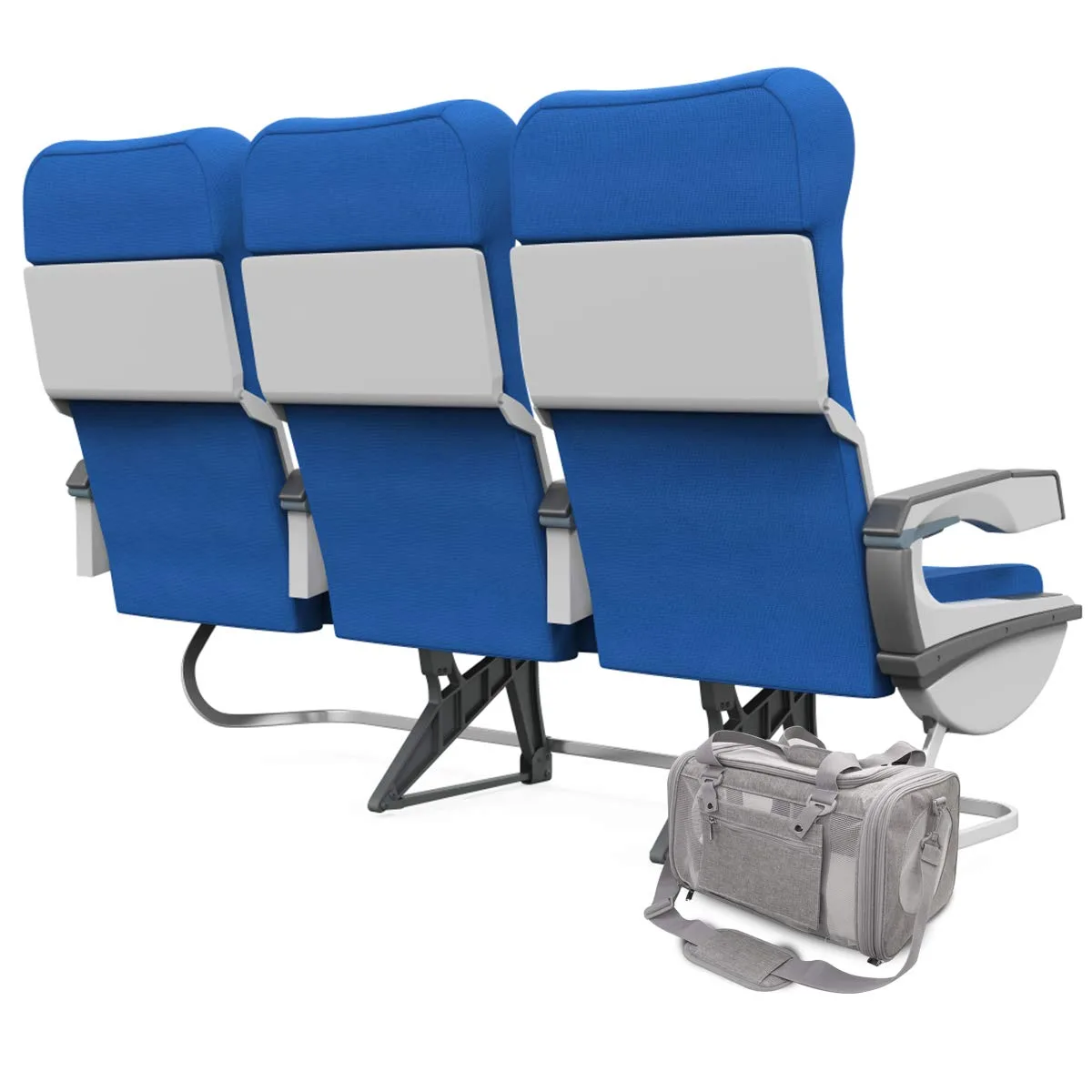
Closure systems and escape resistance
Closure architecture is the single most important decision in this category. The options are a standard zip, a locking zip where the pull must be lifted or rotated to move, and a two-stage system where a zip is backed by a mechanical clip or a hook-and-loop strap. For kitten containment the two-stage system is the correct default, and a locking zip is the minimum acceptable upgrade where the buyer will not accept the extra component.
Where the zip runs matters as much as what the zip is. A zip that terminates at a corner creates a gap that a paw can work into; a zip that runs to a fabric garage, or that terminates against a bound stop, removes that opportunity. Buyers should specify the termination detail explicitly, because it is a few cents of construction and it is the most common escape path in otherwise sound products.
Seam strength behind the closure is the second line of defence. If an animal cannot open the zip, it will try the seam next, and a seam with a low strength figure will begin to open under sustained pressure from inside. Specifying a seam strength target with a named test method, and testing it per production run, converts a vague quality claim into an enforceable one.
- Two-stage closure: zip plus a mechanical safety, as the default.
- Locking zip as the minimum upgrade where a second component is unacceptable.
- Zip termination into a garage or bound stop, never an open corner.
- Seam strength target with a named test method and per-run testing.
- Closure endurance testing over the expected service life of the zip.
Buyers should also require that the sample and the bulk production use the same closure brand and model. Closure substitution between sample and bulk is the most common cause of a product that performs worse in the field than in approval, and it is invisible in a specification that says only heavy duty zip.
Fabric and mesh: claw resistance and puncture testing
Mesh is the weakest element of any soft cat product and the one that requires the most precise specification. The failure mode is snagging, not tearing: a claw catches a filament, pulls it, and the resulting hole is enlarged by the animal within a minute. A tight weave with a high filament count resists snagging far better than an open decorative mesh, and the difference is not visible in a photograph.
Buyers should specify mesh by construction and by test result rather than by name. A snag resistance test, run against a defined probe and load, gives a comparable number across suppliers. Where a supplier cannot produce the number, the buyer should assume the mesh is decorative and specify a replacement, because the field consequence is a containment failure rather than a cosmetic one.
Shell fabric matters less than mesh but should still be specified with intent. A tightly woven 600D polyester resists claw penetration adequately at this size, and a PU coating helps with wipe cleaning. Buyers should avoid soft, brushed or knitted shells entirely in this category, because they snag and because they look worn after a single encounter with claws.
Seam placement is the related decision. Seams that run along the inside of the animal compartment are reachable and will be worked at; seams placed on the outside of the panel, or bound and covered internally, remove that opportunity. This is a construction instruction that costs nothing to specify and materially extends service life.
Washability completes the material picture. A removable interior board and a wipeable lining let the product return to service the same day after an accident, which in a veterinary or rescue context is the difference between one bag and two.
Coating choice deserves a specific note because it interacts with both cleaning and claw resistance. A thin PU coating wipes clean but abrades quickly at the points where claws repeatedly contact the surface, while a heavier coating resists abrasion and feels stiffer. For containment products the heavier coating is usually the right trade, because a worn coating at a contact point becomes a snag point, and a snag point becomes an escape route.
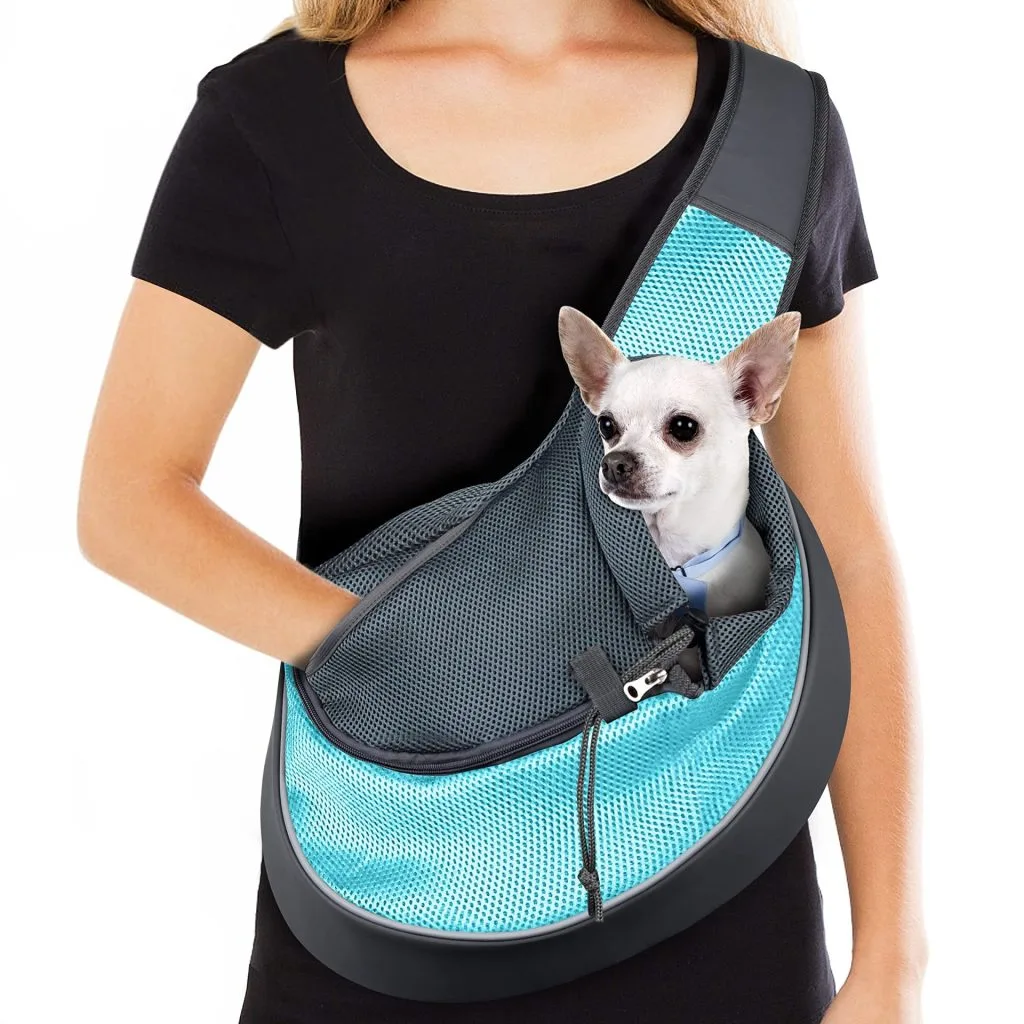
Sizing, weight bands and internal dimensions
Kitten products are sold against a weight band, and the band should be conservative. A bag rated to six kilograms will carry most cats comfortably, but buyers should resist stretching the number for listing reasons because the customer experience at the top of the range is poor and generates returns. Rating to a weight the product genuinely supports, and stating internal dimensions alongside it, produces better reviews than an optimistic figure.
Internal dimensions matter more to a customer than volume. A customer asks whether their cat fits, and the answer is a length and a height, not a litre figure. Buyers should request internal dimensions in both centimetres and inches at quotation and use them in listings, because they are the most compared numbers in the category.
Structure affects usable space more than nominal volume. A soft bag without a base board loses effective floor area because the animal sinks into the fabric; adding a removable board of appropriate thickness recovers that space at a small cost. Buyers should specify board thickness rather than accepting a default, and should confirm that the board is removable for washing.
Growth is a smaller concern here than with puppies, because cats reach most of their adult size quickly and because a kitten bag is frequently kept for the adult cat. Sizing to the adult animal is therefore the safer default, with the kitten case covered by the same product rather than by a separate small size.
Finally, buyers should confirm the product's behaviour when set down. A bag that collapses when empty is harder to load an unwilling cat into, and a semi-structured body or a stiffened base makes the loading step materially easier for the owner.
There is a listing dimension to sizing that is worth planning early. Marketplaces and comparison sites in this category rank heavily on stated weight bands and internal dimensions, and a product with clear numbers converts better than one described qualitatively. Asking the supplier to confirm internal length, width and height at quotation, and to state whether those figures are taken before or after the board is inserted, avoids the most common source of customer disappointment in the category.
Interior design: security, darkness and cleanability
A frightened cat wants a small, dark, enclosed space, and a bag designed around that preference is easier to load and calmer in use than one designed around ventilation alone. The practical resolution is a bag with good airflow on two or three sides and a covered panel the owner can close to reduce visual stimulation. That panel is cheap to add and is one of the few genuine comfort features available in this category.
The interior surface should be smooth and free of loops, elastic and dangling webbing. Any interior element is a claw target and, worse, a potential limb trap. A single-compartment interior with a removable board is the correct baseline, and it is also the easiest to clean, which matters for the same reason it matters in every small-animal category.
Colour choice inside the bag is not trivial. A light interior shows soiling, which the owner wants to know about, but also shows staining, which the owner does not want to look at. A mid-tone interior is usually the best compromise and is worth specifying rather than defaulting to black.
Finally, consider the entry sequence the owner will actually use. Loading an unwilling cat is the most stressful moment in the product's life, and a wide top opening that the owner controls beats a narrow front opening every time. Buyers should test the loading sequence on a sample, ideally with an actual animal, before approving.
- Covered panel to reduce visual stimulation without losing airflow.
- Smooth single-compartment interior with no loops or elastic.
- Mid-tone interior colour for the best balance of visibility and appearance.
- Wide owner-controlled top opening for loading.
- Removable board that recovers floor area and washes separately.
Compliance, testing and documentation
Kitten bags sold as containment products carry a higher duty of care than accessory bags, and the documentation should reflect it. United States distribution requires CPSIA lead and phthalate reports on accessible substrates and a Prop 65 assessment for California, as set out by the Consumer Product Safety Commission. European distribution requires REACH SVHC declarations on shell, lining and mesh.
Beyond chemical compliance, the performance documentation is what separates a serious product from a decorative one. Buyers should hold a closure endurance test record, a seam strength test record, a mesh snag resistance result and a load test on the base and strap anchors. Each should name the test method and the production lot. Independent safety research and consumer guidance on pet containment is published by organisations such as the Center for Pet Safety, and while their programmes address specific product types, their published approach to containment testing is a useful reference for setting internal acceptance criteria.
Veterinary-facing channels bring a further expectation. Clinics and veterinary distributors frequently ask for a statement of the weight band, the cleaning protocol and the ventilation area before listing a product. Buyers serving that channel should prepare a one-page technical sheet at specification stage rather than assembling it when a distributor asks.
The retained sample completes the file. As in every category with a performance claim, a retained production unit is the only reliable basis for comparing a re-order against the approved specification, and it ends disputes about substitution quickly.
Channel and order planning
Kitten bags sell through veterinary clinics, pet specialty retail, shelters and subscription boxes, and each channel applies a different requirement. Veterinary distribution values the technical sheet and the cleaning protocol. Pet retail values presentation and the barcode. Shelters value price and durability. Subscription boxes value the unboxing impression above everything. Buyers should decide the primary channel before specifying, because a bag cannot be optimal for all four.
MOQ 500 per colour applies as standard. Programmes wanting a range of colours should use one body colour with varied trim, and programmes wanting a size range should consider whether one adjustable product will serve both the kitten and adult case, which is usually the more efficient answer in this category.
Sampling takes 6-10 working days and should include the loading and closure tests described above rather than a visual check. Bulk production runs 35-50 days after sample approval and deposit, and inspection to AQL 2.5 should be supplemented with the closure and seam gates. Buyers should also request a pre-production sample for first orders, because closure substitution between approval and bulk is common enough to justify the extra week.
Seasonality is milder than in the puppy category but still present, with kitten intake peaking in spring and summer. Buyers serving shelter and rescue channels should plan capacity against that peak rather than against a calendar quarter. Shelter channels in particular order in response to intake rather than to a retail calendar, which means short-notice orders are common and a supplier holding an existing tech pack is worth considerably more than a marginal price advantage.
The re-order discipline is the same as elsewhere: hold the specification steady, refresh artwork only, and keep the compliance file current so a repeat order is a confirmation rather than a new development. Our production team retains tech packs and test data for exactly this reason, which is what allows a re-order to be scheduled at the short end of the 35-50 day window.
Why brands source here
- Pet bag programmes run since 2014; founding team in sewn goods since 2004
- SGS-verified production floor of 4,950 m² with 137 workers across 7 lines
- Monthly capacity of 200,000 units, audited to BSCI and ISO 9001
People Also Ask
What size bag suits a kitten?
A 5-10 litre bag covers most kittens and adult cats in the small to medium range, with internal dimensions mattering more to the customer than the volume figure.
Why do cats escape from bags that hold puppies?
Cats probe rather than push. They work at zip garages, binding ends and loose mesh corners with claws, so closure architecture matters more than fabric strength.
Is a soft bag safe for cat transport?
Yes, when the closure is two-stage, the mesh is snag-resistant and the seams meet a named strength target. Soft bodies are often calmer than rigid ones for a frightened animal.
How much ventilation does a kitten bag need?
Two or three panels, with a covered panel the owner can close to reduce visual stimulation. Airflow and a sense of enclosure are both required.
Can kitten bags be washed?
Yes. A removable board and a wipeable or washable lining let the product return to service the same day, which is the norm for veterinary and rescue use.
Frequently Asked Questions
What is the MOQ for a wholesale kitten bag?
MOQ is 500 pieces per colour. Buyers wanting several colourways should use one body colour with varied trim rather than opening a second fabric minimum.
What closure should a kitten bag use?
A two-stage closure is the correct default: a zip backed by a mechanical safety clip. A locking zip is the minimum acceptable upgrade where a second component is not wanted.
How is mesh specified for claw resistance?
By weave density and a snag resistance test result against a defined probe and load. Decorative open-weave mesh will snag and then be enlarged by the animal.
What weight band should we state?
Rate conservatively and support the number with a load test on the base and strap anchors. An optimistic figure produces poor customer experience at the top of the range and generates returns.
Should the interior have pockets or loops?
No. Interior loops, elastic and dangling webbing are claw targets and potential limb traps. A smooth single-compartment interior with a removable board is the correct baseline.
How long do sampling and bulk production take?
Samples take 6-10 working days and should include closure and loading tests. Bulk production is 35-50 days after sample approval and deposit.
What inspection gates apply beyond AQL 2.5?
Closure endurance and seam strength, both named with a test method and run per production lot. These are the gates that catch substitution.
Should we request a pre-production sample?
Yes for first orders. Closure substitution between the approval sample and bulk production is common enough to justify the additional week.
Which compliance documents are needed?
CPSIA lead and phthalate reports for the US, a Prop 65 assessment for California, REACH SVHC declarations for Europe, plus closure, seam, mesh and load test records.
Is a top opening better than a front opening?
Generally yes. Loading an unwilling cat is the most stressful moment in the product's life and a wide owner-controlled top opening makes it materially easier.
How do veterinary channels differ from retail?
Veterinary distributors ask for a technical sheet covering weight band, cleaning protocol and ventilation area before listing. Pet retail asks for presentation and barcode compliance.
Should the bag be sized for a kitten or an adult cat?
Size for the adult animal. Cats reach most of their adult size quickly and the bag is usually kept after the kitten has grown.
Talk to QUANZHOU JUNYUAN BAGS about a wholesale pet bag order: MOQ 500 pieces per colourway, samples in 6-10 working days, bulk production in 35-50 days under AQL 2.5 inspection.
Get a free quote Request a sample