Vegan Pet Bags: Animal-Free Materials for Wholesale Buyers
Vegan pet bags contain no leather, wool, silk, down, feathers, or animal-derived adhesive, coating, dye, or finishing agent. For a wholesale buyer the working definition is stricter: every line of the bill of materials carries a supplier declaration proving animal-free origin. Expect a material premium of 5-18% over conventional PU builds, with MOQ unchanged at 500 pieces per colourway.
Animal-free sourcing is now a procurement requirement rather than a marketing flourish, because retailers and marketplaces ask for component-level evidence before a listing goes live. Our production team builds vegan pet bag programs at MOQ 500 pieces per colourway, with samples in 6-10 working days and bulk production in 35-50 days after sample approval; every shipment is inspected to AQL 2.5 before release. The practical work sits upstream: locking a bill of materials where shell, coating, lining, foam, webbing, thread, zipper tape, hardware plating, adhesive, ink, and hangtag are each covered by a written declaration tied to a trade name. Buyers who finish that file before the purchase order avoid the two expensive failure modes in this category: a claim that a retailer rejects after goods land, and a reformulation that forces a second sampling round and pushes the season by six weeks. Cost planning should treat the vegan build as a landed-cost question, not a fabric question, because testing amortisation, certification registration, and packaging copy often outweigh the resin premium itself. The sections below set out the material choices, the certification routes, the cost structure, and the quality risks that decide whether an animal-free pet bag line holds its margin through the second reorder.
Where to buy pet bags wholesale is less a question of directory listing than of Material & Technology verification - ask for the test report before the price list. Pet bag wholesale vendors who can name the fabric mill will usually also name the failure mode, which is the fastest way to separate a real programme from a catalogue.
What Vegan Means in a Pet Bag Specification
Vegan is a sourcing claim, not a fabric name. In pet bag programs the word describes the bill of materials: no hides, no wool, no silk, no down, no beeswax finishes, and no animal-derived gelatin or casein in adhesives, coatings, or print pastes. A 600D polyester shell is vegan on its face, and the same shell laminated with a hide-derived glue is not. That distinction decides whether a retail compliance team accepts the claim outright or opens a corrective action file.
Buyers should write the requirement into the specification at component level. The lines that matter are the shell fabric and its coating, the lining, foam and interlining, webbing and binding tape, sewing thread, zipper tape and slider, hardware plating, adhesives, printing inks, care labels, and even the polybag and hangtag. Each line receives a supplier declaration naming the trade name and the chemical family. Our production team keeps that declaration pack inside the tech file so a claim review takes days rather than weeks, and so a reorder in the following season does not need to be re-engineered from zero.
The commercial reason for that discipline is simple. Retailers that merchandise animal-free pet bags generally require a documented chain for the claim, and marketplaces delist products when documentation is missing. One undocumented adhesive can invalidate a whole SKU, and relabelling a landed container costs far more than collecting declarations before production starts.
Buyers should also decide early how the claim interacts with the rest of the assortment. If the same range carries a leather-trimmed SKU, a mixed shelf weakens the story and creates two documentation workflows for one planogram. Most programs are cleaner when the animal-free line is given its own SKU prefix, its own hangtag artwork, and its own specification pack, so that a reorder can be released without re-opening the original claim review.
Animal-free specifications also interact with durability targets. Removing leather does not remove the need for abrasion resistance, seam strength, or cold-crack performance, so the specification should state the performance test alongside the origin requirement rather than leaving performance implied.
A vegan pet bag program is only as defensible as the least-documented component in its bill of materials, so the claim must be engineered at specification stage rather than printed onto packaging after production.
Animal-Free Material Options and Their Cost Bands
Once the claim is defined, the buyer chooses the material family that carries it. The shortlist for wholesale pet bags is narrower than the consumer press suggests, because the material has to survive a 500-piece minimum, a 35-50 day production window, and a price point that still works after freight and duty. Polyurethane-coated polyester remains the volume answer: it is animal-free by construction, it accepts print and embossing, and it holds colour across repeat dye lots. Thermoplastic polyurethane costs more and resists hydrolysis better, which matters for humid markets and for warehouse storage that runs long.
Recycled polyester with a GRS claim pairs well with an animal-free story because both claims come out of the same transaction certificate, and a single audit supports two marketing lines. Microfibre suede gives the hand feel that buyers usually want when they ask for a leather look, at roughly half the cost of genuine split leather and with none of the origin documentation. Plant-based sheets made from pineapple leaf fibre, cactus, or cork read well on a hangtag but carry real constraints: higher per-metre cost, tighter width, more waste in cutting, and a longer lead time to secure the roll stock.
PVC deserves a note. It is technically animal-free, but many retailers that merchandise vegan pet bags also run restricted-substance lists that exclude chlorinated polymers or specific plasticisers. A buyer can end up with a material that satisfies the vegan claim and fails the chemical screen, so PVC should be priced as a fallback rather than a default.
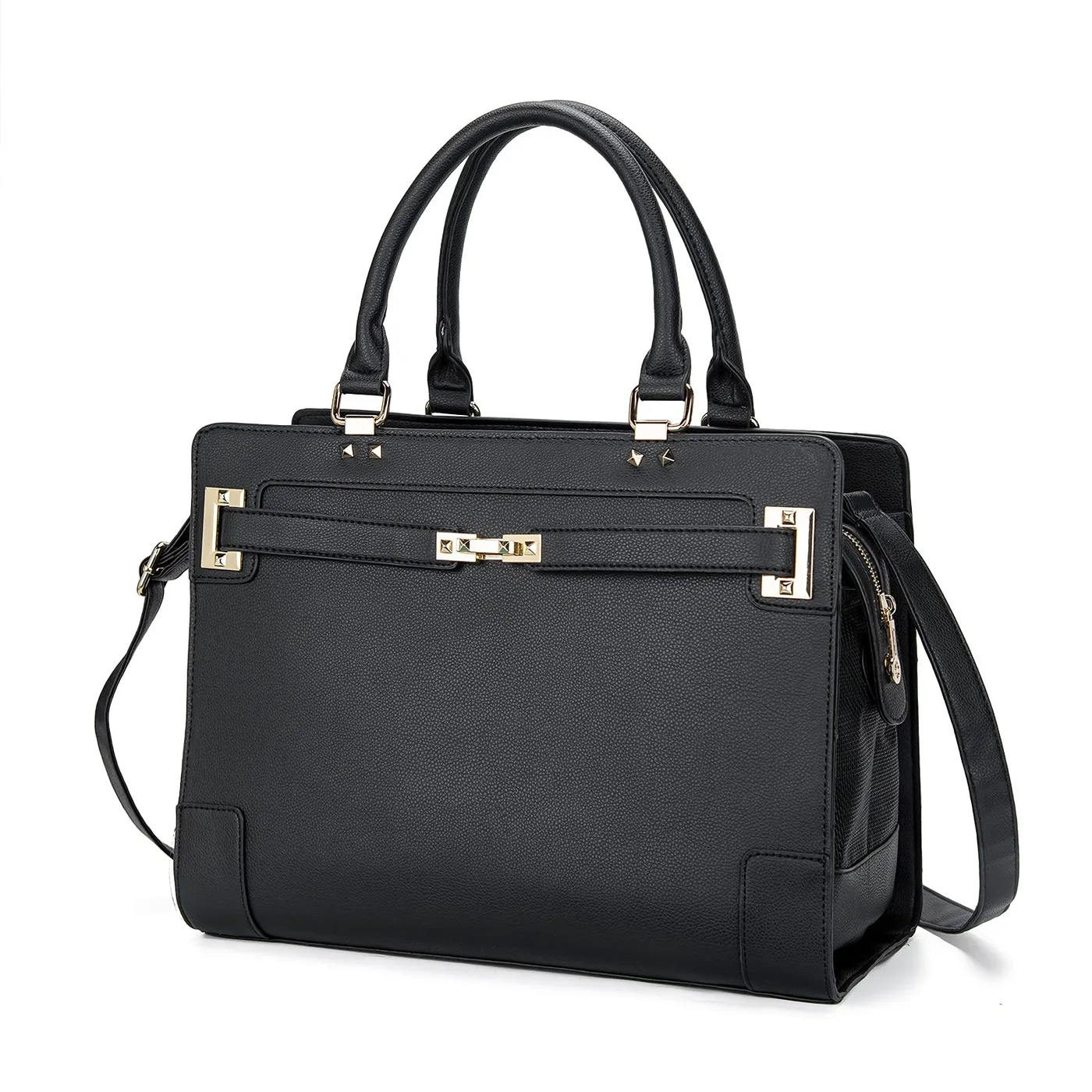
Material comparison for wholesale planning
| Material family | Cost index vs 600D polyester | Typical MOQ | Abrasion behaviour | Certification effort | Buyer note |
|---|---|---|---|---|---|
| PU-coated polyester | 100 (baseline) | 500 per colourway | Good, 20,000+ cycles | Low, declaration sufficient | Volume default for animal-free lines |
| TPU laminate | 135-160 | 500-1,000 | Very good, hydrolysis resistant | Low to medium | Best for humid climates and long storage |
| GRS recycled polyester | 115-130 | 500 per colourway | Good | Medium, transaction certificate | Supports two claims from one audit |
| Microfibre suede | 180-240 | 500-800 | Very good | Medium | Leather look without hide sourcing |
| Cork or plant-leaf sheet | 260-400 | 300-500 | Fair, creases on fold | High, traceability per lot | Hangtag value, limited run economics |
| PVC-coated fabric | 85-100 | 500 | Good | High on chemical screens | Check retailer RSL before specifying |
Read the cost index as a material-only comparison. At 500 pieces the fabric is typically 35-45% of FOB, so a 60-point index move shifts FOB by roughly 20-27% and landed cost by 12-16% once freight, duty, and overhead are layered on top.
Certification Routes and What They Cost a Buyer
There are three ways to substantiate an animal-free claim, and they sit at very different price points. The first is a supplier declaration set, where every component maker states in writing that the input contains no animal-derived substance. It costs nothing in fees, takes two to three weeks to assemble, and satisfies most distributor and independent retail buyers. The second is a third-party textile certificate such as OEKO-TEX testing for textile safety, which does not certify vegan status directly but proves the finished article is free of the substances a reviewer will ask about next.
The third route is a registered vegan trademark on the product. Registration carries an annual fee, requires the applicant to submit the full component list, and adds an approval cycle to the calendar. For a single-SKU test order the fee is hard to justify; for a twelve-SKU private assortment that will sit on shelf for three seasons it is usually worth it, because the mark removes an argument at the buyer meeting and gives the listing page a recognisable badge.
Buyers should also budget for the testing that sits underneath any of these routes. A restricted-substance screen against ECHA REACH requirements runs per material per colour, so a six-colourway program in three shell fabrics can need a dozen test reports. Amortised over 500 pieces per colourway that testing adds a visible line to unit cost; amortised over a reorder of 3,000 it almost disappears, which is the strongest economic argument for planning a second drop before the first one ships.
Certification cost is a fixed cost per SKU and a variable cost per colourway, so the unit economics improve sharply once a program moves past its first minimum order.
Cost Structure: Where Animal-Free Adds or Removes Dollars
The material premium is the visible part of an animal-free build and usually the smallest part of the margin story. A buyer moving from a standard PU build to a TPU or microfibre build might add 0.90 to 2.40 US dollars per unit at FOB Xiamen. The larger swings come from testing amortisation, certification registration, packaging redesign, and the yield loss that accompanies unfamiliar roll stock. Cutting waste on a plant-based sheet can run 8-12 percentage points higher than on polyester, and that waste is paid for at full material price.
On the revenue side, an animal-free claim supports a higher shelf price in the channels that care about it. A comparable pet bag at 24.99 US dollars retail often moves to 29.99 or 34.99 with a documented animal-free story and a recognised badge. Because retail price moves in steps while cost moves in cents, the margin gain usually exceeds the material premium by a wide margin once the fixed testing costs are absorbed.
The discipline is to model both sides before committing. Take a landed cost of 8.40 US dollars at 500 pieces, add 1.60 for the animal-free build, and test whether the target channel will carry a 39.99 price point. If the answer is no, the right move is not to abandon the claim but to change the material family: a GRS recycled polyester shell with a declaration pack often delivers most of the merchandising value at a fraction of the premium.
- Material premium: 0.90-2.40 US dollars per unit at FOB
- Testing and certification: 400-1,800 US dollars per program, amortised over units
- Packaging and hangtag: 0.12-0.35 US dollars per unit for claim copy and badge
- Yield loss on unfamiliar roll stock: 3-8% of fabric cost
- Retail price step supported by the claim: typically one full price tier
Buyers who plan the second order at the same time as the first convert most of these fixed costs into a per-unit rounding error.
Quality Risks Unique to Animal-Free Builds
Animal-free does not mean risk-free. Polyurethane coatings lose adhesion and surface integrity through hydrolysis, particularly when goods sit in a hot container or a non-climate-controlled warehouse for months. Units can pass inspection at the plant and arrive with a tacky surface or a peeling coating. Buyers shipping into humid markets should specify hydrolysis resistance in the material requirement and ask for an ageing data point rather than accepting a generic coating description.
Cold crack is the second recurring issue. Some coatings stiffen and craze below freezing, which matters for pet bags sold in northern latitudes and for any program with winter outdoor positioning. A low-temperature bend test written into the specification costs almost nothing and prevents an expensive return wave.
Colour transfer and odour round out the list. Microfibre suede and some recycled yarns hold finishing oils that produce a detectable smell in a sealed carton, and dark shades can crock onto light linings. Both problems are solvable at the finishing stage, but only if the buyer names them before bulk starts. Our production team runs these checks during sampling so that the approval sample represents what the container will contain.
Inspection standard matters here as well. Under third-party inspection and audit services written to AQL 2.5, coating and odour defects are classed as major when they affect saleability, which means a systematic coating problem will fail a lot rather than pass with a deviation note. That is the intended outcome: it is far cheaper to hold a lot at origin than to process returns from a distribution centre.
The failure modes in animal-free pet bags are coating and chemistry failures, not construction failures, so the specification and the inspection plan should both be written around surface performance.
Compliance Documentation to Request Before the Purchase Order
A buyer who waits until pre-shipment to collect documents will miss the season. The file should be requested at quotation stage and updated when the sample is approved. At minimum it contains the component declaration set, the restricted-substance test reports for shell and lining, the colourfastness and physical test summary, the country-of-origin statement, and the fibre composition for the labelling block.
Where the pet bag is marketed with children or sold through a channel that screens for children's products, the buyer should also expect lead and phthalate evidence under CPSIA. That requirement usually surprises buyers of animal-free lines, because the claim and the children's-product rule are unrelated in their minds but both land on the same compliance desk at the retailer.
Documentation also protects the buyer on the commercial side. A declaration pack dated before production establishes that the claim was engineered rather than retrofitted, which is exactly what a marketplace reviewer wants to see when a listing is challenged. It also gives the buyer a defensible position if a competitor files a substantiation complaint.
One practical tip saves time on every subsequent season: ask for the declaration pack in a spreadsheet keyed to the specification line numbers rather than as a folder of PDFs. A reviewer at a retailer or a marketplace can then match each component to each line without interpretation, and the buyer can reuse the same file for the next colourway by updating only the changed rows. That format also makes it obvious when a component has been silently substituted between sampling and bulk, which is the single most common cause of a claim failure in a second production run.
- Component-level animal-free declarations with trade names
- Restricted-substance screening for each shell and lining colour
- Physical test summary: abrasion, seam strength, colourfastness, cold bend
- Fibre composition and care labelling block
- Country-of-origin statement and packing declaration
MOQ, Sampling, and Production Planning for Animal-Free Runs
Order planning for an animal-free program follows the same mechanics as any wholesale pet bag line. MOQ sits at 500 pieces per colourway, samples take 6-10 working days, bulk production runs 35-50 days after sample approval, and shipments are inspected to AQL 2.5 under T/T 30/70 terms from FOB Xiamen. What changes is the sequence: material confirmation has to happen before the sample, because an animal-free roll stock with a long lead time can consume most of the sampling window on its own.
Colourway strategy carries more weight here than in a standard build. Because testing and certification are priced per colour, a five-colourway launch multiplies the fixed cost five times. Buyers frequently do better with two core colourways at 500 pieces each plus a seasonal third, then expand the palette on reorder once sell-through data exists.
Timing follows the retail calendar rather than the factory calendar. For a spring assortment, sampling should be complete in the autumn, bulk should close before the lunar new year shutdown, and the container should be on the water with enough buffer to clear customs and reach the distribution centre before the planogram resets. Buying the material early is the cheapest insurance available; buying air freight at the end is the most expensive.
Buyers comparing across suppliers should also read our pet bag materials overview and the companion notes on OEKO-TEX textile safety before finalising a specification, because the material decision drives both the certification route and the reorder economics.
How to Read an Animal-Free Pet Bag Quotation
A quotation for an animal-free program should be separable in a way that standard quotes often are not. Buyers should ask for the fabric line, the trim and hardware line, the testing and certification line, the labour and overhead line, and the packaging line to be shown separately. When those five lines are collapsed into a single unit price, the buyer cannot tell whether a competitor's lower number comes from a cheaper coating, a skipped test, or a thinner foam, and all three produce a different product.
The testing line deserves particular attention. If it reads zero, the supplier is either absorbing the cost or not planning to test. Absorption is fine when it is stated; silence is not, because the certificates will be needed at the retailer's line review and the buyer will end up paying for them later at rush rates. Ask which standards the quoted tests cover and how many colourways are included, since a quote covering one colour screen on a six-colour program is incomplete by five reports.
Fabric waste allowance is the second item to interrogate. On plant-based sheets and on patterned materials the allowance legitimately rises, and a supplier quoting the same waste factor as for plain polyester is either optimistic or planning to substitute. A clear allowance stated in the quote is a sign the material has actually been run before.
Finally, check whether the quote assumes one sampling round. Animal-free programs more often need two, because the first sample is where the coating hand feel and the odour profile get judged. A quote that prices one round and a calendar that assumes one round will both be wrong, and the gap shows up as either an unplanned sample fee or a compressed bulk window. Pricing the second round up front is cheaper than negotiating it mid-process.
The cheapest quotation in an animal-free program is usually the one with the least testing inside it, and that missing line becomes the buyer's cost at the retail compliance desk rather than the supplier's.
Channel Fit: Where an Animal-Free Claim Earns Its Cost
Not every channel pays for an animal-free claim, and pretending otherwise wastes margin. Specialty pet chains, independent boutiques, and direct-to-consumer brands with a values-led positioning will pay the price step. Discount channels and marketplace price wars generally will not, because the shopper there is comparing on dimensions and price and reads the badge as noise.
The test is simple: look at the existing assortment. If the shelf already carries recycled-content or plant-based pet products at a premium, an animal-free pet bag fits and the claim will convert. If the shelf is a price ladder, the same bag should be built in recycled polyester with a declaration pack and priced to win the ladder instead.
Claim wording also has to survive review. Avoid absolute statements that imply medical or safety benefits, keep the claim to the composition of the product, and place the badge where a reviewer can trace it to a certificate number. Where the assortment also carries a recycled claim, the GRS recycled standard guide explains how the two certificates share one transaction chain and one audit fee.
Assortment planning should follow the same logic. A buyer with three price tiers usually gains more by making the top tier animal-free and leaving the entry tier alone than by spreading the premium across all three, because the entry tier shopper is price-driven and will not pay for the badge. Concentrating the claim in the tier where the margin already exists keeps the blended margin intact and gives the range a clear step-up story that store staff can explain in one sentence.
Finally, plan the hangtag and listing copy in the same pass as the product. Adding claim copy after goods are packed means either a reprint or a sticker, and both look cheap on a premium shelf. A documented animal-free pet bag line, planned from specification through hangtag, is one of the few assortment moves that raises price point without raising return rate.
Order and quality terms
- MOQ 500 pieces per colourway; samples in 6-10 working days
- Bulk production 35-50 days after approval; AQL 2.5 inspection standard
- T/T 30/70 terms, FOB Xiamen, full document set per shipment
People Also Ask
Are vegan pet bags more expensive to produce?
Yes, but the premium is smaller than most buyers expect. Material cost typically rises 0.90 to 2.40 US dollars per unit at FOB when moving from a standard PU build to TPU or microfibre suede. The larger one-time costs are the restricted-substance testing and any trademark registration, which are fixed per program and shrink per unit once a reorder is placed at 500 pieces or more per colourway.
What makes a pet bag not vegan?
Any animal-derived input anywhere in the bill of materials: leather trim, wool felt, silk lining, down fill, beeswax finish, or gelatin and casein used in adhesives, coatings, and print pastes. The most common failure is an adhesive or a finishing agent that nobody listed on the specification, which is why component-level declarations are required rather than a single fabric statement.
Is PU vegan and is it safe for pet products?
Polyurethane is synthesised and contains no animal input, so it is vegan by composition. Safety is a separate question and depends on the restricted-substance profile of the specific coating. Buyers should require a REACH-aligned screen and, where the product is marketed to children, CPSIA lead and phthalate evidence in addition to the animal-free declaration.
Do vegan pet bags last as long as leather versions?
In abrasion terms, quality microfibre suede and TPU laminates often outlast genuine split leather. The durability risk is not wear but coating chemistry: hydrolysis in humid storage, cold cracking below freezing, and odour retention in sealed cartons. Specifying hydrolysis resistance and a low-temperature bend test closes most of the gap.
Which certificate proves a pet bag is vegan?
A registered vegan trademark is the strongest proof, but a structured alternative works for most wholesale programs: a component-level declaration set from every supplier plus a third-party textile safety certificate on the finished article. Many distributors accept that combination because it documents the chain rather than relying on a single logo.
What MOQ applies to animal-free pet bag production?
MOQ is 500 pieces per colourway for animal-free pet bag programs, the same as for standard builds. Plant-based sheet materials sometimes carry a lower fabric minimum but a higher effective cost because of cutting waste. Samples take 6-10 working days and bulk runs 35-50 days after approval, inspected to AQL 2.5.
Frequently Asked Questions
Can one order mix vegan and non-vegan colourways?
Technically yes, but it is a poor commercial decision. Mixing creates two documentation chains inside one production run, raises the chance of a component mix-up on the line, and doubles the claim review work. Buyers usually run animal-free as a separate program with its own specification number and its own hangtag set.
How long does vegan certification approval add to the calendar?
Registration review typically adds two to four weeks once the component list is submitted. The longer variable is assembling the list itself, which is why declarations should be collected at quotation stage rather than after sample approval.
Does an animal-free claim affect customs classification?
Classification is driven by the article's construction and material, not by a marketing claim. A pet bag made of man-made fibre textile still classifies as a textile travel or pet article regardless of the animal-free positioning, so duty treatment is unchanged. Claims only affect labelling and marketplace documentation.
Should the hangtag state the certificate number?
Yes. A badge with a traceable certificate number survives a marketplace substantiation challenge far better than an unqualified claim. It also gives the retail buyer something concrete to enter into their compliance system during line review.
What is the typical defect profile on a first animal-free run?
First runs skew toward coating and odour issues rather than stitching faults: surface tackiness after humid transit, crocking on dark shades, and residual finishing smell in sealed cartons. An AQL 2.5 inspection plan that names these as major defects catches them at origin.
Is recycled polyester compatible with an animal-free claim?
Yes, and the pairing is efficient. Both claims are supported by the same supplier documentation chain, and a GRS transaction certificate covers the recycled content while the composition declaration covers animal-free status, so one audit supports two merchandising lines.
How should a buyer handle a supplier who cannot produce declarations?
Treat it as a disqualifying gap for that component and substitute it. A supplier that cannot state the origin of an adhesive or finish cannot support a claim, and the buyer carries the marketplace risk when the documentation is missing.
Do plant-based materials need special care labelling?
Usually yes. Cork and leaf-fibre sheets crease on tight folds and should not be machine washed, so the care block on the label has to be written for the specific material rather than copied from a polyester program.
What payment terms apply to animal-free programs?
Standard terms are T/T 30/70 with the balance due before shipment, FOB Xiamen. Because plant-based roll stock sometimes requires an early deposit to reserve, buyers ordering those materials should expect a material deposit at order confirmation.
Can own-brand branding be applied to animal-free pet bags?
Yes. Woven labels, rubber patches, and printed linings are all available as secondary branding on an animal-free build, provided the label material itself is declared. Branding components are frequently the forgotten line in a declaration pack.
How many colourways should a launch assortment carry?
Two core colourways at 500 pieces each plus one seasonal shade is the usual recommendation. Testing and certification are priced per colour, so a wide first palette multiplies fixed cost before sell-through data exists to justify it.
What should the buyer check on the approval sample?
Beyond construction, check coating hand feel after a warm storage test, odour inside a sealed bag, crocking between dark shell and light lining, and that every component on the sample matches the declaration list. The approval sample is the reference for the AQL 2.5 inspection.
Talk to QUANZHOU JUNYUAN BAGS about a wholesale pet bag order: MOQ 500 pieces per colourway, samples in 6-10 working days, bulk production in 35-50 days under AQL 2.5 inspection.
Get a free quote Request a sample