Pet Convertible: Multi-Way Carry
One shell, several carry identities - that is the convertible pet bag pitch, and the hardware decides whether the pitch survives a season. Judge the product on its interface parts rather than on its fabric: detachable strap fittings rated to 250 N, a trolley sleeve that holds under 12 kg, and a documented 3,000-cycle conversion test. FOB Xiamen typically lands between USD 9.80 and 19.50 because the fitting set costs more than the panels.
A convertible pet bag is a hardware programme wearing a bag. The shell is the cheap part; the detachable strap set, the trolley interface and the anchor reinforcement are where the money and the risk sit. Our production team therefore quotes the fitting set separately from the body, because a buyer who negotiates the body price and leaves the fittings unexamined has optimised the wrong line.
Standard commercial terms apply: MOQ 500 pieces per colorway, samples in 6-10 working days from a frozen specification, bulk production 35-50 days after final sample approval, pre-shipment acceptance at AQL 2.5, T/T 30/70 against FOB Xiamen. Fitting procurement occasionally runs ahead of the body when a plated finish or a branded buckle is specified, and that lead time should be shown on the schedule rather than discovered later.
Assembly and cycle testing are handled through an SGS-verified production base and partner facilities audited to BSCI and ISO 9001. Insist on the pull-test figures for every load-bearing fitting and on a cycle log for the conversion mechanism; a convertible product without those two documents is being bought on faith rather than on evidence.
Buy dog carriers and buy cat carriers enquiries usually arrive from two different channels - one from pet specialty, one from general merchandise - and Pet Bag Types & Styles has to serve whichever basket is larger. Buy pet carriers in a single colourway first, then extend the shade range on the reorder.
A Convertible Pet Bag Sells One Shell With Several Carry Identities
The commercial promise of a convertible pet bag is simple to state and expensive to deliver: one shell that works as a shoulder bag on Monday, a backpack on Saturday and a trolley-topper at the airport. For the retailer that means one purchase order covering three use cases and one shelf slot earning three sets of search traffic. For the product it means three load paths have to be engineered into the same shell, and the load paths do not share anchors neatly.
That mismatch is the whole difficulty. A shoulder carry pulls down on two top anchors. A backpack carry pulls down and back on four anchors and adds a sternum load. A trolley mode pulls forward on a sleeve and puts a bending load on the base. If the shell is designed for the first case and the others are added with extra webbing, the product will fail in the mode the customer actually uses most.
Buyers should therefore start by ranking the modes by expected frequency rather than by marketing appeal. Most convertible pet bags are bought as backpacks and used as shoulder bags; trolley mode is the reason for purchase and the least frequently exercised. Designing for the most frequent mode and qualifying the others rather than optimising all three equally produces a lighter, cheaper and more reliable product.
The second question is whether the conversion is mechanical or modular. Mechanical conversion - a strap that reeves through a different set of loops, a harness that unclips and re-clips - keeps all parts attached and cannot be lost, but it is fiddly and generates instruction complaints. Modular conversion - complete strap assemblies that detach and stow - is easier to explain and creates spare-part revenue, at the cost of parts that go missing in a cupboard.
Finally, be clear about what the conversion is not. A convertible pet bag is not a different size of product; it is the same interior offered in different carry attitudes. Shoppers who expect the bag to become bigger, or to become a bed, or to split into two units, are describing a different category entirely and will review the product badly if the listing implies any of those.
Procurement bottom line: Rank the carry modes by expected frequency, engineer the most frequent one properly, and qualify the others rather than over-building all three.
Hardware Is the Whole Product: Detachable Straps, Trolley Sleeves and Clip Interfaces
List the fittings before costing the bag. A typical convertible set includes two shoulder strap assemblies with trigger clips or G-hooks, four D-rings or ladderlock anchors, a removable backpack harness with a sternum slider, a rear trolley sleeve with a retaining strap, and the reinforcement plates behind every one of those anchors. On a mid-sized body that set can represent 22-35 percent of the unit cost, which is more than the face fabric and lining combined.
Anchor design deserves the most attention. Every anchor transfers the animal's weight into the shell, and the shell is fabric, so the anchor is a load-spreading problem. A D-ring sewn directly to a single layer of face fabric will tear out under repeated load; the same D-ring on a webbing tab that runs down into the base seam will not. Specify the tab length, the stitch pattern and the bar-tack count, and inspect them on the finished goods.
Detachable fittings should be specified by material and by finish, not by appearance. Zinc-alloy castings are cheap and heavy and will crack under impact; aluminium is light and strong and costs more; engineering plastic is lightest and cheapest and creeps under sustained load at temperature. For a load-bearing pet application, aluminium or a certified steel fitting is the defensible choice, with plastic reserved for non-load-bearing retainers.
Plating is a hidden quality variable. A bright finish photographed under studio light looks identical whether it has passed a 24-hour salt spray test or four. Where the range ships to humid markets or to coastal retail, require a corrosion rating on the plating and a defined number of hours in a neutral salt spray cabinet, because tarnished fittings generate returns long after the bags have sold.
The trolley sleeve is the most frequently under-specified component in the set. It needs a retaining strap over the handle, a non-slip backing so the bag does not creep down the telescopic handle, and a reinforcement that stops the sleeve tearing away from the back panel under a forward pull. Test it loaded at 12 kg on an actual trolley rather than on a bench, because the failure is usually the sleeve opening, not the stitching.
Procurement bottom line: Specify anchors by tab construction and stitch pattern, fittings by material and plating rating, and the trolley sleeve by a loaded pull on an actual frame.
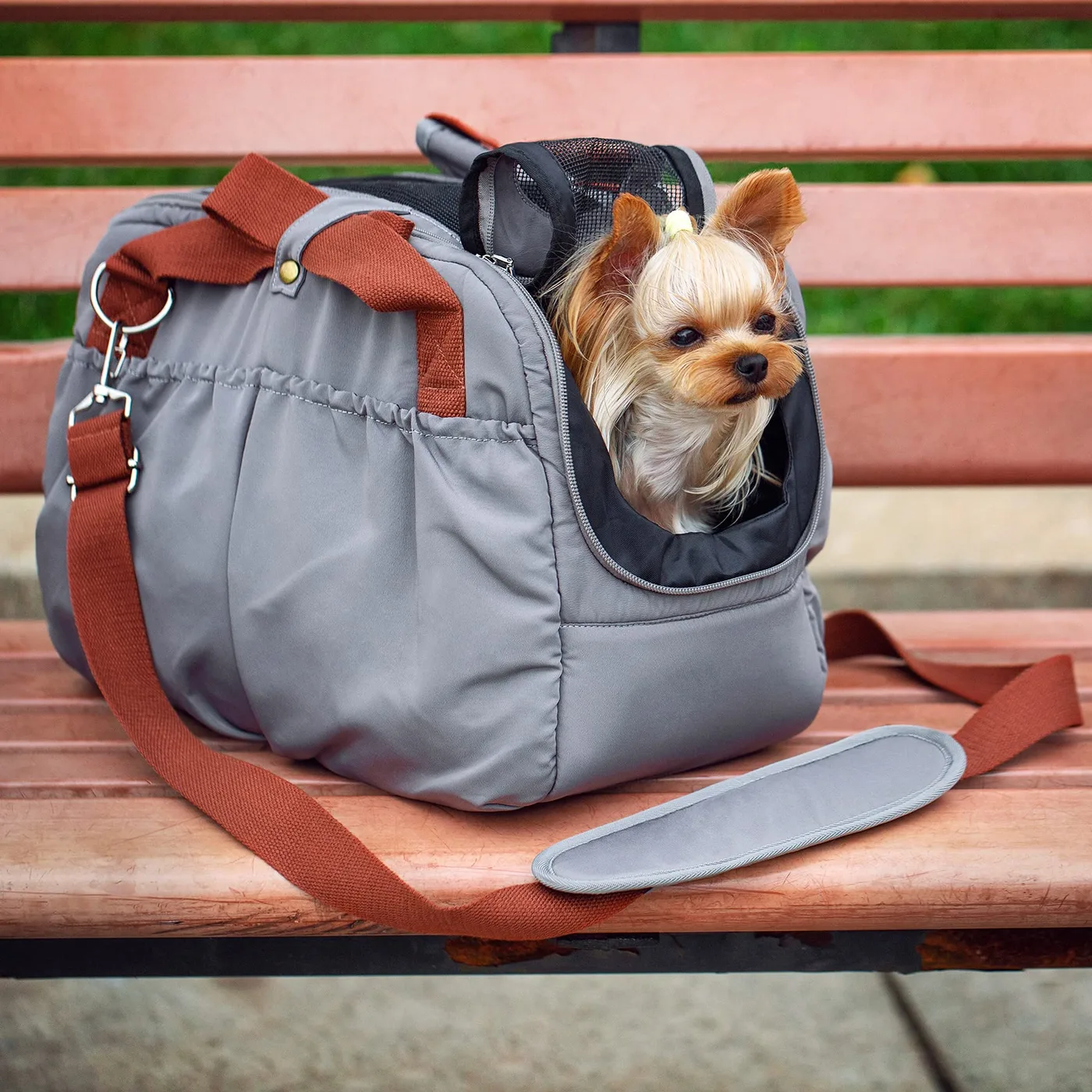
Failure Modes of Convertible Interfaces
Every interface has a characteristic way of failing, and the failures cluster into four families: the anchor tears out of the fabric, the fitting itself fractures or deforms, the adjustment slips under load, and the part is simply lost. Knowing which family applies to which component lets a buyer write an inspection worksheet that catches the right things instead of a generic appearance check.
Anchor tear-out is progressive. It starts as stitch elongation around the tab, becomes visible distortion of the panel, and ends with the anchor leaving the bag with the animal inside. Catching it means looking at the bar-tack and the panel around it during incoming inspection rather than at the end of the line, by which point the reinforcement is buried.
Fitting fracture is sudden and usually material-related. Cast alloy trigger clips crack at the gate; plastic ladderlocks split at the crossbar; thin steel D-rings deform into an oval and then the webbing wears through at the contact point. Specify a minimum cross-section for each fitting and require a destructive pull test on a sample from every delivery lot, with the result filed under the purchase order.
Slip is the complaint customers describe as "it kept coming loose". It happens when an adjuster is under-sized for the webbing, when the webbing is too smooth or too stiff for the cam angle, or when the load path puts the adjuster in a bend rather than in a straight pull. Match the adjuster to the webbing width and thickness exactly, and route the webbing so the adjuster sits in a straight run.
| Interface component | Dominant failure mode | Cycle-life target | Verification method | Replacement cost (USD) | Spare-part policy |
|---|---|---|---|---|---|
| Trigger clip on detachable strap | Gate fracture at the casting gate | 5,000 open-close | Destructive pull to 250 N per lot | 0.55-1.20 | Stock 2 per 100 bags |
| G-hook with webbing tab | Webbing wear at the hook radius | 5,000 attach-detach | Abrasion cycles plus 200 N pull | 0.30-0.70 | Stock 2 per 100 bags |
| Ladderlock adjuster | Creep slip under sustained load | 2,000 re-adjust | 60 min hold at 80 N, measure travel | 0.08-0.20 | Bulk pack, 20 per 100 |
| D-ring anchor tab | Stitch elongation then tear-out | Not cyclic | Pull to 250 N with panel clamped | Repair, not replace | Repair at returns desk |
| Backpack harness quick-release | Partial latch, releases under movement | 3,000 cycles | Cycle then re-pull to 180 N | 0.90-1.80 | Stock 1 per 50 bags |
| Trolley sleeve with retaining strap | Sleeve mouth opens under forward pull | 1,000 on-off | 12 kg loaded pull on a trolley frame | Repair, not replace | Repair at returns desk |
| Sternum slider | Slider walks open during carry | 2,000 cycles | Vibration table with 5 kg load | 0.15-0.35 | Bulk pack, 20 per 100 |
The replacement-cost column is the one buyers rarely ask for and should. It converts a quality argument into a service argument: a fitting that costs USD 0.60 to replace is a spare-part problem, while a torn anchor is a repair or a write-off. Stock the cheap parts and design out the expensive failures.
Read the table alongside the mode frequency established in the first section. If trolley mode is rare, the sleeve row matters less and the backpack harness row matters more. Weighting inspection effort by how customers actually use the product is what keeps the AQL worksheet short enough to be usable on a line.
Procurement bottom line: Test the interface, not the bag: pull to a defined force per lot, cycle the mechanism to a defined count, and stock the cheap fittings as spares.
SKU Consolidation and the Working-Capital Payoff
The strongest financial argument for a convertible range is SKU consolidation. Three separate products - a shoulder bag, a backpack and a trolley-topper - each carry their own 500-piece minimum, their own forecast line, their own photography and their own risk of markdown. One convertible shell covers all three use cases under a single minimum, and the arithmetic on working capital is compelling.
Run the numbers before the pitch. Three dedicated SKUs at 500 units each is 1,500 units of committed inventory and three forecasts to get wrong. One convertible at 900 units is 600 fewer units committed and one forecast. Even where the convertible costs 25-35 percent more per unit, the total cash at risk is usually lower, and the exposure to a single size or colour missing its forecast is substantially reduced.
There is a second-order benefit that shows up in the warehouse. Fewer SKUs means fewer pick faces, fewer barcodes, less safety stock held against each line, and a simpler replenishment model. For a distributor running dozens of pet lines, the reduction in safety stock alone frequently pays for the hardware premium within two seasons.
The offset is concentration risk. If the convertible shell is wrong - wrong size, wrong colour, wrong mode emphasis - the buyer has consolidated three bets into one wrong bet. Mitigate by keeping at least one dedicated format in the range as a comparison, and by reading the mode-frequency data from the first season before committing the whole assortment to a convertible architecture.
Spare-part inventory is the third piece of the model. Holding two trigger clips and one harness per hundred bags costs a few hundred dollars and converts a category of write-offs into a category of five-minute repairs. Budget it as part of the launch rather than as an afterthought, and decide which party - supplier, distributor or retailer - holds the stock.
Procurement bottom line: Consolidation saves more in committed inventory and safety stock than the hardware premium costs, provided one dedicated format is retained as a hedge.
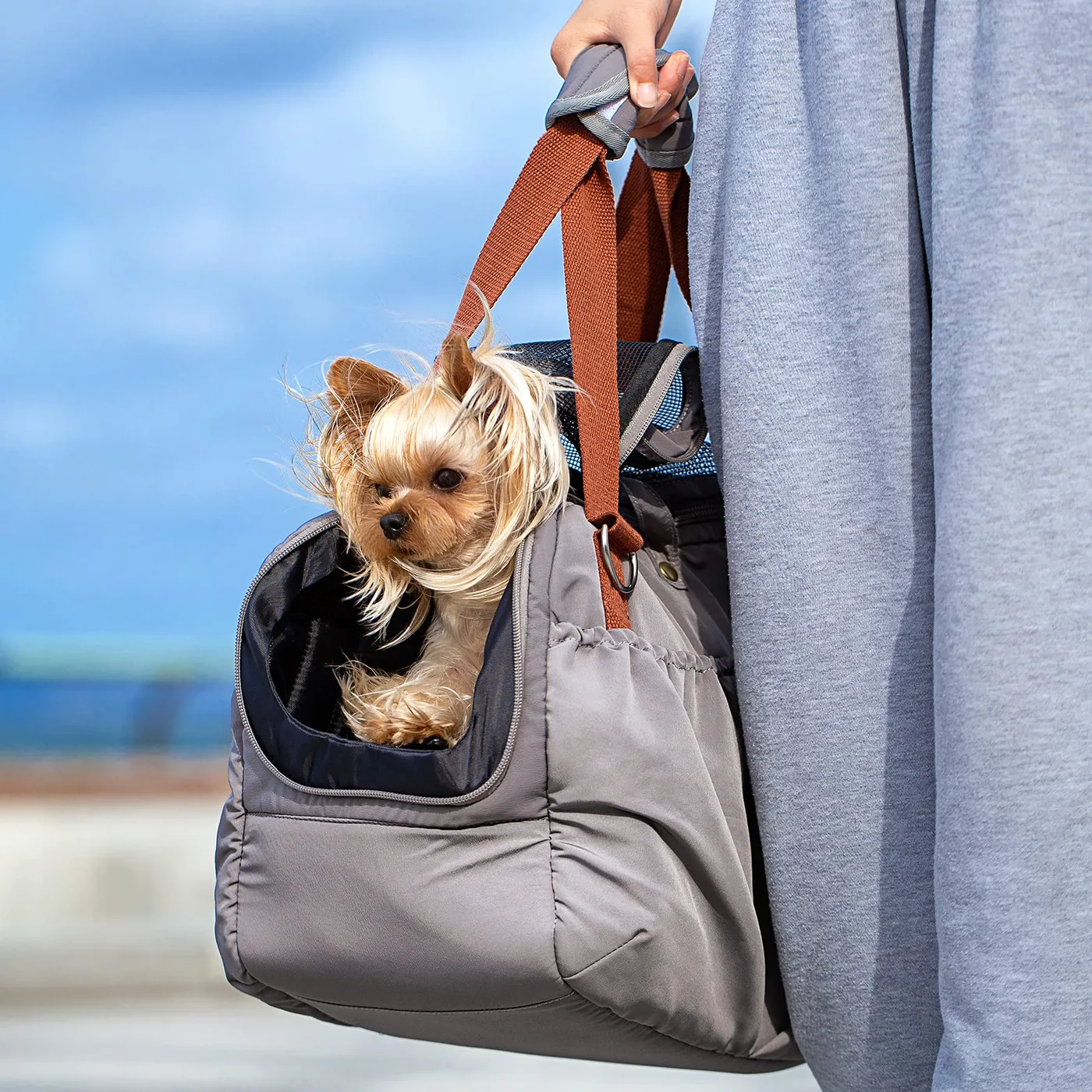
Testing a Conversion Cycle Instead of a Static Load
Standard bag testing applies a static load and measures whether something breaks. A convertible product needs a different protocol, because the thing that wears is the conversion itself: the clip that is opened and closed several times a day, the strap that is reeved and unreeved, the adjuster that is reset each time the handler changes mode. None of that appears in a static pull test.
Build the protocol around a conversion cycle script. Define one cycle as a full mode change - unclip the shoulder strap, reeve the harness, adjust, load the bag, carry it, then return to the starting configuration - and run it to a defined count, typically 2,000 to 3,000 cycles for a wholesale product. Then repeat the static pull tests and compare the results with the uncycled sample.
The comparison is the point. A trigger clip that pulls to 250 N when new and to 210 N after 3,000 cycles is acceptable; one that pulls to 250 N and to 90 N after cycles is not, and no amount of static testing would have revealed the difference. Require both figures on the test report and set the acceptance threshold on the post-cycle number.
Webbing wear deserves separate attention because it is the failure most often missed. Run a cycle test in which the webbing is drawn repeatedly across the fitting radius under load, then inspect for fuzzing, thinning and colour transfer. A strap that looks sound can lose a third of its tensile strength through abrasion long before it looks worn to a customer.
Third-party verification is worth the modest cost on a product whose entire claim is mechanical. Independent laboratories and inspection bodies such as SGS run pull, cycle and corrosion testing to published methods, and mechanical test methods can be referenced from the ASTM standards catalogue. A report from a named laboratory ends arguments that a supplier certificate does not.
Procurement bottom line: Cycle the conversion to a defined count, then re-pull, and set the acceptance threshold on the post-cycle figure rather than on the new-sample figure.
Cost Structure: Where the Premium Sits in a Convertible Build
The indicative FOB Xiamen band for this family is USD 9.80-19.50 per unit, and the spread is almost entirely fitting-related. A convertible built with cast-alloy clips, a basic sleeve and a single harness will sit at the bottom. The same shell with aluminium fittings, a reinforced sleeve, a padded harness with a sternum slider and a spare-part pack will sit near the top, and the difference is visible in the returns data rather than in the photograph.
Break the cost down by function to make quotations comparable. Body fabric and lining typically run 25-32 percent; the fitting set 22-35 percent; anchor reinforcement and labour on the reinforcement 10-15 percent; the trolley sleeve assembly 6-10 percent; printed instruction material and packaging 4-7 percent; and the remainder in cutting, assembly and overhead. A quotation far below the band has almost certainly reduced the fitting set or the reinforcement.
Negotiate the right lines. Consolidating colours, accepting a stock plating finish and simplifying the instruction leaflet all reduce cost without touching safety. Downgrading the clip material, shortening the anchor tabs or removing the sleeve reinforcement all reduce cost by transferring risk into returns and, in the worst case, into an injury claim. Ask for two quotations and require the cheaper one to state what was removed.
Freight behaves differently here than for a plain soft body. The detachable strap set adds volume in the packed state, and the hardware adds meaningful weight, so a convertible fills a container on both cube and mass. Model both constraints when planning an order: the strap sets can be packed separately to improve cube, and heavier fittings will bring the weight limit into play earlier than a buyer from the soft-goods side expects.
Finally, price the spare parts into the programme from the start. A small pack of clips, adjusters and sliders per hundred bags is a rounding error against the order value and materially reduces the cost of field failures. Buyers who discover the need after launch pay retail prices and emergency freight for parts that should have travelled with the original container.
Procurement bottom line: Compare quotations on the fitting set and the anchor reinforcement, model freight on cube and weight together, and ship the spare parts with the first container.

Instruction, Labelling and Returns Risk
Convertible products generate instruction complaints at a rate that surprises buyers. The bag arrived, the customer could not work out how to turn it into a backpack, and the review says the product is confusing rather than that the leaflet is unclear. That is a documentation failure being recorded as a product failure, and it is cheap to prevent.
Write the instruction around the modes rather than around the parts. Number the modes, show one photograph per mode, and mark the anchor points with the same symbols used on the product itself. A customer should never have to read a sentence to find out which clip goes where. Where the market is multilingual, budget for the leaflet as a printed component with its own approval deadline, not as a translation to be attached later.
Label the load limit on the product, not only in the leaflet. A convertible used in backpack mode with a pet above the stated limit puts loads on anchors that were never rated for them. A small woven label stating the working pet weight, placed inside the bag where it is seen at the point of loading, is the cheapest risk control available on this format.
Photography carries the same burden. Shoot every mode the product claims, from the angle a customer would see, with the animal visible. A listing showing only the shoulder mode for a product sold as a three-way convertible invites a mismatch complaint from every shopper who bought it for the backpack photograph that was not there.
Cross-link the neighbouring formats so the comparison stays inside the assortment. Shoppers weighing a convertible against a dedicated option will look at the hands-free backpack pet bag range and the rolling pet bag family, and a well-placed internal link keeps that decision on the same site.
Procurement bottom line: Treat the instruction leaflet, the load label and the multi-mode photography as product components with their own sign-off dates.
Sequencing a Convertible Launch
Sequence matters more for this format than for any other, because the hardware lead time and the body lead time are not the same. Fittings with a special plating or a branded mould need to be ordered before the body fabric is cut, and a late decision on a finish can delay a programme by weeks even though the sewing line is idle and ready.
Plan the calendar backwards. Fix the mode set and the fitting schedule first, place the fitting order, then freeze the body specification and book the sampling slot. Samples take 6-10 working days from that freeze and bulk runs 35-50 days after final sample approval, but both clocks assume the fittings are already in hand. Show the fitting delivery date separately on the schedule so nobody assumes it is included.
Order the first season narrowly. One shell, two colours, all modes included, with the neutral shade at full depth. A convertible range does not need a wide colour offer in year one, because the selling proposition is the conversion and the shopper is choosing on function rather than on shade. Adding colours before the mode-frequency data exists simply fragments the forecast.
Collect mode-frequency data deliberately. Put a single question on the warranty card or in the follow-up email asking which mode the customer uses most, and read the answer alongside the return reasons. If the answer is overwhelmingly one mode, the second season should be engineered around it, and the other modes can be de-emphasised in the copy without removing them from the product.
Reorder on the same discipline as any hardware-led line: confirm the fitting supplier still holds the tooling and the plating specification, confirm the fabric shade is still available, and place the order while several weeks of cover remain. A convertible reordered without re-checking the fittings is how a good first season turns into a weak second one.
Procurement bottom line: Schedule the fittings first, launch narrow, ask which mode customers actually use, and re-qualify the fitting specification on every reorder.
Production capability
- SGS-verified production space of 4,950 m², 149 machines, 7 assembly lines
- Pet bag output since 2014 from a 137-person team
- 200,000 units shipped monthly under BSCI and ISO 9001 systems
People Also Ask
What is a convertible pet bag?
It is a single pet carry shell engineered to work in several carry attitudes - shoulder, backpack and trolley-topper - using detachable strap assemblies, multiple anchor points and a rear sleeve.
Is a convertible pet bag better value than buying three bags?
Usually, on working capital. One shell covers three use cases under a single 500-piece minimum, so less inventory is committed and less safety stock is held, even though the unit costs 25-35 percent more.
What fails first on a multi-way pet bag?
The interfaces rather than the panels: clip gates, webbing abraded across a fitting radius, adjusters that creep, and anchor stitching that elongates before tearing out.
How many conversion cycles should a pet bag survive?
Around 2,000-3,000 full mode changes for a wholesale product, followed by a repeat static pull. The post-cycle figure, not the new-sample figure, should set the acceptance threshold.
Can the backpack harness be removed and washed?
It should be, since the harness absorbs the most sweat and dirt. Specify it as a detachable assembly with its own care label and confirm the fittings survive repeated laundering.
Why do customers find convertible bags confusing?
Because the instruction material is usually written around parts rather than around modes. Number the modes, show one photograph each, and mark the anchors with the same symbols used on the product.
Does a convertible bag work as an airline carry-on?
The trolley mode helps with airport handling, but airline acceptance depends on the closed dimensions and the containment rules of the operating carrier, not on the carry mode. Check the current carrier rules before listing.
Frequently Asked Questions
Can the carry strap on a convertible pet bag be replaced in the field?
Yes, if it was designed that way. Detachable strap assemblies using trigger clips or G-hooks can be swapped by the customer, and the fittings should be stocked as spares at roughly two per hundred bags.
What is the MOQ for a convertible pet bag order?
The opening minimum is 500 pieces per colorway. Because one shell covers several carry modes, a convertible buy usually commits less total inventory than three dedicated products would, which is the core consolidation argument.
How is the strength of a detachable fitting verified?
By a destructive pull test to a defined force - commonly 250 N for a primary strap fitting - run on samples from every delivery lot, plus a cycle test followed by a repeat pull. Set the acceptance threshold on the post-cycle figure.
Do convertible pet bags need special testing beyond a normal bag?
Yes. A conversion cycle script, typically 2,000-3,000 full mode changes, followed by repeat static pulls. Static testing alone will not reveal wear at a clip gate or abrasion of webbing across a fitting radius.
What causes the most returns on convertible pet bags?
Confusion rather than breakage. Customers who cannot work out the mode change record the product as badly designed, so instruction photography, mode numbering and symbol labelling matter as much as the hardware.
How long do samples and bulk take?
Samples take 6-10 working days from a frozen specification and bulk runs 35-50 days after final sample approval. Fittings with a special plating or a branded mould have their own lead time and should be shown separately on the schedule.
Which inspection standard applies to the shipment?
Pre-shipment acceptance at AQL 2.5 with a convertible-specific worksheet: fitting pull results, anchor bar-tack and stitch pattern, adjuster slip under sustained load, trolley sleeve integrity and instruction leaflet accuracy.
Should the trolley sleeve be tested loaded?
Always, and on an actual trolley frame rather than on a bench. The common failure is the sleeve mouth opening under a forward pull, which a bench test will not reproduce.
How much does the hardware add to the unit cost?
The fitting set typically represents 22-35 percent of unit cost on a mid-sized body, more than the face fabric and lining combined. That is why the indicative band of USD 9.80-19.50 is driven mainly by fitting choice.
Are spare parts worth stocking?
Yes. Clips, adjusters and sliders cost cents and ship flat with the original container, and they convert a category of write-offs into five-minute repairs. Decide which party holds the stock before launch.
How heavy is a convertible compared with a plain soft bag?
Noticeably heavier, because of the fitting set and the reinforcement. Model freight on cube and weight together; a convertible can hit a container weight limit before it fills the available volume.
What payment and Incoterm baseline applies?
T/T 30/70 against FOB Xiamen, held constant across competing quotations so that origin charges and freight do not distort the comparison.
Should the first season include several colours?
No. One shell, two colours, all modes, with the neutral shade at full depth. Shoppers choose a convertible on function rather than on shade, so colour breadth before mode data exists only fragments the forecast.
How should the second season be planned?
From mode-frequency data collected through the warranty card or follow-up email, read alongside return reasons. Re-qualify the fitting specification and the fabric shade before reordering.
Talk to QUANZHOU JUNYUAN BAGS about a wholesale pet bag order: MOQ 500 pieces per colourway, samples in 6-10 working days, bulk production in 35-50 days under AQL 2.5 inspection.
Get a free quote Request a sample