Pet 2-in-1: Dual Function
A 2-in-1 pet bag has to be describable in one sentence or no channel will know where to put it. Define the two functions precisely - typically carry plus rest, or carry plus storage - then cost the line before costing the unit. Two dedicated assembly lines need roughly 2,400 units per function to break even against one universal line; below that, a universal line with a late-stage split is the cheaper route.
Dual-function products fail commercially long before they fail physically. They fail because a marketplace does not know which category to file them under, because a buyer cannot explain the second function on a hangtag, or because two functions were engineered at full cost and the resulting price sits above what either buyer segment will pay. Our production team therefore insists on a written function statement before any costing begins.
Terms are unchanged across the category: MOQ 500 pieces per colorway, samples in 6-10 working days from a frozen specification, bulk production 35-50 days after final sample approval, pre-shipment acceptance at AQL 2.5, T/T 30/70 against FOB Xiamen. Where the two functions require different components, the component lead times are quoted separately so the schedule shows which one governs the delivery date.
Programmes are assembled through an SGS-verified production base and partner facilities audited to BSCI and ISO 9001. Ask which line the order will actually run on and what the changeover cost is; on a dual-function programme that single question usually moves the margin more than any negotiation on fabric.
Bulk pet bag orders consolidate best when carton dimensions are fixed early, and Pet Bag Types & Styles decisions are what fix them. Bulk pet carrier orders that mix sizes inside one carton save freight but complicate the packing line, so the trade-off should be priced rather than assumed.
Defining the Boundary of a Dual-Purpose Pet Bag
The phrase "2-in-1" is used so loosely in this category that it has almost lost meaning. It is applied to a carrier that unzips into a bed, to a bag that also works as a backpack, to a tote with a removable liner, and to a product that is really two bags sold together. Only the first of those is genuinely a dual-function product; the others are either a carry-mode variant or a bundle, and confusing them leads to the wrong costing model.
A working definition: a 2-in-1 pet bag is one article that performs two distinct functions for the animal or the owner, where each function would otherwise be bought as a separate product. Carry plus rest qualifies. Carry plus storage for leads and bowls qualifies, marginally. Carry plus "also looks nice" does not qualify, because nobody buys the second function separately.
The boundary matters because it sets the engineering brief. If the second function is rest, the product needs a floor that is comfortable when flat and rigid enough when carried, which is a genuine structural conflict. If the second function is storage, the conflict is between volume for storage and containment for the animal, which is much easier to resolve. Naming the conflict early is what keeps the project from becoming two half-products.
Write a one-sentence function statement and test it on people who do not know the product. "A pet carrier that unzips flat into a travel bed" survives that test. "A versatile 2-in-1 pet solution" does not, and no amount of photography will rescue a listing built on the second formulation. The one-sentence version should appear on the hangtag, in the first line of the product description and in the buyer's range review document.
Decide also which function is primary. In practice the carry function sells the product and the second function justifies the premium. Engineering both at equal weight produces an expensive compromise; engineering the primary function properly and the secondary function adequately produces a product that reviews well and prices sensibly.
One more boundary is worth drawing explicitly, because it decides the engineering route rather than the marketing one. If the two functions are used at the same time, the product has to satisfy both simultaneously and the structure carries a genuine conflict. If they are used at different moments, the product only needs to change state cleanly, and the conflict largely disappears. Carry plus rest is the second kind; carry plus ventilation-on-the-move is the first kind, and the first kind costs substantially more to get right.
Margin verdict: A 2-in-1 pet bag is only a 2-in-1 if each function would otherwise be a separate purchase, and the primary function must be engineered first.
One Universal Line or Two Dedicated Lines
How the product is assembled is a bigger commercial decision than how it is designed. If both functions use essentially the same panel set and the same sewing sequence, the order can run on one universal line with a late-stage split, and the buyer pays one changeover. If the two functions need different machinery, different operators or different jigs, the order becomes two production runs sharing a purchase order, and the changeover cost appears twice.
Universal lines win on flexibility and lose on efficiency. A universal line can absorb a late mix change between the two functions, can be re-balanced when one function sells faster than forecast, and keeps work-in-progress low. It runs slightly slower per unit because operators handle more variation, and it is more exposed to operator error when the two variants look similar but are assembled differently.
Dedicated lines win on throughput and lose on commitment. Once a line is set up for one function, it produces that function quickly and consistently, and the unit cost falls as the run lengthens. The cost is that the mix decision has to be made before production starts, and getting the split wrong leaves the buyer with too much of one variant and a second changeover bill to correct it.
The third option is usually the best at wholesale volumes: a universal front end that produces a common shell, followed by a short dedicated finishing cell that adds whichever function-specific component applies. Cutting, basic assembly and inspection are shared; only the final 15-20 percent of operations differ. This keeps the changeover small and lets the mix be decided late.
Ask the supplier three questions before accepting a quotation: which line will the order run on, how long is the changeover, and who pays for it when the mix changes after the order is placed. Suppliers who cannot answer the third question are quoting a unit price that will not survive contact with a real season.
Margin verdict: At wholesale volumes a shared front end with a late-stage finishing split usually beats both a fully dedicated line and a fully universal one.

Pricing and Margin Architecture for a 2-in-1 SKU
A dual-function product costs more to make than a single-function one and cannot simply be priced at the sum of two products. Shoppers compare it against the primary function and judge the second function as a bonus, which means the achievable price sits above the primary product by a premium rather than at the combined value. Getting that premium right is the whole margin question.
Work from the cost side first. A carry-plus-rest 2-in-1 typically adds a removable cushioned floor, a second zipper line, a reinforced base hinge and extra pattern pieces, which together add roughly 18-30 percent to the cost of the equivalent single-function carrier. If the market will only bear a 12-18 percent price premium over that carrier, the product is margin-destructive at any volume and should be re-specified rather than discounted.
| Line scenario | Changeover time | Effect on MOQ | Unit cost index | Typical gross margin | Lead-time impact | Suits order size |
|---|---|---|---|---|---|---|
| Two fully dedicated lines | 4-6 h each, twice | 500 per function per colour | 100 (baseline) | 34-42 percent | +5 to +8 days | Above 2,400 units per function |
| One universal line, mixed run | 2-3 h once | 500 per colour, functions combined | 106-112 | 28-36 percent | Baseline | 500 to 2,400 units |
| Shared front end plus finishing split | 45-90 min at the cell | 500 per colour, split decided late | 102-108 | 31-39 percent | +1 to +3 days | 800 to 6,000 units |
| Universal line, second function as accessory | No changeover | 500 per colour plus accessory pack | 94-100 | 36-44 percent | Baseline | Any, best under 1,500 units |
The last row is the one most buyers overlook. If the second function can be delivered as a packed accessory - a roll-out mat, a removable divider, a storage pod - rather than as an integrated structural feature, the product runs on a single line with no changeover, the unit cost falls, and the second function is still genuinely purchasable separately. It is the cheapest way to make a credible 2-in-1 claim.
Margin then has to be defended at the channel level. A 2-in-1 invites discounting because it looks expensive against a single-function competitor on the same shelf. Arm the retail buyer with the replacement-cost argument: the shopper is not paying a premium for a feature, they are avoiding a second purchase. That argument works in a range review and does not work in a price-comparison widget, so choose the channel accordingly.
Model the downside explicitly. If the second function is never used by 40 percent of buyers, the premium was paid for nothing and those buyers will not reorder. Price the product so that it still makes an acceptable margin if judged purely as the primary function; that way the second function is upside rather than a dependency.
Margin verdict: Deliver the second function as a packed accessory wherever possible, and price the product so it still clears margin when judged only as the primary function.
Compliance Overlap When One Product Claims Two Uses
Two functions can mean two sets of rules. A product that is a carrier and also a bed is subject to the expectations applied to pet carriers - containment, ventilation, structural integrity - and to those applied to pet bedding - fabric contact safety, fill material cleanliness, washability. Neither set is onerous on its own; the work is in making sure one folder covers both without contradiction.
Start with the substance scope. The materials list for a dual-function product is longer than for either single function alone, because cushions, fill and a second textile layer are added. Every added material needs to appear on the declaration, and a laboratory report that covers the shell fabric does not cover the cushion fill. Ask for the bill of materials to be listed line by line against the test report and check that nothing is missing.
Structural claims are the second overlap. If the product is described as a carrier, the load-bearing elements - handles, strap anchors, base - need the same pull evidence as any carrier. If it is also described as a bed, the flat configuration needs to be stable and the exposed hardware in that configuration needs to be free of snag and sharp-edge hazards. Two configurations, two checklists.
Care labelling has to serve both functions. A bed is washed often; a carrier is spot-cleaned. If the removable cushion is machine washable but the shell is not, the label must say so clearly and the two components need separate care symbols. Ambiguous care labelling on a dual-function product is a reliable generator of both returns and complaints.
Reference the frameworks rather than asserting compliance. Process and documentation control is commonly checked against ISO 9001 quality-management requirements, and general consumer-product safety expectations for the destination market against CPSC guidance. Naming the framework in the tech pack is what makes a compliance clause enforceable later.
Margin verdict: Build one compliance folder that covers both configurations and every added material, and give each component its own care label.
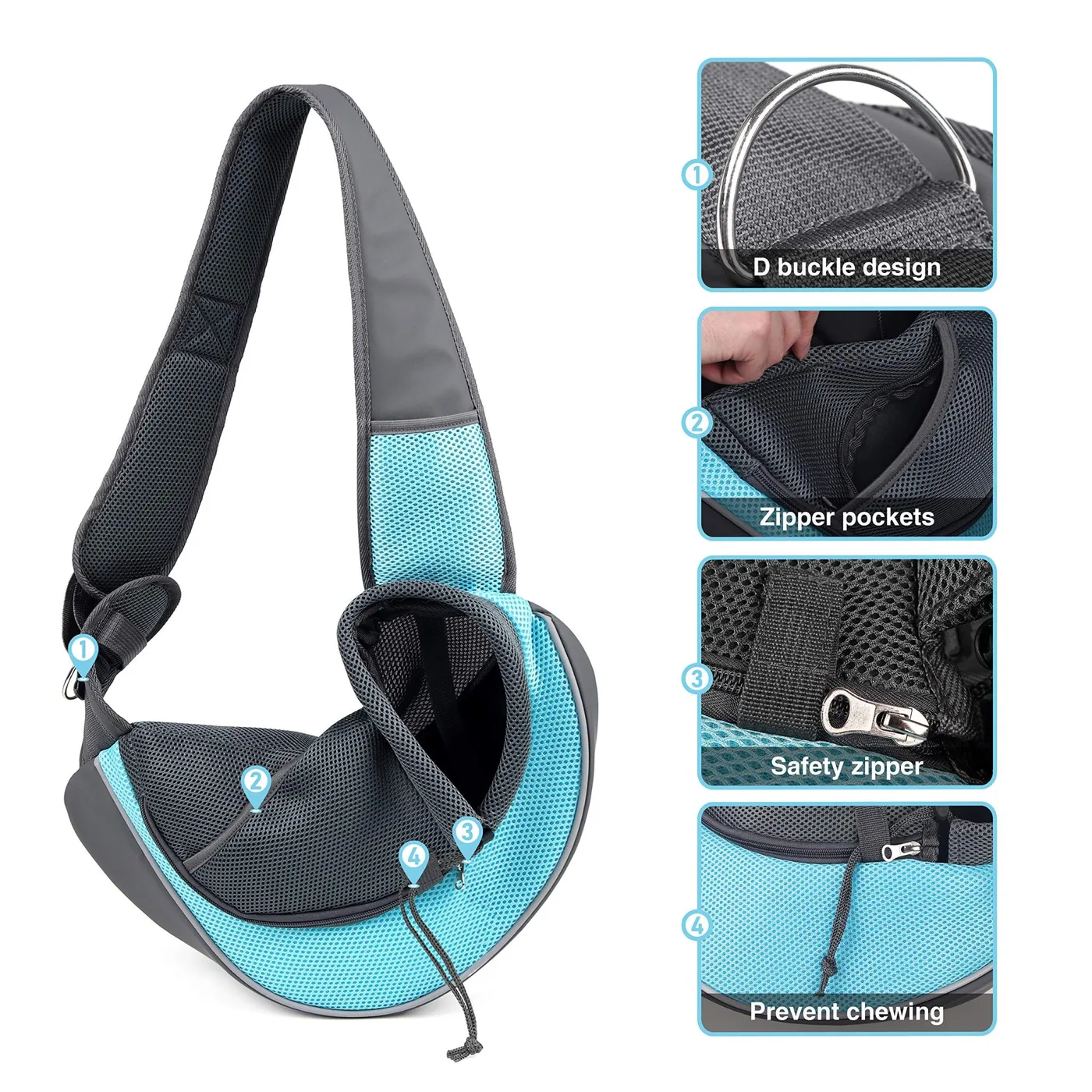
Channel Narrative Difficulty: Why 2-in-1s Confuse Listings
The most under-estimated cost of a dual-function product is narrative. A marketplace needs one category; a 2-in-1 belongs in two. A department store needs one department; the product could sit in pet travel or in pet home. A distributor needs one line on a sell-sheet; the product needs a paragraph. Each of those mismatches costs placement, and placement is what converts engineering effort into units.
Search behaviour makes it worse. Shoppers looking for a carrier search carrier terms; shoppers looking for a bed search bed terms. A dual-function listing that tries to serve both usually ranks poorly for both, because the title and attributes are diluted. The practical fix is to choose the primary function for the listing title and place the second function in the bullets, rather than splitting the title across two vocabularies.
Retail buyers have a different objection: shelf logic. A product that could be filed in two places is often filed in neither, because each department assumes the other will take it. The counter is a deliberate placement decision backed by the one-sentence function statement and, where possible, a secondary display hook that lets the product appear in the second department without a second SKU.
Wholesale catalogues and distributor sell-sheets favour single-function clarity. A 2-in-1 needs two lines of copy where a normal product needs one, and in a printed catalogue with limited space that is a real cost. Decide whether the range can afford that space, and if it cannot, consider whether the second function is worth carrying at wholesale at all.
Where the narrative does work, it works because the second function is a concrete, photographable outcome rather than an adjective. "Unzips flat into a bed" photographs. "Versatile" does not. Every hour spent making the second function visible in a single image returns more than any amount of copywriting.
Margin verdict: Choose one primary function for the title and the category, then prove the second function in a single image, because diluted listings rank for neither.
Photography, Copy and the Cost of Explanation
Explanation is a cost line on a dual-function programme and should be budgeted like one. The product needs a conversion sequence, two hero images, an in-use image for each function, a dimension diagram for each configuration, and usually a short video. On a typical wholesale launch that is two to three times the content spend of a single-function equivalent, and skipping it is the most common reason a good product underperforms.
Sequence the imagery around the transformation rather than around the states. Showing the closed carrier and the open bed as two unrelated photographs leaves the shopper to work out how one becomes the other. Three frames - closed, mid-conversion, fully converted - close that gap in about two seconds of attention and remove the single largest source of "not what I expected" returns.
Copy should lead with the primary function and quantify the second. "A 6 kg-capacity carrier that unzips flat into a 60 x 40 cm bed" is defensible and searchable. "The ultimate 2-in-1 pet companion" is neither. Wherever a number can replace an adjective, replace it; numbers survive contact with a returns department and adjectives do not.
Video earns its cost specifically on this format. A fifteen-second clip showing the conversion, shot from a fixed tripod with no cuts, answers every question the listing copy would otherwise need a paragraph to address, and it converts better than any static image set on a product whose entire proposition is change of state.
Keep the comparison inside the assortment by linking the neighbouring formats. Shoppers weighing a 2-in-1 against a dedicated option will look at the triple-function pet bag range and at our duffel-style pet bag formats, and a well-placed internal reference keeps that decision on the same site.
Packaging carries a share of the explanation too, and it is frequently left until last. A dual-function product needs a carton face that shows both states, because the shopper often meets the product on a shelf rather than on a screen. Budget the printed carton and the insert as components with their own artwork deadline, and review the printed proof against the actual converted sample rather than against a rendering.
Margin verdict: Budget two to three times the usual content spend, show the transformation as a three-frame sequence, and replace adjectives with measurable figures throughout the copy.
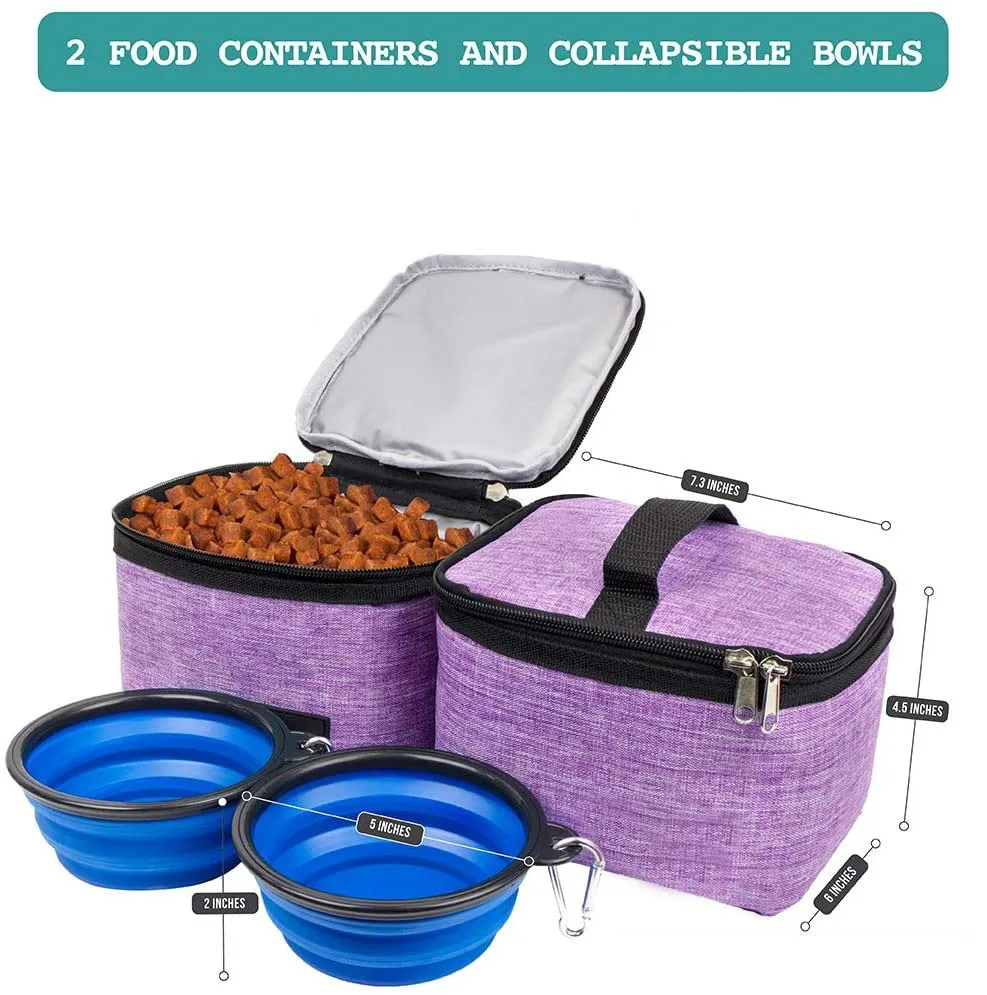
When to Split a 2-in-1 Into Two Separate SKUs
Sometimes the honest answer is that the product should not be a 2-in-1 at all. Three signals indicate that. The first is cost: if the dual-function build pushes the price above what either buyer segment will pay, splitting into two single-function products at lower prices will outsell the combined version and often at better total margin.
The second signal is usage data. If the second function is exercised by a small minority of buyers, the product is carrying cost and narrative difficulty for a feature most customers never use. Splitting lets the majority buy the cheaper focused product and lets the minority buy the accessory separately, which frequently produces higher total revenue from the same shelf.
The third signal is channel feedback. If category managers consistently file the product in the wrong department, or if marketplace classification keeps rejecting the listing, that friction is a real cost that will not be solved by better copy. Two clean SKUs each with an unambiguous category will usually outperform one confusing SKU, even at higher total inventory.
The counter-argument is inventory. Two SKUs mean two 500-piece minimums, two forecasts and two sets of safety stock, against one of each for the combined product. On thin volume that arithmetic favours the 2-in-1 even where the narrative is harder, which is why the decision should be revisited once a season of sell-through data exists rather than settled permanently at launch.
A practical middle path is to launch the combined product, sell the second function as a separately packed accessory, and split later if the accessory sells well on its own. That sequence keeps the opening commitment low, produces the data needed to decide, and avoids betting the season on a structural guess.
Margin verdict: Split when price, usage data or channel classification says so, but launch combined with an accessory pack and let a season of evidence decide.
Order Planning and Reorder Signals for Dual-Function Lines
Order planning on a dual-function programme has one distinctive feature: the mix between the two functions is uncertain at the time of order. If the product is a single SKU with both functions integrated, that uncertainty disappears, which is a genuine planning advantage over a two-SKU approach. If the two functions are produced as variants, the split has to be forecast and the forecast will be wrong.
Reduce the exposure by deciding the split late. On a shared front end with a finishing split, the mix can be adjusted until shortly before packing, which is worth real money when a season's sell-through pattern is still forming. Ask for the latest possible mix-decision date as a contractual figure rather than accepting whatever the line schedule happens to allow.
Sampling follows the standard calendar: 6-10 working days from a frozen specification, then 35-50 days of bulk after final sample approval. On a dual-function product, however, the specification has two configurations, so the sample approval covers two sets of dimensions and two checklists. Make sure both are signed off, because approving only the primary configuration leaves the second one uninspected at AQL 2.5.
Inspection needs a two-configuration worksheet. Check the primary configuration as usual, then convert the unit and check the second: zipper tracking on the conversion seam, cushion fit in the flat state, hardware exposure in the converted state, and the care label against the actual components. A single-configuration inspection is the most common quality gap on this format.
Reorder signals differ from a normal line. Track not just units but review language mentioning the second function: if buyers mention it positively, the premium is defended and the programme should continue; if reviews never mention it, the premium is unearned and the second season should either be re-specified or split. That single read is worth more than any aggregate sell-through figure.
Margin verdict: Secure a late mix-decision date, inspect both configurations at AQL 2.5, and decide the second season on review language rather than on units alone.
Order and quality terms
- MOQ 500 pieces per colourway; samples in 6-10 working days
- Bulk production 35-50 days after approval; AQL 2.5 inspection standard
- T/T 30/70 terms, FOB Xiamen, full document set per shipment
People Also Ask
What is a 2-in-1 pet bag?
One article performing two functions that would otherwise be bought separately - most commonly carry plus rest, or carry plus storage - rather than a bundle of two products or a variation on a single carry mode.
Is a 2-in-1 pet bag worth the premium?
Only if the second function is genuinely used. Price the product so it still clears margin when judged as the primary function alone, which turns the second function into upside rather than a dependency.
How do I explain a dual-function pet bag on a listing?
State the primary function in the title with its capacity, put the second function in the bullets, and show the change of state in a three-frame image sequence or a short fixed-camera video.
Does a 2-in-1 need two sets of compliance documents?
Not two folders, but a wider single one. Every added material needs its own declaration and the converted configuration needs its own stability and hardware checks alongside the carrier checks.
Can the second function be added later as an accessory?
Yes, and it is often the cheapest approach. A packed accessory requires no line changeover, keeps the unit cost lower and preserves a genuine claim that the shopper avoids a second purchase.
Why do retailers struggle to place 2-in-1 pet products?
Because they fit two categories and each department assumes the other will take them. Fix it with a one-sentence function statement and a deliberate placement decision backed by a secondary display hook.
When should a 2-in-1 be split into two products?
When price resistance, low usage of the second function or persistent category misclassification outweighs the inventory saving of a single SKU. Decide after a season of data, not at launch.
Frequently Asked Questions
Should a 2-in-1 pet bag be listed as one SKU or split into two?
Launch as one SKU with the second function packed as an accessory, then let a season of data decide. Split only if price resistance, low usage of the second function, or persistent category misclassification shows the combined version is not working.
What does MOQ look like on a dual-function programme?
The opening minimum is 500 pieces per colorway. With one integrated SKU that covers both functions, only one minimum is committed; with two produced variants, each function carries its own minimum and its own forecast.
Does a 2-in-1 cost twice as much to develop?
No, but a genuine structural 2-in-1 typically adds 18-30 percent to the cost of the equivalent single-function product, through extra pattern pieces, a second zipper line and a reinforced conversion seam.
Which assembly arrangement is cheapest at wholesale volumes?
Usually a shared front end with a late-stage finishing split, which avoids a full second changeover while still allowing the function mix to be decided late. Fully dedicated lines only win above roughly 2,400 units per function.
How long do samples and bulk take?
Samples take 6-10 working days from a frozen specification and bulk runs 35-50 days after final sample approval. Both configurations must be approved, not only the primary one, or the second will ship uninspected.
What inspection standard applies to the shipment?
Pre-shipment acceptance at AQL 2.5 with a two-configuration worksheet. Convert the unit during inspection and check zipper tracking on the conversion seam, cushion fit, exposed hardware and care-label accuracy.
Are there extra compliance requirements for two functions?
The scope widens rather than changes. Every added material - cushion fill, second textile layer - needs its own declaration, and the flat configuration needs its own stability and sharp-edge check alongside the carrier checks.
Why do 2-in-1 listings rank poorly on marketplaces?
Because the title and attributes are diluted across two vocabularies. Put the primary function in the title and place the second function in the bullets; prove the second function with a single conversion image.
Can the second function be sold as a separate accessory?
Yes, and it is usually the cheapest route. A packed accessory needs no line changeover, keeps unit cost lower and still lets the shopper avoid a second purchase.
How should the product be priced against a single-function competitor?
At a premium, not at the sum. Price so the product still clears margin if judged purely as the primary function, which makes the second function upside rather than a dependency.
What content budget should a dual-function launch expect?
Roughly two to three times a single-function equivalent: two hero images, a three-frame conversion sequence, in-use images for both functions, dimension diagrams for both configurations and usually a short video.
What payment and Incoterm baseline applies?
T/T 30/70 against FOB Xiamen, held constant across competing quotations so origin charges and freight do not distort what looks like a unit-price difference.
How late can the function mix be changed?
On a shared front end with a finishing split, usually until shortly before packing. Ask for the latest mix-decision date as a contractual figure rather than accepting the line schedule by default.
What reorder signal matters most for this format?
Review language rather than units. If buyers mention the second function positively the premium is defended; if reviews never mention it, the premium is unearned and the next season should be re-specified or split.
Talk to QUANZHOU JUNYUAN BAGS about a wholesale pet bag order: MOQ 500 pieces per colourway, samples in 6-10 working days, bulk production in 35-50 days under AQL 2.5 inspection.
Get a free quote Request a sample