Pet Weekender Bag: Overnight Program Guide
A pet weekender is sized and organised for a 24-48 hour trip, which in practice means 28-45 litres, at least four separate compartments, and a documented pet weight limit. Wholesale programs start at MOQ 500 pieces per colourway, sample in 6-10 working days and run 35-50 days in bulk after approval.
The weekender is an organisation problem disguised as a bag, and buyers who specify it as a smaller travel bag end up with a product that looks right and works badly. Commercial floor is MOQ 500 pieces per colourway, because the trim set alone - multiple zippers, dividers, liner and accessory items - cannot be bought sensibly below that volume. Sample development runs 6-10 working days per round and a weekender typically takes two rounds, one for the shell and one for the compartment layout and the accessory fit. Bulk production is 35-50 days after sample approval and deposit clearance, released only after an AQL 2.5 inspection with a written report. Terms are T/T 30/70, FOB Xiamen, with dye lots matched to a signed Pantone reference and approved in a controlled light box. The economics are driven by bundle content rather than by shell cost: a three-item set raises the achievable retail band far more than it raises the bill of materials. Specify each compartment by content and closure type, because a compartment without a defined purpose becomes a pocket the customer fills with nothing. Plan the accessory items at the same time as the shell, because they carry their own minimums and their own test requirements.
Pet bag sample cost is normally credited against the first production order, which makes Pet Bag Types & Styles review the expensive step rather than the sampling itself. Pet carrier sample cost rises with hardware changes, so lock the hardware before the second sample round.
The Weekender Brief: What an Overnight Trip Actually Requires
An overnight trip generates a short, predictable list of items, and a weekender pet bag is a bag engineered around that list rather than around a capacity number. The pet needs a rest space; the owner needs food for two meals, a bowl, medication if applicable, waste bags, a leash, documents and their own overnight essentials. That is between five and eight distinct categories of content, and each one that ends up loose in a single cavity produces a complaint about organisation rather than about capacity.
The brief should therefore start with a content matrix: item, quantity, whether it is wet or dry, whether it needs to be accessible during transit, and whether it can share space with the animal. Once that matrix exists, the compartment architecture follows directly, and the factory can quote it accurately. Without it, the factory quotes a generic bag and the first sample arrives with three pockets of the wrong size in the wrong places.
Trip duration sets the size. A 24-hour trip with a small animal fits comfortably in 28-35 litres; a 48-hour trip with a medium animal and a full accessory set needs 38-45 litres. Going larger than the trip requires is a mistake, because an oversized weekender is carried half empty, slumps, and reads as poor quality on the shelf. The right discipline is to size to the content matrix and then confirm, not to size to a category average.
Two statements should appear on every weekender specification: the stated pet weight limit and the stated trip duration the bag is designed for. Both are legible to a customer in a listing and both are defensible in a compliance review. A bag that claims neither leaves the customer to guess, and guessing is what produces the size-related return that dominates this category.
Compartment Architecture for a 24-48 Hour Trip
Four compartments is the practical minimum for a credible weekender, and five is better. The pet compartment with ventilation on two planes; a dry goods compartment sized for a measured food portion; a wipeable or lined compartment for wet or soiled items; an exterior quick-access pocket for documents, leash and waste bags; and optionally a flat sleeve for paperwork or a tablet. Each should be specified by internal dimensions, closure type and lining material.
Separation is the functional requirement, not the pocket count. Food and soiled items must not share airspace with the animal's rest area, and a wipeable lining on the wet compartment is the difference between a bag that survives a season and one that is retired after three trips. Specify the coating by type and by wipe-clean test method, and ask for a stain-resistance result on the pre-production sheet rather than accepting a description.
Access during transit is the second requirement and it is routinely overlooked. The quick-access pocket needs to be reachable while the bag is on a shoulder and while the animal is inside, which constrains its position more than its size. A pocket that requires setting the bag down to open is a pocket that does not get used, and unused features do not justify a price premium.
Interior visibility is a low-cost detail with outsized effect. A light-coloured lining, a contrast interior and a small internal tether loop make the bag legible in a dim car or hotel room, and they cost almost nothing. These are the details that separate a weekender that reviews well from one that reviews neutrally, and they are decided at the material selection stage.
| Compartment | Contents | Target size | Closure | Lining |
|---|---|---|---|---|
| Pet rest zone | Animal, liner, tether | 60-70% of volume | Mesh or zip panel | Removable washable |
| Dry goods | Food portion, treats | 3-5 L | Zip | Uncoated |
| Wet or soiled | Bowl, wipes, waste | 2-4 L | Zip | Wipeable coating |
| Quick access | Documents, leash | Flat, full width | Zip or magnetic | Uncoated |
| Flat sleeve | Paperwork, tablet | Full panel | Open or elastic | Uncoated |
Bundle Economics: Weekender Plus Accessories as One SKU
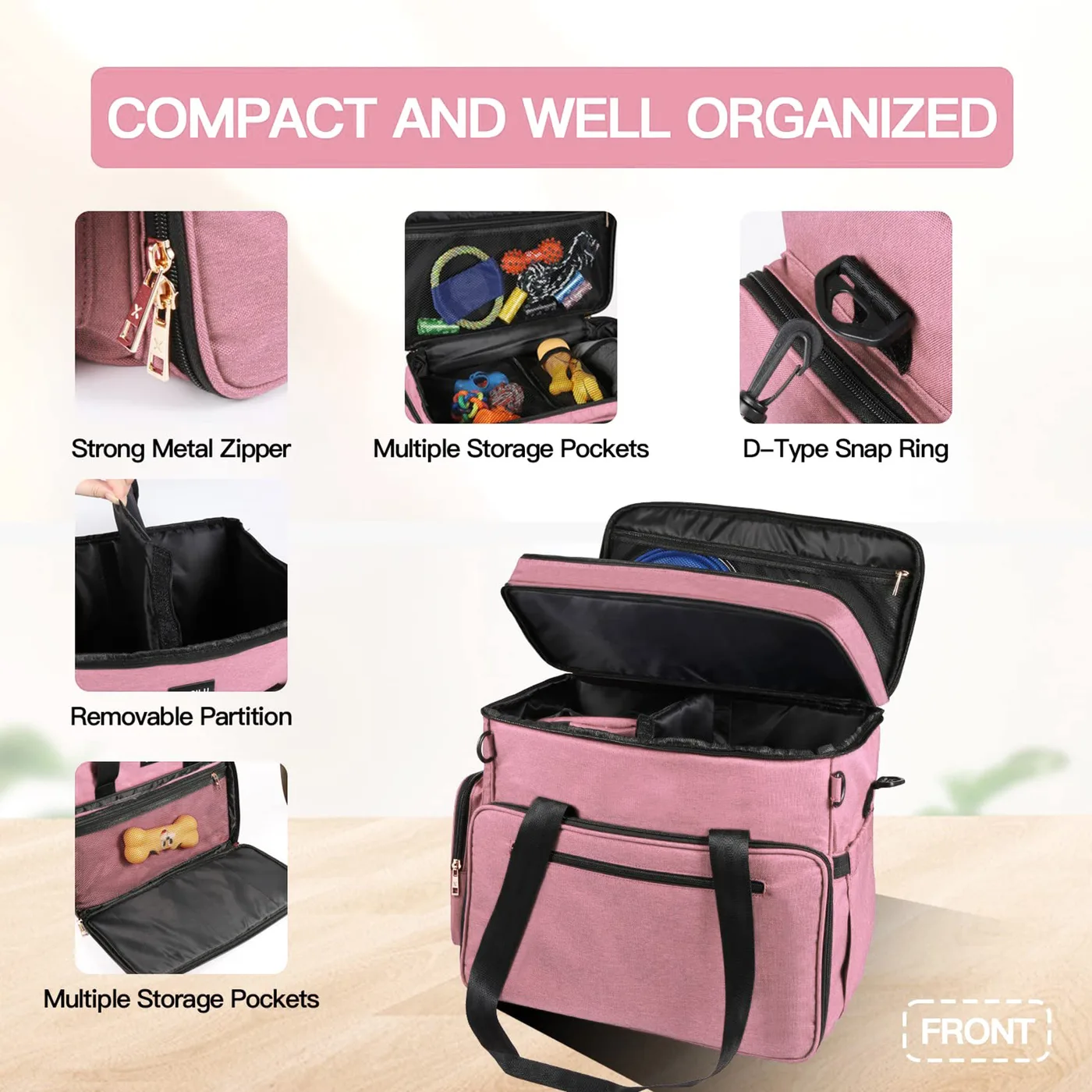
The strongest commercial argument for the weekender is that it is the easiest pet bag format to bundle. A shell plus a removable washable liner, a fold-flat travel bowl and a small wet-items pouch fits into one carton, carries one barcode, and reaches a retail band the standalone bag could not justify. The incremental bill of materials is modest while the perceived value is high, which is the definition of a good bundle.
The economics work because the bundle shares the cube. The shell is the bulky item and it already defines the carton; the accessories nest inside it at almost no incremental freight. That means the marginal cost of the third and fourth item is essentially their purchase price, while the marginal retail value is the full list value of those items. On a typical program, a three-item bundle adds 12-18 percent to landed cost and supports a 30-45 percent higher retail price.
Bundles do carry extra work. Each accessory has its own minimum order quantity, its own material compliance requirement and its own test consideration, and the liner in particular needs a shrinkage and wash-cycle specification because it is laundered repeatedly. Plan the accessory sourcing at the same time as the shell, not after, because accessory lead times frequently exceed shell lead times and they will drive the critical path if discovered late.
Secondary packaging is where bundles are won or lost at the shelf. A printed band, a clear window or a die-cut card that shows all items at once converts far better than a plain carton with a list printed on it. Decide the pack-out format when you decide the bundle, because a bundle that is not visible is a bundle the customer discounts mentally to a single bag.
Material Choices That Survive Weekend Frequency of Use
A weekender is used repeatedly and roughly - loaded into a car boot, set down on pavement, carried by one strap, wiped rather than washed. Material selection should be made against that duty cycle rather than against a showroom appearance. The dominant failure mode in this category is not catastrophic tearing; it is accumulated abrasion, coating delamination and zipper wear.
600D polyester with a PU or PVC backing remains the wholesale default and handles weekend duty well. Where the program targets a higher band, a 900D construction or a polyester-cotton blend raises abrasion resistance and improves hand feel, at a cost increase that is usually 8-15 percent on the fabric line. Nylon ripstop is the weight-saving option and performs well on abrasion, but it is more expensive and less consistent across dye lots, which matters when you are running 500 pieces per colourway.
Coatings deserve a specific line on the brief. A wipeable interior coating is what makes the wet compartment functional, and coatings vary widely in how they survive repeated wiping and in how they behave in cold weather. Ask for a stated coating type, a stated adhesion or rub test result, and a temperature range. Reference AATCC test methods for abrasion and colour fastness so the result is expressed in a form a retail compliance team recognises.
Hardware frequency matters more than hardware strength here. A zipper that is opened four times per trip, forty trips per year, accumulates more cycles in one season than a zipper on an occasional-use bag does in five years. Specify cycle ratings and ask for a cycle test at pre-production. Chemical compliance runs through REACH in Europe and the reference point is the European Chemicals Agency; current reports matched to your fabric and trim references should be requested before bulk, not after.
Liner Specification Notes
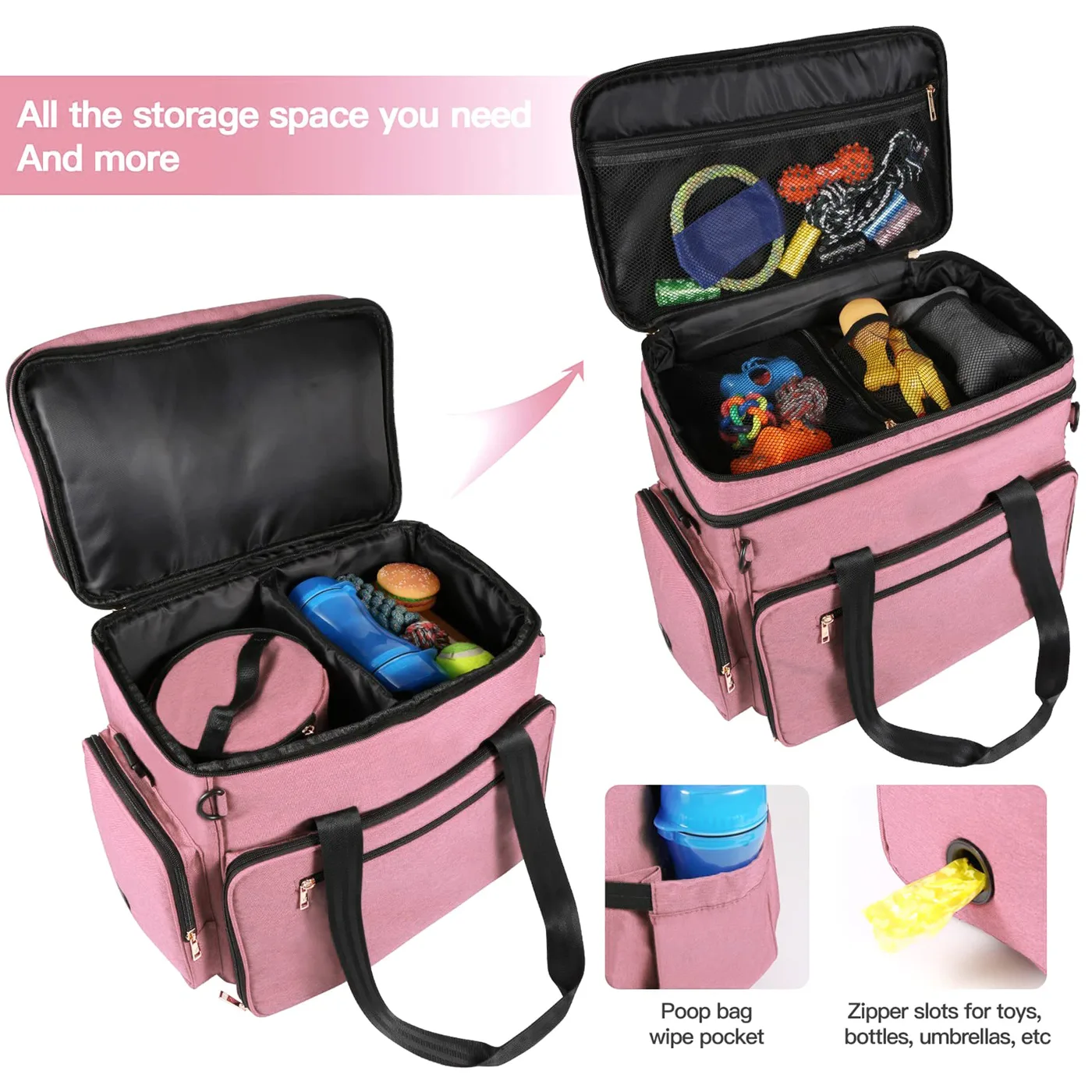
The removable liner is the most-used component in a weekender and the most frequently under-specified. State the fabric construction, the shrinkage limit after laundering, the number of wash cycles tested, and how the liner is retained in the shell. A liner that shrinks or that detaches in use becomes a complaint about the whole product.
Pricing Ladder and Margin Structure for Weekender Programs
Price architecture for a weekender should be built from the retail band backwards, because the format supports a wider band than its bill of materials suggests. Entry band: shell only, 600D fabric, uncoated compartments, no bundle. Mid band: shell plus liner, one wipeable compartment, documented weight limit. Upper band: full bundle, higher-denier fabric, branded hardware, printed retail packaging. Each step up should be legible on the shelf or in the listing image, or the customer will not pay for it.
Margin behaves differently across the ladder. The entry band competes almost entirely on price and absorbs freight cost per unit badly, because the shell is bulky relative to its value. The upper band carries the same freight and a much higher gross margin, which is why a bundled weekender is usually the more profitable program even at lower unit volume. Buyers should model gross margin per carton rather than per unit, because cube is the constraint.
Volume tiers on the cost side are worth understanding precisely. MOQ is 500 pieces per colourway, and the first meaningful step change usually arrives between 1,000 and 1,500 units, where fabric and trim purchasing move into a better tier. Negotiating the finished price without changing volume rarely produces the same result as consolidating colourways to reach the next tier, and consolidation has the added benefit of simplifying the season.
Finally, price the documentation in. Test reports, artwork and packaging development are real costs that fall outside the unit price, and they are the items most often forgotten in a first-season budget. A program that spends its entire budget on units and nothing on packaging will land at the shelf looking unfinished.
Sampling and Pre-Production Validation for Multi-Compartment Builds
A weekender needs two sample rounds in most programs, and the rounds should test different things. Round one validates the shell: silhouette, capacity, strap geometry, base insert and ventilation. Round two validates the interior: compartment dimensions against the content matrix, liner fit and retention, coating behaviour, zipper run and accessory fit inside the packed carton. Attempting to validate both in one round is the main reason weekender programs need a third round.
Each round runs 6-10 working days plus freight and evaluation, so a realistic plan is four to six weeks of development. Build the content matrix test into round two literally: place the actual food portion, bowl, leash and waste bags into the compartments and photograph the result. A compartment that fits on paper and fails with real items is a common and avoidable outcome.
Pre-production validation is the gate that protects bulk. At this stage the factory should produce the pre-production sample from bulk materials, run the agreed tests, and issue a report covering dimensional checks, coating adhesion, zipper cycles, colour consistency across all components and carton pack-out. Confirm carton dimensions and units per carton now, because carton disputes discovered after production are resolved by re-packing at someone's cost.
Release is conditional on an AQL 2.5 inspection with a written report. For a multi-compartment build, add a compartment-dimension check and a completeness check for bundled accessories to the standard plan - missing accessories inside a sealed master carton are invisible until a customer opens the box, and they generate the worst kind of return.
What to Photograph at Each Sample Round
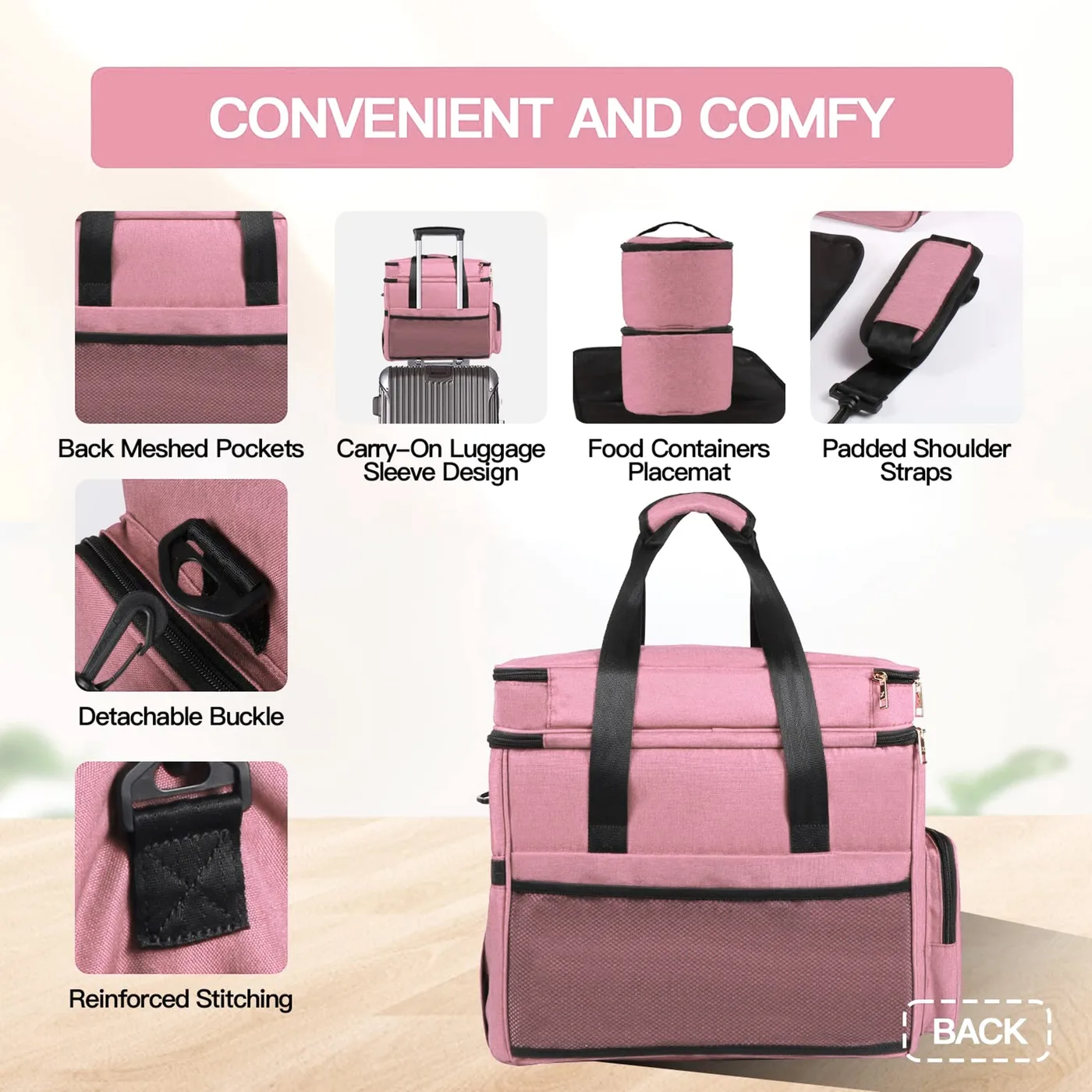
Require a fixed photographic set at every round: exterior in three states, interior with the content matrix items placed, liner removed and refitted, each closure open and closed, and the packed carton with the lid open. A consistent set across rounds makes changes visible and gives both sides the same reference when a written description would be ambiguous.
Compliance and Documentation for Multi-Item Sets
A bundled weekender is a set, and compliance teams frequently treat sets as multiple products. That means the file has to cover the shell, the liner and each accessory, and the test reports have to name each material. Where a marketplace asks for documentation, it will ask by item, and a single report covering the shell is not an answer.
For the United States, general consumer product obligations run through the U.S. Consumer Product Safety Commission, and children's-product rules attach if the item is marketed toward children or styled as a children's article. For Europe, restricted substances are governed under REACH with the European Chemicals Agency as the reference. Where the program sells into California, the Proposition 65 list is the relevant warning framework and it should be reviewed before artwork is finalised, because warnings cannot be added after printing.
Claim substantiation is the practical half of the file. Every stated capacity, weight limit, wash-cycle rating and coating property needs a test record behind it, dated and matched to the pre-production sample. Build a one-page map of claim, test method, result and date, and the next compliance query takes an hour instead of a week.
One more item belongs in the file: the accessory specifications. A bundled weekender usually contains a liner, a bowl and a pouch, and each has its own material, its own dimensions and its own test consideration. Recording them alongside the shell means a compliance query about any item in the set is answered from the same folder, and it prevents the common situation where the shell is documented and the accessories are not.
Keep the folder by program and season: material test reports, pre-production test sheet, signed sample approval form, artwork approvals and the AQL 2.5 inspection report. That folder is also what lets you restart a program cleanly next season without re-sampling from scratch.
How to Brief a Weekender So the First Sample Is Close
The gap between a first sample and a usable product is almost always a briefing gap, and in the weekender format it shows up in the interior rather than in the silhouette. A brief that specifies the shell well and the compartments loosely produces a bag that photographs beautifully and organises badly, and the second round then has to solve a problem that should never have existed.
Write the brief as a numbered specification with a content matrix attached. For each compartment: name, internal dimensions, closure type, lining material, position relative to the pet compartment, and the reason it exists. The last item sounds unnecessary and it is the most useful one, because a compartment without a stated reason is a candidate for deletion when cost has to come out, whereas a compartment with a reason is defended by everyone in the room.
State the non-negotiables explicitly and keep the list short. For a weekender they are usually three: the stated pet weight limit, the ventilation open area, and the wipeable lining in the wet compartment. Everything else - pocket count, hardware finish, print placement - should be marked as flexible so the factory has room to propose a cheaper construction. A brief in which everything is critical is a brief the factory will simply price conservatively.
Include the packing and the carton in the brief, not just the bag. State the pack-out orientation, whether the accessories ship inside the shell, the units per master carton and the maximum carton dimensions if the channel imposes one. Those four lines decide the freight cost per unit and they are frequently discovered after the first sample, when changing them means changing the pack-out rather than the product.
Finally, name the acceptance tests in the brief rather than leaving them to the pre-production stage. List the dimensional checks, the coating rub test, the zipper cycle target and the loaded carry test, with the acceptance figure for each. When the tests are written into the brief, the sample arrives already measured against them, and the first round produces a decision instead of a discussion.
Merchandising the Weekender Across Channels
Channel fit for the weekender is broad because the use case is universal, but the presentation differs. Pet specialty retail wants the pet weight range and the trip duration on the front panel in large type, and it wants a hangtag or shelf-ready tray that communicates four compartments in a single graphic. E-commerce wants the same information delivered as a compartment diagram in the image set and a three-bullet block in the description.
The single most effective merchandising asset for this format is a labelled interior photograph. Customers buying an organisation product want to see the organisation, and a picture with each compartment named converts better than a lifestyle image of a dog. Produce it once and use it everywhere - listing, retail sell sheet and wholesale catalogue.
Seasonality is mild but real. Demand rises ahead of holiday travel periods and ahead of summer boarding season, and a program targeting those windows should count backwards from the required in-warehouse date through freight, 35-50 days of bulk production, and four to six weeks of sampling. Buyers who place in the month before the window end up air-freighting or missing it.
Assortment coherence matters as much as the individual product. If the line already carries a travel duffle format, position the weekender as the organised, longer-trip sibling and share a colourway so the two read as one family on the fixture. Programs building a full travel range should also review the manufacturing guide for pet travel bags, since fabric, coating and zipper decisions carry across the range and consolidate your trim buying.
Order and quality terms
- MOQ 500 pieces per colourway; samples in 6-10 working days
- Bulk production 35-50 days after approval; AQL 2.5 inspection standard
- T/T 30/70 terms, FOB Xiamen, full document set per shipment
People Also Ask
How is a pet weekender different from a pet duffle?
A weekender is specified around a content matrix and organisation; a duffle is specified around raw capacity and packability. The weekender has four or more defined compartments; the duffle usually has one large cavity.
Can a weekender be used as an everyday bag?
Yes, and many customers do, but the organised compartments are what justify the price, so the merchandising should lead with overnight use rather than daily use.
What is the best way to photograph a weekender for a listing?
A labelled interior photograph showing each compartment named. Customers buying an organisation product want to see the organisation before they buy it.
Should the liner be removable?
Yes. A removable, washable liner with a stated shrinkage limit and wash-cycle rating is now an expectation in this category and reduces whole-product complaints.
How do I justify a premium price band for a weekender?
Bundle it. A shell plus liner, bowl and wet pouch shares one carton, adds modest cost and supports a substantially higher retail band.
Does seasonality affect weekender orders?
Yes. Demand rises ahead of holiday travel and summer boarding season, so the production slot should be booked well before those windows rather than during them.
Frequently Asked Questions
What size is a pet weekender bag?
Typically 28-45 litres, with 28-35 litres covering a 24-hour trip for a small pet and 38-45 litres covering a 48-hour trip for a medium pet with a full accessory set.
What is the MOQ for a weekender program?
500 pieces per colourway. The trim set - multiple zippers, dividers, liner and accessories - cannot be purchased sensibly below that volume.
How many sample rounds does a weekender need?
Usually two: one for the shell and one for the compartment layout, liner fit and accessory packing. Each round runs 6-10 working days plus freight.
How long is bulk production?
35-50 days after sample approval and deposit clearance, with freight additional. Accessory lead times can exceed shell lead times and may drive the critical path.
Which inspection standard is used?
AQL 2.5 with a written report, plus a compartment-dimension check and a completeness check for bundled accessories added to the plan.
Do bundled accessories need their own compliance documents?
Yes. Compliance teams treat sets as multiple products, so the shell, liner and each accessory should each have a material test report naming the item.
How many compartments should a weekender have?
Four is the practical minimum and five is better: pet rest zone, dry goods, wet or soiled items, quick access, and optionally a flat sleeve.
What coating should the wet compartment use?
A wipeable interior coating, specified by type with a stated rub or adhesion test result and a stated temperature range, rather than a generic water-resistant description.
How much does bundling add to landed cost?
Typically 12-18 percent, because the accessories share the carton cube the shell already defines, while supporting a 30-45 percent higher retail price.
What payment terms apply?
T/T 30/70 - 30 percent deposit, 70 percent before shipment - on FOB Xiamen terms. Alternative Incoterms can be quoted but change the landed cost model.
When should I place an order for the holiday travel window?
Count backwards from the required in-warehouse date through freight, 35-50 days of bulk production and four to six weeks of sampling, then add a buffer for re-test.
Should the empty weight be published?
Yes, along with the pet weight limit and the intended trip duration. Stated numbers reduce size-related returns and are straightforward to defend in a compliance review.
Talk to QUANZHOU JUNYUAN BAGS about a wholesale pet bag order: MOQ 500 pieces per colourway, samples in 6-10 working days, bulk production in 35-50 days under AQL 2.5 inspection.
Get a free quote Request a sample