Pet Rolling Backpack: Backpack Plus Wheels Guide
A pet rolling backpack is a single shell with a harness system and a wheel set that work together, aimed at pets up to about 10 kg, and it typically costs 30-45 percent more than a standard pet backpack. Programs start at MOQ 500 pieces per colourway, sample in 6-10 working days per round, and run 35-50 days in bulk after approval.
The rolling backpack is the most mis-specified format in the pet bag category, because it is genuinely two products sharing one shell and teams usually engineer one of them properly. Commercial floor is MOQ 500 pieces per colourway, because the wheel set, handle assembly and back-panel reinforcement each carry their own purchasing minimum. Sample development runs 6-10 working days per round and these programs need two to three rounds: harness and back panel, rolling behaviour, then finishing. Bulk production is 35-50 days after sample approval and deposit clearance, released only after an AQL 2.5 inspection with a written report. Terms are T/T 30/70, FOB Xiamen, with fabric, webbing and trim matched to a signed Pantone reference and approved in a controlled light box. The engineering question that decides the product is the load path: the animal's weight travels either through the harness into the user's shoulders or through the base into the wheels, and the reinforcement has to serve both without doubling the weight. Specify the harness anchors by pull rating, the wheels by diameter and bearing, and the handle by extended height - three numbers that determine whether the product works. Cap the pet weight honestly at the lower of the two mode limits, because that is the figure a customer will hold you to.
Most buyers source pet bags from china through a mix of catalogue review and sample rounds, and Pet Bag Types & Styles decisions sit in the middle of that sequence. Pet bag wholesale suppliers who publish a price list with the fabric spec attached save a full round of email, and bulk pet bag orders then move on carton weight rather than on unit count.
Market Read: Who Buys a Rolling Pet Backpack
The rolling pet backpack serves a narrower customer than its name suggests. The buyer has a small-to-medium pet, travels through built environments with long flat stretches and occasional stairs, and does not want to choose between carrying and rolling. In practice that is an urban or campus customer, a commuter with a pet, and a traveller moving through stations and terminals rather than a hiker or a driver.
Understanding that profile matters because it sets the weight ceiling. Above roughly 10 kg of pet, the backpack mode stops being usable for most people regardless of how good the harness is, and the product silently becomes a rolling bag with unnecessary straps. Programs that publish a 15 kg limit are selling a mode the customer will abandon, and the returns follow within a season.
Seasonality is real in this format and it is not the pattern buyers expect. Demand tracks the academic calendar and the urban travel calendar rather than the holiday pet-gifting peak, because the format is bought for a journey rather than as a gift. Buyers planning around a December gifting peak will find the rolling backpack underperforming in November and selling through in late summer and early autumn.
The channel fit follows from the profile: e-commerce first, then travel and campus-adjacent retail, then pet specialty. The format needs explanation before purchase, and e-commerce is the only channel where a buyer can receive a full explanation - dimensions, mode limits and a video - without a salesperson.
Structure and Load Path for Hybrid Carry
Hybrid carry means one shell has to serve two incompatible load paths. In backpack mode, load runs from the animal's weight through the base, up the back panel and into the shoulder straps. In rolling mode, load runs from the base into the wheel axles and into the ground, while the handle takes only a steering and stabilising force. The reinforcement that serves one does not automatically serve the other, which is why hybrid products are heavier than either single-mode equivalent.
The base is the shared component and it carries everything. Specify it as a moulded or laminated panel with stated thickness, stated coverage footprint and a stated deflection limit under maximum load. A base that is stiff enough for rolling is usually stiff enough for carrying; the reverse is not true. If cost has to come out somewhere, it should come out of the shell fabric or the trim, never out of the base.
The back panel is the second shared component and it does double duty as padding and as structure. It needs enough rigidity to keep the animal's compartment from collapsing into the user's back, and enough ventilation to keep the user comfortable. Specify both: a stated panel thickness and compression resistance, plus a stated airflow channel or spacer construction. A panel that is only padding produces a bag that feels good empty and sags loaded.
Frame attachment is where hybrid builds fail in bulk. The wheel frame and the harness anchors both attach to the same shell, often within a few centimetres of each other, and the combined stress concentration tears stitching that was adequate for either load alone. Specify reinforcement patches, state their material and coverage, and require a combined-load test rather than two separate ones.
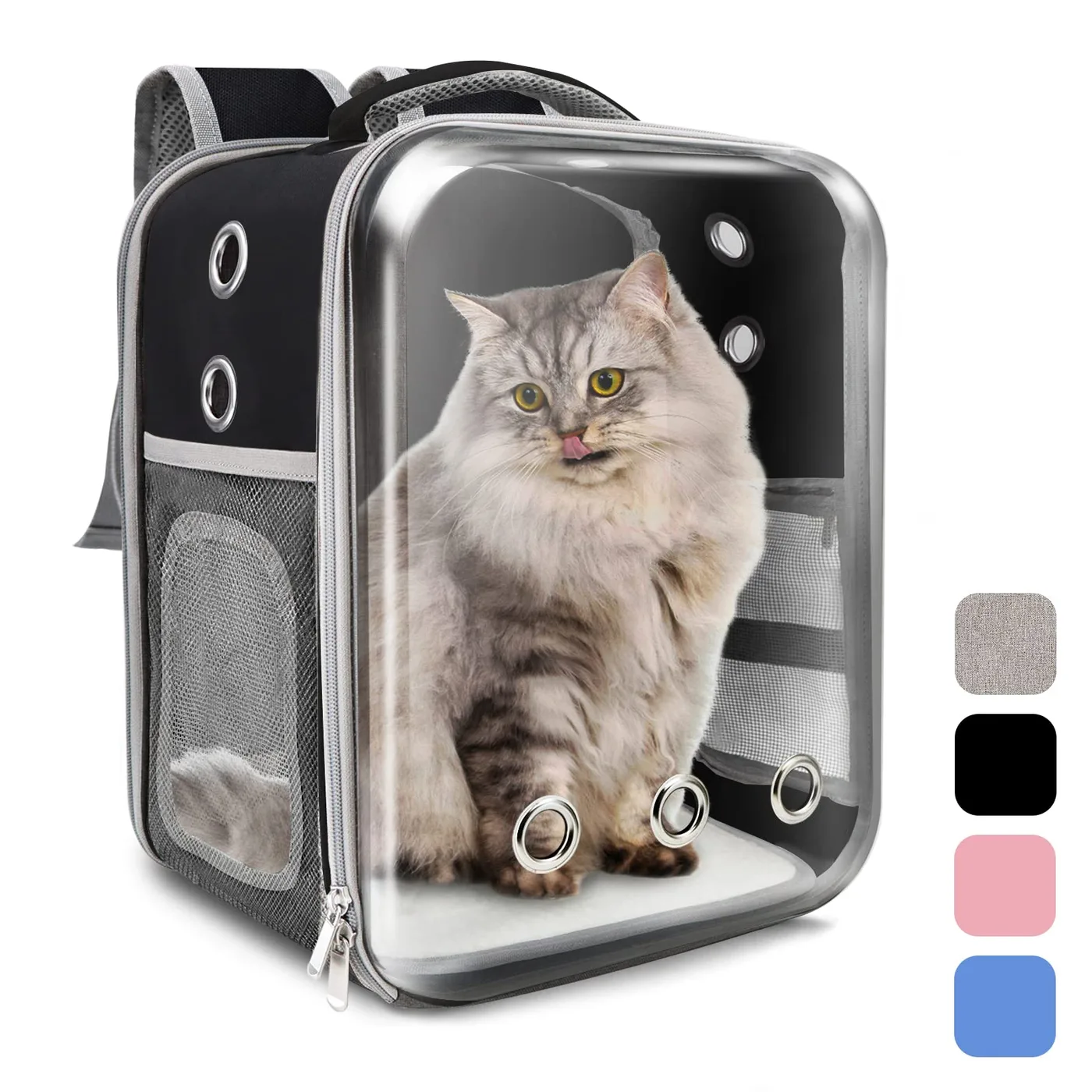
Reinforcement Where the Two Load Paths Meet
Specify reinforcement patches at both the wheel frame attachment and the harness anchors, stated by material and coverage area, and test them together rather than separately. In a hybrid shell the two attachment zones sit close enough that their stress fields overlap, and a patch sized for one path will not survive both. A combined-load bench test at pre-production catches this before bulk and costs almost nothing to run.
Strap, Back Panel and Harness Specification
The harness system is what makes the backpack mode work and it is usually specified last, which is a mistake. Four variables matter: strap width and padding, strap anchor construction, sternum or chest strap presence, and adjustability range. Each should be a written specification with a test, not a description.
Strap width and padding determine comfort under load. Narrow straps concentrate pressure and are the most common comfort complaint; a wider strap with adequate foam spreads the load and costs a little more in material. Specify the foam density and thickness, not just "padded straps", and ask for a compression-recovery result so the padding does not flatten permanently in the first month.
Strap anchors are safety-critical. State the anchor construction - bar-tacked webbing into a reinforced patch, or a moulded or riveted attachment - and require a pull test with a stated safety factor over the maximum pet weight. Anchor pull-out is the most serious failure the format can produce and it is entirely preventable with a specification and a bench test recorded on the approval sheet.
Adjustability determines whether the product fits a range of users. Specify the strap length adjustment range in centimetres and the chest strap position range, and test the fit on a small and a large user at the sample stage. A rolling backpack that fits one body type well and another badly generates fit returns that look like quality returns in the data.
Ventilation for the User, Not Just the Pet
Most ventilation specifications in this category address the animal and forget the user. A loaded backpack against a human back generates significant heat, so specify an airflow channel or spacer mesh on the back panel and record it as a design feature worth paying for.
Rolling Gear: Wheel Size, Handle Height and Terrain
Wheel and handle specification for a rolling backpack follows the same logic as any wheeled pet bag, with one difference: the wheel set has to work on a shorter, narrower product with a higher centre of gravity relative to its footprint. That makes stability the governing concern rather than rolling efficiency.
Wheel diameter should be chosen for the terrain the customer actually meets. For station concourses, campus paths and retail floors, 60-70 mm sealed-bearing wheels give a good balance of clearance and stability. Below 55 mm the bag vibrates over expansion joints and paving cracks; above 75 mm the product becomes taller and less stable when set down. Specify durometer in the 80-85A band, which rolls quietly on hard surfaces without wearing quickly.
Wheel track width matters more here than in a trolley format. A narrow track on a tall narrow bag tips on turns; widening the track by a few centimetres costs nothing in components and materially improves the product's behaviour. State the track width on the specification sheet and test a loaded turn rather than only straight-line rolling.
Handle height is the last variable and the one that generates the most subjective complaints. Specify the extended height range in centimetres and match it to the target user population - a handle that is too short produces a stooping user and a back complaint. Two-stage handles are stiffer and cheaper; three-stage handles pack shorter and flex more. Decide on the band and record the extended height on the approval sheet.
| Pet weight band | Volume | Wheel spec | Handle stages | Empty weight target | MOQ per colourway |
|---|---|---|---|---|---|
| up to 5 kg | 20-26 L | 2 x 60 mm sealed | 2 | under 2.6 kg | 500 pcs |
| 5-8 kg | 26-34 L | 2 x 65 mm sealed | 2 | under 3.2 kg | 500 pcs |
| 8-10 kg | 34-42 L | 2 x 70 mm sealed | 2-3 | under 3.8 kg | 500 pcs |
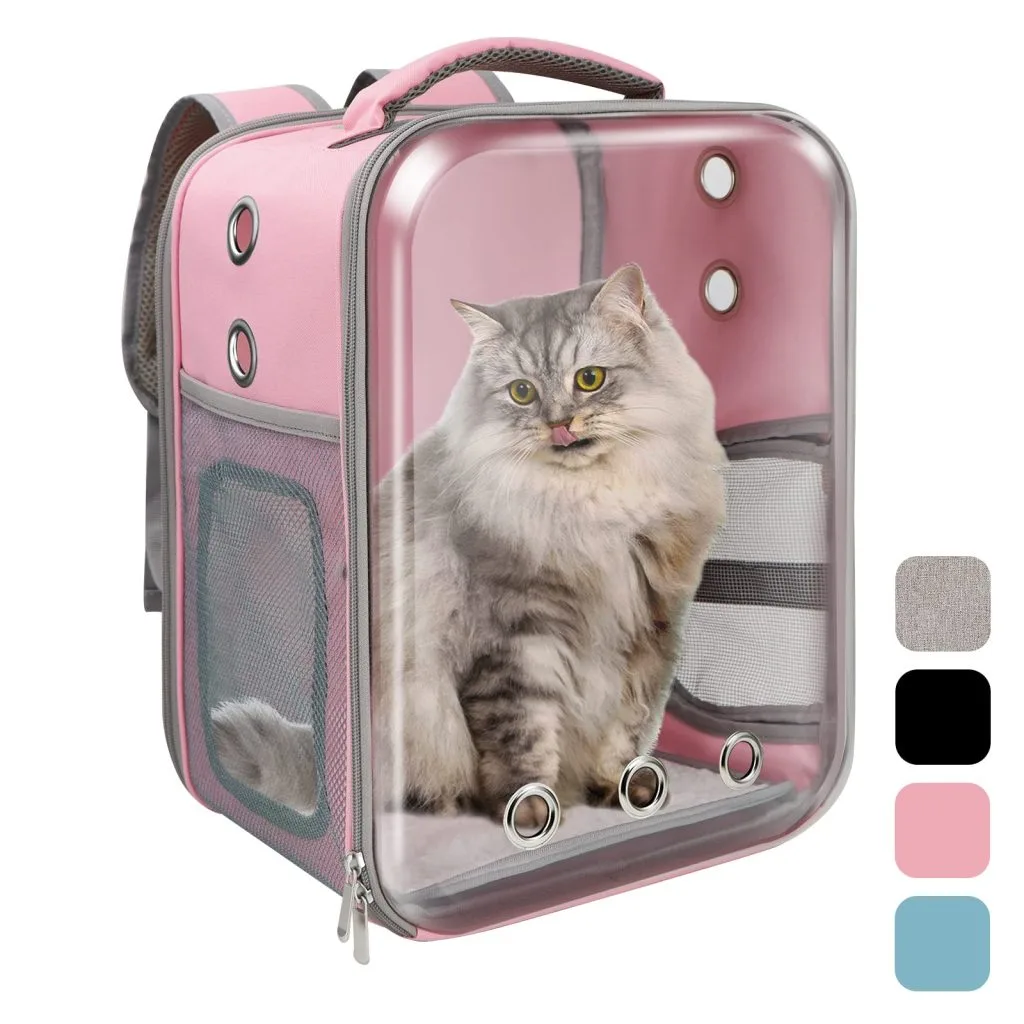
Reading the Weight Ratio
Compare the empty weight against the maximum pet weight as a ratio, and publish both numbers. Customers read the ratio even when they do not articulate it, and a bag that carries twice its own weight is perceived very differently from one that carries one and a half times.
Pricing and Margin Architecture for Hybrid Builds
A rolling pet backpack costs 30-45 percent more than a comparable standard pet backpack, and the margin case rests on whether that premium is legible to the customer. It is legible when the product is compared against buying two bags; it is not legible when it is sitting next to a cheaper standard backpack on the same shelf. Merchandising therefore carries as much of the margin as the product does.
Cost decomposes into the wheel set, the handle assembly, the base reinforcement, the back panel and the additional labour. Fabric is a minor line. Because three of those five are purchased components with tiered pricing, volume is again the strongest lever: the step from 500 to 1,500 units per colourway moves the price more than any negotiation at fixed volume.
The margin model should be built per carton rather than per unit. Hybrid builds carry a higher cube and a higher weight than standard backpacks, so both freight allocation and parcel-network shipping bands move against them. A program that prices on FOB alone will set a retail price that leaves less margin than the spreadsheet suggested.
Returns are the hidden margin variable. Hybrid products return more often than single-mode ones, predominantly for mode mismatch - the customer expected to carry a pet that is too heavy, or to roll a bag on terrain that defeats the wheels. Publishing honest mode limits and a weight ratio is the cheapest available return-reduction measure, and it costs one line on the listing.
Sampling, Testing and Pre-Production Schedule
Plan two to three sample rounds with distinct purposes. Round one covers the harness and back panel: fit on a small and a large user, padding behaviour under load, strap anchor integrity and ventilation. Round two covers rolling: loaded straight-line rolling, loaded turning, handle height and stability when set down. Round three, if needed, covers finishing, colour consistency across fabric, webbing and hardware, and pack-out.
Each round runs 6-10 working days plus freight and evaluation, so five to eight weeks is the realistic development window. The wheel and handle decision has to be made in round one, because those components have the longest procurement lead time and a change in round three restarts the program.
Test both modes with ballast at the maximum stated pet weight and record results with photographs or video. Straight-line rolling alone is not sufficient - add a loaded turn test, because tipping on turns is the failure mode that narrow-track hybrid products actually produce and it never appears in a straight-line test.
Bulk runs 35-50 days after sample approval and deposit clearance, and release is conditional on an AQL 2.5 inspection with a written report extended with a rolling check, a strap-anchor check and a wheel-retention check. Where a claim needs independent support, commission testing against recognised methods - ASTM publishes relevant test methods and SGS provides third-party testing and inspection.
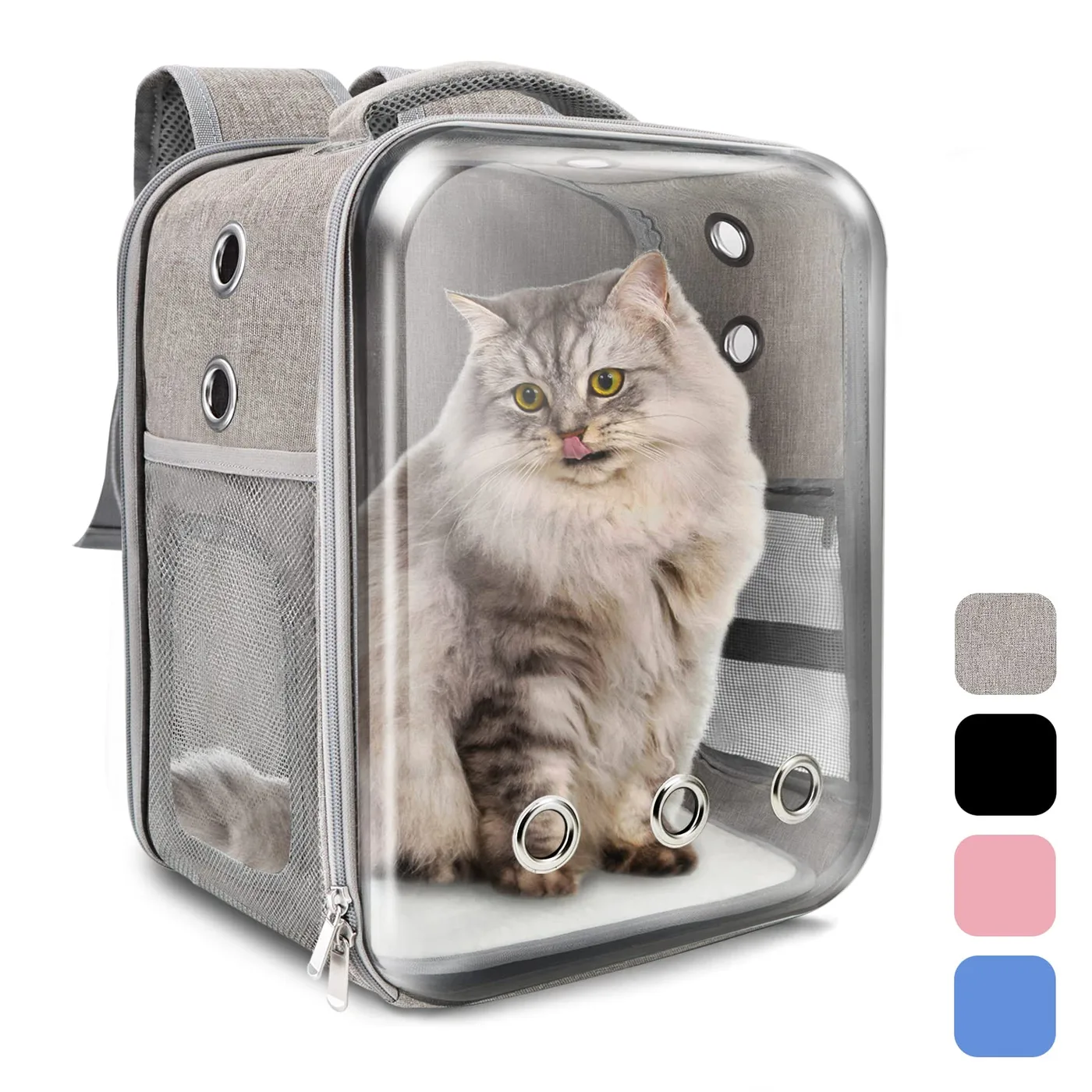
Fit Testing on Real Body Types
Test the harness on a small-framed and a large-framed user at the sample stage, with the bag loaded to its maximum pet weight. A harness that fits one body type well and another badly produces fit returns that appear in the data as quality returns, and the distinction is only visible if both are tested before bulk.
Compliance, Labelling and Retail Pack-Out
Compliance for a rolling backpack follows the general consumer product framework, and because the product combines textile, metal and polymer components the report set usually has three material lines. For the United States, obligations run through the U.S. Consumer Product Safety Commission, with children's-product requirements attaching where the item is marketed toward children or styled as a children's article - which happens often in this format, since it resembles a school bag. For Europe, restricted substances fall under REACH with the European Chemicals Agency as the reference.
The school-bag resemblance is worth taking seriously at the briefing stage. If the product is styled, sized or marketed in a way that reads as a children's article, it will be assessed as one, and the additional requirements attach regardless of intent. Buyers targeting a student segment should confirm the assessment before sampling rather than after production.
Labelling covers country of origin, fibre content, care instructions and any load or use warnings, in the destination's required format. Because the product has two modes, the weight limit warning should state the limit that applies to both rather than the higher figure, and it should be legible on the product or the package rather than only on the listing.
Pack-out is the last decision and it is format-specific. A rolling backpack ships with the handle collapsed and the straps stowed, so the pack-out specification should state that orientation and confirm the carton closes without forcing. Ask for photographs of the packed carton as part of the inspection report, because cube and closure disputes are far easier to settle with evidence than with correspondence.
How to Brief a Rolling Backpack Program
The rolling backpack is the format where a weak brief costs the most, because the two load paths interact and a factory that is not told about the interaction will optimise the one it can test most easily. The brief should state, in one paragraph, that the product is loaded through the harness in one mode and through the base and wheels in the other, and that both paths must be validated at the stated maximum pet weight.
Specify the anchors with numbers. Each strap anchor, the handle attachment and the wheel axle retention should carry a stated pull or retention figure with a safety factor over the maximum pet weight. These are the three components whose failure produces an incident rather than a complaint, and they are cheap to specify and cheap to test on the bench before pre-production.
Give the dimensional envelopes for both modes: exterior dimensions with the handle collapsed and extended, the wheel track width, and the interior floor dimensions for the animal. The wheel track is the number most often omitted and it governs stability, which is the failure mode that narrow-track hybrid products actually produce. Publishing it also gives the factory a target to design the base around.
Set an empty-weight target and mark it as a hard constraint. Because the hybrid carries a wheel set, a handle, a base plate and a structural back panel, weight creeps upward through a dozen individually reasonable decisions. A stated target - for instance, under 3.2 kg for a medium - gives every one of those decisions a boundary to work within.
Name the tests and the acceptance figures: strap anchor pull, wheel rolling distance under load, loaded turn stability, handle extension cycles, and combined-load behaviour at the frame and harness attachments. Written into the brief, these turn the first sample into a measured artefact rather than an object of opinion, and they shorten the program by a round in most cases.
Assortment Planning: Sizes, Colourways and Replenishment
Assortment planning for a rolling pet backpack is constrained by MOQ. At 500 pieces per colourway, a three-size launch in one colour commits 1,500 units, while one size in three colours commits the same volume with a very different risk profile. For a first season, the better structure is usually one or two sizes in two or three colourways, because colour is the faster variable to learn from and sizes are the more expensive mistake.
Size should follow the pet weight bands rather than breed labels. A three-step ladder - up to 5 kg, 5-8 kg and 8-10 kg - covers the usable range of the format, and going above 10 kg is not advisable because the backpack mode stops working. Each step should publish interior floor dimensions as well as volume, because floor dimensions are what determine whether the animal fits.
Replenishment should be planned against the academic and travel calendar rather than the gifting calendar. Place so that stock lands before late-summer and early-autumn demand, working backwards from the in-warehouse date through freight, the 35-50 day bulk window and five to eight weeks of sampling. Programs that place in the month before the window either air-freight or miss it.
A second calendar caution applies to this format specifically: the harness and the wheel set are sourced in parallel with different lead times, and the longer of the two governs the program. Book both at the same time and confirm both in writing at the end of round one, because a wheel set that arrives a week after the sewing line is ready costs a week of the production slot that cannot be recovered later.
Finally, keep the hybrid clearly positioned against its neighbours. Where the range also carries a convertible backpack with wheels and a standard hands-free pet backpack, differentiate on published weight and on the pet weight ceiling rather than on styling, because the three read as one family at the fixture. Buyers assembling a carry range should also review the pet travel bag manufacturing guide, since fabric, webbing and hardware decisions repeat across the range and consolidate trim buying.
Review the hybrid once a season, not once a year. The format improves quickly because each season yields a returns profile and a component price improvement, and together they decide whether the product should stay, move up a band, or be replaced by a simpler single-mode alternative. Programs that review annually tend to carry an underperforming variant for a full extra season.
Production capability
- SGS-verified production space of 4,950 m², 149 machines, 7 assembly lines
- Pet bag output since 2014 from a 137-person team
- 200,000 units shipped monthly under BSCI and ISO 9001 systems
People Also Ask
Can you carry a rolling pet backpack on your back comfortably?
Up to about 10 kg of pet, yes, provided the harness anchors are pull-rated and the back panel has both rigidity and ventilation. Above that the mode stops being practical.
Why is a rolling backpack heavier than a standard pet backpack?
Because it needs a wheel set, a handle assembly, base reinforcement and a structural back panel - none of which a standard backpack requires.
What causes hybrid pet bags to fail in bulk?
Combined stress at the frame and harness attachments. The two load paths concentrate within a few centimetres of each other and tear stitching that was adequate for either load alone.
Do I need a sternum strap on a rolling pet backpack?
It improves load stability materially and costs little. Specify the chest strap position range and test the fit on both a small and a large user.
How do I reduce returns on this format?
Publish the pet weight ceiling, the empty weight and the exterior dimensions with wheels, and state the limit that applies to both modes rather than the higher figure.
Is the rolling backpack a seasonal product?
Yes, but its season follows the academic and urban travel calendar rather than the holiday gifting peak, which surprises buyers planning around December.
Frequently Asked Questions
What is the MOQ for a pet rolling backpack?
500 pieces per colourway. The wheel set, handle assembly and back-panel reinforcement each carry their own purchasing minimum.
What pet weight should a rolling backpack be rated for?
Up to about 10 kg. Above that, the backpack mode stops being usable for most people regardless of harness quality, and the product effectively becomes a rolling bag with unused straps.
How many sample rounds are needed?
Two to three: harness and back panel, rolling behaviour, then finishing. Each round runs 6-10 working days plus freight and evaluation.
How long is bulk production?
35-50 days after sample approval and deposit clearance, with freight additional. Wheel and handle procurement overlaps the sampling window.
Which inspection standard applies?
AQL 2.5 with a written report, extended with a rolling check, a strap-anchor check and a wheel-retention check.
How much more does a rolling backpack cost than a standard one?
Typically 30-45 percent, concentrated in the wheel set, handle assembly, base reinforcement and back panel rather than in fabric.
What wheel size should I specify?
60-70 mm sealed-bearing wheels for station, campus and retail surfaces. Below 55 mm the bag vibrates over paving joints; above 75 mm it becomes taller and less stable when set down.
Why does the bag tip when turning?
Usually a narrow wheel track on a tall narrow shell. State the track width on the specification sheet and run a loaded turn test, which straight-line testing never catches.
Does the product get assessed as a children's article?
It can, because the format resembles a school bag. If it is styled, sized or marketed toward children, children's-product requirements attach, so confirm the assessment before sampling.
What payment and shipping terms are standard?
T/T 30/70 - 30 percent deposit, 70 percent before shipment - on FOB Xiamen. Alternative Incoterms can be quoted but change the landed cost model.
Should I launch three sizes or three colourways?
Usually one or two sizes in two or three colourways for a first season. Colour is the faster variable to learn from; sizes are the more expensive mistake.
When should I place for the peak season?
Against the academic and travel calendar rather than the gifting peak, working backwards from the in-warehouse date through freight, bulk and sampling, plus a buffer.
Talk to QUANZHOU JUNYUAN BAGS about a wholesale pet bag order: MOQ 500 pieces per colourway, samples in 6-10 working days, bulk production in 35-50 days under AQL 2.5 inspection.
Get a free quote Request a sample