Wholesale Pet Bags: Bulk Buying Guide
Short answer: bulk buying pet bags only works when the order clears the material thresholds that set the price — plan on MOQ 500 pieces per colour, 35-50 days of bulk production, AQL 2.5 final inspection and a landed-cost model built before you place the order, not after it ships. Below 500 per colour, unit price typically rises 15-35 percent and the saving you expected disappears into setup costs.
This guide is for buyers moving from spot purchases to a planned wholesale pet bag program: distributors, online sellers scaling past a few hundred units a month, and retail teams building a seasonal assortment. The economics change at scale in three places — material purchasing, production slot efficiency, and freight utilisation — and a buyer who understands all three can forecast margin to within a few points before ordering. Our production team quotes on MOQ 500 pieces per colour, 6-10 working days for a development sample, 35-50 days for bulk after sample approval and deposit, AQL 2.5 final random inspection, T/T 30/70 and FOB Xiamen. Capacity across an SGS-verified 4,950 square metre production base with 7 lines, 149 machines and 137 staff supports about 200,000 pieces per month, which is what allows a bulk buyer to hold a recurring slot rather than competing for leftover capacity. Read the pricing tiers, then the landed-cost section, then the calendar: those three in sequence prevent almost every expensive first-import mistake.
Most buyers source pet bags from china through a mix of catalogue review and sample rounds, and Pet Bag Types & Styles decisions sit in the middle of that sequence. Pet bag wholesale suppliers who publish a price list with the fabric spec attached save a full round of email, and bulk pet bag orders then move on carton weight rather than on unit count.
What Bulk Buying Actually Changes in Your Cost Model
Bulk buying is not simply the same bag at a lower price. Three cost behaviours change as quantity rises, and each has a different shape. The first is setup amortisation: pattern making, cutting dies, print screens, embroidery cards and label minimums are fixed per style, so their contribution to unit price falls steeply between 300 and 1,000 pieces and then flattens. The second is material purchasing: fabric, webbing and zipper tape are bought in supplier-defined lots, and unit cost steps down at those lot boundaries rather than sliding smoothly. The third is line efficiency: a run long enough for operators to settle into the rhythm produces higher first-pass yield, and yield is a cost line that never appears on a quotation but always appears in the price.
| Order size per colour | Typical unit price index | What drives the change |
|---|---|---|
| 200 pieces | 130-145 | Setup dominates; changeover time is a large share of the job |
| 500 pieces (standard MOQ) | 100 | Material lot minimums met; line settles within the run |
| 1,000 pieces | 92-96 | Setup amortised further; fabric purchased in one lot |
| 3,000 pieces | 86-90 | Yield improves; printing and labels reach their own tiers |
| 10,000 pieces | 80-84 | Dedicated slot; components bought at mill-level pricing |
The index above is the pattern buyers should expect, not a promise of a specific number, because the curve is steeper for hardware-heavy styles and flatter for simple panel bags. The practical use is diagnostic: if a quotation shows a flat curve between 500 and 3,000 pieces, the supplier is probably reselling rather than manufacturing, because a real production base sees genuine savings at volume and passes some of them through.
The second diagnostic is where the curve steps. Ask for quotes at 500, 1,000 and 3,000 pieces and look for the steps to coincide with material lot boundaries rather than with round numbers. A supplier who can tell you which step comes from fabric and which comes from zipper tape understands its own cost structure, and that understanding tends to show up later as schedule reliability.
Finally, note what bulk buying does not fix. It does not fix a specification that is over-engineered for the price point, it does not fix an assortment with too many colourways, and it does not fix freight that ships half-empty containers. Those three problems scale with volume: they cost more, not less, as the order grows.
Choosing the Assortment: Which Pet Bag Categories Carry Volume
Assortment planning for wholesale pet bags should start from how the category behaves on the shelf and in the search results, not from what looks interesting in a catalogue. Soft pet bags fall into a handful of demand clusters: everyday carry for small pets, travel-oriented bags sized to airline under-seat rules, structured totes bought for style as much as function, backpack-format bags for hands-free travel, and rolling or duffel formats for longer trips. Each cluster has a different price band, a different return rate and a different review-risk profile.
For a first bulk program, the safest structure is one hero SKU plus two extensions. The hero should be the format with the clearest demand signal in your channel and the simplest construction you can tolerate, because simplicity protects margin and yield. The extensions should share fabric, hardware finish and labelling with the hero so that the three styles together clear material minimums that none would clear alone. This is the single most reliable way for a mid-sized buyer to reach bulk pricing without concentrating risk in one silhouette.
Weight-bearing categories deserve separate attention. Slings, shoulder bags and front-carry formats carry the animal against the body, so the load path — webbing, stitching at the strap root, buckle rating — determines both product safety and review sentiment. Buyers in these categories should specify strap and buckle performance explicitly and test it, rather than relying on a general bag inspection. Where a program targets air travel, the dimension set should be written against the strictest airline in the target market and validated before bulk, not after a season of returns.
Accessory-led formats behave differently again. Small crossbody and gift-oriented bags sell on design and price rather than on load performance, which makes them excellent volume fillers and excellent freight utilisation: they flat-pack, they cube out a container well, and they are cheap to hold in inventory. Many successful programs use them to improve container economics while the hero SKU carries the brand story.
Plan the assortment on a twelve-month horizon even if you order quarterly. Knowing that a backpack extension is coming in Q3 lets you specify shared hardware in Q1, book a common fabric colour once, and avoid the classic situation where the extension arrives in a slightly different shade because it was bought as an unrelated one-off. Shared specification across a range is what makes a wholesale program look like a brand rather than a collection.
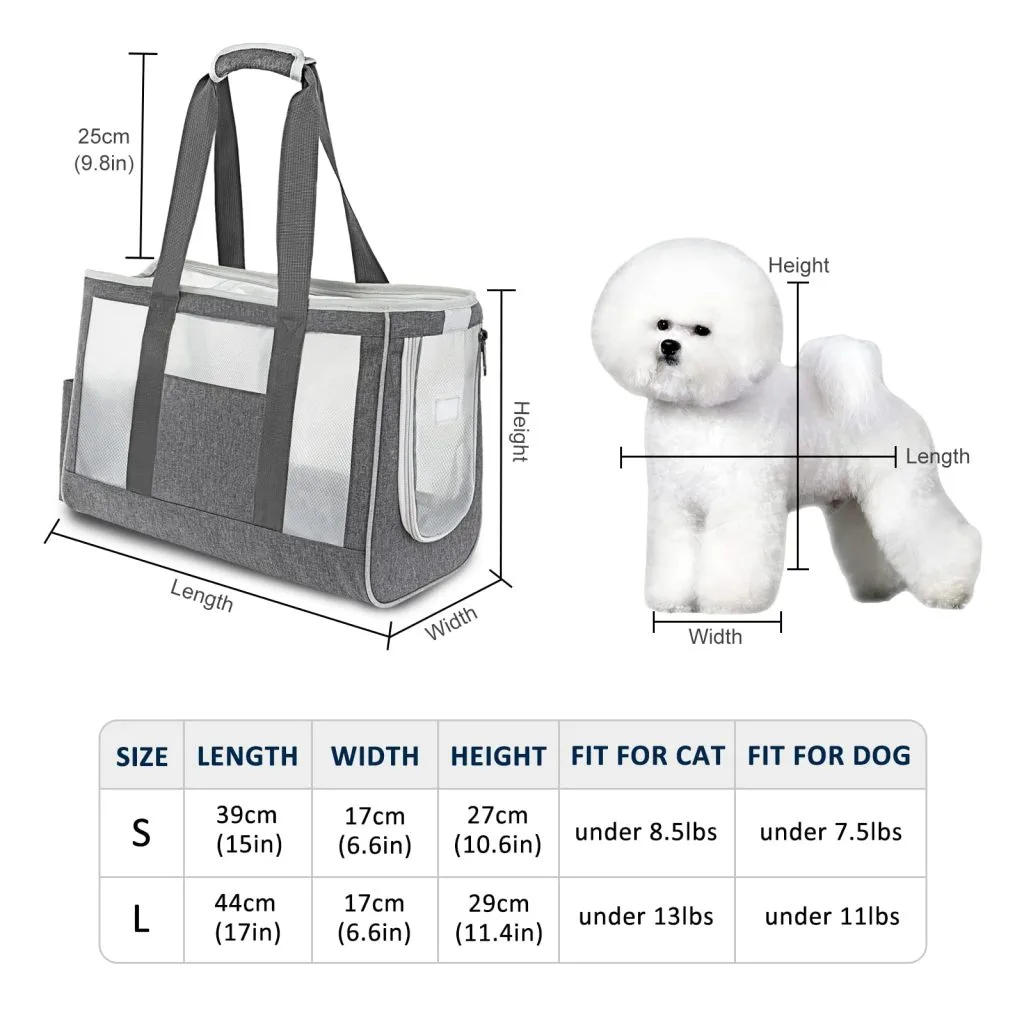
Reading a Wholesale Quote: Price Tiers, Validity and Material Basis
A wholesale pet bag quotation should be readable in under two minutes and should answer four questions without a follow-up email: what exactly is being made, at what quantity tiers, on what material basis, and for how long the price holds. Quotations that omit the material basis are the most dangerous, because they allow the price to be renegotiated later on the grounds that "fabric went up" when the real cause was an unspecified basis at the outset.
Insist on a named material basis: fabric type and denier with finish, lining specification, foam density, webbing width, hardware finish, and zipper gauge and brand level. Then insist on a validity window, typically thirty days, tied to that basis. This protects both sides — the buyer gets a firm price they can plan a launch around, and the production team gets protection from a commodity move it cannot control.
Price tiers should be quoted as a small table rather than a single figure. Ask for the price at your target quantity, at 50 percent above it, and at double it. The shape of that table tells you where the economic thresholds are for your specific style, which is far more useful than a discount percentage negotiated off an unknown base. A supplier that refuses to quote tiers usually has no volume economics to share.
Read the quote for what is excluded as carefully as what is included. Common exclusions worth clarifying in writing: tooling for moulded or custom hardware, print screen charges, testing and certification fees, label and hangtag minimums, carton printing plates, inspection fees, and any destination charges if the term is landed. An ex-works or FOB quote that excludes testing is not cheaper than one that includes it; it simply moves the cost to a line you have not budgeted.
Finally, confirm who owns the tooling and the pattern. For programs with any expectation of repetition, the buyer should own the physical tooling and the production base should hold it under a documented arrangement. This prevents the awkward — and expensive — situation where a second run cannot be placed without paying again for dies that were already bought once.
Landed Cost: Freight, Duty and the Numbers Buyers Miss
A landed-cost model converts a factory price into a true cost per unit sitting in your warehouse. Buyers who skip this step usually discover the gap at the worst possible moment, when the goods are already on the water and the price is no longer negotiable. The model has five blocks: product cost, inland and export handling, ocean or air freight, duty and import taxes, and destination handling including drayage, customs clearance and warehousing.
| Landed cost block | Typical share of landed unit cost | Common buyer error |
|---|---|---|
| Product (FOB) | 58-72% | Comparing FOB prices across suppliers with different specs |
| Ocean freight | 6-14% | Quoting per bag instead of per cubic metre |
| Duty and import taxes | 4-15% | Using the wrong HS classification for the product |
| Destination handling and clearance | 3-8% | Discovering drayage and storage after arrival |
| Warehousing and fulfilment prep | 4-10% | Ignoring per-unit pick, pack and prep cost |
The most frequent and most expensive error is quoting freight per bag rather than per cubic metre. Pet bags are bulky relative to their weight, so freight is driven by volume, and a small change in carton pack quantity can move freight cost per unit by more than a cent of negotiation on the factory price ever will. Ask for carton dimensions and a container loading estimate at quotation stage and put the resulting freight per unit into your margin model before you commit.
Duty is the second avoidable surprise. Classification matters, and the same physical product can be classified differently depending on construction and material dominance. Confirm the intended classification with your broker before production, not at clearance, and remember that trade rules and preferential arrangements change; the World Trade Organization publishes the framework that national schedules sit within, and your broker should be working from the current national schedule rather than from last year's spreadsheet.
Air freight deserves a clear-eyed rule. It is a schedule-recovery tool, not a cost strategy. Air freighting a bulk pet bag order typically adds more per unit than the entire labour content of the bag, and it should be reserved for the portion of an assortment needed to hit a launch window, with the balance following by sea. Buyers who plan a partial air shipment in advance — typically the hero SKU only — recover launch dates at a fraction of the cost of air freighting everything.
Build the model in a spreadsheet with product cost, carton cube, freight rate, duty rate and destination fees as separate inputs, then re-run it whenever a rate moves. A model that takes ten minutes to update is the difference between a program that knows its margin and one that finds out at year end.
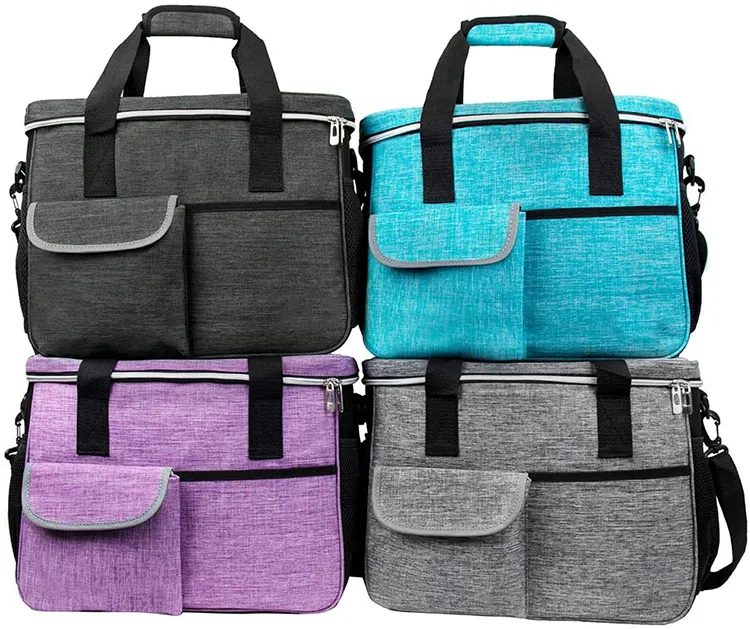
Carton and Container Planning for Pet Bags
Pet bags ship as air, and that single fact shapes the economics of a bulk program more than most buyers expect. A framed travel bag may pack four to six per carton; a flat sling may pack thirty. The same container therefore carries wildly different piece counts, and the freight cost per unit varies by a factor of five or more across the assortment.
Carton planning should happen during specification, not after production. Three decisions control it: whether the bag ships assembled or nested, whether internal supports are removable or fixed, and whether the retail packaging is a polybag, a printed box or a hangtag-only presentation. Each choice has a cube consequence and a channel consequence, and they frequently conflict — a rigid retail box protects the shelf presentation and destroys the container utilisation.
A practical resolution used by many programs is a two-tier pack: bulk cartons for warehouse and marketplace fulfilment, plus a smaller quantity of retail-ready cartons for shelf accounts. It adds a packing line item and saves a great deal of freight. Where a single pack must serve both, ask for a carton that cubes efficiently in the master pack and a polybag that still carries the barcode and compliance text needed for the retail scan.
Carton strength is the second planning item and the one most often under-specified. Pet bags are light, so cartons are frequently over-filled by enthusiastic loading plans; a master carton that holds twenty bags and is stacked eight high in a container needs a bursting strength rating appropriate to that load. Ask for the carton specification in the purchase order and require drop and stacking checks during inspection — crushed cartons at destination are a freight claim nobody wins.
Mixed containers are the third tool. Combining a bulky hero SKU with flat-packing accessories lets a buyer fill the container rather than shipping air, and it is one of the few ways to improve landed cost without touching the product specification. Plan the mix at the quotation stage, because the factory can only optimise the load plan if it knows all the SKUs in advance.
Cash Flow and Inventory Risk in Bulk Programs
Bulk buying converts a margin advantage into a cash commitment, and the conversion is where otherwise sound programs fail. A 3,000-piece order at a good unit price ties up cash for roughly the sum of sampling, deposit, production, freight, clearance and sell-through — commonly four to six months from first payment to last unit sold. Modelling that timeline is as important as negotiating the price.
T/T 30/70 structures the exposure sensibly: 30 percent at booking, 70 percent against a passed inspection. The buyer's cash is therefore committed in two tranches, with the larger one contingent on verified goods. Buyers should resist the temptation to trade inspection rights for payment flexibility; the inspection clause is worth more than any extension of terms, because it is the only mechanism that actually prevents payment for defective goods.
Inventory risk is best managed through assortment shape rather than order size. A program built on one shared platform — common fabric, common hardware finish, common labelling — can be reordered in smaller tranches without losing bulk pricing, because the material lots are already established. A program built on five unrelated styles cannot, and each reorder behaves like a new first order with all the associated setup cost.
Sell-through assumptions should be conservative for any category with size-dependent demand. Pet bags are sized to animal weight, so demand is not uniform across sizes: small and medium typically dominate, and extra-small and large move slowly. Ordering a size curve that mirrors the market rather than a uniform split across sizes is one of the highest-return decisions available to a wholesale buyer, and it costs nothing.
Finally, hold a documented reserve. Setting aside a small percentage of each run for marketplace returns, retail chargebacks and warranty replacement prevents the slow erosion of margin that comes from writing off damaged stock against the current order instead of against the program. A reserve is not a cost; it is the honest pricing of a known rate.
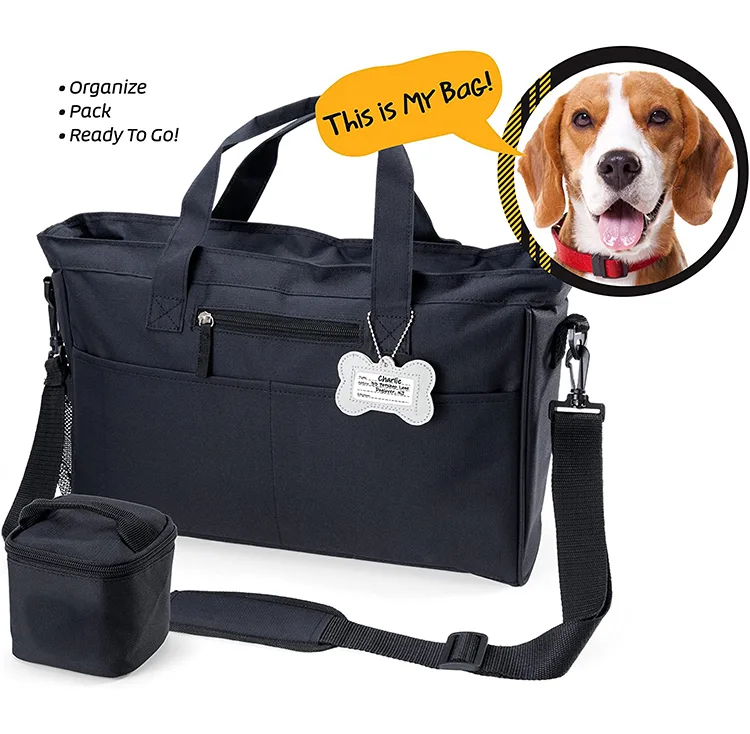
Channel Requirements: Marketplace, Retail and Distribution
Wholesale pet bag programs usually sell through more than one channel, and each channel imposes requirements that reach back into the specification. Marketplace channels demand scannable barcodes, compliant labelling, durable packaging that survives fulfilment handling, and increasingly documented test reports. Retail channels demand social-compliance audits, carton and pallet standards, and submission windows that are unforgiving. Distribution channels care mostly about consistency across reorders and about documentation that lets them resell into their own accounts.
The requirements are not additive in cost if they are planned together. A single label set, a single carton specification and a single test matrix can satisfy all three channels when designed up front. The same requirements met retroactively — relabelling a finished run, re-boxing, re-testing — routinely cost more than the entire compliance budget would have.
Product compliance is the area where marketplace enforcement has tightened most. Lead content and phthalate screening under CPSIA, California Prop 65 warnings where applicable, and REACH substance restrictions for the EU are all routinely requested, and marketplaces increasingly remove listings rather than issue warnings. Buyers planning a bulk program should treat a current, material-family-level test file as a fixed cost of doing business, arranged through a recognised third party such as SGS and re-validated annually. Reference points such as the U.S. Consumer Product Safety Commission guidance are useful when writing the internal compliance checklist.
Packaging for fulfilment deserves its own gate. Marketplace prep requirements — polybag suffocation warnings, barcode placement, carton weight limits, and per-unit bagging — are procedural but strictly enforced, and non-compliant inbound shipments are refused or charged. Confirming prep requirements before the packing specification is written is far cheaper than repacking at the destination.
For programs sold into airline-adjacent positioning, channel requirements also include claim substantiation. A listing that implies airline approval should be backed by the dimension set and the airline policy it references; the IATA Live Animals Regulations provide the framework most carriers work from. Overstating in this area is a returns driver and, in several jurisdictions, an advertising-compliance risk.
Building a Repeat Order Calendar
A bulk program becomes profitable on the second and third orders, and those orders only work if the calendar is planned. Working backwards from a shelf date: allow 35-50 days for bulk production, 6-10 working days for sampling, roughly two weeks for approvals and artwork, three to five weeks for ocean freight and clearance depending on lane, and a buffer of two weeks for the things that always slip. That is roughly four to five months from brief to warehouse for a first program, and about three months for a repeat where the specification is frozen.
Peak season changes the arithmetic. Lines book up ahead of Q4 retail and ahead of the northern hemisphere travel season, and slot allocation follows deposits rather than inquiries. A buyer who approves samples early and pays the deposit early gets the slot and the price; a buyer who waits competes for leftover capacity and often ends up paying for air freight to recover the same date.
The repeat calendar should include a rolling forecast shared with the production team. Ninety days of visibility lets materials be booked ahead of the purchase order, which shortens effective lead time by the material portion — typically one to three weeks — without any change to the nominal 35-50 day bulk window. This is the cheapest schedule advantage available and almost no first-time buyer uses it.
Annual housekeeping belongs on the same calendar: re-validate test reports before they expire, confirm that dye houses and hardware suppliers have not changed, review the approval samples against the last production run, and re-check duty classification against any schedule change. Programs that put these four items on a recurring reminder do not get surprised by compliance requests.
Treat the calendar as a contract with yourself. The most common failure in wholesale pet bag programs is not quality and not price — it is a launch window missed by three weeks because artwork approval slipped and nobody revised the downstream dates. Every slip should trigger a re-baseline of every subsequent milestone, in writing, the day it happens.
Negotiating Wholesale Price by Trading Variables, Not Asking for Less
Unit price in a wholesale pet bag programme is not a number a supplier defends; it is the output of five variables. Change a variable and the price moves legitimately. Ask for a discount without changing a variable and you are asking the supplier to give up margin it has already committed to materials and labour, which is why bare discount requests either fail or come back as a quiet specification change nobody approved.
The five variables are order quantity per colourway, colourway count, material basis, packaging specification, and commercial terms. The first two are documented: MOQ 500 pieces per colourway is the standard entry, the step from 500 to 3,000 pieces is roughly 10-14 percent, and below the standard MOQ unit price typically rises 15-35 percent because setup and changeover spread across fewer units. The third variable is where most negotiating room actually sits: a 600D shell specified where a 420D shell passes the same abrasion requirement, a branded slider where an unbranded slider of the same gauge passes the same cycle test, a stock buckle where a moulded one adds tooling cost and one to three weeks of lead time with no measurable benefit at retail.
| Lever | What you give the supplier | Typical effect on unit price | What it costs you |
|---|---|---|---|
| Consolidate colourways | Fewer dye lots and fewer setups | Often larger than a volume increase | Shelf breadth in season one |
| Consolidate packaging | One generic carton, fewer print runs | Removes per-colourway print minimums | A printed retail carton |
| Move to a stock component | No tooling, shorter material chain | Removes amortised tooling and one to three weeks | Distinctive hardware |
| Share a rolling 90-day forecast | Material pre-booking, protected slot | Better pricing than a cold purchase order | The discipline to maintain a forecast |
| Earlier deposit or tighter terms | Reduced cash exposure | A real concession on repeat programmes | Working capital timing |
Quote validity and material volatility belong in the same conversation. A quotation is an offer against today's material costs; a validity window of 30 days is normal, and a supplier who will not state one is telling you the price is not firm. For programmes with long approval cycles, ask for a material fluctuation clause instead of a floating price: the quoted price holds unless a named input moves beyond an agreed threshold, at which point both sides re-open that single line with evidence rather than re-opening the whole quotation. That clause is what protects both parties when resin or fabric costs move between sample approval and deposit.
Capacity is the variable buyers forget they hold. A supplier will pay for predictability, because a known slot on 7 lines with roughly 200,000 pieces of monthly output is worth more than a slightly larger order that arrives cold and competes for a leftover slot. Committing a quarterly volume band, rather than negotiating order by order, converts that predictability into price without changing a single line of the specification.
Compliance is the one area where trading down is a false economy. A material chosen to save a small amount per unit can fail a REACH SVHC screen or a CPSIA lead and phthalate test at destination, and the cost of a failed test or a withdrawal dwarfs the saving. Negotiate the specification; do not negotiate the test.
Settle commercial terms as part of the same package rather than after the price. FOB Xiamen keeps freight and destination charges under your control and is the right default until you have benchmark data, and T/T 30/70 is the standard structure. A buyer with a record of on-time balance payments has a genuine argument for a better price on the next programme. Write every agreed variable into the purchase order so the price you negotiated is the price you can verify against the documents.
Designing the SKU Mix: Volume Drivers, Margin and Flagship Roles
A wholesale pet bag assortment does not need every SKU to earn the same margin, and programmes that try to make every line a profit line end up with a range that sells to nobody. Assign each SKU a role before assigning it a price, and let that role determine its order quantity, its packaging and its reorder frequency.
Three roles cover most wholesale ranges. The volume driver carries the programme: a proven silhouette, a neutral colourway, the deepest order quantity and the tightest margin. The margin SKU funds the programme: a differentiated material, hardware or feature, lower volume, and a materially higher gross margin. The flagship SKU sells the programme to a retail buyer: the largest or most technical silhouette, low volume, often shipped at thin margin because winning the shelf conversation is what brings the volume driver onto the order.
| Role | Share of SKU count | Share of units | Margin posture | Reorder pattern |
|---|---|---|---|---|
| Volume driver | 20-30 percent | 55-65 percent | Tightest | Every cycle |
| Margin SKU | 40-50 percent | 25-35 percent | Highest | Seasonal, on sell-through |
| Flagship SKU | 10-20 percent | 5-10 percent | Thin or neutral | Annual, often with a revision |
The arithmetic of MOQ 500 pieces per colourway is what turns this from a merchandising discussion into a cash decision. Five silhouettes in two colourways is ten production runs at 500 pieces each, or 5,000 pieces committed before a single unit sells. Five silhouettes in one colourway halves that commitment to 2,500 pieces and keeps every style live, which is usually the better first season. Depth of colour is a second-season decision; breadth of silhouette is a first-season one.
The single-colour multi-size versus multi-colour single-size question resolves the same way. Pet bags size by pet weight, and a size ladder in one colourway shares a dye lot, shares label and packaging runs, and lets a retailer present a complete range on one fixture. A colour ladder in one size multiplies dye lots and packaging minimums while offering the shopper a choice that frequently converts no better. Where the channel is marketplace rather than shelf, the ladder matters even more, because a size ladder consolidates reviews and variation listings under one parent listing instead of scattering them across colours.
Build the range on a shared platform. Common shell fabric, common lining, common webbing width and common hardware finish across three or four silhouettes lets material be booked once for the whole programme, keeps shade and hand feel consistent across the range, and reorders faster because the material chain is already booked when the next purchase order arrives. One shared material set is also far simpler to verify: fewer restricted-substance screens against REACH and CPSIA, and fewer component sources to confirm through our vetted partner facilities under BSCI.
Guard against cannibalisation with a price ladder, not with good intentions. Each role needs a clear gap to the next, because a margin SKU priced close to the volume driver will take volume from it and leave you holding the wrong inventory. Publish the ladder internally, review it once per season against actual sell-through, and retire the SKUs that sit in no role at all.
Quality Control Beyond Final Inspection: First Article, In-Line Checks and the Third-Party Trade-Off
Final random inspection is the last gate in a pet bag programme, and relying on it alone means discovering a systemic defect at the point where the least can be done about it. Three other gates exist, and the cost and the yield of each are very different.
The first article is the first finished unit off the line, built from production materials on production tooling, before bulk cutting starts. It is checked against the approval sample and the specification sheet line by line: dimensions with tolerance, stitch density, bar-tack placement at load points, hardware function, zipper travel, logo placement and hand feel. Catching a pattern error here costs one unit; catching it at final inspection costs the run. Ask for the first article report before cutting is released, and treat release-to-cut as a gate you control rather than a formality the supplier performs.
In-line inspection is the second gate and the only one that catches process drift. An inspector present during production checks stitch density, seam allowance, thread tension, mesh alignment and hardware seating while operators are still working on the style, so a deviation is corrected on the same shift instead of across a finished batch. A light but continuous presence, meaning a check at the start of each production day plus a defined percentage pull during the run, is worth more than a heavier check at the end.
| Gate | When | What it uniquely catches | Who performs it | Cost profile |
|---|---|---|---|---|
| First article | Before bulk cutting | Pattern, construction and material errors | Our production team, report issued to the buyer | Included; one unit |
| In-line check | Daily during the run | Process drift and operator-to-operator variance | Internal QC on our SGS-verified production base | Included |
| Final random inspection | Goods packed, before release | Batch defect rate against AQL 2.5 | Internal QC or an independent third party | Per man-day if third party |
| Container loading check | At stuffing | Carton count, marks and packing condition | Either | Low; often added to the final inspection |
Third-party inspection is worth paying for in four situations: the first order of a new programme, any style with a new material or a new tooling set, any shipment where a retailer has mandated independent verification, and any order large enough that a rejection at destination would cost more than the inspection. It is not worth paying for on every repeat of a frozen specification with a stable defect history, where an internal report plus dated production photographs gives most of the assurance at no incremental cost.
Whichever route you choose, require the same evidence pack: the inspection report with its sampling plan drawn to ISO 2859-1, defect counts classified as critical, major and minor, photographs of each defect type, photographs of the packing and the carton marks, and either a signed release or a written rework plan with a re-inspection date. Under our ISO 9001 procedure those records are filed against the order number, so a claim raised months later traces to a specific run, a carton range and an inspection result rather than becoming a general dispute.
One rule makes all four gates work: no balance payment until the release is issued. Where T/T 30/70 is the agreed structure, the 70 percent balance is the only leverage a buyer has over a shipment that has not yet been inspected, and spending it early converts a quality gate into a request.
Return Rates and After-Sales: Designing Out the Common Defects
Return rate is a specification outcome, not a logistics one. By the time units are coming back, the decision that caused it was made months earlier on a spec sheet, and the cheapest place to fix it is the line that was never written.
The defect pattern for pet carriers is consistent across markets. Zipper failure leads: a split coil, a slider that jumps the chain, or a puller that breaks at the attachment. Seam and strap failures follow, almost always at load points where a handle or shoulder strap meets the body without reinforcement. Mesh panels snag and tear, and that damage is often reported as a quality defect when the specification called for an aperture a claw can enter. Adjusters slip under load. Shapes collapse after washing because foam density was never specified. Odour and skin-irritation complaints trace to materials nobody screened. And a steady share of returns are not defects at all: the buyer ordered a size that does not fit the pet, because a recommended weight ceiling was never printed on the label or the listing.
| Return driver | Root cause in the specification | Control to write in | Supporting standard or test |
|---|---|---|---|
| Zipper failure | Gauge or slider level unspecified | #5 nylon coil, branded slider, defined cycle test | Cycle test recorded under ISO 9001 |
| Strap tear at load point | No reinforcement specified | Bar-tack at every strap and handle root | Seam strength test per order |
| Mesh snagging | Aperture too open | 3 mm air-mesh, snag check on the first article | ISO 105-X12 / AATCC 8 on printed mesh |
| Adjuster slip | Webbing and hardware not matched | 25 mm webbing with a matched adjuster, slip test | Load test on the first article |
| Shape collapse after washing | Foam density omitted | 8 mm foam at 22 kg/m3, wash cycle validation | ISO 105-C06 / AATCC 61 |
| Odour or skin complaint | Material not screened | Restricted substance testing before bulk | REACH, CPSIA, Proposition 65 |
| Wrong size ordered | Weight ceiling not published | Pet weight ceiling on label and listing | Channel listing requirement |
| In-cabin refusal | Dimensions not checked against airline rules | Publish external dimensions and verify before travel season | IATA Live Animals Regulations |
Two structural decisions reduce the cost of whatever returns remain. The first is batch coding: a production code on the care label or hangtag that ties a unit back to a run, a material lot and an inspection report, so a problem is traced to a carton range instead of recalled across the whole programme. The second is a defined claim pack agreed before the first shipment, consisting of photographs, the batch code, the carton number, a defect description and the affected quantity, so a claim is assessed on evidence in days rather than argued over in weeks.
Separate genuine defects from buyer expectation gaps, because they have different fixes. A zipper that fails inside the warranty period is a specification and inspection problem, and it belongs in the corrective action record for that style. A return because the pet did not fit is a content problem, and it is fixed on the label, the size chart and the listing, not on the production line. Programmes that lump both into one return-rate number end up re-engineering a bag that did not need re-engineering.
Set a threshold and monitor it. Track returns by SKU and by defect type, agree in writing what rate triggers a specification review, and put that review on the same calendar as the reorder. A programme that reads its defect data once per season and amends the specification accordingly sees its second year outperform its first, not because the supplier changed but because the specification did.
The Sourcing Calendar: Chinese New Year, Peak Season and Cut-Off Dates
Most wholesale pet bag programmes run on a twelve-month plan that was built without a single production or shipping date on it. The result is a schedule that is correct in theory and late in practice, because the calendar contains hard closures that no amount of expediting will move.
Chinese New Year is the largest of them. Production at our SGS-verified production base and at the partner facilities feeding it stops for a shutdown that typically runs two to three weeks, and the effective closure is longer than the holiday itself: material mills and dye houses stop taking new work before the lines do, and labour returns gradually afterwards rather than on a single date. A programme that must ship before the holiday has to be finished and booked well ahead of it, and a programme that can ship after it should be planned as if the shutdown lasted a month rather than a fortnight.
The second effect is the pre-holiday rush, and it is a freight problem rather than a production problem. Space on vessels departing in the weeks before the shutdown tightens, rates move, and bookings placed late get rolled to a later sailing. Booking four to six weeks ahead of the intended departure, and shipping the last pre-holiday cartons earlier than the plan strictly requires, is cheaper than recovering the schedule afterwards.
| Calendar event | Typical window | Effect on a pet bag programme | Action deadline |
|---|---|---|---|
| Chinese New Year shutdown | Two to three weeks, January or February | No production; effective impact up to a month | Finish pre-holiday goods and book space four to six weeks ahead |
| Post-holiday ramp | Two to four weeks after the holiday | Reduced effective output while labour returns | Do not schedule first-article dates in this window |
| National Day holiday | About one week, early October | Short production pause, yard congestion | Avoid container loading in this week |
| Q4 retail shipping peak | Ahead of the Q4 retail season | Space tightens, roll risk rises | Book earlier and build in a vessel buffer |
| Peak production season | Ahead of Q4 and the travel season | Lines allocate by deposit, not by inquiry | Approve samples and place deposits early |
| Standard bulk run | 35-50 days after approval and deposit | The controllable segment of the plan | Lock materials and production booking in parallel |
Cut-off dates are the third piece, and they are the one buyers discover the hard way. A vessel departure is preceded by several sequential closures: the container yard or gate-in cut-off, the shipping instruction cut-off, the verified gross mass submission cut-off, and the documentation and import clearance cut-off. Each sits a different number of hours or days before departure, and missing the earliest one means the container waits for the next sailing, typically a roll of about a week plus the destination delay that follows. Ask your forwarder for the full cut-off schedule in writing at booking, and treat the earliest cut-off as the real deadline rather than the departure date.
Capacity interacts with the same calendar. Our production base runs 7 lines with 137 people and roughly 200,000 units of monthly output, and none of that capacity exists during the shutdown. A rolling forecast shared before the holiday is what converts a buyer from a name on a waiting list into a booked slot when production restarts.
Air freight is the fallback, and it should be priced before it is needed. IATA Live Animals Regulations govern animals travelling by air, not pet products, but the practical constraint on flying finished bags is dimensional weight and cost per kilogram, which is why a bag that is cheap to make can be expensive to fly. Know that number before a schedule slips, so the decision to fly is a commercial calculation rather than a reaction.
The working rule is simple: add a two-week buffer to any programme whose production window touches the Chinese New Year shutdown, and add a one-week buffer to any programme whose departure touches a peak shipping month. Those buffers cost nothing if unused and cost a season if omitted.
Order and quality terms
- MOQ 500 pieces per colourway; samples in 6-10 working days
- Bulk production 35-50 days after approval; AQL 2.5 inspection standard
- T/T 30/70 terms, FOB Xiamen, full document set per shipment
People Also Ask
What quantity counts as buying pet bags in bulk?
In practical terms, bulk begins at 500 pieces per colourway, because that is where upstream material lot minimums stop dominating unit price. Buyers below that threshold usually pay a 15-35 percent premium and receive no production slot priority.
How do I calculate landed cost for a pet bag order?
Add product cost, inland and export handling, ocean freight, duty and import taxes, and destination handling and warehousing, then divide by piece count. The most common error is quoting freight per bag instead of per cubic metre, since pet bags are bulky relative to their weight.
Why does the number of colourways matter more than total volume?
Each colourway triggers its own dye lot, label run and cutting setup, so four colours of 500 often cost more per unit than two colours of 750. Volume savings come from longer runs of fewer colours.
How do I plan a size curve for pet bags?
Size demand follows pet weight distribution, so small and medium sizes dominate while extra-small and large move slowly. Ordering a market-shaped curve rather than a uniform split is one of the highest-return, zero-cost decisions available to a wholesale buyer.
What should be on a wholesale pet bag purchase order?
Specify the named material basis, quantity per colourway, price tiers, Incoterm and port, payment schedule, inspection level and who pays for it, testing responsibility, carton specification, label artwork approval as a gate, and the quotation validity window.
How far ahead should I place a repeat order?
Place repeats about three months before the shelf date when the specification is frozen, and share a rolling 90-day forecast so materials can be booked ahead of the purchase order. That visibility typically shortens effective lead time by one to three weeks.
Frequently Asked Questions
What is the MOQ for wholesale pet bags?
The standard MOQ is 500 pieces per colourway. Below that level, unit price typically rises 15-35 percent because setup and changeover costs spread across fewer units and upstream material lots cannot be bought efficiently.
How much does unit price fall between 500 and 3,000 pieces?
Expect roughly 10-14 percent between the standard MOQ and 3,000 pieces, with the largest steps occurring at material lot boundaries rather than at round numbers. Hardware-heavy styles show a steeper curve than simple panel bags.
How long does a bulk order take?
Bulk production takes 35-50 days after sample approval and deposit, plus 6-10 working days for development sampling. Ocean freight and clearance add three to five weeks depending on the lane, so plan four to five months from brief to warehouse for a first program.
Should I buy FOB or a landed term?
FOB Xiamen is the better default for buyers without benchmark freight data, because it keeps carrier, routing and destination charges under your control. Adopt a landed term once you have real freight and clearance numbers to compare against.
How do I avoid shipping half-empty containers?
Ask for carton dimensions and a container loading estimate at quotation stage, then plan the assortment mix so that bulky styles are combined with flat-packing accessories. Freight cost per unit is driven by volume, so carton planning is a pricing decision.
What payment terms are standard?
T/T 30/70 is standard: 30 percent deposit to book materials and reserve the production slot, 70 percent balance against a passed AQL 2.5 inspection report before release of the original shipping documents.
Can I split one order across several styles?
Yes, provided the styles share fabric, hardware finish and labelling so that combined material lots reach supplier minimums. Sharing a platform across styles is the most reliable way for a mid-sized buyer to reach bulk pricing.
What testing do marketplaces require for pet bags?
Expect CPSIA screening and California Prop 65 assessment for the US, REACH for the EU, and OEKO-TEX on skin-contact textiles where requested. Testing by material family is normally acceptable when the base cloth, finish and dye house are identical.
What is AQL 2.5 and why is it used?
AQL 2.5 is the acceptable quality limit for the final random inspection, setting how many major defects are tolerable in a statistically drawn sample. Critical defects such as a failed load-bearing strap carry an acceptance number of zero.
How do I protect a fixed launch date?
Lock materials at the same time you approve the sample so material booking and production booking run in parallel, share a rolling 90-day forecast, and pay the deposit early to secure the slot in peak season.
Is air freight ever the right choice for pet bags?
Air freight is a schedule-recovery tool, not a cost strategy, and it usually costs more per unit than the entire labour content of the bag. If it is needed, air freight only the hero SKU to hit the launch window and let the balance follow by sea.
What causes most bulk pet bag programs to fail?
Missed launch windows are the most common cause, usually from artwork approval slipping without downstream dates being re-baselined. Over-wide colourway assortments and size curves that ignore small-and-medium demand dominance are the two most common margin problems.
Talk to QUANZHOU JUNYUAN BAGS about a wholesale pet bag order: MOQ 500 pieces per colourway, samples in 6-10 working days, bulk production in 35-50 days under AQL 2.5 inspection.
Get a free quote Request a sample