Pet Bag Factory: What to Look For
Short answer: evaluate a pet bag factory on five things — real reserved capacity, documented incoming material control, in-process inspection with records, a recognised quality and social-compliance certificate set, and a quotation that names its material basis. Ask for the numbers behind each: lines, monthly pieces, AQL level, and the 35-50 day bulk window. A factory that answers every question with "yes, no problem" is telling you it has no system.
This checklist is written for buyers who are about to commit a season of inventory to a production base they have not seen. Our production team runs programs from an SGS-verified production base of 4,950 square metres with 7 lines, 149 machines and 137 staff, supporting roughly 200,000 pieces of monthly output, and holds BSCI social-compliance and ISO 9001 quality certification. Those figures are verifiable, and any serious supplier should be willing to state theirs in the same form. Standard commercial terms are MOQ 500 pieces per colour, 6-10 working days for development samples, 35-50 days for bulk production after sample approval and deposit, AQL 2.5 final random inspection, T/T 30/70 and FOB Xiamen. Use the eight sections below as an evaluation script: capability, compliance, equipment, material control, in-process quality, documentation, remote verification and red flags. Work through it in one call rather than across six emails, and you will learn more in an hour about how the next twelve months will go than any catalogue review can tell you.
Pet bag moq is quoted per colourway, not per order, so Pet Bag Types & Styles planning decides how many shades a launch can carry. A pet bag wholesale price that looks attractive at 500 units often shifts once the dye-lot minimum is added, and pet bag sample cost is normally credited back against the first production run.
Capability Signals That Actually Predict Delivery
Capability is not a photograph of a sewing floor; it is a set of numbers that reconcile. A production base should be able to state, without hesitation, how many lines it runs, how many pieces it ships per month, what its peak-season booking looks like, and which categories consume which lines. Numbers that reconcile are the first reliable signal, because a supplier inventing them rarely keeps them consistent across a conversation.
The reconciliation test is simple. If a base claims 7 lines, 137 staff and 200,000 pieces a month, then each line is producing roughly 28,500 pieces monthly, or about 1,100 finished bags per working day across roughly 20 people per line. That is a plausible figure for mid-complexity soft bags. If the same base claims the same output with 40 staff, the arithmetic fails and so does the claim. Buyers who run this check in real time rarely get a second inconsistent answer.
| Capability question | Answer that indicates a real program | Answer that indicates reselling |
|---|---|---|
| How many lines and staff? | Named counts that reconcile to monthly output | "Many lines, we are big" |
| What is monthly output? | A figure with a category split | A figure that changes when repeated |
| Which slot would my order use? | A dated window and a booking condition | "Any time, we are flexible" |
| What is your peak season? | Named months and a booking rule | "No peak, we always have space" |
| Who makes your zippers? | Named partner facility and a grade | "We buy good quality" |
The second signal is whether capacity is reserved or opportunistic. A managed program books a slot against a deposit; a trader sells whatever capacity is left that week. Ask directly which production slot your order would occupy and what happens to it if your artwork slips two weeks. A supplier with a real planning function will answer with a date and a condition rather than with reassurance.
The third signal is category fit. Pet bags span flat soft goods and semi-structured goods with foam, frames and reinforcement. A base optimised for flat totes will struggle with a structured travel bag, and the struggle shows up as first-pass yield, not as a refusal. Ask which three styles the base produces most often and pick a supplier whose answer resembles your product.
Finally, ask about the repeat. A production base that expects a second order behaves differently from one that treats each order as terminal: it documents the pattern, holds the tooling, keeps the material cards, and protects the slot. Ask what happens to your patterns and tooling between orders. The answer tells you whether you are building a program or buying a batch.
Audit Checklist: Social Compliance and Quality Systems
Social compliance and quality systems are the two certificates that matter, and both should be current, named and verifiable. BSCI covers labour and social standards at the production base; ISO 9001 covers whether a documented quality management system exists and is followed. Neither certificate means the product is good. Both mean the organisation is capable of following a written process, which is the precondition for consistent product.
Ask for three things rather than one. First, the certificate itself with its scope, expiry and the entity name — certificates issued to a sourcing agent do not cover the production base. Second, the most recent audit finding list and the corrective action record; a clean audit with no findings is less reassuring than a real audit with documented corrections. Third, confirmation that the certificate covers the site where your goods will actually be made, not a sister facility.
Third-party verification is worth its fee for a first order and for any program above a few thousand pieces. Independent inspection through SGS gives you a report a retail compliance team will accept without debate, and it removes the awkward dynamic in which the supplier grades its own homework. For buyers selling into retail channels, an independent audit is frequently a contractual requirement rather than an option.
Quality systems should be read at the document level. Ask to see the incoming material inspection record, the in-line inspection record for a current style, and the final inspection report template. Three documents, ten minutes. If the records exist, are dated, name a responsible person and show actual measured values rather than only tick marks, the system is real. If they are blank templates produced on request, it is not.
Note also what a quality system should contain for soft goods: a defined AQL level per inspection type, a defect classification list with photographs, a calibration record for measuring tools, and a non-conformance process that names who decides what happens to suspect goods. Certification frameworks such as ISO 9001 describe the structure; the value for a buyer is in seeing the structure populated with real entries.
Equipment, Line Layout and What It Tells You
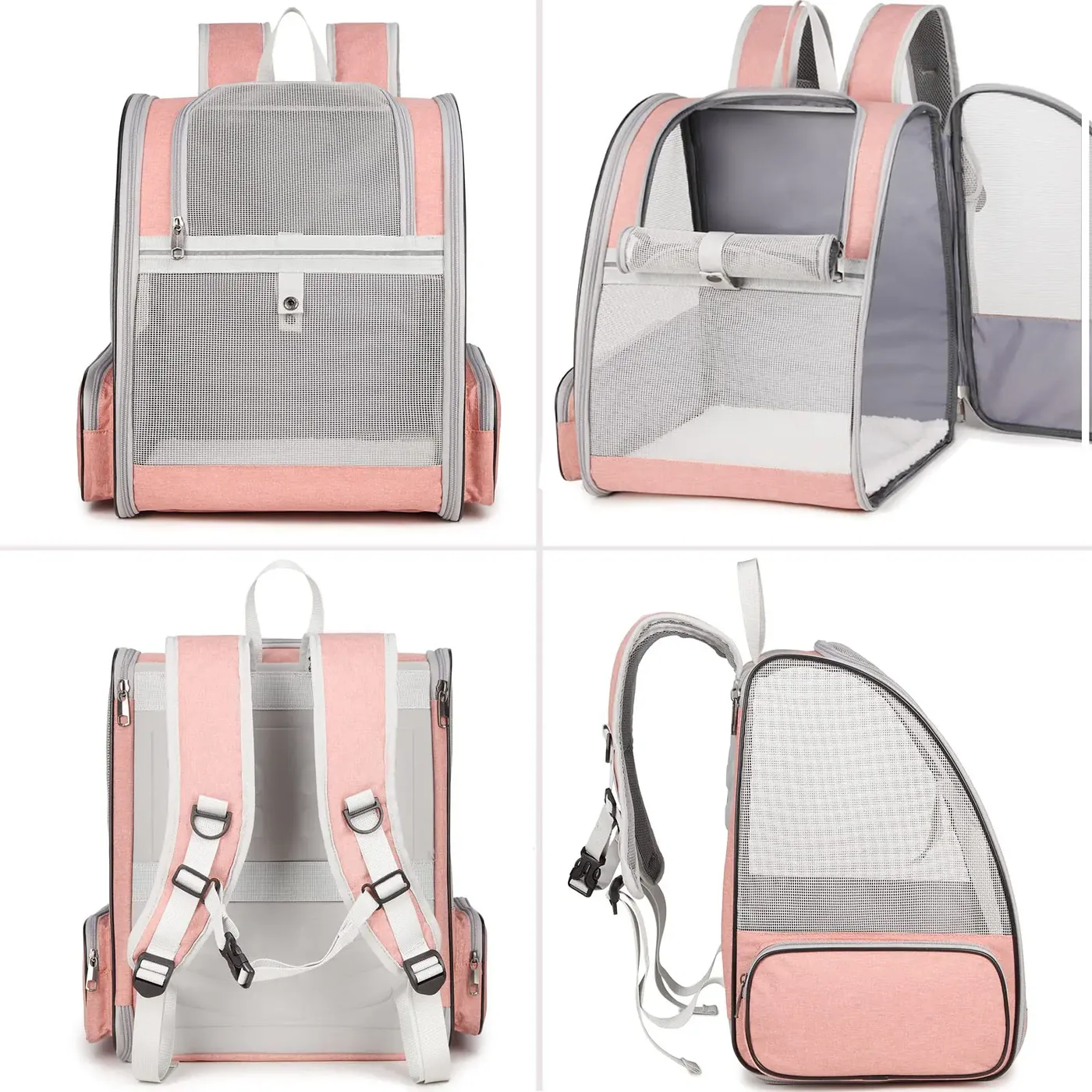
Equipment count is a weak signal on its own and a strong signal in context. One hundred and forty-nine machines across 7 lines implies a mix: lockstitch and overlock sewing, bar-tack and box-stitch machines for stress points, cutting equipment, and some form of pressing or shaping. For pet bags specifically, the presence of bar-tack capacity matters because strap roots, handle joins and buckle attachment points are where load failures originate.
Ask what happens at the stress points. A production base that bar-tacks every handle and strap root, reinforces every webbing join, and can show you the stitch pattern it uses has thought about load. One that "sews it strongly" has not. The difference is invisible in a sample and obvious after three months of use, which is exactly when returns and reviews arrive.
Cutting is the second equipment question. Die cutting gives consistency across a 3,000-piece run; manual cutting gives consistency across the first fifty pieces and drift after that. Ask whether cutting dies are made for your style and who owns them. Dies cost money and save money, and a supplier unwilling to make them is planning a short run whether or not you are.
Line layout predicts defect rates more reliably than machine brands. Look for: material staged by component rather than by carton, work-in-progress moving in one direction, a defined first-piece approval station at the head of the line, and an inspection position before packing rather than only after. A line where finished goods pile up next to cut parts is a line where mix-ups happen.
Finally, ask about testing equipment on site. Simple, honest in-house checks — a pull test on webbing and strap assemblies, a zipper cycle test, a colourfastness rub test — indicate that the base verifies rather than assumes. Reference test methods published by bodies such as AATCC are the common language for textile tests; a supplier that names the method rather than the machine is usually describing a real procedure.
Material Control: Incoming Inspection and Traceability
Most pet bag quality failures are material failures that were visible before cutting. Shade variation between fabric rolls, a webbing batch with lower tensile strength, a coating that smells, a hardware lot whose plating fails a nickel screen: all of these are incoming-material problems, and all of them are cheap to catch and expensive to miss.
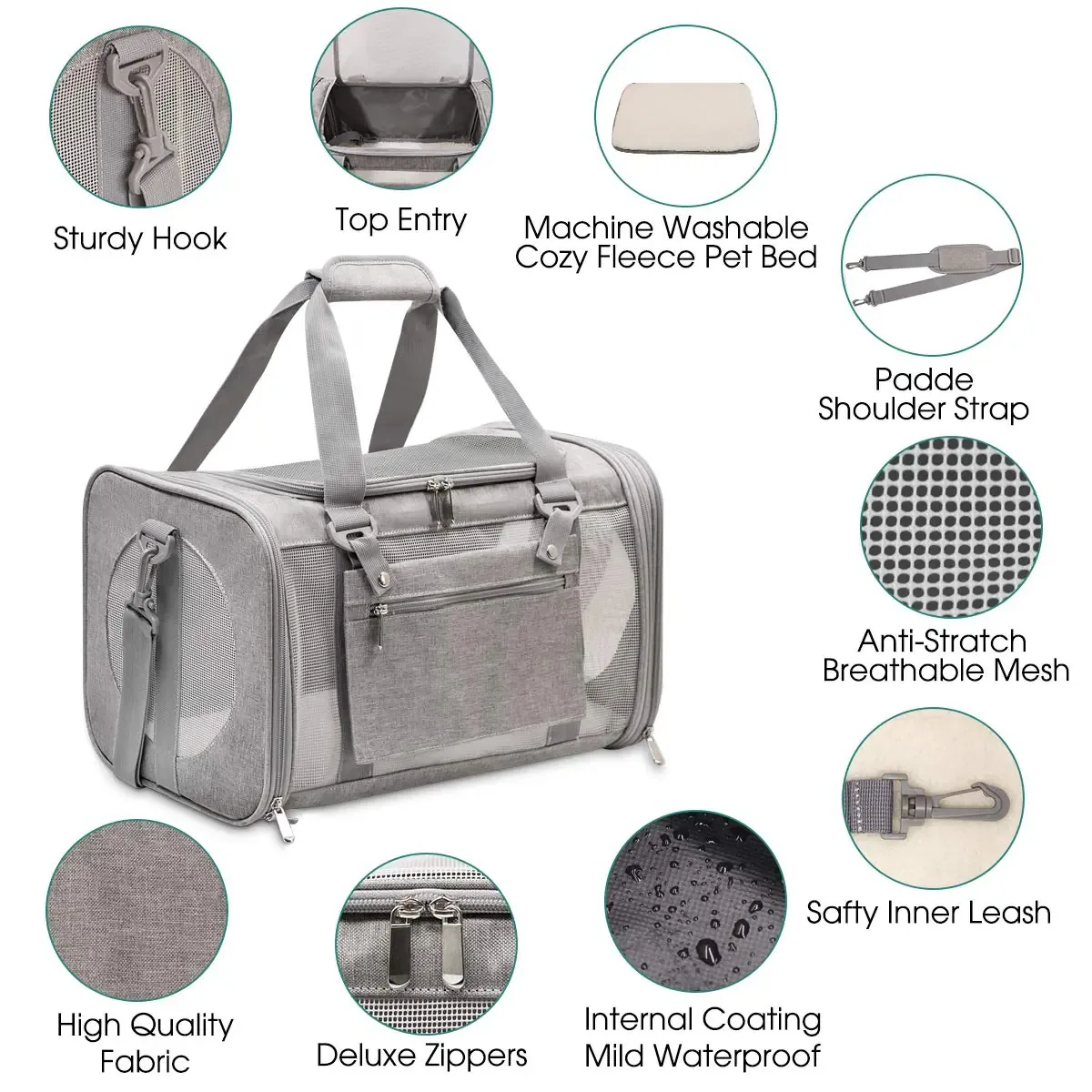
Ask how incoming material is handled. A controlled process receives a material card per component, checks roll-to-roll shade under standard lighting, verifies width and weight against the specification, and quarantines anything unverified until it is released. The output you should ask to see is a material confirmation card signed before cutting started, referencing the supplier, the lot and the test status.
Traceability is the second half. If a marketplace or retail compliance team asks which dye house produced the fabric in a specific shipment, the answer should take a day, not a week. That means lots are recorded per production order, not per month. Ask for a sample traceability record: one production order, all component lots listed. If the supplier cannot produce one, its compliance file will not survive an audit.
Hardware deserves specific attention because it is the most frequently substituted component. Buckles, clips, D-rings and sliders come from partner facilities, and a substitution mid-run is easy to make and hard to notice. Specify hardware by material, finish and grade in the purchase order, require a hardware sample card with the approval sample, and require that any substitution be approved in writing before it enters production.
For programs with environmental or chemical requirements, incoming control should include certificate collection: OEKO-TEX certificates for skin-contact textiles, REACH declarations for the EU, and CPSIA and Prop 65 screening results for the US. Certificates should be collected at material receipt rather than assembled at shipment, because assembling them later is how expired or mismatched documents end up in a compliance file. The OEKO-TEX system is the most widely accepted textile label in this area.
In-Process Quality: Where Defects Are Actually Created
Defects are created at four points in a soft goods line, and only one of them is caught reliably by a final inspection. The first is cutting: a pattern error, a mis-aligned die or a stretched fabric spread produces parts that cannot be assembled correctly, and every downstream operator will compensate rather than stop. The second is first-piece assembly: if the first ten bags are not approved against the sample, the line will spend the whole run reproducing the first mistake.
The third is the seam and stress-point operation, where an operator under time pressure skips a bar-tack or shortens a backstitch. The fourth is packing, where the wrong label, the wrong colour or the wrong quantity enters a carton. Final inspection catches the third and fourth reasonably well and the first two badly, which is why in-process inspection exists.
Ask for the in-process protocol in concrete terms: who approves the first piece, at what piece count the first in-line inspection happens, what sample size is used, and what authority the inspector has to stop the line. The authority question is the decisive one. An inspector who must ask a supervisor before stopping production is not a control point; a stop authority that is written into the process is.
Then ask about the statistics. AQL 2.5 governs the final random inspection, but a mature program also tracks in-line defect rates by operation and reviews the top three defect types weekly. A supplier that can name its three most common defects and what it changed to reduce them is running a process. One that says defects are rare is not measuring.
Finally, agree how suspect goods are handled before there are any. The purchase order should state that non-conforming goods are segregated, that rework requires written approval of the method, and that reworked goods are re-inspected at a tightened level. Agreements made in advance are followed; agreements improvised after a problem are negotiated, and negotiation is where quality leaks.
Documentation Discipline: The Paper Trail Test
Documentation discipline is the cheapest reliable predictor of how a program will run, because it is visible before any goods exist. Request a document set for a hypothetical order and see what comes back: specification sheet with tolerances, material confirmation card, sample approval record with dates, in-line inspection report, final AQL report with photographs, packing list reconciled to carton marks, and test certificates referenced by report number.
Judge the set on three qualities. Specificity: real measured values rather than tick marks. Dating: every document tied to a production order and a date. Reconciliation: the piece count on the packing list equals the piece count on the inspection report equals the carton count. A supplier whose documents reconcile is a supplier whose production reconciles.
Documentation also determines how fast you can react. When a marketplace requests a test report, a program with a numbered file responds in an hour; a program without one spends two weeks and loses the listing. When a retail buyer asks for a compliance pack, the difference between having it and commissioning it is often the difference between a season and no season.
Ask who owns the file. In a managed program, the production team maintains the document set for the life of the style and can reproduce it for a reorder without re-testing. In a transactional relationship, every order starts a new file and costs a new testing fee. Over three years, that difference is a meaningful percentage of program margin.
Finally, require that documents are issued in the language and format your channels need. English-language reports, PDF originals rather than photographs of printouts, and report numbers that can be verified with the issuing laboratory. Formats sound trivial until a compliance portal rejects a scan and the listing goes dark during your peak week.

How to Run a Factory Evaluation Without Travelling
Most buyers cannot visit before the first order, and a well-structured remote evaluation gets close to the same result. The sequence matters. Start with documents, because documents can be reviewed asynchronously and cost nobody a calendar slot. Then do a live video walkthrough with a scripted route. Then run a paid development sample, which is the only part of the evaluation that tests output rather than presentation.
Script the video walkthrough and send the route in advance: raw material store, cutting, first-piece approval station, sewing lines, bar-tack and stress-point operations, in-line inspection, packing, and the document desk. Ask for continuous footage rather than edited highlights, and ask the camera to stop at one work station long enough to see a full operation cycle. Suppliers confident in their process do not object; suppliers staging a show do.
During the walkthrough, ask three unscripted questions. What is the most common defect on this style, and what did you change to reduce it? Which operation on this line is the bottleneck today? If my order doubles next quarter, what breaks first? These questions require operational knowledge to answer, and the answers reveal whether the person on the call works in planning or in sales.
Then commission the sample and judge the process, not just the bag. Did it arrive within the stated 6-10 working days? Was the quotation's material basis honoured exactly? Did the parcel include a specification sheet, a material card and photographs? A supplier that sends a well-documented sample at the promised date will run bulk the same way.
Where budget allows, combine remote evaluation with a third-party pre-shipment inspection on the first order. Independent verification through a recognised laboratory and inspection body gives you an unbiased read on the base and produces the document set your channels will ask for later. The cost is small relative to a first bulk order and is usually recovered in avoided rework.
Red Flags and Deal-Breakers
Some signals are worth ending a conversation over. Refusing to name the production site, or naming a different site in the contract than in the audit, is a terminal problem because it makes every other assurance unverifiable. Quoting without a material basis is close behind: it converts a fixed price into an option that will be repriced later.
The second group of red flags concerns capacity honesty. A supplier that claims unlimited capacity in every season is either small or lying, and both outcomes are bad for a buyer with a launch date. Similarly, a supplier that accepts an impossible deadline without discussion has either not understood the specification or does not intend to meet the date.
The third group concerns documentation. Certificates issued to a different legal entity, test reports without report numbers, reports older than the style they cover, or an inability to produce an in-line inspection record for a current production order all indicate that the paperwork is decorative.
The fourth group is commercial. Pressure to pay 100 percent up front, resistance to any inspection clause, refusal to state a quotation validity window, or a price that drops sharply the moment you mention a competitor all suggest a transactional counterparty rather than a manufacturing partner. Terms like T/T 30/70 with inspection before balance exist precisely because they align incentives, and a supplier that will not work within them is telling you how it expects the relationship to end.
Finally, watch for the soft signals that accumulate into real cost: responses that answer a different question than the one asked, specification changes that appear without a revised quotation, and samples that arrive without documentation. None of these is fatal alone. Together they describe the next twelve months accurately.
Matching Your Order Profile to the Production Base
Even a capable production base is a better fit for some order profiles than for others, and buyers who understand their own profile get better pricing and better slots. Four variables define it: order size per style, colourway count, specification stability and forecast visibility.
A base running 7 lines and roughly 200,000 pieces a month is built for programs in the 1,000 to 20,000 piece range with a small number of colourways and a stable specification. That profile allows long runs, efficient changeovers and material purchasing at scale, and it is where the price curve flattens most favourably. Buyers in that profile should ask for slot reservations and annual pricing rather than negotiating each order separately.
Small, highly varied orders are a poor fit for the same base and will be priced accordingly. That is not exploitation; it is the honest cost of changeovers, short material lots and scheduling disruption. Buyers with this profile are better served by consolidating styles onto one platform to reduce variation, or by accepting a different commercial arrangement with realistic setup cost rather than expecting program pricing on a spot order.
Specification stability is the variable buyers control most directly. A program that freezes its specification and re-orders the same product-year after year receives better pricing than one that revises the design at every reorder, because revisions restart development, re-testing and first-piece approval. Buyers should aim to freeze specifications for at least two seasons and route cosmetic changes through print and colour rather than through construction.
Forecast visibility is the cheapest advantage available. Sharing a rolling 90-day forecast costs nothing and lets materials be booked ahead of the purchase order, which shortens effective lead time by the material portion and improves slot priority in peak season. Buyers who treat the forecast as a commitment rather than an aspiration get the most from it.
Finally, ask the production base which profile it prefers and whether yours fits. A supplier that tells you your profile is a poor fit is worth more than one that accepts every order indifferently, because fit is what determines whether your order gets attention when the schedule is under pressure.
Why brands source here
- Pet bag programmes run since 2014; founding team in sewn goods since 2004
- SGS-verified production floor of 4,950 m² with 137 workers across 7 lines
- Monthly capacity of 200,000 units, audited to BSCI and ISO 9001
People Also Ask
What questions should I ask a pet bag factory before ordering?
Ask which production slot your order would occupy, what the peak-season booking rule is, who supplies the zippers and hardware, what the three most common defects are, and what breaks first if your volume doubles. Operational answers indicate a planning function; reassurance alone indicates a sales desk.
How can I tell a real factory from a sourcing agent?
A real production base states lines, staff and monthly output in numbers that reconcile, can name the site where goods are made, and shows dated in-line inspection records for current production. A trader answers in adjectives and cannot produce process documents.
Does ISO 9001 mean the bags will be good?
No. ISO 9001 confirms a documented quality management system exists and is followed, which is the precondition for consistent output, not a guarantee of it. Read the populated records — material cards, in-line reports and final AQL reports — rather than the certificate alone.
Why do most pet bag defects start before sewing?
Cutting errors and first-piece mistakes propagate through an entire run before a final inspection can detect them, because downstream operators compensate rather than stop. First-piece approval and inspector stop authority are the two controls that prevent this.
How do I check that certificates cover the right site?
Read the certificate scope and the named legal entity, then confirm it matches the production site in the contract. Certificates issued to a sourcing agent do not cover the production base, and sister-facility coverage is a common gap in audit files.
Is a third-party inspection worth the fee?
Yes for a first order and for any program above a few thousand pieces. Independent reporting produces a document set retail compliance teams accept without debate and removes the conflict of a supplier grading its own work.
Frequently Asked Questions
How do I verify a pet bag factory's real capacity?
Ask for lines, staff count, monthly piece output and peak-season booking rules, then check that the numbers reconcile. A base claiming 7 lines, 137 staff and 200,000 pieces monthly implies around 1,100 finished bags per line per day, which is plausible for mid-complexity soft bags.
Which certificates should a pet bag production base hold?
BSCI for social compliance and ISO 9001 for quality management are the two that matter, and both should name the site where your goods will actually be produced. Request the certificate scope, expiry and the most recent corrective action record rather than a single scan.
What is AQL 2.5 used for?
AQL 2.5 is the acceptable quality limit applied to the final random inspection, defining how many major defects are tolerable in a statistically drawn sample before a shipment is rejected or reworked. Critical defects carry an acceptance number of zero.
Can I evaluate a factory without visiting?
Yes. Review the document set first, then run a scripted live video walkthrough covering material store, cutting, sewing, stress-point operations, in-line inspection and packing, then commission a paid development sample and judge the process as well as the product.
What are the standard production terms?
MOQ 500 pieces per colour, 6-10 working days for development samples, 35-50 days for bulk production after sample approval and deposit, AQL 2.5 final inspection, T/T 30/70 payment and FOB Xiamen as the default Incoterm.
Who owns the tooling and patterns between orders?
In a managed program the buyer owns the tooling and the pattern, held and maintained by the production team under a documented arrangement. Without that arrangement, a repeat order can be charged again for dies that were already paid for once.
How is incoming material controlled?
A controlled process issues a material confirmation card per component, checks roll-to-roll shade and measured weight against specification, and quarantines unverified material until released. Hardware should be specified by material, finish and grade, with substitutions approved in writing.
Why does in-process inspection matter more than final inspection?
Final inspection catches workmanship and packing errors reasonably well, but cutting errors and first-piece mistakes propagate through an entire run before they can be detected. A first-piece approval station and an inspector with written stop authority prevent that.
What should the document set for one order contain?
A specification sheet with tolerances, a material confirmation card, a dated sample approval record, an in-line inspection report, a final AQL report with photographs, a packing list reconciled to carton marks, and test certificates referenced by report number.
What is the biggest red flag when choosing a production base?
Refusing to name the production site, or naming a different site in the contract than in the audit, because it makes every other assurance unverifiable. Quoting without a named material basis is the close second.
How often should test reports be refreshed?
Annually at material-family level, and immediately after any change of dye house, fabric supplier or hardware supplier. Reports should be collected at material receipt rather than assembled at shipment so that expired documents never enter the compliance file.
What equipment matters most for pet bags?
Bar-tack capacity for strap roots, handle joins and buckle attachment points, because that is where load failures originate. Die cutting for consistency across long runs, and basic in-house checks such as strap pull tests and zipper cycle tests, matter as much as machine count.
Talk to QUANZHOU JUNYUAN BAGS about a wholesale pet bag order: MOQ 500 pieces per colourway, samples in 6-10 working days, bulk production in 35-50 days under AQL 2.5 inspection.
Get a free quote Request a sample