Pet Bag Wholesale Distributor: Channel Strategy
A pet bag wholesale distributor channel works when the landed cost supports a 2.0-2.5x markup and the supplier can hold 500-piece colourway minimums across a 6-8 SKU opening assortment. Budget USD 8-14 landed per unit for mid-tier soft-sided bags, plan a 90-day replenishment cycle, and commit to one annual re-buy before you chase a second distributor.
Distributor programmes fail on arithmetic more often than on product. The buying desk does not compare your bag against another bag; it compares the gross margin line your bag produces against the line it replaces, and against the working capital that line consumes for 90 days. That is why the first conversation should be about landed cost bands, carton configuration and replenishment cadence, not about fabric swatches. Our production team runs pet bag programmes at MOQ 500 pieces per colourway, with samples in 6-10 working days and bulk production in 35-50 days after sample approval, released against AQL 2.5 inspection, which is the cadence a distributor catalogue actually needs: short enough to react to a sell-through report, long enough to plan a seasonal spread. Four decisions determine whether the channel holds: how many SKUs you open with, whether you accept the distributor's own-brand or supply an open line, who carries the freight and duty risk, and what happens when a competing distributor sees the same product at a lower price. Settle all four before the first purchase order, because each one is far cheaper to negotiate at the brief stage than at the re-order stage.
Pet bag tiered pricing usually breaks at three quantity points, and Market & Business Strategy determines which point is realistic for a first order. Cheap pet carriers wholesale quotes that ignore carton cubage tend to lose their advantage once freight is added, so pet bag unit cost wholesale is the only number worth comparing.
What a Wholesale Distributor Actually Buys in Pet Bags
A distributor is not a consumer with a bigger basket. The buying desk evaluates a pet bag line on four questions that have almost nothing to do with how the bag photographs: can it be explained in one line on a catalogue page, does it fill a price band the catalogue is missing, will it survive a season of warehouse handling, and can the supplier repeat it without drift. A pet bag programme that wins the first two and fails the last two is the single most common reason a distributor drops a line after one buy.
Catalogue logic beats product logic. A mid-size distributor carrying pet supplies will already list an entry-level soft-sided tote, a mid-tier backpack-style bag and something at the top of the ladder. Your submission is judged against the slot, not against the market. When a buyer says the product is "nice but we already have that", the objection is assortment overlap, not quality, and the correct response is to move the specification into a different band rather than to argue about stitching.
The operational specifications matter more than most first-time suppliers expect. Distributors want standardised master-pack quantities, consistent barcode assignment, a sell sheet with packed dimensions and net weight, and a stated policy on hardware replacement. Mixed carton quantities create pick errors in their distribution centre, and a pick error on a 40-page catalogue costs them more than the margin on the bag. Our production team ships pet bag programmes in even master packs of 10 or 12 with a single barcode per colourway, and confirms packed carton dimensions at sample approval rather than at booking.
Durability is tested against warehouse handling, not living-room handling. Cartons are stacked, dropped from pallet height, and opened with a knife. That is why the zip cycle count, the seam strength at the handle attachment and the abrasion resistance of the base panel are the three specifications that generate the most distributor complaints, and why the pre-shipment inspection should sample them by carton rather than by piece.
- One-line catalogue description that a buyer can paste without editing
- Even master-pack quantity and a single barcode per colourway
- Confirmed packed carton dimensions and net weight at sample stage
- Stated zip cycle and handle load test values with the test method named
- Hardware replacement policy in writing before the first order
Channel Economics: Margin Bands and the Landed Cost Ladder
Every distributor works to a margin ladder, and the ladder is set by the retailer downstream, not by the supplier. A typical structure runs: supplier sells at FOB, distributor lands the goods at 1.35-1.55x FOB once freight, duty and handling are added, sells to the retailer at 2.0-2.5x landed, and the retailer marks up again to shelf. If the shelf price the category supports is USD 24.99, the maths runs backwards to a landed cost of roughly USD 8-11 and an FOB cost of roughly USD 6-8 depending on the duty rate and freight mode.
This is why a technically better bag can lose to a technically worse one. Adding USD 1.20 of FOB cost to improve a lining moves the landed cost by roughly USD 1.70 and the shelf price by roughly USD 4.00, which can push the article out of the band the category holds. The correct discipline is to quote bands, not single prices: give the distributor three specifications at three FOB points, and let the desk choose the one that lands inside its band.
| Channel tier | Typical shelf price | Distributor landed cost | Implied FOB band | Order profile |
|---|---|---|---|---|
| Discount / catalogue value line | USD 12.99-17.99 | USD 4.50-6.50 | USD 3.20-4.60 | 2-3 colourways, 6,000+ units per buy |
| Mid-tier pet specialty | USD 19.99-29.99 | USD 7.00-11.00 | USD 5.00-7.80 | 4-6 colourways, 2,000-4,000 units |
| Premium independent | USD 34.99-59.99 | USD 12.00-21.00 | USD 8.60-15.00 | 2-3 colourways, 600-1,500 units |
| E-commerce-only distributor | USD 22.99-39.99 | USD 8.00-14.00 | USD 5.70-10.00 | Many colourways, 500-1,000 per drop |
The table is a planning instrument, not a price list. Duty rates and freight rates move, and the conversion from FOB to landed is where most first-year programmes lose their margin. Buyers who build the ladder backwards from the shelf price and then ask the supplier to engineer to a target cost get a workable line; buyers who start from a factory price and hope the market accepts it usually do not.
Freight mode is the largest single variable in the conversion. A pet bag is a bulky, low-density article, and volumetric weight frequently exceeds actual weight, so sea freight remains the default for distributor volumes while air is reserved for a launch drop or a stock-out rescue. Consolidating colourways into a single container is the cheapest margin improvement available to most programmes.
Assortment Architecture: Good, Better, Best for the Catalogue
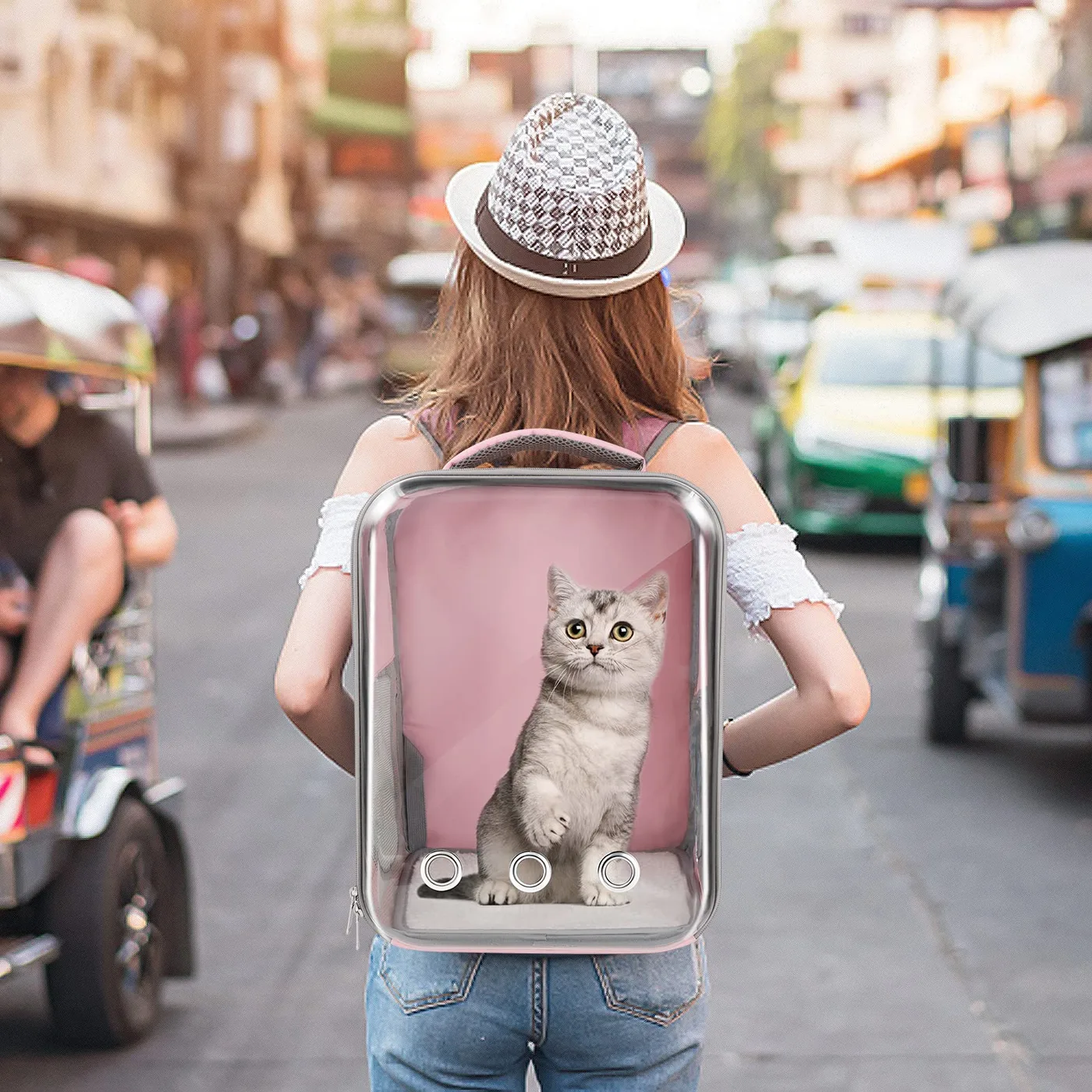
A distributor catalogue is built in three rungs, and each rung has a different job. The good rung exists to win the price-shopping customer and to fill the shelf at the lowest possible cash outlay. The better rung carries the volume and the margin. The best rung exists to make the middle rung look reasonable. Suppliers who submit a single hero product are asking the buyer to do the architecture work, and the buyer usually declines.
For pet bags the rungs are defined by a small number of visible specifications: fabric denier and coating, ventilation panel area, internal frame or base-board construction, hardware grade, and the number of functional pockets. Moving a specification between rungs is cheap at the design stage and expensive later, because each change re-opens costing, sampling and, in the case of a structural change, the safety and load testing that supports the claim.
The practical recommendation for a first programme is to submit three SKUs that share a tooling and material platform but differ on exactly two visible specifications. Shared platform keeps the total buy above the MOQ 500 per colourway threshold across the line, while the visible differences give the buyer a defensible ladder. Three SKUs that share nothing force three separate material buys and three separate sampling rounds, which is where launch budgets disappear.
Colourway strategy follows the same logic. Distributors rarely want eight colours of one bag; they want two proven colours per rung plus one seasonal colour that creates a reason to re-order. A programme of six colourways spread across three SKUs outsells a programme of six colourways on one SKU in most distributor catalogues, because it fills more slots on the page.
Volume Planning: MOQ, Colourways and Replenishment Cadence
Distributor buying is seasonal, but the season is not the retail season. A distributor placing goods on a spring shelf commits in the previous autumn, which means the production slot is booked months before any sell-through data exists. That lead time is the reason the standard commitment is an annual buy split into two or three releases rather than a series of independent orders.
MOQ is the constraint that shapes the whole plan. At MOQ 500 pieces per colourway, a six-colourway programme implies 3,000 units minimum, which is a real cash commitment for a first-time buyer and a trivial one for an established distributor. The workaround is not to negotiate the MOQ down but to concentrate colourways: four colourways at 500 each is 2,000 units, and two of those colourways can be repeated across two SKUs on the same material platform, so the material buy still clears its own minimum.
Replenishment cadence should be agreed in writing at the first buy. A 90-day cycle with a 35-50 day bulk production window and 6-10 working days for samples leaves roughly 30 days of slack for freight and customs, which is workable for sea freight from Xiamen to a US or European DC but tight for anything that requires a re-test. Distributors who discover at the re-order stage that the supplier needs a fresh sample approval before every bulk run will miss the season.
The second discipline is reserving capacity rather than reserving stock. Holding finished goods against a distributor's forecast ties up working capital on both sides, while reserving line capacity in the production calendar costs nothing until it is called. Our production team holds a rolling slot for repeat programmes, which is the practical equivalent of safety stock without the balance-sheet cost.
The Distributor Compliance Pack: What the Buying Desk Demands
Large distributors will not place a first order until a document pack is complete, and the pack is reviewed by a compliance team that has never seen the product. Missing documents delay the buy by weeks; incorrect documents delay it by months, because a rejected file has to be re-issued by the testing laboratory rather than corrected in-house.
The standard pack for pet bags in the US and EU markets covers: material composition declarations, restricted-substance test reports against the applicable chemical regime, physical test reports for the load and zip claims, factory social-compliance documentation, country-of-origin marking, and labelling artwork. Retail-facing distributors increasingly ask for the same file that their own retail customers ask for, which means a distributor selling into a national chain will pass that chain's requirements straight down to the supplier.
Two regimes cause the most confusion. In the United States, consumer-product safety obligations sit with the Consumer Product Safety Commission, and California adds its own warning obligation administered by OEHHA under Proposition 65. In the European Union, chemical restrictions run through the European Chemicals Agency under REACH. A distributor selling into both markets needs both files, and the two files are not interchangeable.
Social compliance is the second gate. BSCI and ISO 9001 documentation is standard for the SGS-verified production base we work with, and audit reports have a validity window, so a distributor asking for a report that is 14 months old will be told to re-audit. Build the audit calendar into the annual buy plan rather than reacting to a request.
- Material composition declaration per component, not per finished bag
- Chemical test reports for both the US and EU regimes where both markets are served
- Physical test reports naming the test method and the laboratory
- Social-compliance audit report inside its validity window
- Country-of-origin and fibre-content labelling artwork approved before bulk
Open Line or Own-Brand: Which Route Fits Which Distributor Tier
Distributors generally choose between two commercial structures. In an open-line arrangement the supplier's existing product is sold under the supplier's brand or a neutral brand, and the distributor buys catalogue slots. In an own-brand arrangement the distributor's brand goes on the bag, the distributor controls the artwork and often the specification, and the supplier is contractually restrained from selling the same article to a competing distributor in the same territory.
The economics differ sharply. Open line is cheaper and faster: no artwork development, no exclusive tooling, no territory negotiation, and a first buy can be as small as the standard MOQ 500 per colourway. Own-brand costs more in development time and usually carries a higher MOQ because the distributor is asking for a dedicated material run, a dedicated label set and exclusivity that has a real cost to the supplier. Both routes are legitimate, and the choice depends on the tier.
Mid-tier and discount distributors usually take open line, because their customers are buying on price and the brand on the bag is not the reason for the purchase. Premium independents and e-commerce distributors with a strong house brand usually take own-brand, because their margin depends on the customer not being able to comparison-shop the identical article. A supplier that pushes own-brand at a value distributor is asking for a development cost the channel cannot support.
Exclusivity is the clause that decides these deals, and it should be written as territory plus channel plus duration, not as a vague promise. A distributor that wants exclusive rights to a pet bag design in North America for 24 months is asking for something quantifiable, and the supplier's answer should be tied to a volume commitment rather than given away. Our production team treats exclusivity as a priced term: it is available, and it is paid for with either volume or a per-unit premium.
Incoterms, Freight and Payment Terms in Distributor Agreements
Distributor agreements are usually written on FOB terms, and FOB Xiamen is the default for pet bag programmes, but the term only does its job if both sides understand where the risk transfers. Under a standard FOB arrangement the seller clears export and loads the goods; the buyer owns the freight, the insurance, the import clearance and the duty. A distributor that asks for CIF is usually asking the supplier to manage freight, which is fine, but the cost of that service has to be inside the quoted price rather than added afterwards.
The commercial rules that define these terms are maintained by the International Chamber of Commerce, and quoting the correct edition in the contract removes a surprising amount of argument. Most disputes in this area are not about what the term means but about who booked the container and therefore who bears a delay, which is why the contract should name the nominated forwarder and the booking responsibility explicitly.
Payment terms follow the same logic. T/T with 30% deposit and 70% against bill of lading is the standard structure, and it exists because the supplier is financing raw material for 35-50 days before the goods ship. Distributors that push to 100% against documents after inspection are asking the supplier to carry the entire working capital cycle, and the cost of that request appears somewhere in the unit price. The honest version of the negotiation is to trade payment terms against price rather than to pretend the two are independent.
Tariff exposure is the other term that has to be addressed, because duty rates on travel goods and textile articles move with trade policy and the classification is the supplier's and importer's joint risk. Programmes that state the HS classification in the contract, and that agree who absorbs a rate change, survive a policy shift; programmes that leave it silent end up in a dispute at the port. The World Trade Organization publishes the tariff and trade data that informs those classifications.
Channel Conflict: Territory, Account Protection and Price Policing
The fastest way to lose a distributor is to sell the same bag to a competing distributor two states away. Channel conflict is not a legal problem in most cases; it is a commercial one, and it destroys the trust that the whole arrangement depends on. Distributors invest in photography, catalogue placement and sales training, and they will not make that investment if a competitor can free-ride on it.
The practical protections are three. First, territory: grant exclusivity on a geography the distributor can actually cover, measured by accounts served rather than by square kilometres. Second, channel: a distributor that sells only to independent pet stores is not in conflict with one that sells only to e-commerce, and separating the two in writing allows a supplier to run both. Third, duration: exclusivity should expire if the volume commitment is missed, which converts a promise into a contract.
Price policing is the harder problem, because a distributor that discounts aggressively will drag the shelf price down for everyone. Minimum advertised price policies are one instrument, but they are difficult to enforce across borders. A simpler and more effective instrument is to differentiate the article: a slightly different colourway, hardware finish or packaging for each distributor gives every account something that cannot be directly compared, which removes most of the incentive to discount.
Finally, decide in advance what happens when a large national account approaches the supplier directly. The clean answer is a written pass-through arrangement, where the distributor of record handles the account and receives an agreed margin, rather than a silent bypass that ends the relationship the moment the distributor notices.
Building the Annual Buy Plan With Your Pet Bag Supplier
An annual buy plan converts the strategy into dates. It starts from the distributor's catalogue cycle, works backwards through freight and production, and ends at a brief date. For a spring catalogue, the sequence typically runs: brief and specification lock in month one, samples in 6-10 working days, sample approval and testing in month two, bulk production in 35-50 days, sea freight and clearance in month four, DC receipt in month five.
The plan should state three numbers for each SKU: the opening buy quantity, the trigger point for a re-order, and the maximum re-order quantity the line can absorb inside the remaining season. Those three numbers let both sides act without a fresh negotiation, and they are the difference between a programme that reacts to sell-through and one that explains a stock-out.
Testing and documentation belong in the plan as dated tasks rather than as a condition of shipment. Chemical testing and physical testing both have laboratory turnaround times that are outside the supplier's control, and a programme that discovers a re-test requirement in the week before booking will miss the vessel. Build a two-week buffer in front of the booking date for exactly this reason.
The last element is the review. A quarterly review that compares forecast against actual sell-through, and adjusts the colourway mix rather than the total volume, is what keeps a second-year programme healthy. Distributors that treat the annual plan as fixed and the supplier as a vending machine tend to end year two with a warehouse of the wrong colours and a complaint about the supplier's flexibility.
- Lock specification and brief dates before quoting
- State opening buy, re-order trigger and seasonal maximum per SKU
- Reserve production capacity rather than finished stock
- Schedule testing as a dated task with a two-week buffer
- Review colourway mix quarterly, total volume annually
Why brands source here
- Pet bag programmes run since 2014; founding team in sewn goods since 2004
- SGS-verified production floor of 4,950 m² with 137 workers across 7 lines
- Monthly capacity of 200,000 units, audited to BSCI and ISO 9001
People Also Ask
What is a wholesale distributor channel for pet bags?
It is the route where a distributor buys in bulk, holds inventory in its own distribution centre, and resells to independent retailers or e-commerce accounts under its own catalogue. The supplier sells one programme to one counterparty instead of managing dozens of small accounts.
How do I find pet bag distributors for my product line?
Start from the trade fairs where pet specialty buyers attend, then work the catalogue of distributors already listing adjacent categories. The qualification test is whether they already sell a bag at your price band, not whether they like your sample.
What markup do distributors apply to wholesale pet bags?
Typically 2.0-2.5x landed cost, after freight, duty and handling have been added to the FOB price. Landed cost usually runs 1.35-1.55x FOB, so the two multipliers compound to a shelf price roughly five to six times FOB.
Is selling through a distributor better than direct retail?
It is better when you lack the sales infrastructure to serve many small accounts and when the distributor's catalogue gives you placement you could not buy. It is worse when your margin cannot absorb two layers of markup before the shelf price ceiling.
What causes distributor programmes to fail in year two?
Most failures are assortment and cadence failures rather than quality failures: the wrong colourways were repeated, the re-order missed the season, or a competing distributor received the same article at a lower price and the account was lost.
How much working capital does a distributor programme need?
Budget for the deposit at order placement, the balance at shipment, and 60-120 days of inventory in the distributor's own warehouse before sell-through converts to a re-order. The cash cycle, not the unit price, is what limits how many colourways you can open with.
Frequently Asked Questions
What margin does a pet bag distributor expect?
Most distributors target 2.0-2.5x landed cost when selling to retail, with the retailer marking up again to shelf. Work backwards from the shelf price the category supports to set your FOB band, and quote three specifications at three price points so the buying desk can choose the one that lands inside its ladder.
How many SKUs should an opening distributor assortment have?
Six to eight SKUs across three price rungs is the practical opening assortment for a pet bag line. Sharing one material and tooling platform across those SKUs keeps the total above the 500-piece per colourway minimum while giving the buyer a defensible good-better-best structure.
Who pays for freight and duty in a distributor deal?
Under FOB terms the buyer owns freight, insurance, import clearance and duty from the loading port onward. That is the default for pet bag programmes and it should be stated in the contract along with the nominated forwarder, so there is no argument about who bears a booking delay.
Can a distributor get exclusivity on a pet bag design?
Yes, but it is a priced term. Exclusivity should be written as territory plus channel plus duration and tied to a volume commitment, because the supplier is giving up the right to sell the same article elsewhere and that has a real cost.
What documents does a distributor compliance team require?
Material composition declarations per component, chemical test reports for each market served, physical test reports naming the method and laboratory, a social-compliance audit inside its validity window, and approved origin and labelling artwork. Missing the per-component split is the most common cause of a rejected file.
How long does a distributor replenishment cycle take?
Plan 90 days end to end. Samples take 6-10 working days, bulk production runs 35-50 days after approval, and sea freight plus clearance consumes most of the remainder. Reserving line capacity rather than finished stock shortens the reaction time without tying up capital.
Should a supplier sell the same bag to two distributors in one country?
Only if the channels are separated in writing. A distributor serving independent pet stores and one serving e-commerce are not in conflict; two distributors serving the same accounts are. Differentiating colourway, hardware finish or packaging removes most of the price conflict.
What order quantity makes a distributor programme viable?
Roughly 2,000-3,000 units across four to six colourways. That clears the per-colourway minimum, fills a container efficiently and gives the catalogue enough depth to test sell-through without over-committing working capital on a first buy.
How should price changes on raw materials be handled?
State a material index or a validity window in the contract. Fabric and hardware costs move, and a quote valid for 30 days is the norm. Agreeing a re-quote trigger linked to a named input is cleaner than arguing about it at re-order time.
What is the difference between open line and own-brand supply?
Open line sells the supplier's existing article with no exclusivity and no development cost, suited to value and mid-tier distributors. Own-brand puts the distributor's brand on the bag with dedicated artwork and usually territory exclusivity, suited to premium and house-brand distributors with volume to support it.
How does a distributor handle a damaged-goods claim?
Claims should be raised against the inspection record. Goods released at AQL 2.5 have a defined acceptance threshold, so a claim needs carton-level evidence and photographs taken before the cartons are broken down in the distribution centre, which is when the evidence disappears.
When should compliance testing be booked?
Book it as a dated task at the same time as bulk production, with a two-week buffer in front of the vessel booking date. Laboratory turnaround is outside the supplier's control, and discovering a re-test requirement in the booking week will cost the season.
Talk to QUANZHOU JUNYUAN BAGS about a wholesale pet bag order: MOQ 500 pieces per colourway, samples in 6-10 working days, bulk production in 35-50 days under AQL 2.5 inspection.
Get a free quote Request a sample