Pet Grocery Bag: Wholesale Sourcing Specs and Costs
A wholesale pet grocery bag program starts at MOQ 500 pieces per colorway, with samples in 6-10 working days and bulk in 35-50 days. Insulated pet grocery bags price from USD 4.80 to USD 13.60 FOB Xiamen, with thermal lining specification and food-contact documentation driving most of the spread.
Grocery pet bags are the most documentation-heavy category in the range. They sit next to food, they are expected to keep pet food and treats at temperature, and they are sold through channels that ask compliance questions before they ask about price. For a wholesale buyer, that means the specification and the paperwork have to be developed together.
Commercial terms follow the standard framework: MOQ 500 pieces per colorway, samples in 6-10 working days, bulk production in 35-50 days after sample approval, pre-shipment inspection at AQL 2.5, T/T 30/70 payment and FOB Xiamen quotation. Production runs through an SGS-verified production base with BSCI and ISO 9001 coverage, 7 lines, 149 sets of equipment and around 200,000 pieces of monthly capacity.
Two decisions dominate the program. The first is the thermal system, which sets cost, weight and packed volume. The second is the food-contact position, which determines whether the product can be sold through grocery and mass channels at all. Both should be settled at quotation stage, because changing either after production begins is expensive and slow, and because the documentation for a food-adjacent product cannot be assembled retroactively without delaying the shipment it was meant to support.
Buy dog carriers and buy cat carriers enquiries usually arrive from two different channels - one from pet specialty, one from general merchandise - and Pet Bag Types & Styles has to serve whichever basket is larger. Buy pet carriers in a single colourway first, then extend the shade range on the reorder.
What Makes a Grocery Pet Bag Different From a General Tote
On the surface a grocery pet bag looks like a tote with a lining. In commercial terms it is a different product class, because it carries two obligations that a general tote does not: it is expected to manage temperature, and it is expected to be safe in contact with food. Those obligations drive specification, testing and documentation in ways that a buyer used to general-purpose bags will not anticipate.
The first obligation produces a thermal requirement. Pet owners use these bags to carry chilled or frozen food, which means the product has to slow heat transfer for a defined period. The second produces a compliance requirement: the inner surface is a food-contact surface, and retailers and regulators treat it as one.
Those two requirements interact in a way that matters commercially. A thicker insulation layer improves thermal performance but increases packed volume, which raises freight cost per unit. A food-contact compliant liner satisfies the channel but constrains material choice and adds documentation cost. The buyer's job is to find the point where both are satisfied at a price the channel will carry.
The category also has a defined use pattern that shapes design. A grocery bag is loaded at a store, carried to a vehicle, carried into a home and emptied, all within perhaps two hours. That is a short thermal window, which is good news for specification: there is no need to engineer for hours of retention, and buyers who over-specify insulation are spending money that customers will never notice.
Insulation Systems and How to Write a Thermal Specification
Three insulation approaches cover the category, and the differences between them are in cost, weight and packed volume rather than in any dramatic difference in performance over a short window.
Foam laminate with an aluminium or metallised film facing is the standard solution. It is cheap, thin and adequate for a two-hour window. Thickness is the main variable: 3 mm suits a light-duty bag, 5 mm is the common default, and 8 mm is used where the product is marketed for frozen goods. Moving from 3 mm to 8 mm adds roughly USD 0.70-1.40 per unit and materially increases packed volume.
Non-woven or fibre batting insulation is the softer alternative. It packs better when compressed, has a quieter hand-feel, and is easier to sew without creating stiff corners. It performs slightly less well per millimetre than foam laminate but is often preferred where the bag is designed to fold flat.
Reflective film without a foam core is the lightest option and is only appropriate where thermal performance is a marketing claim rather than a functional requirement. It is common in very low-price programs and should not be specified where a retailer will ask for a performance figure.
The specification should state the test rather than the material. A workable thermal clause defines the starting temperature, the ambient temperature, the load, and the acceptable temperature after a stated period. That is measurable, it is defensible with a retailer, and it prevents the common dispute in which a buyer expects performance a supplier never agreed to deliver. It also makes quotation comparable: two suppliers quoting different insulation thicknesses can be evaluated on whether each meets the same clause, which is a far better basis for a decision than comparing material descriptions.
Where the thermal budget should go
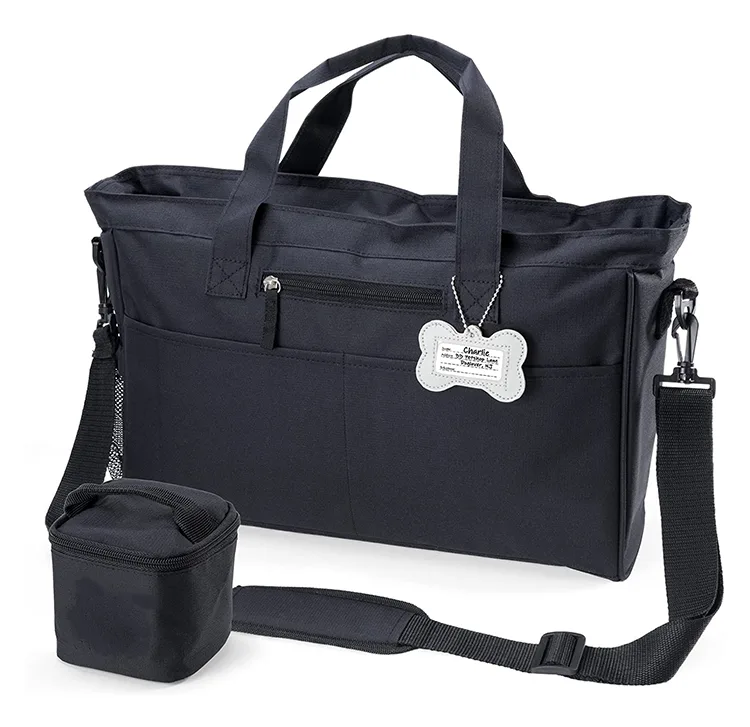
For most grocery programs the thermal budget is better spent on closure and seam integrity than on thickness. A bag with a full zip closure and sealed seams will outperform a thicker bag with an open top, because most heat gain in real use happens through the opening rather than through the walls.
Food-Contact Compliance: The Documents Buyers Are Asked For
Any bag marketed for carrying pet food is treated by many retailers as a food-contact article, and the documentation expectation follows from that. The specific requirements vary by market, but the shape of the file is consistent and should be assembled before the first shipment rather than after a retailer asks.
In the United States, food-contact materials are regulated by the Food and Drug Administration, and buyers are commonly asked to confirm that the liner material is suitable for its intended use. In the European Union, the framework is set at EU level with national implementations, and the substance requirements that affect coatings and inks are maintained by the European Chemicals Agency. In practice, OEKO-TEX certification on the liner and any printed surface is the fastest way to answer the majority of retailer questions with a single document.
The liner is not the only surface that matters. Inks, coatings, adhesives used in lamination and any antimicrobial treatment all sit inside the scope of a serious retailer questionnaire. Buyers should request certification that explicitly covers the laminated construction, because a certificate for the base fabric does not cover the finished laminate.
California adds a separate layer. Prop 65 assessments apply to the finished article, and the substance list is maintained by the California OEHHA. Buyers selling into that market should raise it at quotation stage, because a warning label decision affects artwork and therefore the production calendar.
Finally, buyers should ask for a declaration rather than a general assurance. A written statement naming the material, its compliance basis and its scope is what a retail compliance team needs, and it is far more useful than a certificate that simply says the product is safe. Buyers should also ask when the documentation was issued and for which construction, because a declaration issued for a different laminate or a different ink set will not survive a serious compliance review, and re-issuing it during a live program delays the shipment rather than the document.
Leak Resistance, Seam Construction and Cleanability
Leak resistance is the performance attribute customers notice most. Frozen and chilled pet food produces condensation, raw diets leak, and a bag that lets liquid through into a car or a shopping trolley generates a complaint and a return. Because the consequence lands outside the product itself, leak failures are disproportionately damaging to a brand's review profile relative to their frequency. Getting the seam construction right is therefore more important than most buyers assume.
The standard construction is a welded or heat-sealed liner inside a sewn outer shell. The liner carries the liquid; the shell carries the load. Specifying a liner with sealed corners rather than sewn corners is the single most effective leak prevention measure and costs roughly USD 0.30-0.60 more per unit.
The closure is the second factor. A full zip with a storm flap keeps cold in and liquid contained; a hook-and-loop closure does neither well and should be reserved for the lowest price tier. Where a zip is used, the tape should be specified with a water-resistant coating and the slider with a pull that can be operated with one hand.
Cleanability should be specified explicitly because it determines how long the product stays in service. A smooth, non-absorbent liner wipes clean; a fabric liner absorbs odour. Antimicrobial treatments are available but should be requested with documentation, since an unsupported claim creates more exposure than it resolves.
Base construction deserves a note. Grocery bags are set down loaded, often on wet surfaces, and a reinforced or moulded base both protects the liner seams and keeps the bag upright while loading. It is one of the few additions that improves function, presentation and durability at the same time. Handles deserve the same attention: an insulated bag carries a heavier load than a general tote, so webbing handles should be specified with a load rating and attached with bar-tack reinforcement at both roots, and a wrapped or padded handle is worth the additional cost above the entry tier because it is the part the customer feels most directly. Buyers should also specify how the bag behaves when empty: an insulated bag that collapses into a heap on a shelf looks cheaper than it is, and a light base board is usually enough to hold a retail presentation without adding meaningful cost or freight weight.
Cost Build-Up and Realistic Price Bands
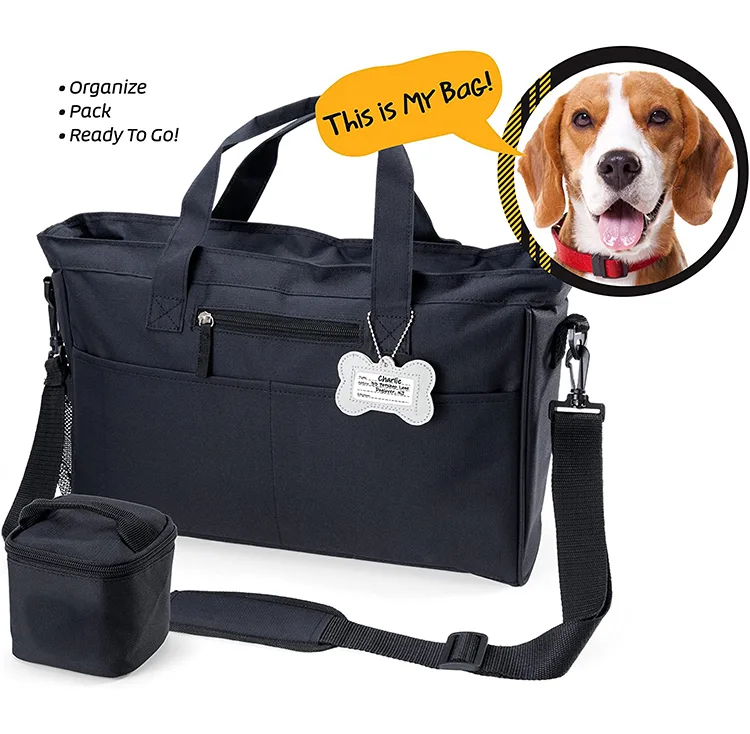
An insulated pet grocery bag at USD 8.40 FOB typically breaks down as follows: outer shell fabric USD 1.60, insulation laminate USD 1.35, food-contact liner USD 1.10, zip and hardware USD 0.95, webbing and handles USD 0.70, binding and trim USD 0.45, cutting and sewing labor USD 1.55, QA and packing USD 0.35, and factory overhead and margin USD 0.35.
The notable feature is that materials account for roughly 60 percent of the unit cost. That is a higher material share than in most pet bag categories, and it means two things commercially. First, volume negotiation has limited room, because material cost does not fall steeply with quantity; a move from 500 to 3,000 pieces typically improves price by 5-9 percent. Second, specification is the effective lever, because the material content is where the money is.
| Specification | Insulation | Closure | FOB band | Channel fit |
|---|---|---|---|---|
| Light duty | 3 mm foam | Hook and loop | USD 4.80-6.90 | Value retail |
| Standard | 5 mm foam, sealed liner | Full zip | USD 6.80-9.60 | Grocery, pet chain |
| Frozen goods | 8 mm foam, sealed seams | Zip with storm flap | USD 9.20-13.60 | Specialty, premium online |
| Fold-flat | Fibre batting | Zip | USD 6.40-9.20 | Online, promotional |
| Collapsible crate style | 5 mm with board base | Zip lid | USD 10.40-15.80 | Specialty, subscription |
Freight interacts strongly with specification here. Insulated bags do not compress well, and an 8 mm specification can occupy 30-40 percent more container space than a 3 mm one. For a low-unit-value product, that difference can exceed the entire material cost saving of a cheaper specification, which is why landed cost modelling should be done before the insulation thickness is fixed.
Packaging should be costed as a component. Grocery and mass channels generally require a carded or banded format with a barcode, and that packaging cost on a USD 7 product is significant enough to change the viability of a price point.
It is also worth noting how the cost build-up shifts with volume in one specific respect. Because liner and laminate are bought against the production quantity, the first order on a new specification carries a slightly higher material cost than a repeat order on an established one, where remnants from the previous run can often be used. Buyers who expect to reorder should say so at quotation stage, because it allows the material purchase to be sized across two runs and reduces per-unit material cost on both.
Finally, buyers should model the cost of compliance explicitly. Certification and testing on a food-contact specification are real costs that fall once per specification rather than once per unit, which means they are proportionally heavier on a 500-piece order than on a 5,000-piece one. That is an argument for fewer, larger specifications rather than many small ones in this category.
MOQ, Sampling and Component Lead Times
Standard terms apply: MOQ 500 pieces per colorway, samples in 6-10 working days, bulk production in 35-50 days after sample approval, AQL 2.5 inspection, T/T 30/70 and FOB Xiamen. Insulated programs add one variable that buyers should plan for: the laminate and liner materials are typically ordered against the production quantity rather than held as generic stock.
That has a practical consequence. A specification using a standard foam laminate and a standard food-contact liner sits comfortably inside the 6-10 working day sample window and the 35-50 day bulk window. A specification requiring a particular liner certification or an unusual laminate thickness may need material procurement time on top, which is typically 10-18 days. Buyers with a fixed shelf date should confirm material availability at quotation stage.
Sampling should be used to validate performance, not just appearance. A thermal test with a defined load and a leak test with a measured volume of water take very little time and prevent the most expensive category of complaint. Our production team can run both against an agreed clause and report the result with the sample.
Artwork approval remains the most common cause of delay. Because food-contact products carry care and warning information, artwork carries more content than a general tote, and revisions take longer. Fixing artwork before bulk scheduling rather than during it is the single most effective way to protect a launch date, and it is worth having compliance text reviewed by the destination market's own team rather than by the design team, because a warning statement that satisfies one market frequently does not satisfy another.
Grocery and Mass Channel Packaging Requirements
Grocery and mass channels impose the strictest packaging rules in the pet bag range, and their requirements should be treated as part of the product specification rather than as a finishing step.
The standard requirements are a scannable barcode in a defined position, a declared product identity and size on the pack, country-of-origin marking, care instructions, and carton packing to a specified count and weight. Some channels additionally require a shelf-ready presentation, which means the product must be placeable on a shelf without unpacking.
Weight and dimension limits on cartons matter more here than elsewhere because insulated products are bulky. A carton that is within weight limits but oversized may be rejected by an automated handling system, so carton dimensions should be confirmed with the channel before packing is specified.
Online channels pull in the opposite direction. Fulfilment networks increasingly penalise excess packaging, and a bulk-packed insulated bag ships more cheaply and avoids repacking labour. The practical resolution is to specify two packing formats for the same product, which is straightforward when planned at quotation stage and awkward when added later.
Seasonal and promotional programs have their own requirement: a fixed in-store date. Because the product is bulky and the artwork carries compliance content, the approval chain is longer than for a general tote, and buyers should build additional slack into the calendar for these programs specifically. A useful discipline is to freeze artwork one week before the production slot opens, because any change after that point competes with material procurement for the same days and pushes the whole schedule back by more than the change itself would suggest.
Testing and AQL 2.5 Inspection for Thermal and Leak Performance
Inspection for insulated grocery bags has to cover performance attributes that a visual check cannot reach. AQL 2.5 sets the sampling basis; the performance tests are what make it meaningful for this product class.
The recommended plan covers: liner seam integrity by water test, corner seal coverage, zip operation and storm flap coverage, insulation thickness against the approved specification, dimensional consistency, handle attachment strength at both roots, print legibility and care-label presence, odour assessment on finished goods, and carton count and barcode accuracy.
Thermal verification should be agreed as a clause rather than as a general expectation. A workable clause states the load, the starting temperature, the ambient condition and the acceptable result after a defined period. It can then be tested on a sample basis during inspection and reported objectively.
Third-party testing is worth considering for a first program. Independent verification through SGS gives a buyer a document that a retailer compliance team will accept without further question, and textile test methods are published by AATCC. For food-contact declarations, testing should be arranged against the market of sale rather than generically.
Buyers should also agree the rejection remedy in advance. Insulated products cannot easily be re-worked once assembled, so the commercial consequence of a failed inspection should be settled at quotation stage rather than negotiated after the run is finished.
Positioning Grocery Pet Bags Inside a Wider Wholesale Program
Grocery bags earn their place in a wholesale range for a specific reason: they reach channels that functional pet products do not. A grocery or mass buyer who would not list a technical pet carrier will list an insulated food bag, because it sits in a category they already merchandise and understand.
That makes the category a useful entry product for buyers trying to open a new channel. The margin is thinner than on specialty styles, but the volume is larger and the reorder pattern is more stable, because food purchases do not follow a season.
The second reason to carry the category is component commonality. Insulated grocery bags share shells, webbing, zips and trim with cooler bags, lunch bags and travel food bags, which means a buyer can build several SKUs on one component set and negotiate from a larger total quantity.
The discipline to maintain is specification creep. Because the category invites technical requirements, there is a tendency to over-specify insulation, closures and documentation for a price point that cannot support them. The right test is always the channel: what the grocery buyer requires and what the shopper will pay for. A retail buyer will not pay for thermal performance that cannot be demonstrated on a shelf, and a shopper will not pay for documentation they cannot see, so the money is better spent on the closure, the base and the handle, which are the three things a customer evaluates in the first ten seconds of handling the product. Buyers who apply that test consistently end up with fewer specifications and larger orders, which is the combination that produces the best unit economics in this category. Buyers extending into adjacent categories typically add errands pet bags and pet travel kits, both of which share trim and can absorb the same food-contact liner specification.
Why brands source here
- Pet bag programmes run since 2014; founding team in sewn goods since 2004
- SGS-verified production floor of 4,950 m² with 137 workers across 7 lines
- Monthly capacity of 200,000 units, audited to BSCI and ISO 9001
People Also Ask
How much does a wholesale pet grocery bag cost?
Insulated pet grocery bags generally price from USD 4.80 to USD 13.60 FOB Xiamen depending on insulation thickness, closure type and liner specification. Material content is a larger share of cost here than in most pet bag categories.
Do pet food bags need food-safe materials?
Any bag marketed for carrying pet food is treated by many retailers as a food-contact article, so the liner should carry a written declaration of suitability and certification scope. Inks and coatings should be included.
How long will an insulated pet bag keep food cold?
Over a typical two-hour shopping trip, a 5 mm foam specification with a full zip closure performs adequately. Performance should be defined by a test clause rather than by a marketing claim.
What is the best closure for a grocery pet bag?
A full zip with a storm flap. Hook-and-loop closures do not contain cold air or liquid well and should be reserved for the lowest price tier.
Can insulated pet bags be folded flat?
Yes with a fibre batting insulation rather than a thick foam laminate. Fold-flat versions pack better for e-commerce but perform slightly less well per millimetre of thickness.
What thickness of insulation do I need?
5 mm is the standard default for grocery use. Thicker insulation raises both unit cost and container volume, so it should be justified by the thermal clause rather than added speculatively.
Are insulated pet bags machine washable?
The liner wipes clean and that is the intended cleaning method. Full machine washing can delaminate the insulation and should not be presented as a product feature.
Frequently Asked Questions
What is the MOQ for wholesale pet grocery bags?
MOQ is 500 pieces per colorway. Insulated programs may need additional material procurement time if a specific laminate thickness or a certified liner is required, so availability should be confirmed at quotation stage.
How long do samples take?
Samples are completed in 6-10 working days from specification sign-off. Thermal and leak tests can be run against an agreed clause and reported with the sample.
What is the bulk production lead time?
Bulk production runs 35-50 days after sample approval. Non-standard laminate or certified liner specifications may add 10-18 days of material procurement time.
Is food-contact documentation available?
Yes. Written declarations naming the liner material, its compliance basis and its scope can be supplied, and OEKO-TEX certification can be arranged covering the laminated construction including inks and coatings.
How is thermal performance specified?
It should be specified as a test clause rather than a material. Define the load, starting temperature, ambient condition and acceptable temperature after a stated period, so the result is measurable.
Which insulation thickness is standard?
5 mm foam laminate is the common default and suits a two-hour shopping window. 3 mm suits light duty and 8 mm is used where frozen goods are the claim.
How is leaking prevented?
A heat-sealed liner with sealed corners inside a sewn shell is the standard solution. Specifying sealed rather than sewn corners is the single most effective measure and costs about USD 0.30-0.60 more per unit.
What inspection standard is used?
Pre-shipment inspection is at AQL 2.5, with liner seam water tests, insulation thickness checks and barcode accuracy treated as rejection-level defects.
Can the same product be packed for retail and for online?
Yes, but it should be specified at quotation stage. Retail channels need a carded or banded barcode format; online fulfilment is better served by bulk packing.
Are antimicrobial treatments available?
They are available but should be requested with supporting documentation. An unsupported antimicrobial claim creates more compliance exposure than it resolves.
What are the payment and trade terms?
Standard terms are T/T with a 30 percent deposit and 70 percent balance before shipment, quoted FOB Xiamen. Alternative Incoterms can be quoted on request.
Do insulated bags affect freight cost?
Yes, materially. Insulated products do not compress well, and a thicker specification can occupy 30-40 percent more container space, which can outweigh the material saving of a cheaper build.
Can grocery bags share components with other pet bags?
Yes. They share shells, webbing, zips and trim with cooler and travel food bag styles, which allows several SKUs to be built on one component set and negotiated from a larger quantity.
Talk to QUANZHOU JUNYUAN BAGS about a wholesale pet bag order: MOQ 500 pieces per colourway, samples in 6-10 working days, bulk production in 35-50 days under AQL 2.5 inspection.
Get a free quote Request a sample