Pet Shopping Bag for Errands: Wholesale Specs & Costs
A wholesale pet shopping bag program starts at MOQ 500 pieces per colorway, with samples in 6-10 working days and bulk in 35-50 days. Errands totes price from USD 2.60 to USD 9.80 FOB Xiamen, with decoration method and fabric weight driving most of the spread.
Errands pet bags are the impulse end of the wholesale market. They are bought because they are attractive and cheap rather than because they solve a technical problem, and that reverses the usual sourcing logic: print quality, shape and shelf presence matter more here than load ratings or suspension.
Commercial terms follow the standard framework: MOQ 500 pieces per colorway, samples in 6-10 working days, bulk production in 35-50 days after sample approval, pre-shipment inspection at AQL 2.5, T/T 30/70 payment and FOB Xiamen quotation. Production runs through an SGS-verified production base with BSCI and ISO 9001 coverage, 7 lines, 149 sets of equipment and around 200,000 pieces of monthly capacity.
The two decisions that determine whether an errands line makes money are the decoration method and the retail format. Decoration sets both the unit cost floor and the minimum order quantity per design; the retail format sets how much packaging the product needs and therefore how much of the selling price is consumed before margin. Buyers who decide both before sampling move faster and quote more accurately than those who treat them as finishing details.
Pet bag retail buyers and pet bag wholesale business owners look at the same unit cost from opposite ends, and Pet Bag Types & Styles is where those numbers meet. Pet bag procurement teams normally fix quality first and negotiate price second, which is why pet bag supplier selection is really a documentation exercise.
What Buyers Actually Mean by an Errands Pet Bag
In wholesale terms, an errands pet bag is a general-purpose tote or shopper sold under a pet-theme umbrella. It is not engineered for a specific activity. It carries a few items, folds away when not needed, and is bought because the customer likes it or because it solves a small recurring problem such as carrying treats, a water bottle or a folded mat on a short trip.
That definition matters because it changes what a buyer should specify. There is no load rating to argue about and no suspension to engineer. What replaces those is presentation: the silhouette, the print, the handle comfort and the way the product looks when it is hanging or stacked in a store. A specification that spends its budget on structure is usually misallocated in this category.
Demand comes from three places. Pet specialty stores use errands totes as impulse items near the counter and as gift-with-purchase. Grocery and mass channels use them as seasonal replacements for generic reusable bags. Online sellers use them as low-price basket builders and as cross-sells against higher-value pet products. Each of those channels has different packaging and price expectations, and the same product rarely serves all three well.
The category also has a distinctive risk profile. Because the unit price is low, buyers tend to order larger quantities and to hold more inventory than the sell-through justifies. The margin math works only if the product turns quickly, which makes accurate first-order sizing more important here than in slower, higher-margin categories. It also makes design discipline important: an unsold generic tote can be re-merchandised, but an unsold tote carrying a specific brand or seasonal artwork usually cannot.
Formats: Open Tote, Zip Tote, Foldable Shopper and Structured Box Bag
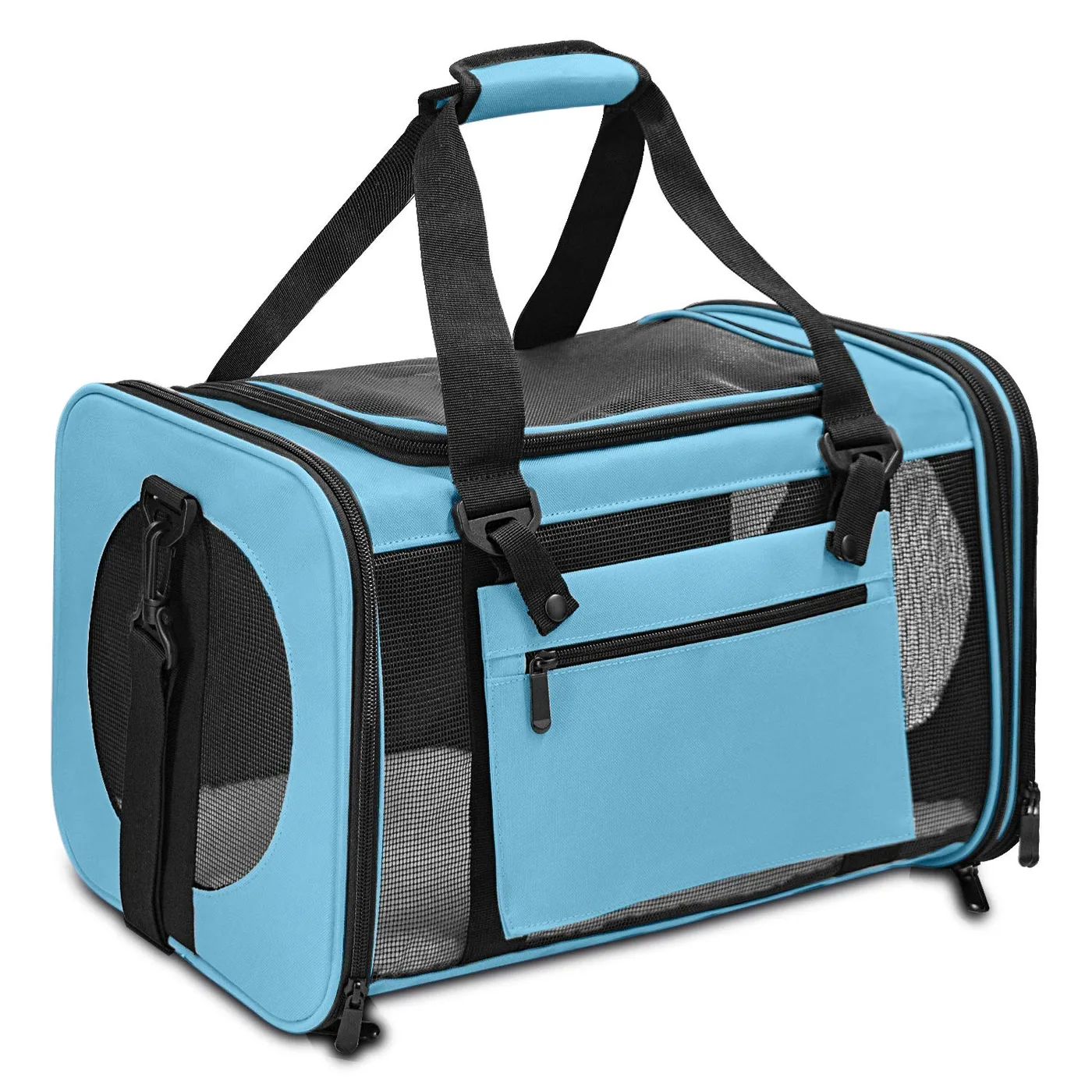
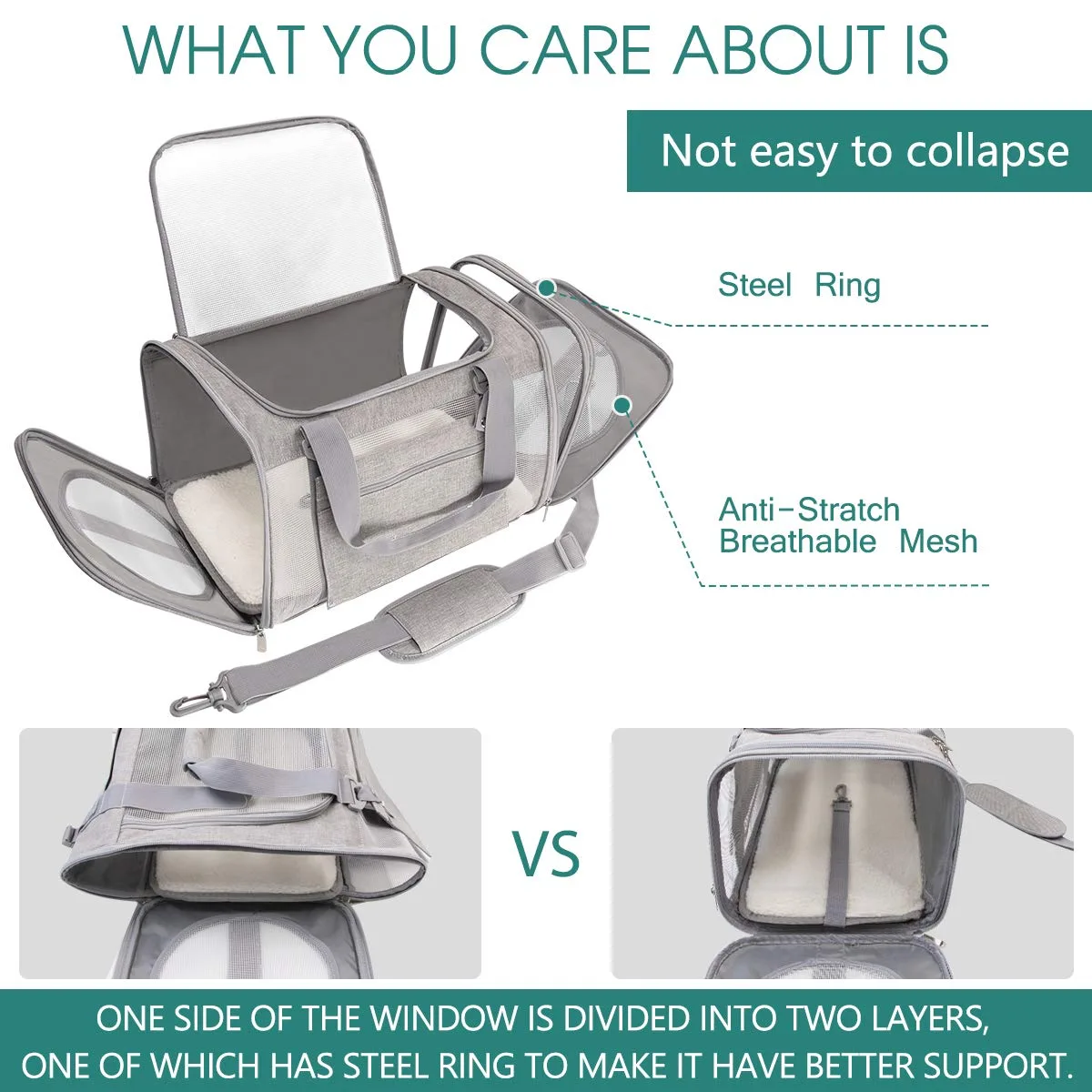
Four formats cover nearly all errands demand, and the differences between them are structural rather than cosmetic. Each has a different cost floor, a different packing volume and a different retail placement.
The open tote is the cheapest and the most price-sensitive. It has no closure, two handles, and usually a single main compartment. Its weakness is that it looks unfinished at higher price points, so it belongs at the entry of the range or in a promotional context. FOB typically runs USD 2.60-4.80 depending on fabric weight and handle construction.
The zip tote adds a closure and a lining, which lifts perceived quality substantially for a modest cost increase. The zip is also the component most likely to fail, so specification should call for a tested slider and a bound top edge. In practice the zip version outsells the open version at retail by a wide margin whenever the price gap is under about USD 3, which makes it the safer default for most programs. FOB is usually USD 4.20-7.40.
The foldable shopper is the format with the best freight economics. It packs flat, cubes out a container slowly, and is the natural choice for online sellers and for promotional programs where shipping cost dominates. The engineering requirement is a fold line that survives repeated folding without cracking, which is a fabric and coating decision rather than a sewing one. FOB is typically USD 3.40-6.20.
The structured box bag is the premium format. It holds its shape, photographs well, and supports a higher retail price, but it cubes out quickly and costs more to freight. It belongs in specialty and gift channels rather than in value retail. FOB usually falls at USD 6.80-9.80.
Choosing the format for the channel
A simple rule works: foldable and open totes for online and promotional programs, zip totes for pet specialty and mid-tier retail, and structured box bags for gift and boutique channels. Buyers who pick a structured bag for a value program usually discover the problem in the freight quote rather than in the product.
Decoration Methods and Their Cost and MOQ Consequences
Decoration is the single largest variable in an errands program, and it is also the one that most often surprises buyers late in the process. Each method carries its own setup cost, its own minimum quantity per design, and its own durability profile, and those three factors together determine which method suits a given order.
Screen printing is the default for simple one- and two-colour logos on polyester or canvas. Setup is cheap, per-unit cost is low, and durability is good. The constraint is colour count: each colour adds a screen and a pass, so a four-colour design can cost three times a one-colour design to print.
Heat transfer and digital printing suit photographic or multi-colour artwork. Setup is minimal, which makes short runs economical, but per-unit cost is higher and durability through washing is lower. For a product sold as a reusable shopper that will be washed, heat transfer is a compromise that should be acknowledged rather than ignored.
Woven labels and patches are the premium route. A woven label costs more per unit but adds perceived quality disproportionate to its cost and is more durable than any print. A patch or badge adds handling operations and therefore labour, and it is best reserved for the top of the range.
Embroidery sits between them. It looks premium and lasts well, but it is slow, it adds meaningfully to unit cost, and it works poorly on lightweight fabrics without a backing. For errands totes in the lower half of the price range it is usually the wrong choice economically, and buyers should also note that embroidery on a foldable shopper interferes with the fold line, which is a functional problem rather than only a cost one.
The MOQ consequence is important. Print setup and label production carry their own minimums, so a buyer wanting four designs in one 500-piece order is really asking for four 125-piece runs, which most decoration processes cannot support economically. The practical answer is to consolidate designs at launch and add design variety on reorder once volumes justify it, and to review design-level sell-through on the same cycle as stock-level sell-through, because a printed design that is not moving is harder to clear than an unprinted one.
Material Choices for a Bag That Is Carried Rather Than Worn
An errands bag is carried in the hand or over the shoulder for short periods, which means the material brief is about handle comfort, shape and cleanability rather than about abrasion or body contact. That is a different brief from the rest of the pet bag range and should be specified accordingly.
Fabric weight is the primary lever. A 6 to 10 oz canvas or a 300D to 420D polyester covers most of the category. Lighter fabrics fold better and cost less but look flimsy on a shelf; heavier fabrics look substantial but add cost and freight weight. For a product sold on appearance, erring slightly heavier is usually the better commercial decision.
Handles deserve specific attention because they are what the customer touches. Webbing handles are cheap and durable but feel utilitarian; padded or wrapped handles feel better and cost USD 0.30-0.80 more. Handle length should be specified for shoulder carry, not just hand carry, because that is how most shoppers use a tote.
Coatings and linings should match the intended use. A wipe-clean lining suits a bag that will carry pet supplies; an uncoated natural fabric suits a fashion-led product that will carry dry goods. Adding a coating to a canvas changes its hand-feel and its price, so the decision should be made deliberately rather than left to default.
Chemical compliance applies to all of it. OEKO-TEX certification on the fabric and on printed areas is the most efficient route through retailer requirements, and the EU substance framework is maintained by the European Chemicals Agency. Print pastes and coatings should be included in the certificate scope, because a certified fabric with an uncertified print does not satisfy a retailer's question.
Cost Bands and the Margin Math of an Impulse-Price Product
Impulse-price products fail on margin more often than they fail on quality. A tote retailing at USD 12.99 has to absorb product cost, freight, duty, packaging, marketplace or retail margin, and marketing, and what is left is frequently less than the buyer assumed when the product was selected.
Working backwards is the reliable method. Start from the retail price, subtract the channel's margin requirement, subtract landed freight and duty, subtract packaging, and see what is left for the product. On a USD 12.99 retail price with a 50 percent channel margin, roughly USD 3.20-3.80 is available for landed product cost including packaging in most markets. That immediately narrows the viable FOB range and tells the buyer which formats are realistic.
| Format | Fabric | FOB band | Packing volume | Suits channel |
|---|---|---|---|---|
| Open tote | 300D polyester | USD 2.60-4.80 | Low | Promotional, value |
| Zip tote | 8 oz canvas | USD 4.20-7.40 | Medium | Pet specialty, mid retail |
| Foldable shopper | 210D ripstop | USD 3.40-6.20 | Very low | Online, promotional |
| Structured box bag | 600D with board | USD 6.80-9.80 | High | Gift, boutique |
| Zip tote with woven label | 10 oz canvas | USD 5.60-8.90 | Medium | Specialty, own-brand |
Packaging is the line item most often underestimated at this price point. A hanging header card, a barcode label and a polybag can add USD 0.40-0.90 to a USD 4 product, which is a 10-20 percent cost increase on an item whose entire margin may be 25 percent. Buyers should decide packaging at quotation stage and price it as a product component rather than as an overhead.
Freight is the second underestimated item, and it interacts with format. A structured bag that cubes out quickly can cost two to three times as much per unit to ship as a foldable shopper of identical invoice value. In a category where the product itself may cost USD 4, that difference decides whether the program works.
Retail Channel Requirements: Display, Barcode and Store Policy
Errands totes are sold through channels with strict onboarding rules, and those rules are frequently the reason a shipment is delayed rather than any issue with the product. Understanding them before sampling avoids rework.
Mass and grocery channels require a scannable barcode in a specified position, a price ticket or integrated tag, and carton packing to a defined count and weight. They also commonly require packaging that can be placed directly on a shelf or a clip strip without additional handling. Failing any of these does not affect product quality but does prevent receipt at the distribution centre.
Pet specialty retailers are less rigid on packaging but more demanding on presentation. They want the product to look consistent across a display, which means print registration and colour consistency matter more than they would for an online-only program. Colour consistency across production batches should therefore be specified with a tolerance rather than left to a visual match.
Store policy is a separate consideration that buyers occasionally overlook. Some retailers restrict bags that could be confused with their own reusable shopping bags, and others require a declared reusable-bag composition. Confirming this before artwork is approved is far cheaper than reprinting a finished run.
Online channels have their own requirements, mainly around protective packing and the avoidance of excess packaging. A product destined for online fulfilment should be quoted in bulk-packed form rather than retail-carded, which reduces cost and avoids the need for a seller to unpack and repack. Where a buyer sells through both, the most efficient arrangement is to specify one product with two packing options at quotation stage rather than to create two SKUs later.
MOQ, Sampling and Short-Window Production Planning
Standard terms apply: MOQ 500 pieces per colorway, samples in 6-10 working days, bulk production in 35-50 days, AQL 2.5 inspection, T/T 30/70 and FOB Xiamen. For errands programs, two additional factors influence the calendar.
The first is decoration approval. Print and label artwork must be approved before bulk begins, and a change to artwork after production has started is expensive. The 6-10 working day sample window should therefore be used to approve both the physical product and a printed sample, because approving them separately adds a round.
The second is seasonality. Errands totes sell into spring and summer gifting windows and into back-to-season retail resets, so the production slot matters. The 35-50 day window plus transit means a buyer targeting an early-spring reset should be sampling well before the preceding winter, and the earlier the artwork is fixed, the more predictable the slot.
Capacity is rarely the limiting factor. The production network runs 7 lines with 149 sets of equipment and around 200,000 pieces monthly, so errands programs of 2,000-10,000 pieces are routine and can typically be consolidated with other categories in one container. The limiting factor is almost always the buyer's own approval chain.
Buyers running promotional programs with a fixed event date should build in a buffer. Promotional deadlines are immovable, and the usual causes of a missed date are artwork revision and packaging approval rather than production. Allocating two weeks of slack to those two steps is standard practice for experienced buyers.
Compliance and Testing for General-Purpose Pet Bags
General-purpose totes face fewer mandatory requirements than structured pet carriers, but retailer compliance questionnaires still ask a standard set of questions, and answering them late delays onboarding. The file should be requested at quotation stage.
Chemical compliance is the core. OEKO-TEX certification covering fabric, print and coatings answers most retailer questions in one document, and REACH coverage addresses the EU framework. Where a program sells in California, Prop 65 considerations apply to inks, coatings and hardware, and the relevant list is maintained by the California OEHHA. Reusable bag composition rules exist in some jurisdictions and should be confirmed per market.
Physical testing is usually limited to colour fastness to rubbing and washing, handle strength, and seam strength. Test methods for these are published by AATCC, and general product test methods by ASTM International. Handle strength in particular is worth testing on a defined cycle, because a handle that pulls away from the body is the most visible failure in this category.
Factory compliance is the remaining piece. BSCI and ISO 9001 coverage allows large retail buyers to approve the production base without commissioning their own audit, and independent verification is commonly arranged through SGS. Social compliance documentation is a standard requirement for grocery and mass channels and should be requested alongside the product quote.
AQL 2.5 Inspection Priorities for Decorated Bags
Decorated products have a defect profile that conventional bag inspection does not fully cover. A structurally perfect tote with a mis-registered print is unsaleable at retail, which means the inspection plan has to treat decoration as a product attribute rather than as a finishing touch.
The checklist should cover print registration against the approved artwork, colour match against the approved standard within an agreed tolerance, print adhesion by tape test, absence of ink smearing or bleeding, label placement and legibility, handle attachment strength at both roots, seam integrity at the base corners, zip operation where fitted, dimensional consistency within the shipment, and packaging accuracy including barcode placement and carton count.
Cosmetic standards should be set realistically. A low-price printed tote will never be perfect, and setting an unachievable visual standard leads to unnecessary rejection and dispute. The standard should instead define what is acceptable at a stated viewing distance, which is how retail customers actually judge the product.
AQL 2.5 provides the sampling basis, and buyers should agree in advance which defects are automatic rejection triggers. For errands programs, the usual answer is any barcode or labelling error and any print defect that changes the legibility of the design.
Finally, buyers should confirm the re-work remedy before production. Print defects cannot always be corrected, so agreeing whether a failed run is repaired, partially shipped or re-produced is a commercial decision that is much easier to settle at quotation stage than after the fact. Buyers should also decide who owns the print standard: a physical approved print sample held by both parties resolves colour disputes far faster than a digital file, because screens and presses do not reproduce colour identically and a digital reference is not an enforceable standard.
Where an Errands Line Fits in a Wider Pet Bag Program
An errands tote is rarely the product a buyer builds a business on, but it is often the product that makes a wider program work. It fills the entry of the price ladder, it occupies shelf space cheaply, and it gives a brand visible presence in a channel where higher-value products would not be tried.
The most effective use of the category is as a volume companion to higher-margin styles. Because errands totes share fabrics, webbing and trim with other pet bag categories, they can be produced in the same container, inspected under the same AQL 2.5 basis, and shipped with the same documentation. That shared overhead is what makes a low-unit-value product worth carrying.
The second effective use is as a promotional or gifting vehicle. A tote offered with purchase or included in a seasonal set costs little, carries the brand visibly, and generates repeat exposure in a way that a functional product stored in a cupboard does not.
The discipline to maintain is inventory. Because the unit cost is low, it is easy to over-order, and a slow-moving printed design is very hard to clear because it is specific to a brand and a season. Limiting design variety at launch and adding it on reorder is the single best protection against that outcome. Buyers extending a program typically move next into grocery pet bags and daily walk pet bags, which share fabric and trim and absorb leftover component inventory efficiently.
Order and quality terms
- MOQ 500 pieces per colourway; samples in 6-10 working days
- Bulk production 35-50 days after approval; AQL 2.5 inspection standard
- T/T 30/70 terms, FOB Xiamen, full document set per shipment
People Also Ask
How much does a wholesale pet shopping bag cost?
Errands totes typically price from USD 2.60 to USD 9.80 FOB Xiamen depending on format, fabric weight and decoration method. Packaging and freight consume a larger share of margin at this price point than in any other pet bag category.
What is the cheapest pet bag to manufacture?
An open tote in lightweight polyester is the lowest-cost format in the range, generally USD 2.60-4.80 FOB. A foldable shopper is close behind and ships more cheaply per unit.
Which printing method lasts longest on a tote bag?
Screen printing offers the best combination of durability and low cost on polyester and canvas. Woven labels last longer than any print but cost more per unit.
Do reusable pet shopping bags need certification?
No product certification is mandatory in most markets, but OEKO-TEX covering fabric and print and REACH coverage for the EU are the documents retailers request during onboarding.
What size should a pet errands tote be?
Most programs use a 35 x 38 cm body with a shoulder-length handle of roughly 60 cm. Handle length should be specified for shoulder carry because that is how most shoppers use a tote.
How do you price a low-cost tote for retail?
Work backwards from the retail price. With a 50 percent channel margin on a USD 12.99 price, roughly USD 3.20-3.80 remains for landed product and packaging cost.
Can pet shopping bags be used as promotional gifts?
Yes, and it is one of the strongest uses of the category. Foldable shoppers pack flat, ship cheaply and carry brand artwork visibly for a long period after the event.
Frequently Asked Questions
What is the MOQ for wholesale pet shopping bags?
MOQ is 500 pieces per colorway for standard errands styles. Print setup and label production carry their own minimums, so a single 500-piece order should normally carry one or two designs rather than four.
How long do samples take?
Samples are completed in 6-10 working days from specification sign-off. Both the physical product and a printed sample should be approved inside that window to avoid a second round.
What is the bulk production lead time?
Bulk production runs 35-50 days after sample approval. Promotional programs with a fixed event date should allow two weeks of slack for artwork and packaging approval on top of that window.
Which decoration method is best for a low-price tote?
Screen printing is usually the right choice for one- or two-colour designs on polyester or canvas. Heat transfer suits photographic artwork but is less durable through washing.
Can several designs be run in one 500-piece order?
Not economically in most cases. Decoration processes carry per-design setup minimums, so consolidating designs at launch and adding variety on reorder is the practical approach.
Which fabric weight suits an errands tote?
A 6 to 10 oz canvas or a 300D to 420D polyester covers most programs. Because these products sell on appearance, erring slightly heavier usually performs better at retail.
What inspection standard is used?
Pre-shipment inspection is at AQL 2.5. Print registration, colour match within tolerance and barcode or labelling accuracy should be treated as rejection-level defects.
Are reusable bag composition rules a concern?
Some jurisdictions regulate reusable shopping bag composition and labelling. Confirming the rule per market before artwork approval is far cheaper than reprinting a finished run.
Can errands totes be bulk-packed for online fulfilment?
Yes. Bulk packing is recommended for online channels because it avoids the cost of retail packaging that a seller would otherwise remove, and it reduces per-unit packing cost.
What certifications can be supplied?
OEKO-TEX certification covering fabric, print and coatings can be arranged, with REACH coverage for EU buyers. BSCI and ISO 9001 documentation covers the production base itself.
What are the payment and trade terms?
Standard terms are T/T with a 30 percent deposit and 70 percent balance before shipment, quoted FOB Xiamen. Other Incoterms can be quoted on request.
Can errands totes share a container with other pet bags?
Yes. They share fabrics, webbing and trim with other categories and are frequently consolidated to spread fixed freight and documentation costs across a larger shipment.
How should a first errands order be sized?
Conservatively. Because unit cost is low it is easy to over-order, and a slow-moving printed design is hard to clear. One or two designs at 500 pieces each is a safer opening than four.
Talk to QUANZHOU JUNYUAN BAGS about a wholesale pet bag order: MOQ 500 pieces per colourway, samples in 6-10 working days, bulk production in 35-50 days under AQL 2.5 inspection.
Get a free quote Request a sample