Pet Gift Bag: Wholesale Present Bag Specs, Cost & MOQ
A wholesale pet gift bag program starts at MOQ 500 pieces per colorway, with samples in 6-10 working days and bulk in 35-50 days. Reusable pet present bags price from USD 2.20 to USD 8.90 FOB Xiamen, and the seasonal calendar matters more than any other specification decision.
Pet gift bags are a calendar business. The product is simple and the unit value is low, but the commercial outcome is decided almost entirely by whether goods arrive before the seasonal selling window opens, which makes production planning more important here than specification.
Commercial terms follow the standard framework: MOQ 500 pieces per colorway, samples in 6-10 working days, bulk production in 35-50 days after sample approval, pre-shipment inspection at AQL 2.5, T/T 30/70 payment and FOB Xiamen quotation. Production runs through an SGS-verified production base with BSCI and ISO 9001 coverage, 7 lines, 149 sets of equipment and around 200,000 pieces of monthly capacity.
Two decisions shape the program. The first is the format, which sets unit cost and packing volume. The second is the decoration route, which sets both cost and the minimum quantity per design. Buyers who settle both before the seasonal slot is booked get a realistic quote and a realistic delivery date; those who settle them later usually get neither, because the calendar is the one input that cannot be recovered once it has been lost.
Choosing a pet carrier supplier or a pet bag supplier comes down to the same three checks: a named production base, a test file that matches the destination market, and a price list that states what is excluded. An own-brand launch usually fails on the second check rather than the first, because the file gets assembled after the order instead of before it.
What a Pet Gift Bag Is in Wholesale Terms
In wholesale terms, a pet gift bag is a reusable fabric bag sold for presentation rather than for carrying function. It exists to make a gift look considered, and it is bought in volume around seasonal peaks. That is a fundamentally different proposition from a functional pet bag, and it changes every specification priority, including the ones a buyer might otherwise treat as fixed: capacity is nearly irrelevant, durability matters only insofar as the bag survives being handed over, and the entire value of the product sits in how it looks at the moment it is given.
Appearance dominates. The customer is buying presentation, so print quality, colour accuracy, shape retention and finishing matter more than capacity or durability. A gift bag that carries a heavy load well but photographs poorly has failed at its actual job.
Unit cost discipline is absolute. Because the retail price is low and the product competes against paper alternatives, a difference of USD 0.30 in unit cost can decide whether a program is viable. Buyers should treat the specification as a cost exercise from the first line rather than designing first and costing afterwards, and should decide the target FOB before the fabric and decoration routes are chosen rather than discovering it once both are fixed.
The category also has a hard deadline that no other pet bag line has. A gift bag that arrives after the seasonal window has passed is worth a fraction of its cost, and there is no second chance within the same year. That deadline should drive the whole plan backwards, from the shelf date to the sampling date, and it should also shape the order structure: two smaller drops timed across the season usually outperform one large order, because they reduce markdown risk and improve cash efficiency even though the unit cost is marginally higher.
Finally, the reusable angle is the category's commercial advantage over disposable alternatives. A fabric gift bag that survives and gets reused carries the brand for longer than paper does, and that is the argument a buyer uses to justify a higher price against a disposable competitor, so the specification should protect it, because a bag too flimsy to be reused a second time undermines the only claim that supports its price.
Seasonal Demand and Working the Calendar Backwards
Seasonality defines this category. Demand concentrates around a small number of peaks, the selling windows are short, and the production slot is the scarce resource. Buyers who plan forward from sampling usually miss the window; those who plan backward from the shelf date usually make it.
The backward plan has four fixed blocks. Sampling takes 6-10 working days. Bulk production takes 35-50 days. Transit takes a further block depending on mode and destination. And buyer-side approvals take whatever the buyer allows them to take. Adding those together and subtracting from the required in-store date gives the latest possible start, and experienced buyers then add two to three weeks of slack on top.
The slot itself is the constraint that catches people out. Because seasonal gift programs across many categories share the same pre-peak production window, capacity in the months before a peak fills early. A buyer who requests a slot after artwork is approved may find the slot gone, which is why artwork should be frozen before the slot is requested rather than after.
Transit mode should be decided at the same time. Sea freight is economical but slow, and a missed sailing can consume the entire buffer. Air freight rescues a late program but destroys the margin on a low-unit-value product. Deciding the mode early, and booking against a realistic production date, is cheaper than deciding it under pressure, and it is worth confirming the transit mode in writing at quotation stage so that the production completion date is planned against a sailing rather than against an assumption.
Buyers running programs across several seasons should also note that the calendar repeats. Once a program has run once, the second year's plan can be built from the previous year's dates, which removes most of the uncertainty and allows an earlier slot request. That is the single strongest argument for keeping a proven design rather than restyling every year: the design carries forward its calendar as well as its artwork.
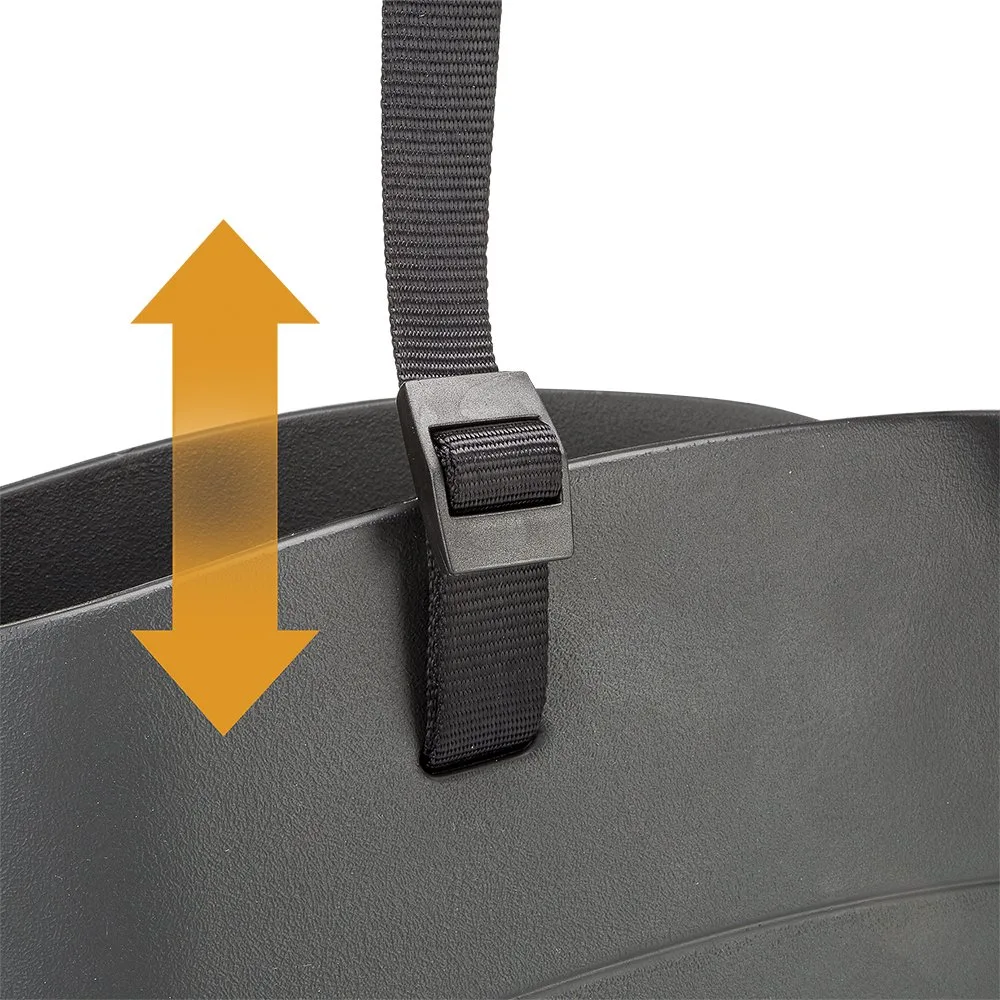
Formats: Gift Tote, Drawstring Bag, Box-Style and Wrap Alternative
Four formats cover the category, and the choice between them is mostly a decision about cost and packing volume rather than about aesthetics. Each has a distinct cost floor and a distinct set of channels it suits.
The gift tote is the standard format. It has two handles, a simple body and a large printable area. It is cheap to produce, it packs reasonably, and it reads clearly as a gift bag. Its limitation is that it looks utilitarian unless the print and the handle treatment are good, which is why handle choice matters more on this format than on any other in the category: a ribbon or tape handle costs very little and is the difference between a gift bag and a plain tote. FOB typically runs USD 2.20-4.60.
The drawstring bag is the cheapest and the most packable format. It uses less fabric, sews faster and folds flat, which gives it the best freight economics in the category. It is the natural choice for promotional programs, for gift-with-purchase and for subscription boxes. FOB is usually USD 1.80-3.60 depending on fabric and cord specification.
The box-style bag is the premium format. A stiffened structure holds a squared shape, photographs well and supports a materially higher retail price, at the cost of higher unit price and significantly worse packing volume. It suits boutique and department channels where the presentation justifies the freight. FOB is typically USD 4.80-8.90.
The wrap alternative is the niche format: a fabric wrap or furoshiki-style square sold as a reusable alternative to paper. It has the lowest material cost and the smallest packed volume, and it appeals to a sustainability-positioned buyer. Its limitation is that it requires customer education, so it sells best where the brand already carries that message, and it should be supported by packaging that shows the wrapping method rather than by a photograph of the folded square alone.
Matching format to price point
A useful rule: below USD 6 retail, only the drawstring and the gift tote are viable; between USD 6 and USD 12 the gift tote and a lightweight box style work; above USD 12 the box style earns its freight. Choosing a format outside its viable retail band is the most common reason a seasonal program underperforms.
Decoration and Finishing at Gift Price Points
Decoration determines whether a gift bag reads as considered or as cheap, and at these price points the margin for error is small. Three routes cover the category, and the choice depends on design complexity and order size.
Screen printing is the workhorse. It suits one- to three-colour designs, it is cheap per unit, and it is durable enough for a reusable product. Setup is modest, so it works at 500 pieces. The constraint is colour count and registration: a photographic design will not reproduce well and a fine gradient will not hold.
Heat transfer suits full-colour artwork and photographic designs. Setup is minimal, which makes it the only realistic route for short runs of complex designs, and it is widely used for seasonal artwork that changes every year. The trade-off is durability and hand-feel: a large transfer panel can stiffen a lightweight fabric and will crack sooner than a print.
Woven labels, tags and applied trim are the finishing route, and they are the most effective way to lift a cheap bag. A woven label on a drawstring bag costs a small amount and changes the perceived quality substantially. Ribbon cords, printed tape and contrast stitching are similarly cheap upgrades with visible effect, and they are usually the best place to spend the last increment of a tight budget because they read as finish rather than as material cost.
Registration and colour control matter more here than in any other category, because the product is judged entirely on appearance and it is displayed alongside competitors. A physical approved print standard, held by both parties, is the only reliable reference; a digital file is not enforceable across different presses, and a seasonal program has no room in the calendar for a dispute about whether a shade is acceptable.
Chemical compliance applies to prints as well as fabrics. OEKO-TEX certification should be requested with the printed construction inside its scope, and the EU substance framework for inks and coatings is maintained by the European Chemicals Agency.
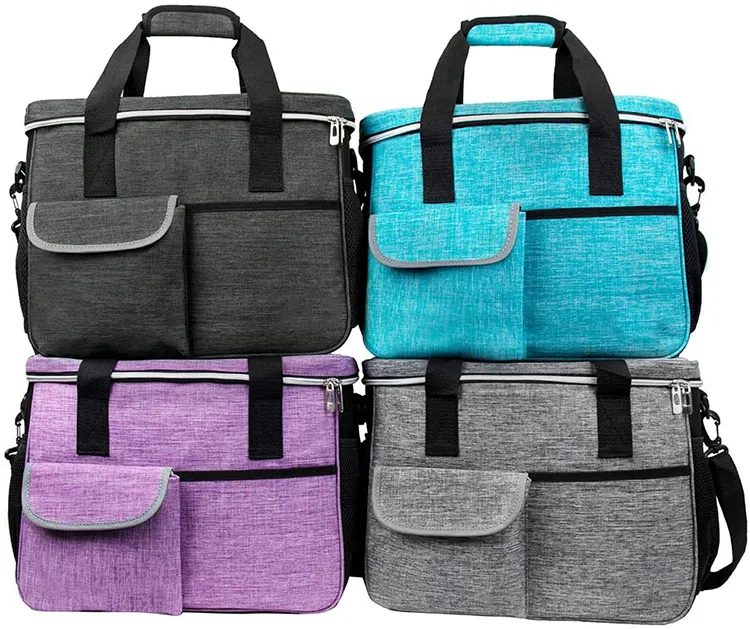
Packaging as the Product: Retail-Ready Requirements
For a gift bag, packaging is not a shipping necessity; it is part of what the customer is buying. A seasonal product has to be ready to place on a shelf the moment it arrives, which imposes requirements that do not apply elsewhere in the pet bag range.
The standard requirements are: a scannable barcode in a defined position, a visible size and identity statement, country-of-origin marking, and a pack format suited to the display method. Some channels require a shelf-ready tray or a counter display unit, and those should be quoted as separate items because they are manufactured components with their own cost, their own minimum quantity and their own production time, all of which fall outside the product lead time a buyer may have assumed.
Seasonal aisle display is a specific consideration. Gift products are frequently merchandised in temporary aisle fixtures where packaging has to work without shelving. That favours formats that stack, hang or stand on their own rather than formats that need a shelf edge.
Counter and checkout placement is the other common route, and it imposes a size constraint: the product has to fit a defined footprint near the till. Buyers should confirm that footprint with the channel before specifying dimensions, because a product that is slightly too large for the fixture will not be listed regardless of its merits, and because the fixture dimensions are fixed by the channel rather than negotiable by the supplier, so they should be the starting point for the size specification rather than a constraint discovered at delivery.
Online channels need the opposite: protective packing that prevents creasing, and ideally a format that does not require the seller to repack. Specifying bulk packing for the online portion of a program is straightforward when it is planned at quotation stage and awkward when added later, and it also reduces the damage rate, because retail-ready formats designed for shelf presentation are frequently less protective than a simple bulk pack.
Cost Bands and Margin Structure for Seasonal Items
A mid-spec gift tote at USD 3.60 FOB typically breaks down as follows: fabric USD 1.10, handles or cord USD 0.45, print USD 0.55, label and trim USD 0.30, cutting and sewing labor USD 0.75, QA and packing USD 0.20, and factory overhead and margin USD 0.25.
The striking feature is the proportion consumed by finishing and labour relative to the total. On a low-value product, a USD 0.20 change in print cost is roughly 6 percent of the unit cost, which is a larger relative effect than a similar change would have anywhere else in the range. That means small specification decisions have outsized commercial consequences.
| Format | Fabric | Decoration | FOB band | Retail band |
|---|---|---|---|---|
| Drawstring bag | 210D polyester | One-colour print | USD 1.80-3.60 | USD 5-9 |
| Gift tote | 300D polyester | Two-colour print | USD 2.20-4.60 | USD 7-14 |
| Gift tote with label | 8 oz canvas | Woven label | USD 3.40-6.20 | USD 10-18 |
| Box-style bag | Stiffened 600D | Print plus trim | USD 4.80-8.90 | USD 15-28 |
| Fabric wrap | Lightweight woven | All-over print | USD 1.60-3.20 | USD 6-12 |
Freight is the second margin factor. Gift bags are light but they are frequently shipped assembled, and a box-style bag cubes out quickly. Buyers should model landed cost per unit before finalising the format, because a cheaper unit in a bulkier carton often costs more delivered.
Markdown risk is the third factor and it is specific to seasonal product. A realistic plan assumes that some portion of the order will not sell at full price, and the margin should be set so that a partial markdown still leaves the program profitable. Buyers who price on a full sell-through assumption are the ones who lose money in this category. A markdown allowance should appear as a line in the margin calculation rather than as an unpleasant surprise at the end of the season, and the allowance should be larger for a first season on a new design than for a proven one.
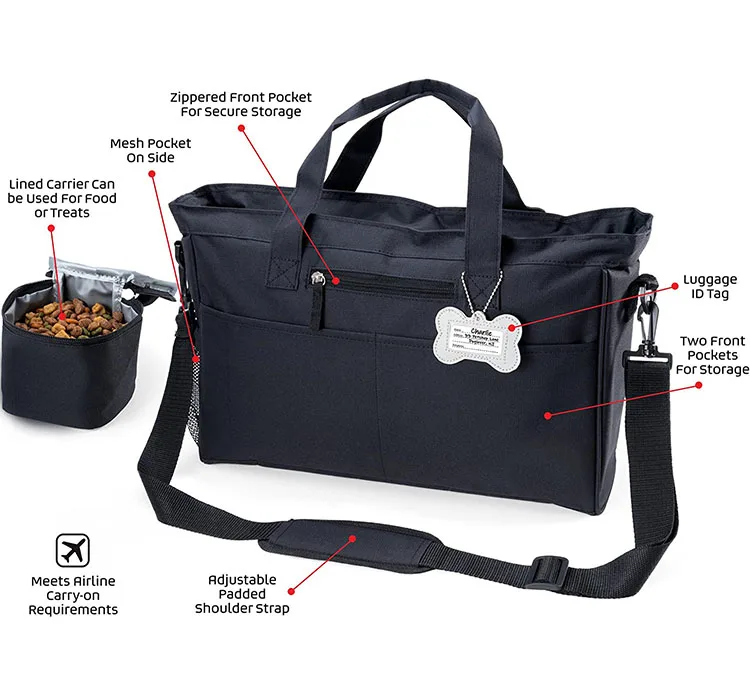
MOQ, Design Minimums and Consolidating Seasonal Orders
Standard terms apply: MOQ 500 pieces per colorway, samples in 6-10 working days, bulk production in 35-50 days, AQL 2.5 inspection, T/T 30/70 and FOB Xiamen. The design minimum is the constraint that most affects a seasonal program.
Because decoration carries its own setup and minimum, a buyer wanting six designs is really asking for six short runs, which is rarely economical at a 500-piece total. The practical structure is one or two designs per 500-piece colorway at launch, with design variety added in later drops once the season's volume is known.
Consolidation is the main lever available. Combining a gift bag order with other categories in the same container spreads freight and documentation across more units, and because seasonal product ships early, it can often share space with a buyer's core replenishment order for the following season.
Sampling should be used to approve print as well as product. A printed sample on the production fabric, approved physically, prevents the most common seasonal failure: a design that looks right on screen and wrong on cloth. Requesting that sample inside the 6-10 working day window costs nothing.
Buyers should also plan the drop structure deliberately. Rather than one large order, two smaller drops timed across the season reduces markdown risk and improves cash efficiency, provided the second drop's production slot is booked at the same time as the first, because a second drop requested after the season has started will almost always arrive after the peak rather than before it.
Compliance and Safety Considerations for Seasonal Gift Products
Seasonal gift products attract compliance attention disproportionate to their value, largely because they are sold in general retail channels alongside toys and children's items, and because they are frequently purchased for children to give. The file should be prepared accordingly.
Chemical compliance is the first requirement and should cover fabric, prints, coatings, cords and trim. OEKO-TEX certification across the finished construction is the efficient route, and REACH coverage addresses the EU framework. In the United States, seasonal products sold through general retail are commonly assessed against expectations administered by the US Consumer Product Safety Commission, and buyers should confirm with the channel whether that scope applies.
Cord and drawstring safety is a specific consideration for drawstring formats. Length, construction and any cord lock are assessed in several markets, and the requirement differs between children's and general products. Buyers should raise this at specification stage because it affects the design.
California adds Prop 65, with the substance list maintained by the California OEHHA. Because the decision affects labelling and therefore artwork, it should be settled at quotation stage rather than after production.
Factory compliance completes the file. BSCI and ISO 9001 coverage allows large retail buyers to approve the production base without commissioning their own audit, and the framework is summarised by ISO. Independent verification is commonly arranged through SGS.
Inspection priorities and AQL 2.5
The checklist should cover print registration and colour against the approved physical standard, print adhesion, cord length and lock function on drawstring formats, handle attachment strength, dimensional consistency, barcode placement and legibility, and carton count accuracy. Because the product is judged entirely on appearance, print defects should be treated as critical rather than cosmetic.
Post-Season Review and Planning the Next Cycle
The end of a season is the most valuable planning moment in this category, and it is the one most buyers skip. A short review immediately after the peak produces information that is still accurate and directly usable for the next cycle, whereas a review conducted months later relies on memory.
The review should capture three things. Which designs sold through and which did not, by quantity rather than by impression. What the actual landed cost was, including freight and any markdown, compared with the plan. And which steps in the calendar consumed the most time, because that is where the next year's buffer should be added.
Design performance should drive the next season's assortment directly. A design that sold through in six weeks should return; one that required a markdown should not. Because the decoration setup is a fixed cost, returning a proven design is also cheaper than developing a new one.
Leftover stock should be dealt with decisively. Seasonal gift product loses value quickly, and holding it for a full year ties up cash and warehouse space for an item whose design may no longer be current. Clearing it promptly and reinvesting in the next season is usually the better outcome, particularly where the design is specific to a season, because a returned design that no longer matches the current palette is worth less than the cash it releases.
Natural extensions exist within the range: pet gift set bundles use the same packaging approach at a higher price point, and errands pet bags share fabric and print processes, so a consolidated reorder across both improves unit cost and container utilisation.
Order and quality terms
- MOQ 500 pieces per colourway; samples in 6-10 working days
- Bulk production 35-50 days after approval; AQL 2.5 inspection standard
- T/T 30/70 terms, FOB Xiamen, full document set per shipment
People Also Ask
How much does a wholesale pet gift bag cost?
Reusable pet gift bags generally price from USD 2.20 to USD 8.90 FOB Xiamen depending on format and decoration. On a low-value product, small specification changes have outsized effects on cost.
What sizes do pet gift bags come in?
Most programs cover three sizes: small for accessories, medium for toys and treats, and large for apparel or bundled gifts. Size ranges should be confirmed against the retail fixture footprint.
When should a seasonal gift bag order be placed?
Work backwards from the in-store date. Sampling 6-10 working days, production 35-50 days, plus transit and approvals, and then add two to three weeks of slack.
Are fabric gift bags better than paper?
They cost more but are reused, which extends brand exposure well beyond the gifting occasion. That reusability is the argument for the higher price.
What is the best printing method for a gift bag?
Screen printing for one- to three-colour designs at 500 pieces and above; heat transfer for photographic artwork or short runs. Woven labels are the cheapest perceived-quality upgrade.
Do gift bags need safety certification?
No product-specific certification is mandatory in most markets, but OEKO-TEX covering the printed construction plus cord assessment on drawstring formats are what general retail buyers ask for.
How much seasonal stock should be ordered?
Conservatively. A realistic plan assumes some portion will not sell at full price, and the margin should be set so a partial markdown still leaves the program profitable.
Frequently Asked Questions
What is the MOQ for wholesale pet gift bags?
MOQ is 500 pieces per colorway. Decoration carries its own setup and minimum, so one or two designs per colorway is the practical structure at launch, with design variety added on later drops.
How long do samples take?
Samples are completed in 6-10 working days from specification sign-off. A printed sample on production fabric should be approved inside that window, because a design that looks right on screen can look wrong on cloth.
What is the bulk production lead time?
Bulk production runs 35-50 days after sample approval. Buyers should work backwards from the required in-store date and add two to three weeks of slack on top of sampling, production and transit.
Which format is cheapest?
The drawstring bag is the cheapest and the most packable format, typically USD 1.80-3.60 FOB. The fabric wrap is comparable in cost but requires more customer education.
Can several designs be run in one order?
Not economically in most cases. Decoration setup and minimums mean a 500-piece order should normally carry one or two designs, with additional designs added once volume is known.
How should colour and print be approved?
Against a physical approved print standard on production fabric, held by both parties. A digital file is not an enforceable reference across different presses.
Are drawstring cords subject to safety rules?
Cord length, construction and cord locks are assessed in several markets, and requirements differ between children's and general products. This should be raised at specification stage because it affects the design.
What inspection basis is used?
Pre-shipment inspection is at AQL 2.5, with print defects treated as critical rather than cosmetic, because the product is judged entirely on appearance.
Can gift bags be bulk-packed for online channels?
Yes. Protective packing that prevents creasing is recommended, and specifying bulk packing at quotation stage avoids the cost of retail packaging an online seller would remove.
Is a shelf-ready display available?
Yes, tray and counter display units can be supplied, but they are manufactured components with their own cost and should be quoted separately from the product.
What certifications can be supplied?
OEKO-TEX certification covering fabric, prints, coatings, cords and trim can be arranged, with REACH coverage for EU buyers and BSCI plus ISO 9001 documentation for the production base.
What are the payment and trade terms?
Standard terms are T/T with a 30 percent deposit and 70 percent balance before shipment, quoted FOB Xiamen. Other Incoterms can be quoted on request.
How should leftover seasonal stock be handled?
Cleared promptly rather than held. Seasonal gift product loses value quickly and holding it for a year ties up cash and space for a design that may no longer be current.
Can gift bags share a container with other pet bags?
Yes, and it is recommended. Seasonal product ships early and can often share space with a core replenishment order, spreading freight and documentation across more units.
Talk to QUANZHOU JUNYUAN BAGS about a wholesale pet bag order: MOQ 500 pieces per colourway, samples in 6-10 working days, bulk production in 35-50 days under AQL 2.5 inspection.
Get a free quote Request a sample