RCM Mark Pet Bags: Australian Compliance Rules
The RCM mark is not a certificate and most wholesale pet bags cannot carry it at all, because it applies to electrical and radio products placed on the Australian market by a locally registered responsible supplier. A conventional fabric pet bag is evidenced by a performance and chemical file instead. Adding a powered component moves a SKU into the electrical regime, typically costing AUD 1,800-5,600 and 3-6 weeks before bulk production can be booked.
Australian compliance punishes imprecision more than most markets, because the rules distinguish between three things that buyers habitually merge: the mark itself, the registration behind it, and the evidence folder that supports it. A supply programme can be fully lawful with none of these, partly engaged with one of them, or fully engaged with three - and the answer differs SKU by SKU inside a single assortment. This page separates them, then shows how a pet bag programme is structured so that the distinction is decided at quotation rather than discovered at the port.
Every figure is keyed to how orders actually run with us. Programmes start at MOQ 500 pieces per colourway, samples take 6-10 working days from a confirmed tech pack, bulk production takes 35-50 days after sample approval, and pre-shipment inspection runs to AQL 2.5 under T/T 30/70 with shipment FOB Xiamen. Registration work, where relevant, runs ahead of all of it and is planned backwards from the shelf date.
Pet bag sample cost is normally credited against the first production order, which makes Material & Technology review the expensive step rather than the sampling itself. Pet carrier sample cost rises with hardware changes, so lock the hardware before the second sample round.
Three Things Buyers Merge Into One
Australian product compliance has three layers that most conversations collapse into a single word. The first is the mark: a visual device applied when a product is in scope. The second is the registration: the act of recording a responsible supplier against a defined set of goods. The third is the evidence: the technical file that demonstrates conformity and could be produced if challenged.
They are separable. A supplier can hold a registration covering a category in which it sells nothing yet. A product can be fully covered by valid evidence yet wrong-marked. And a folder can exist without any obligation to use the mark at all - which is precisely the position of most sewn pet goods. Treating them separately converts a confusing question into three answerable ones.
The confusion has a commercial cost. Buyers who ask for an RCM certificate on a fabric bag receive one of two bad answers: either a supplier promises something meaningless, or the conversation stalls while nobody wants to say no. Buyers who ask instead which layer applies to which SKU get a workable plan in a day.
So the first working document in any Australian programme is a scope table: one row per SKU, three columns, yes or no with a note. It takes an hour to produce and it prevents the two most expensive outcomes - unnecessary testing, and shipping goods whose compliance position nobody can state on request.
Where a Pet Bag Actually Sits
Australia regulates electrical safety through a national scheme organised by states, radio and electromagnetic performance through the communications regulator, and general consumer goods through fair trading law that imposes no pre-approval at all. A fabric pet bag falls into the last group: no pre-approval is required, and no compliance mark belongs on it.
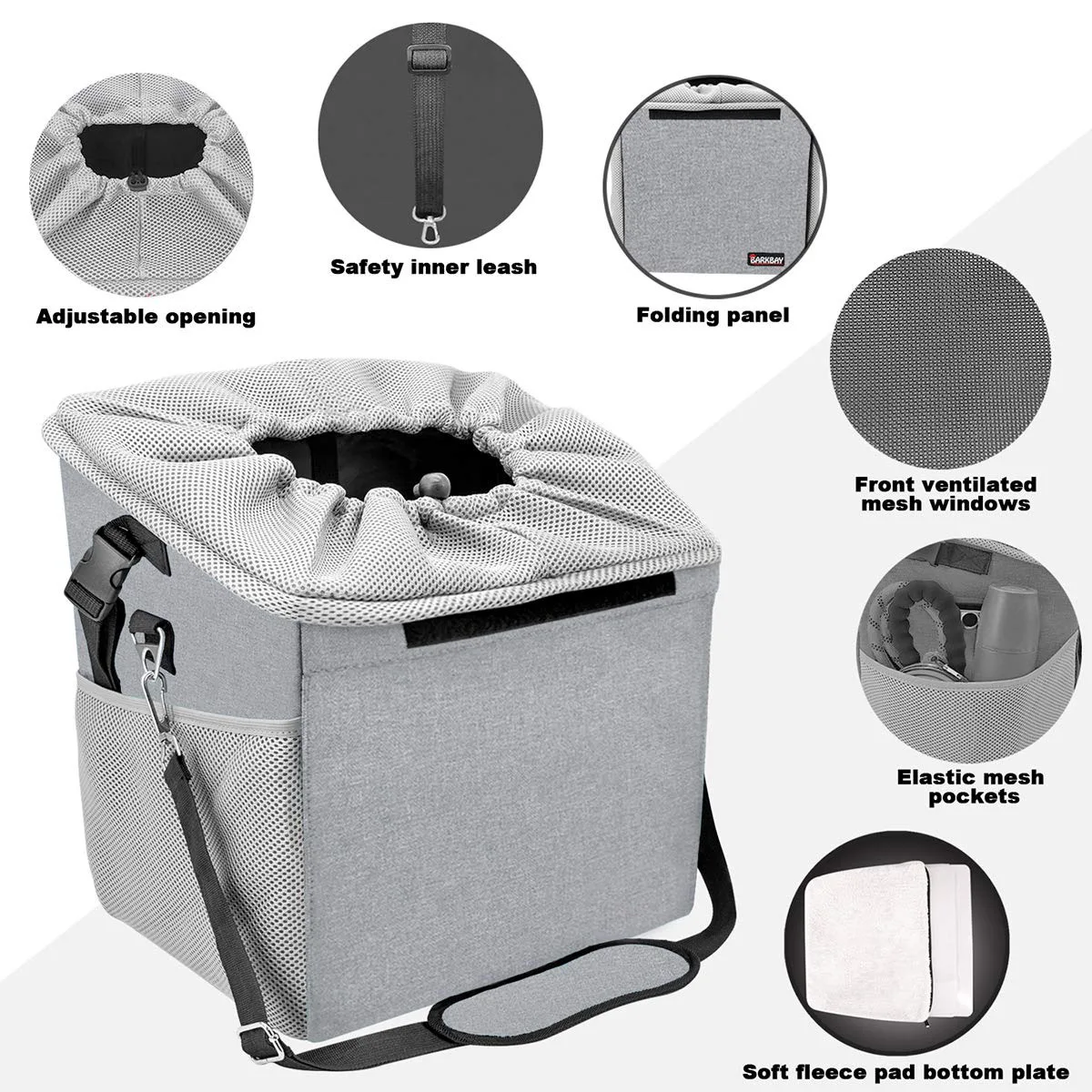
The boundary is crossed by components, exactly as in other markets. Three SKU types typically move into regulated territory: bags with a mains-charged power path, bags with a driver or controller for lighting or ventilation, and bags carrying a radio transmitter of any kind. Two further scenarios are boundary cases worth deciding deliberately: an accessory sold in the same carton but not fitted to the bag, and a bag marketed alongside any powered item.
The practical implication for a buying team is that classification is a design-time decision with a paper trail. Write the decision once, in the tech pack, with the reasoning: which component is present, why it does or does not engage the electrical safety scheme or the communications rules, and what the retail bundle contains at the point of sale. Then attach the component list that supports it. A file assembled this way can be handed to any Australian party - importer, distributor or nominee - and understood without a meeting.
Buyers should also keep in mind the general safety obligation that applies to consumer goods whether or not a scheme covers them. It does not require testing, but it does require that a supplier can show reasonable care - which in practice means having performance data. That is why the evidence folder matters even for completely unregulated SKUs, and why the cheapest Australian programme is not a completely undocumented one.
- Unregulated soft goods. No mark, no registration, but a performance and chemical file should exist.
- Mains-powered components. Electrical safety regime applies, with a local responsible party.
- Radio transmitters. Additional electromagnetic performance obligations attach to the finished unit.
- Bundled but unfitted accessories. Decide and document; the answer changes with the retail pack.
The allocation of responsibility between the parties in these arrangements is governed by trade terms, for which the International Chamber of Commerce rule sets are the accepted reference. Agreeing the rule set at quotation stage prevents the familiar argument about who held the risk at the moment a question arose.
The Local Party Requirement, Structured Commercially
Where a regulated layer does apply, Australian rules expect an entity with an Australian address to stand behind the product. An offshore workshop cannot simply register itself. This is a structural fact, not a paperwork obstacle, and it shapes how the deal should be built rather than merely how forms are filled.
Three commercial structures cover practically every programme. The first is direct import: the Australian buyer imports and acts as the responsible party, which gives them control and gives them the associated duty. The second is distributor-led: the local distributor takes that role as part of the listing deal, which is normal in grocery and pet specialty channels and leaves the wholesale supplier supplying evidence rather than registrations. The third is agent-led, used by marketplace sellers without a local entity, where a nominee service fills the role for a fee and for a defined scope.
| Structure | Who registers | Typical annual cost (AUD) | Control | Best for |
|---|---|---|---|---|
| Direct import | The importing buyer | 300 - 900 plus listing records | High | Established importers with a compliance function |
| Distributor-led | The local distributor | Normally absorbed in margin | Shared | Chain and specialty listings |
| Nominee agent | A contracted service party | 600 - 2,400 per scope | Low | Marketplace sellers and test launches |
Whichever structure is chosen, three clauses should be settled at the same time. First, who can instruct testing and who pays for it. Second, what happens if the local party changes - a distributor switch mid-season is common in this region and should not strand the file. Third, what happens to the evidence if the relationship ends: reports bought and paid for should be assignable, so that a new partner can be appointed without re-testing an unchanged product. These are fifteen minutes of conversation before first sampling and several weeks of dispute after a listing has already been promised.
Each structure carries a different risk allocation, and the choice should be written into the distribution agreement rather than assumed. The common failure pattern is a marketplace seller discovering that nobody downstream is willing to act as the local party, which stalls the listing while a solution is found - usually an expensive expedited one. Deciding this before sampling costs nothing; deciding it after production costs the season.
The Evidence Folder Australian Importers Accept
Whether or not the mark applies, the practical admission ticket to an Australian listing is a technical folder, because major retailers apply their own standards on top of anything the law requires. Its contents are not exotic; what defeats buyers is usually its freshness and its linkage to what actually shipped.
Chemical evidence must reference the dye lot and coating batch actually used. Physical evidence must reference an approved production sample rather than a prototype from an earlier iteration. Marking evidence must correspond to the retail unit as packed, including any distributor contact details added locally. Each of these is obvious when written down and each is routinely breached because the folder was assembled from a previous season's file.
Three habits make the difference. Store reports against components rather than SKUs, so a shared fabric's evidence is reused instantly. Date-stamp everything against a production order number, so linkage is provable in seconds. And keep one photographic record per shipment of every marking position, because disputes in retail are about what the shopper saw, not what a laboratory measured.
The folder should also contain a short written statement of position: which regulatory layer each SKU engages, why, and who the responsible party is for that layer. It is half a page, it is the first thing an Australian sourcing partner asks for, and it converts a conversation about a mark into a conversation about a plan. Programmes that can produce it are onboarded faster, even when nothing in the assortment is formally regulated.
Two further items are worth adding because they are cheap now and expensive later. The first is a signed change-control list, classifying substitutions by whether they trigger new evidence - the difference between changing a webbing colour and changing a hardware supplier is enormous, and writing it down prevents both over-testing and under-testing. The second is a single point of contact on each side who owns the folder, because unowned documents decay faster than any chemical test expires.
Independent test data from recognised third parties such as SGS carries weight here, as does method discipline framed by ISO 9001 quality management principles. Agreeing the method before testing avoids the situation where two competent laboratories produce two different verdicts.

What to Test on a Fabric Pet Bag Anyway
Voluntary testing is not charity; it is evidence of reasonable care, and it is also how field failures are prevented. For a pet bag, the tests that earn their cost are the ones tied to the failure modes that generate returns, and these are remarkably consistent across markets.
Strap and handle assemblies are first: cyclic loading at a stated weight, then a static hold, then inspection for stitch migration and webbing slip. Zippers and buckles come second, because they generate more warranty claims than any other component at this price point. Third is colour transfer, especially dark shells against light linings and against pet fur, because the complaint is consumer-visible even when the bag is functionally sound.
| Test | Why it earns its cost | Typical cadence | Common failure |
|---|---|---|---|
| Strap cyclic load | Highest-frequency field failure | Per platform, per structural change | Stitch migration at the bar-tack |
| Zipper and buckle cycles | Highest warranty claim rate | Per hardware batch | Slider wear and puller detachment |
| Colour fastness to rubbing | Visible to consumers immediately | Per dye lot | Dark shell transfer onto lining |
| Restricted substances screen | Retailer onboarding requirement | Per dye lot, 12 months maximum | Print paste or coating exceedance |
| Seam strength | Structural warranty defence | Per platform | Undersized stitch density at curves |
| Dimensional stability | Retail presentation and fit claims | Per fabric | Shrinkage after first laundering |
Two additions are worth considering where the bag is sold alongside cleanliness claims. Odour retention testing on linings helps defend repeated-use positioning, because pet bedding and transport linings are washed far more often than fashion goods and the complaint rate rises accordingly. Coating hydrolysis resistance matters where a TPU laminate is used, because degraded coatings flake visibly and are rarely covered once a season of use has passed.
Cost control then depends on cadence discipline rather than on cutting the panel. Test per platform and per material change rather than per colourway, share results across all markets instead of re-running them per destination, and concentrate spend on the three lines that actually drive returns. A programme that does this routinely spends less on compliance than a less rigorous competitor spends on replacements.
The cost of this panel is modest relative to a wholesale price because it is largely fixed and shared across a family of SKUs on one platform. Run it once per platform rather than per colourway, and the per-unit figure becomes trivial - typically well under a tenth of a gram of fabric saved in a value-engineering exercise.
Labelling, Traceability and the Shelf Audit
Australian retail audits are shelf-level rather than border-level, which means the details that matter are ones a shopper can read. Country of origin claims, fibre composition, care information and any performance claim made on the hang tag all have to be supportable, and the burden of support sits with whoever placed the goods on the shelf.
Traceability is the recurring weak point. A shipment identified only by carton cannot answer a targeted question about one production day, and a retailer who cannot identify affected units will often withdraw the whole line rather than isolate a batch. Unit-level identification therefore has commercial value beyond compliance: it converts a catastrophic withdrawal into a contained one.
Claims deserve particular care because Australian consumer law is strict about them and because marketing teams write them without consulting anyone else. Water resistant, chew resistant and machine washable are three claims routinely printed on pet bag hang tags without any test behind them. Either fund the test or soften the wording; the second option is free and removes nearly all of the exposure.
Five Misconceptions That Distort an Australian Quote
First: that the mark is required to sell anything. It is not; it applies within defined scopes. Buyers who insist on it for fabric goods pay for something with no legal effect, and often receive a document that does not exist in reality.
Second: that certification is transferable between unrelated sellers. It is not. Each party's obligations are their own, and a predecessor's file does not cover a new importer - although the underlying test reports usually can be reused if ownership was negotiated.
Third: that one test report covers all future production. Evidence is attached to lots, materials and configurations, so a fabric substitution or a new hardware batch restarts part of the cycle. This is why change-control lists matter more than any other single document.
Fourth: that air freight solves a compliance delay. It does not; airborne goods are still subject to the same evidentiary questions, and paying premium freight to arrive at the same blocked outcome is the most expensive mistake in this category.
Fifth: that Australian requirements are harsher or softer than European or North American ones. They are simply different in structure, and applying one market's assumptions to another is how unnecessary cost enters a quotation. The cheapest way to handle all of them is one panel built to the strictest applicable method rather than three separate cycles., and the cheapest way to handle all of them is one panel built to the strictest applicable method rather than three separate cycles. The WTO materials on trade and market access help frame why these differences arise and persist.
Cost Behaviour Across the Volume Curve
Compliance cost is dominated by fixed project work, which produces a steep curve at low volumes and a shallow one above roughly 2,000 units. Understanding the shape helps a buyer decide what to launch, in what order, and at what quantity.
At 500 units, a full panel plus any registration work can add meaningfully to landed cost - often enough to erase the margin difference between a promotional and a standard price point. At 2,000 units the same work typically adds a figure that sits comfortably inside normal price movement. At 5,000 units it is noise.
This has two practical consequences. First, do not launch a regulated SKU at minimum quantity; launch it once the platform has volume behind it. Second, where a programme genuinely must start small, start with unregulated variants and carry the regulated version in the second cycle. In short, compliance behaves like tooling: it rewards volume, it rewards standardisation, and it punishes bespoke small runs more than any other line in the costing.
Buyers can see how this interacts with unit economics in our notes on price point architecture and on margin analysis.
Sequencing an Australian Season From the Shelf Date Backwards
Plan the season backwards and the schedule stops being a source of anxiety. Start from the date goods must be available on shelf, subtract local receiving and distribution time, subtract sea transit and port clearance, subtract the 35-50 day bulk production window, subtract the 6-10 working day sampling cycle, and whatever remains is the date by which the specification and any registration decisions must be settled.
In most cases that leaves more time than buyers expect, which is precisely the point: the schedule fails not because there is too little time but because decisions are made too late. The three decisions that must be earliest are the local-party structure, the component list, and the marking artwork - and none of them can be made during production.
Two buffers deserve building in because experience shows they are used more often than not. The first sits between sample approval and production start: hold five working days for late artwork changes driven by a retailer's compliance team, which almost always arrives after the first physical sample is reviewed. The second sits after production and before vessel loading: hold time for any liquidation check requested by the local party. Both buffers are free if unused and extremely expensive if omitted.
Australian seasons also invert European assumptions, and mistiming is a common source of dead stock. Christmas and summer outdoor ranges must be available well before the northern hemisphere equivalents would suggest, which means a production slot that feels early is usually correct. Agreeing these dates before tooling rather than after the first shipment is what separates a programme with one good season from one with five.
Working terms on Australian-bound programmes run exactly as elsewhere: MOQ 500 pieces per colourway with size splits counted toward the threshold, samples in 6-10 working days, bulk production in 35-50 days, inspection to AQL 2.5 at which the buyer or a nominated agency may attend, T/T 30/70 terms and shipment FOB Xiamen. Our production team assembles the evidence folder alongside the goods so that it travels with the shipment rather than following it.
For adjacent reading, see our pages on Australian standards evidence, import licensing questions and HS code classification.
Why brands source here
- Pet bag programmes run since 2014; founding team in sewn goods since 2004
- SGS-verified production floor of 4,950 m² with 137 workers across 7 lines
- Monthly capacity of 200,000 units, audited to BSCI and ISO 9001
People Also Ask
What does the mark actually stand for?
It signals that the responsible supplier has met the obligations attaching to that product type. It is a consequence of conformity rather than evidence of it, which is why asking for a certificate of the mark misunderstands the system.
Can a foreign factory register itself in Australia?
Generally no; the expectation is a locally based responsible party. Offshore producers support the arrangement by supplying the technical evidence rather than by holding the registration themselves.
How much should we budget for the evidence folder?
Where nothing is regulated, the cost is mainly the voluntary test panel - usually a fraction of a cent per unit when amortised over 2,000 pieces. Where a regulated layer applies, budget several thousand dollars of fixed project cost.
Do we need to retest after a fabric change?
Yes for chemical and colour fastness work, and yes for any physical test affected by substrate behaviour. This is why change-control lists should classify each possible substitution by impact before it arises.
What is the fastest lawful route to an Australian launch?
Choose unregulated SKUs on an existing platform, settle the local-party structure and artwork in week one, and book production against a backwards-planned shelf date. Paying for air freight later never recovers time lost to an unresolved compliance question.
Can one platform serve Australia and Europe together?
Yes, provided the test panel was built to the strictest applicable method in advance. Shared evidence across markets is the single largest compliance saving available to a multi-destination programme.
Frequently Asked Questions
Is the RCM mark required on pet bags?
Not on conventional fabric pet bags. The mark belongs to electrical and radio products placed on the market by a locally registered responsible party. A bag with a powered or transmitting component can move into that scope.
Is the RCM a certificate I can ask a supplier for?
No. It is a marking device supported by a registration and an evidence file. Asking for a certificate invites a meaningless document; ask instead which obligation applies to each SKU.
Who must be registered if the scope does apply?
An Australian entity. In practice this is either the importing buyer, the distributing retailer, or a contracted nominee service, and the choice should be written into the distribution agreement.
Do we need any testing if nothing is regulated?
Legally there is no pre-approval, but the general consumer safety duty makes performance data worthwhile, and retailers apply their own onboarding standards regardless of the law.
Can we reuse last season's test reports?
Partly. Reports keyed to components and platforms survive; those keyed to a dye lot or hardware batch must be refreshed when those change, which is why we store evidence against components.
What does the local-party route cost each year?
Direct importing generally costs several hundred dollars plus records; distributor-led arrangements are absorbed into margin; nominee services commonly run AUD 600-2,400 per defined scope.
How long does electrical safety evidence take?
Cold-start work typically runs 3-6 weeks, and any failure adds most of that again. Because it decides component choices, it has to be completed before the final configuration enters production.
Should we mark bags with claims like water resistant?
Only with evidence behind the claim. Australian consumer law is strict on performance claims, and softening the wording is free whereas defending an unsubstantiated claim is not.
Does unit-level batch coding matter?
Yes. It converts a broad withdrawal into a targeted one. A retailer who cannot isolate a batch will often pull the whole line, so the cost of coding is far below the cost it avoids.
Can we ship at 500 units and still hold the cost down?
Yes, but start with unregulated variants. Fixed compliance work amortises badly at low volume, so the regulated version belongs in a later, larger cycle.
Are the costing assumptions different for this market?
The production terms are identical: MOQ 500, samples in 6-10 working days, bulk in 35-50 days, AQL 2.5 inspection, T/T 30/70 and FOB Xiamen. Only the evidence work differs by destination.
Can a nominated agency attend our inspection?
Yes. Buyers or their nominated agency may attend the pre-shipment check, which we recommend whenever a new platform is being released into a regulated-leaning market.
Does a bundled charger in the retail box change anything?
It can. Scope frequently follows what reaches the consumer, so decide the retail bundle deliberately and record the reasoning in the tech pack rather than leaving it implicit.
Talk to QUANZHOU JUNYUAN BAGS about a wholesale pet bag order: MOQ 500 pieces per colourway, samples in 6-10 working days, bulk production in 35-50 days under AQL 2.5 inspection.
Get a free quote Request a sample