Pet Sling Bag: Close to Pet
Short answer: a pet sling bag program succeeds when the weight ceiling is honest and the load path is engineered for it — slings serve pets up to roughly 6 kg, need a padded strap of at least 50 mm, a bar-tacked root with a reinforcement patch, and an internal harness attachment point rated for dynamic load. Standard terms: MOQ 500 pieces per colour, 6-10 working days for sampling, 35-50 days for bulk, AQL 2.5 inspection.
Sling bags are the most intimate format in the pet bag category: the animal is carried against the torso in a soft, close-fitting pouch, and the whole proposition rests on the animal feeling secure and the carrier feeling supported. That combination is harder to engineer than it looks, because a sling concentrates the entire load onto one shoulder with no second contact point to share it. Our production team specifies sling programs on MOQ 500 pieces per colour, 6-10 working days for development samples, 35-50 days for bulk after sample approval and deposit, AQL 2.5 final random inspection, T/T 30/70 payment and FOB Xiamen, from an SGS-verified production base of 4,950 square metres running 7 lines, 149 machines and 137 staff at roughly 200,000 pieces of monthly output under BSCI and ISO 9001. The sections below cover sizing and weight ceilings, the single-shoulder load path, interior geometry, materials, safety testing, cost priorities, compliance and launch sequencing. Buyers who treat the weight ceiling as a design input rather than a marketing afterthought avoid most of the failure modes in this format.
Where to buy pet bags wholesale is less a question of directory listing than of Pet Bag Types & Styles verification - ask for the test report before the price list. Pet bag wholesale vendors who can name the fabric mill will usually also name the failure mode, which is the fastest way to separate a real programme from a catalogue.
The Sling Format: Close Carry and Its Load Implications
A pet sling is defined by proximity: the animal sits in a soft pouch worn across the torso, close enough to be comforted by contact and low enough to be supported by the carrier's body rather than by the strap alone. That proximity is the product's appeal and also its engineering problem, because the design has a single load path and no structural frame to redistribute weight.
The load implication is straightforward and should be understood before any specification is written. In a backpack, weight is shared across two shoulders and often a hip belt. In a sling, everything goes through one strap and one shoulder, with the bag's position against the torso providing secondary support only if the geometry is correct. If the geometry is wrong — if the pouch hangs away from the body rather than sitting against it — the shoulder takes the entire load and the product becomes uncomfortable above about 4 kg regardless of strap padding.
This is why the two governing specifications for a sling are the weight ceiling and the pouch geometry, in that order. Strap padding, fabric choice and trim are secondary decisions that matter but cannot rescue a sling whose pouch geometry lets the animal swing away from the body.
Commercially, slings serve a specific and loyal segment: owners of very small dogs and cats who want the animal close and who value the calming effect of contact. That segment is less price-sensitive than the general pet bag market and considerably more vocal about comfort and security, which means review quality matters more here than in any other format. A well-specified sling earns strong reviews and repeat purchases; a poorly specified one earns detailed, specific complaints.
Buyers should also understand what a sling is not. It is not a carrier for longer journeys, it is not suitable for animals that need support under the full body, and it is not a restraint device. Stating those limits clearly protects the program's review profile and, increasingly, its standing with marketplace compliance teams. Independent safety guidance from organisations such as the Center for Pet Safety is a useful reference when writing that statement.
Sizing Matrix and Weight Ceilings for Sling Programs
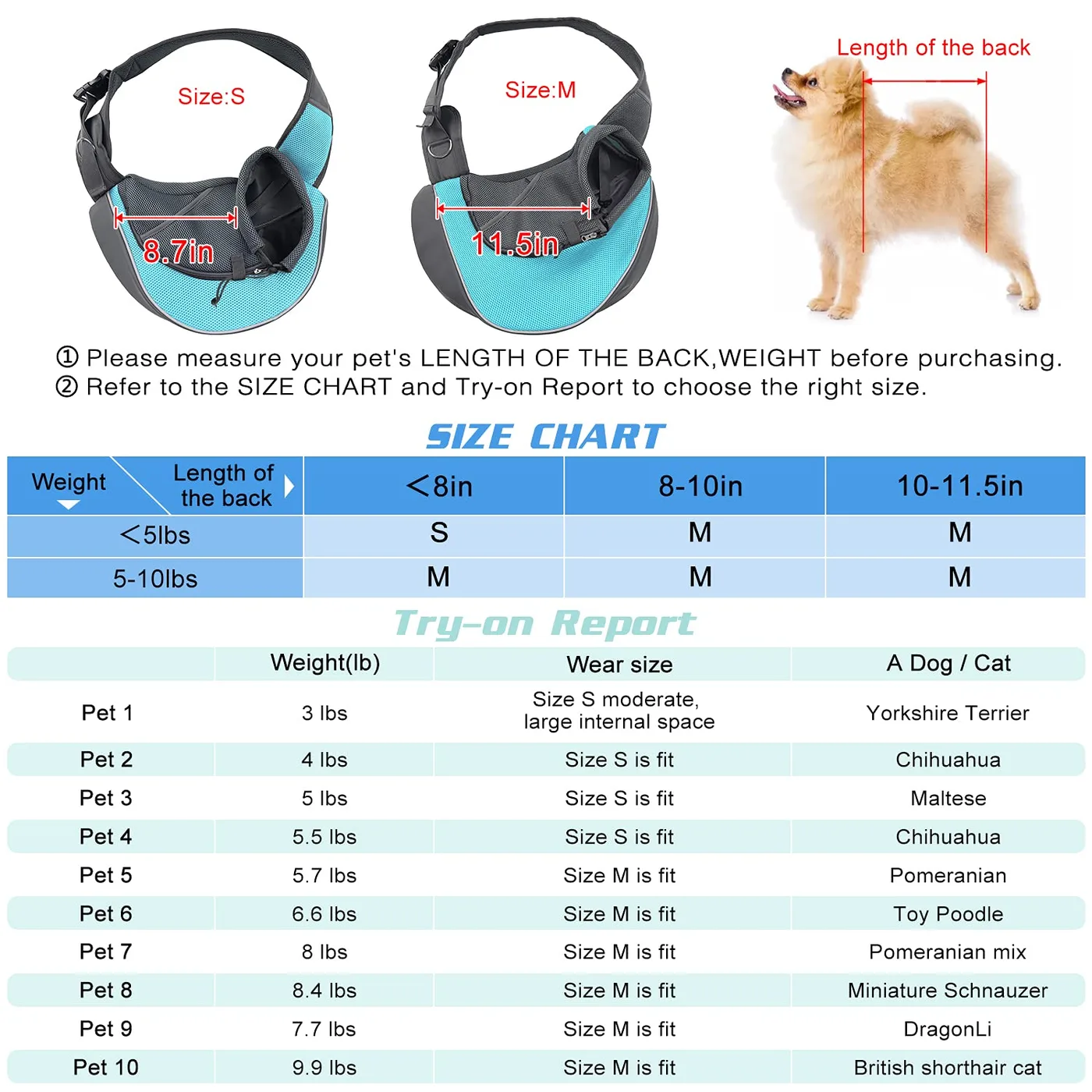
Sling sizing should be driven by animal weight and body length rather than by bag dimensions alone, because a sling supports the animal in a pouch where length matters as much as volume. A sizing matrix built on weight bands, with corresponding pouch dimensions, is the clearest way to specify a range and the easiest way to communicate it to customers.
| Size | Pouch dimensions (cm) | Pet weight ceiling | Strap specification |
|---|---|---|---|
| Extra small | 30 x 20 x 13 | Up to 2.5 kg | 38 mm padded strap |
| Small | 36 x 24 x 15 | Up to 4 kg | 44 mm padded strap |
| Medium | 42 x 26 x 17 | Up to 6 kg | 50 mm padded strap with spreader panel |
| Large sling | 46 x 28 x 18 | Up to 7 kg with a wider pad | 50 mm strap plus structured shoulder pad |
The strap specification should scale with the size, which is the most common specification error in sling ranges. A single strap width applied across four sizes will be inadequate at the top of the range and over-specified at the bottom, and because the top of the range is where the weight is, that is where the failures and the complaints land.
Weight ceilings should be conservative, verified by a loaded carry test, and printed on the product. A sling that comfortably carries 5 kg for twenty minutes may be uncomfortable at 6 kg over an hour, and the difference is exactly what customers describe in reviews. Setting the ceiling at the lower, honest figure costs nothing in units sold and protects the review profile that drives future sales.
Pouch depth and the support shelf deserve particular attention. In a sling the animal rests on a fabric shelf rather than on a rigid base, so the shelf must be wide enough to support the animal's torso and deep enough that it does not feel perched. Fifteen centimetres of usable depth at the small size is a workable minimum, and depth should increase with size rather than staying flat.
Finally, plan the size curve against demand rather than evenly. Extra-small and small slings carry most of the volume because the format suits very small pets; medium sells steadily; large sells in small quantities at good margin. A market-shaped curve improves inventory turns at no cost.
Single-Shoulder Load Path: Where Sling Bags Fail
Because a sling has one load path, every failure occurs at one of four points along it: the pouch shelf, the shelf-to-panel join, the strap root, and the strap itself. Specifying each as a discrete engineering decision is the whole of sling quality control.
The pouch shelf carries the animal's weight directly and is usually the first thing to fail. A single layer of shell fabric will stretch under sustained load, and the stretch is progressive — the bag slowly sags, the animal sits lower, and the carrier compensates with posture. The correct construction is a doubled or reinforced shelf, ideally sleeved into the side panels rather than sewn to them, with the reinforcement carried around the corners where stress concentrates.
The shelf-to-panel join is where tear-out begins. Specifying a bound seam with the reinforcement carried past the join prevents the progressive failure that inspection will not catch, because it occurs over weeks of use rather than on the production line. This is the specification to protect during any price negotiation.
The strap root is the classic failure point in any one-strap design, and slings are no exception. The correct construction is a bar-tack or box-stitch pattern over an internal reinforcement patch, with the webbing carried continuously under the pouch where the design allows it. A continuous webbing path removes the root as a failure point entirely and is worth requesting at design stage, because once the pattern is cut, the option is gone.
The strap itself should be specified by width, foam density and covering, with a wide spreader panel at the shoulder for sizes above about 4 kg. A spreader panel — a wider, shaped section of padding that sits on top of the shoulder — distributes load over a larger area and is the single most effective comfort feature available in a one-strap design. It adds one component and removes most of the pressure complaints.
Finally, treat dynamic load as the design condition. Animals shift, jump and lean, and the peak load on a sling is a multiple of the static weight. Rated hardware and a tested strap assembly should be specified against that dynamic condition rather than against the animal's weight on a scale.
Interior Geometry: Keeping the Animal Stable and Supported
Interior geometry determines whether a sling feels secure to the animal and comfortable to the carrier. Three decisions govern it: where the animal sits relative to the body, how the pouch is contoured, and what provisions exist to keep the animal in place.
Position relative to the body is the first. The pouch should sit against the torso rather than hanging from the shoulder, so that the carrier's core takes part of the load. This is achieved by the strap geometry and by the pouch's attachment points rather than by tightening the strap, and it should be validated in a loaded carry test on at least two body types before approval.
Contour is the second. A flat pouch lets the animal slide to the outer edge, producing the pendulum swing that customers describe as uncomfortable and that animals find unsettling. A gently contoured pouch with a slightly raised outer edge holds the animal in place, and the contour costs one shaped panel rather than a structural component.
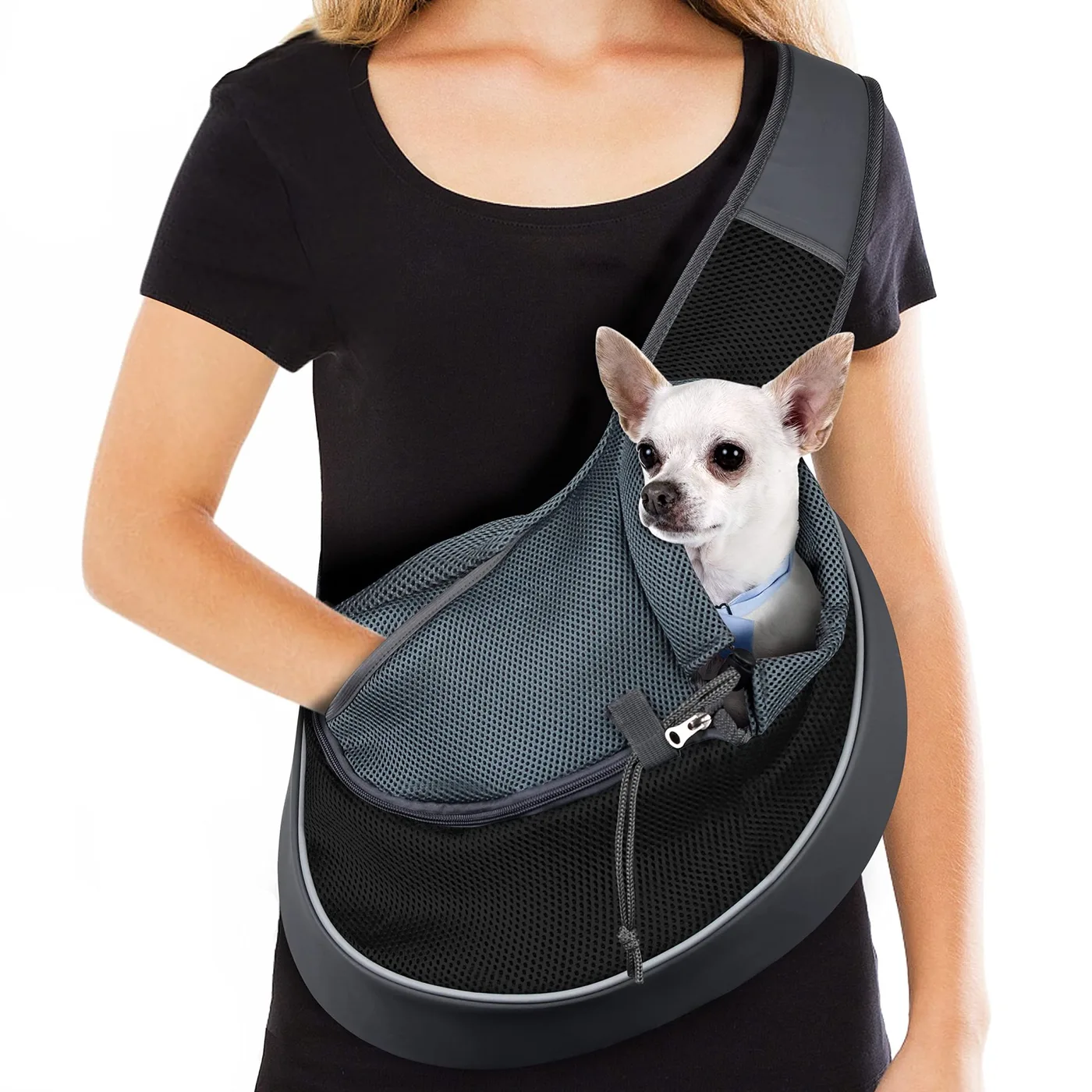
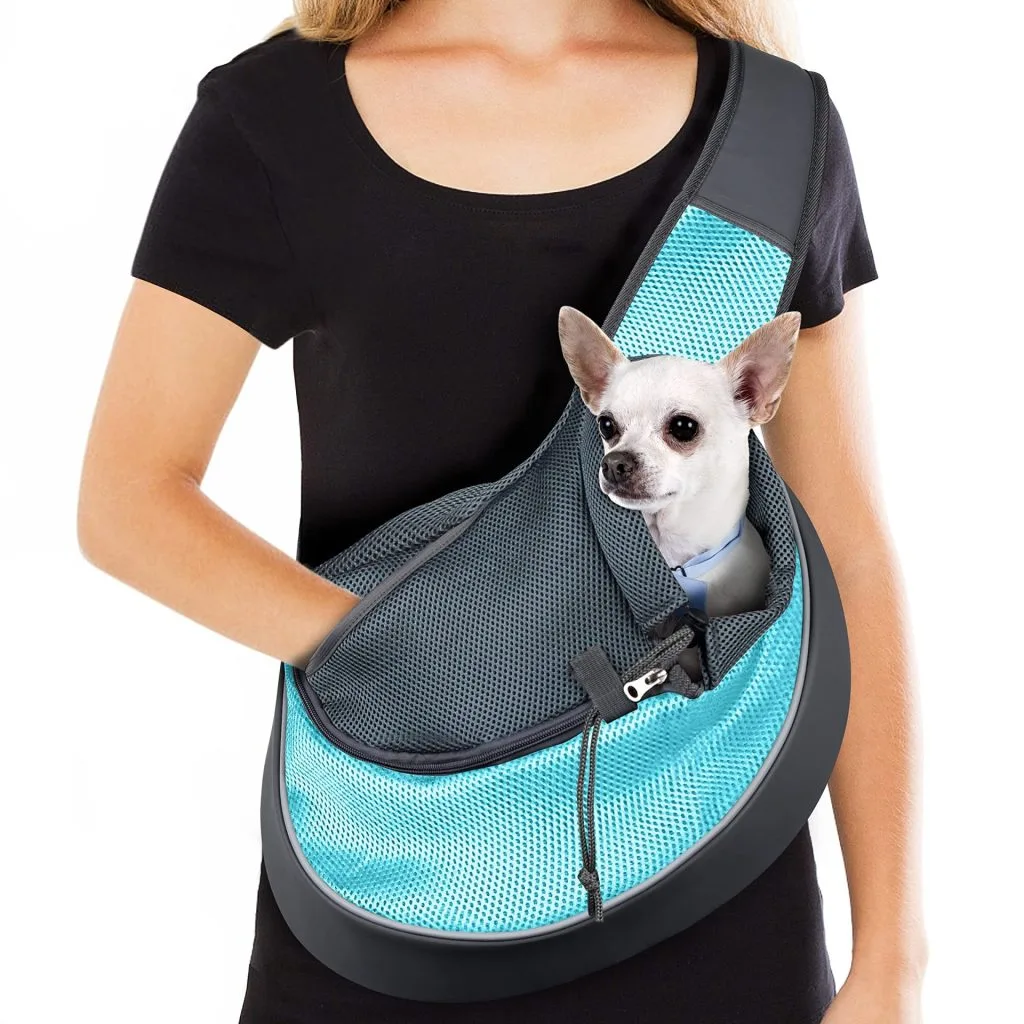
Retention is the third and the most safety-critical. Every sling should have an internal attachment point for a harness clip, rated for dynamic load and positioned so that a clipped animal cannot reach the opening. The addition of a light elasticated opening or a partial mesh panel lets the animal see out without being able to climb out, which is the balance the design is aiming for.
Openings should be specified with escape risk in mind. A wide open-top sling looks inviting and is the format most associated with escapes; a partial closure — a zip across part of the opening, or a drawcord with a stop — reduces the risk substantially while preserving the close-contact feel that defines the category.
Finally, remember that the animal's experience drives the customer's review. A sling that holds the animal stable, supported and in contact with the carrier produces enthusiastic reviews; one in which the animal slides, perches or panics produces detailed negative ones. Geometry is cheaper to fix at design stage than at any point afterwards.
Materials: Stretch Panels, Breathability and Washability
Sling material selection is unusual because the format needs some stretch, a lot of breathability and complete washability, usually at a modest price point. Those three requirements point toward a specific material set.
The pouch body is usually a soft, stable knit or a light woven with a small amount of mechanical stretch. A four-way stretch knit feels pleasant and conforms to the animal, but it sags under sustained load unless it is backed or lined with a stable fabric. The usual solution is a stretch outer over a stable inner, which gives the hand feel customers like and the dimensional stability the load path needs.
Breathability matters more in a sling than in any other format, because the bag is worn against the carrier's body for extended periods and the animal is in close contact with it. A spacer mesh back panel and mesh panels in the pouch improve airflow on both sides, and they cost far less than the comfort they add. Specify mesh by aperture and by snag resistance, and require that mesh be bound rather than set into a single layer.
Washability is not optional in this category. Slings are washed more often than any other pet bag format, and a construction that cannot survive a domestic wash cycle will fail in the field. Specify shrinkage allowances on all fabrics, require colourfastness testing, and specify that any stiffener or padding be removable or wash-stable. A bag that emerges from a wash misshapen generates a review that no amount of design quality will offset.
Trim and hardware should be wash-stable as well. Untreated metal hardware corrodes or marks fabric in the wash; plastic hardware survives it but should be rated for load. Specify the finish explicitly and require a wash test on a production sample rather than on a lab sample, because production construction differs from sample construction more often than buyers expect.
Colourfastness and abrasion should be verified against published textile methods, particularly for dark fabrics worn against light clothing. Test methods from AATCC provide the common vocabulary, and third-party verification through SGS gives a report that retail compliance teams accept.
Safety Features and Testing Protocols
Slings carry a higher perceived safety obligation than most pet bag formats because the animal is close to the opening and the whole design depends on soft structure. Three provisions should be treated as non-negotiable in any program: a rated internal harness attachment point, an opening design that limits escape, and a load path tested to a multiple of the stated weight ceiling.
| Test | Sensible protocol | Failure it predicts |
|---|---|---|
| Attachment point pull test | Load to a stated multiple of the ceiling, hold, inspect | Anchor tearing out under a lunge |
| Strap assembly pull test | Static load to a multiple of the ceiling, hold for a defined period | Root tear-out and stitch hole tearing |
| Pouch shelf sag test | Load to the ceiling, measure deflection over time | Progressive stretch and sagging |
| Wash cycle test | Three domestic cycles, measure shrinkage and shape | Misshaping, colour bleed, hardware marking |
| Mesh snag and abrasion | Standard textile method on the pouch panels | Claw damage and hole formation |
These protocols should be written into the purchase order with acceptance criteria, not requested verbally. A statement that the bag must be "safe" is unenforceable; a stated load, duration, sample size and acceptance criterion produces a test that can be repeated and a report that can be filed.
Destructive testing should be planned into sampling. Buyers frequently avoid destroying samples, but one destructive pull test on the attachment point and one on the strap assembly tells you more about production reality than several visual inspections, and it is the only way to confirm that the reinforcement specified on paper is actually in the bag.
Final inspection at AQL 2.5 should include a format-specific defect list: bar-tack presence at every strap root, reinforcement at the shelf join, attachment point anchoring, mesh binding, and stitch density. These five should be classified as critical or major rather than as general workmanship, because they are the items that fail in use.
Documentation should be maintained as a file: material declarations per component, test reports by family with numbers and validity dates, the approved care and content label artwork, and a written statement of the weight ceiling. Maintaining that file costs a fraction of rebuilding it per shipment and is what allows a marketplace compliance request to be answered in an hour rather than a fortnight.
Cost Structure and Specification Priorities
Sling programs operate at modest price points, which makes the allocation of cost more important than the total. The ranking is unusually clear in this format, because the load path is short and the failure modes are well defined.
| Component | Priority | Reason |
|---|---|---|
| Reinforced pouch shelf | Critical | Prevents progressive sag, the most common field failure |
| Bar-tacked strap root with patch | Critical | Removes the classic one-strap failure point |
| Rated attachment point | Critical | Safety provision and a common marketplace requirement |
| Strap width and foam density | High | Determines comfort at the stated weight ceiling |
| Spacer mesh back panel | High | Low-cost comfort on both sides of the bag |
| Shell fabric and stretch quality | Medium | Hand feel matters, but stability matters more |
| Decorative trim and patches | Low | Perceived value without durability |
The two items to protect during any value-engineering conversation are the reinforced shelf and the bar-tacked root with its patch. Both cost cents and both prevent the failures that generate returns and negative reviews; both are also the items most quietly removed when a factory is asked to sharpen a price.
The items to economise on are decorative: patches, contrast binding, premium pullers and printed linings. In a category where the purchase decision is driven by how the animal will feel and how the carrier will feel, decorative spending converts poorly compared with comfort spending.
Platform sharing is the structural lever. One shell fabric, one mesh specification, one webbing and hardware family and one reinforcement method across three sling sizes moves all of them into better purchase tiers and makes shade matching achievable. This is how a mid-sized buyer affords a properly reinforced load path, and the same logic is set out from the program side in our wholesale pet bags bulk buying guide.
Finally, model per-unit fulfilment cost honestly. Slings are light and pack well, which is good for freight, but they are high-touch products at destination: more units to receive and label, and a higher return rate than average. Including those costs in the margin model prevents the pleasant surprise of a good landed cost being cancelled by an unmodelled return rate.
Compliance, Labelling and Documentation
Compliance for slings follows the standard market requirements plus two format-specific obligations: an honest weight ceiling and a clear statement that the product is not a restraint device.
Market requirements are the familiar set. For the United States, CPSIA screening and California Prop 65 assessment; for the European Union, REACH substance restrictions and OEKO-TEX on skin-contact textiles. Because slings are worn against the carrier's body as well as holding an animal, skin-contact testing is more clearly applicable here than in most pet bag formats and should be planned for rather than debated.
The weight ceiling should appear on the product and in every listing. It is the most important safety statement in the category, it protects the review profile, and it is increasingly requested by marketplace compliance teams. Where a hangtag is used, the ceiling belongs on the front panel rather than in the fine print.
The non-restraint statement is the second obligation. A sling is a carry product, not a vehicle or crate restraint, and stating that plainly prevents the misuse that generates both safety incidents and liability exposure. Wording should be reviewed with the same care as any other warning text on the product.
Care labelling matters more than usual because washability is a purchase criterion in this format. Care symbols should be validated against a real wash test on a production sample, not assumed from the fabric specification, because a construction that survives the fabric test can still fail the garment test.
Documentation should be collected at material receipt and maintained by family: material declarations per component, test reports with numbers and validity dates, country of origin, and approved label and hangtag artwork. Requirements for animals crossing borders are governed by bodies such as USDA APHIS, but the bag itself falls under general consumer product rules, which is where the compliance file should be focused.
Sampling, Approval Gates and Launch Sequencing
Sling sampling needs one gate beyond the standard sequence, because the critical attribute is experienced in use rather than seen at rest. Plan five gates.
Gate one is the development sample, delivered in 6-10 working days, checked for pouch dimensions, shelf reinforcement, strap width and hardware fit. Gate two is the static load test, filling the pouch to the stated ceiling and inspecting the shelf, the joins and the strap root. Gate three is the loaded carry test on at least two body types, recording position, sway and pressure points. Gate four is the wash test on a production-built sample. Gate five is the production pilot at AQL 2.5 before balance payment.
The carry test is the gate most often skipped and the one that catches the most. A sling can measure correctly, pass a static load test and still be uncomfortable if the pouch hangs away from the body or the strap lacks a spreader panel. Two people and twenty minutes per sample is a small investment against a return rate in a category where reviews are unusually detailed.
The wash test should be run on a production-built unit rather than on a development sample. Sample-room construction frequently differs from line construction in ways that only appear after washing — different thread, different seam allowance, different padding attachment — and a sling that fails the wash test is a product that fails in the first month.
Bulk production takes 35-50 days from sample approval and deposit. Sling programs trend toward the shorter end when fabric, webbing and hardware are stock grades, and toward the longer end when a custom knit, a branded hardware finish or a moulded component is specified. Locking those components at sample approval is what keeps the schedule short.
Launch sequencing should follow the size curve: ship extra-small and small first, hold medium and large for the second drop, and use eight weeks of returns and review data to confirm that the strap specification holds at the top of the range. Programs that launch four sizes simultaneously cannot tell whether a comfort complaint is a sizing issue or a specification issue, and end up changing both.
Why brands source here
- Pet bag programmes run since 2014; founding team in sewn goods since 2004
- SGS-verified production floor of 4,950 m² with 137 workers across 7 lines
- Monthly capacity of 200,000 units, audited to BSCI and ISO 9001
People Also Ask
What is the difference between a pet sling and a pet shoulder bag?
A sling holds the animal in a close-fitting pouch against the torso with a single load path and no frame, while a shoulder bag has a more structured body and a conventional strap. The sling's proximity is its appeal and also why weight ceilings must be conservative.
How do I stop a pet sling from sagging?
Reinforce the pouch shelf and sleeve it into the side panels rather than sewing it on, carrying reinforcement around the corners where stress concentrates. A single layer of shell fabric will stretch progressively under sustained load.
What makes a pet sling comfortable to wear?
Correct pouch geometry that holds the animal against the torso, a strap scaled to the size with a spreader panel above about 4 kg, and a spacer mesh back panel. Padding alone cannot rescue a pouch that hangs away from the body.
How do I test a pet sling before launch?
Use five gates: development sample, static load test, loaded carry test on two body types, wash test on a production-built unit, and an AQL 2.5 production pilot before releasing the balance payment.
Why do sling reviews mention escapes?
Because a wide open-top sling lets a small animal climb out. A partial closure, an elasticated opening or a partial mesh panel preserves the close-contact feel while reducing escape risk, and a rated internal attachment point adds a second safeguard.
Where should I spend money in a sling program?
Spend on the reinforced shelf, the bar-tacked strap root with its patch and the rated attachment point, then on strap width, foam density and a spacer mesh panel. Economise on decorative trim, patches and premium pullers.
Frequently Asked Questions
What weight can a pet sling bag carry?
Slings are designed for small pets, with a practical ceiling around 6 kg for a well-specified medium size and lower for smaller sizes. Because a sling has a single load path, the ceiling should be conservative, verified by a loaded carry test and printed on the product.
What is the MOQ for a pet sling program?
The standard MOQ is 500 pieces per colour. Sling ranges usually carry three or four sizes on one shared platform, and the combined material lots often reach better purchase tiers than any single size would alone.
How long do sampling and bulk production take?
Development sampling takes 6-10 working days and bulk production takes 35-50 days from sample approval and deposit. Programs using stock-grade fabric, webbing and hardware land at the shorter end of the bulk range.
Why does my sling sag over time?
Usually progressive stretch in the pouch shelf. A single layer of shell fabric stretches under sustained load, so the correct construction is a doubled or reinforced shelf sleeved into the side panels with reinforcement carried around the corners.
What strap width should a pet sling use?
At least 38 mm for extra-small sizes, 44 mm for small and 50 mm with a spreader panel above about 4 kg. Scaling the strap with the size is essential, because a single width across four sizes will be inadequate at the top of the range.
Should a sling have a safety attachment point?
Yes. An internal harness attachment point rated for dynamic load, positioned so a clipped animal cannot reach the opening, is the primary safety provision in this format and is increasingly required by marketplace compliance teams.
What tests should I require before approval?
Require an attachment point pull test, a strap assembly pull test, a pouch shelf sag test, a three-cycle wash test on a production-built unit and a mesh snag test. State load, duration, sample size and acceptance criteria in the purchase order.
Can pet slings be machine washed?
They should be, because washability is a purchase criterion in this category. Specify shrinkage allowances, colourfastness testing and wash-stable hardware, then validate the care symbols against a real wash test on a production sample.
What does AQL 2.5 cover on a sling order?
AQL 2.5 is the acceptable quality limit for the final random inspection. For slings, the defect list should classify bar-tack presence at strap roots, shelf reinforcement, attachment point anchoring, mesh binding and stitch density as critical or major rather than general workmanship.
Is a sling a restraint device?
No. A sling is a carry product and should be labelled as one, with a clear statement that it is not a vehicle or crate restraint. That statement prevents misuse and is the second most important safety text on the product after the weight ceiling.
Which compliance requirements apply to slings?
CPSIA screening and California Prop 65 for the US, REACH for the EU, and OEKO-TEX for skin-contact textiles. Skin-contact testing is more clearly applicable here than in most pet bag formats because the bag is worn against the carrier's body.
How should I launch a sling range?
Ship extra-small and small first, hold medium and large for a second drop, and use eight weeks of returns and review data to confirm the strap specification holds at the top of the range before scaling the larger sizes.
Talk to QUANZHOU JUNYUAN BAGS about a wholesale pet bag order: MOQ 500 pieces per colourway, samples in 6-10 working days, bulk production in 35-50 days under AQL 2.5 inspection.
Get a free quote Request a sample