Pet Graduation Bag: Achievement-Themed Wholesale Sourcing
A wholesale pet graduation bag programme starts at MOQ 500 pieces per colourway, costs USD 4.30-8.20 FOB Xiamen per unit, and needs 35-50 days of bulk production after a 6-10 working day sample cycle. Because graduation is a low-volume occasion, the programme only works when the shell is shared across several occasions. Shipments release after an AQL 2.5 pre-shipment inspection.
Graduation is the smallest of the occasion categories in the pet bag business, and that scale is the whole sourcing problem. Demand is real but thin, it concentrates in a six-week window in May and June, and the standard MOQ 500 pieces per colourway represents a meaningful inventory commitment against a category that most accounts will not reorder twice in a season.
The structure that makes the category work is a shared shell carrying a swappable occasion layer. One body serves graduation, wedding, anniversary and memorial programmes, and only the badge, the lining print and the card change. Our production team runs this as a single fabric commitment with separate finishing components, which holds the occasion-specific exposure to under ten percent of unit cost and lets a buyer test four occasions for the price of roughly one and a half dedicated programmes.
Timing is standard: sampling takes 6-10 working days from confirmed artwork and colour standard, bulk runs 35-50 days, and sea freight to a US West Coast distribution centre adds 28-35 days. For a May shelf date the purchase order belongs in February. Quality gates are fixed at AQL 2.5 under general inspection level II with zero tolerance for critical defects, terms are T/T 30/70 against FOB Xiamen, and production runs through an SGS-verified production base with 7 lines, 149 machines and 200,000 pieces per month under BSCI and ISO 9001.
Pet bag sample cost is normally credited against the first production order, which makes Pet Bag Types & Styles review the expensive step rather than the sampling itself. Pet carrier sample cost rises with hardware changes, so lock the hardware before the second sample round.
Sizing a Niche Occasion: What the Volume Actually Justifies
Graduation pet bags occupy an unusual position in the assortment. The category is emotionally legible, merchandises well in a photograph, and sells in volumes that would not justify a dedicated production programme on their own. Buyers who treat it as a standalone category end up with a warehouse problem; buyers who treat it as an occasion variant on a shared shell end up with a profitable niche.
The demand is driven by two purchase motives, and they behave differently. The first is the pet as graduate: a dog photographed in a mortarboard after finishing puppy training or a behavioural course. The second is the owner as graduate: a student who is moving with a pet after finishing a degree. The first motive produces gifting demand and favours a smaller, cuter silhouette. The second produces functional demand and favours a larger travel-capable format. Buyers should decide which motive they are serving, because the two do not share a specification.
Six-week concentration is the second defining feature. Graduation volume in the northern hemisphere clusters from early May to mid-June, with a secondary spike where southern hemisphere and non-standard academic calendars apply. That concentration means the category behaves more like a seasonal theme than like an evergreen line, and it inherits the same planning discipline: a fixed floor date, no realistic reorder, and a planned carry-over path for leftovers.
The table below shows the four configurations that carry graduation volume, priced FOB Xiamen at MOQ 500 pieces per colourway.
| Configuration | Purchase motive | Size (cm) | Pet weight | FOB band (USD) | Occasion layer |
|---|---|---|---|---|---|
| Mortarboard tote | Pet as graduate | 36 x 20 x 26 | Up to 5 kg | 4.30 - 5.20 | Tassel badge |
| Diploma-scroll sling | Gifting | 34 x 18 x 24 | Up to 4 kg | 5.00 - 5.90 | Scroll strap detail |
| Travel-capable backpack | Owner as graduate | 42 x 25 x 32 | Up to 9 kg | 6.40 - 7.60 | Embroidered year |
| Congratulations bundle | Gift placement | Box 40 x 28 x 9 | Up to 5 kg | 6.90 - 8.20 | Card and bandana |
Two features of the table matter for planning. The occasion layer column shows that every graduation element is a low-cost finishing component, which is precisely what makes the shared-shell structure viable. And the travel-capable backpack, while the highest-cost configuration, is the only one with a credible carry-over path into the general assortment, which is why it carries the largest commitment in most programmes our production team runs.
Making a Small Minimum Work: Shared Shells and Occasion Consolidation
The 500-piece per colourway minimum is a fabric and setup constraint, not a capacity constraint, and understanding that distinction is what unlocks the category. The minimum exists because a dye lot has to be produced and a print screen or embroidery program has to be set up. Anything that avoids a new dye lot and a new setup avoids the minimum, which is why the finishing-component approach works.
The structure our production team recommends has three tiers. Tier one is the shared shell: one fabric, one colourway, one construction, ordered as a single blanket quantity covering all occasions in the programme. Tier two is the occasion component: a badge, a lining print, a strap detail or a woven label, ordered at one hundred to one hundred fifty pieces per occasion. Tier three is the printed matter: cards, hangtags and belly bands, produced digitally with no minimum at all.
This structure changes the economics materially. A buyer testing four occasions with a dedicated programme each would commit to two thousand units of finished goods. The same buyer under the tiered structure commits to two thousand units of shared shell, of which the entire quantity is sellable across all four occasions, plus roughly five hundred units of low-cost occasion components. The unsold-risk exposure falls by roughly three quarters for the same shelf presence.
There is a practical constraint buyers should confirm at quotation stage: the shell has to be genuinely neutral. A shell with a printed motif, a themed lining or a colourway that reads as seasonal cannot be shared, and the temptation to add a small thematic touch to the body is exactly what breaks the economics. Our production team holds the line on this deliberately, and returns artwork that puts occasion content anywhere other than on a removable or swappable component.
The second constraint is scheduling. Because all four occasions draw from the same shell inventory, the shell has to be produced before the occasion components are applied, which adds five to eight days to the first shipment but nothing to subsequent ones. Buyers should build that into the first-season calendar and treat later occasions as finishing-only runs.
Motif Specification: Tassels, Diplomas and Detachable Parts
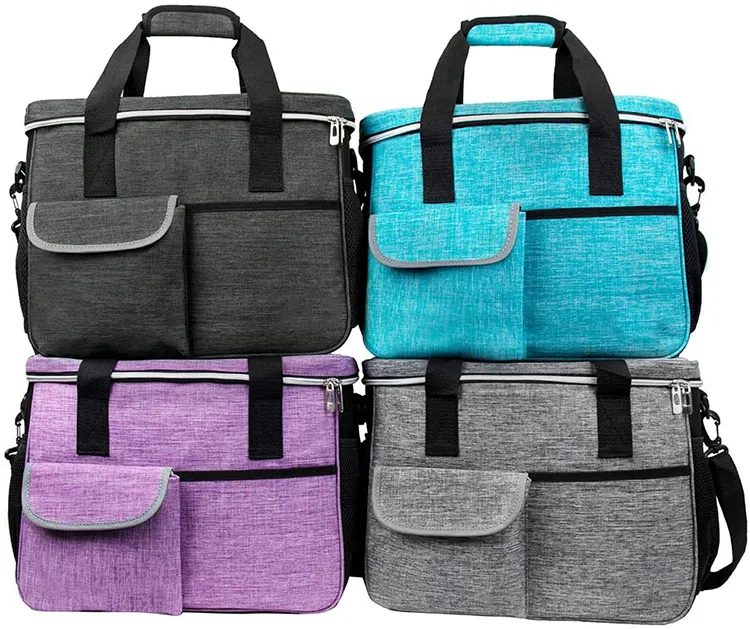
Graduation motifs are the most mechanically fragile decoration family in the pet bag business. A mortarboard tassel, a diploma scroll, a year charm and a decorative cord are all small, all protruding, and all attached to an object that will be carried by an animal. The specification problem is not how to make them look right; it is how to keep them attached and how to keep them out of a pet's mouth.
The failure modes are predictable. Tassels detach at the anchor point under repeated movement. Cords unravel. Small charms are chewed off and become an ingestion hazard. Each of these produces either a return or, in the worst case, a safety complaint, and the cost of one safety complaint exceeds the margin on an entire low-volume occasion run.
The specification our production team writes for this category has three rules. First, no decorative element smaller than a defined choke-size threshold may be attached by a single stitch or a single adhesive point; every element needs either a bar-tacked anchor or a fully enclosed channel. Second, tassels and cords are specified as a sealed-end construction with a bar-tack at the load point, tested to a defined pull force rather than inspected visually. Third, any element that a pet can reach from inside the bag is excluded from the interior specification entirely, regardless of how it photographs.
Buyers should also decide how the year is handled. A graduation year is a dated element with a softer expiry than a New Year numeral, because graduation merchandise retains some gift value into the following year, but it is still a dated element. The recommendation is the same structure: put the year on the card or the hangtag, keep it off the shell. That costs nothing and preserves the carry-over path.
Finally, motif placement should be checked against the retail photography standard. Graduation pet bags sell on a photograph of a pet wearing or sitting beside the unit, which means the motif has to be legible from the front quarter view at a normal handheld distance. Motifs placed on the base or the rear panel photograph poorly and sell accordingly.
Cost Structure for Low-Volume Occasion Runs
Low-volume occasion runs break the cost model that buyers carry over from core categories. In a core programme, setup costs amortise over thousands of units and become invisible. In an occasion run at the minimum, they are a visible and sometimes dominant share of unit cost, and buyers who do not account for them misjudge the profitability of the entire category.
The setup costs in question are print screens or embroidery programming, cutting dies where a shaped motif is used, label and hangtag plates, and the pre-production sample. Across a five hundred piece run these typically add between sixty cents and one dollar forty per unit on top of the fabric, trim and labour cost. On a five dollar bag that is a meaningful share of the selling price, and it is the reason occasion units carry higher price bands than comparable core units.
The mitigation is amortisation across occasions rather than across units. Under the shared-shell structure, the screen or embroidery program for the body is amortised once across the whole blanket quantity, and only the occasion component carries its own setup. Because the occasion component is typically a badge or a label rather than a full panel print, its setup cost is a fraction of a full print setup, and the effective per-unit burden falls substantially.
FOB Xiamen bands for the category run USD 4.30-8.20 as shown earlier. Landed cost adds sea freight at roughly half a dollar per unit in a consolidated container and duty at the applicable rate, and supports retail price points from USD 24.99 for the tote to USD 49.99 for the bundle. Buyers should note that the achievable price point in a gifting occasion is higher than in a core category, which is what allows the higher cost structure to work at all.
One cost line should be modelled explicitly: the write-off. In a low-volume occasion category with a six-week window, a realistic planning assumption is that a share of the occasion-specific components will not sell and will be written off. Because those components are cheap and the shell carries over, the exposure is small, but it should appear in the margin calculation rather than being discovered after the season.
Calendar: Graduation Season and the Hemisphere Split
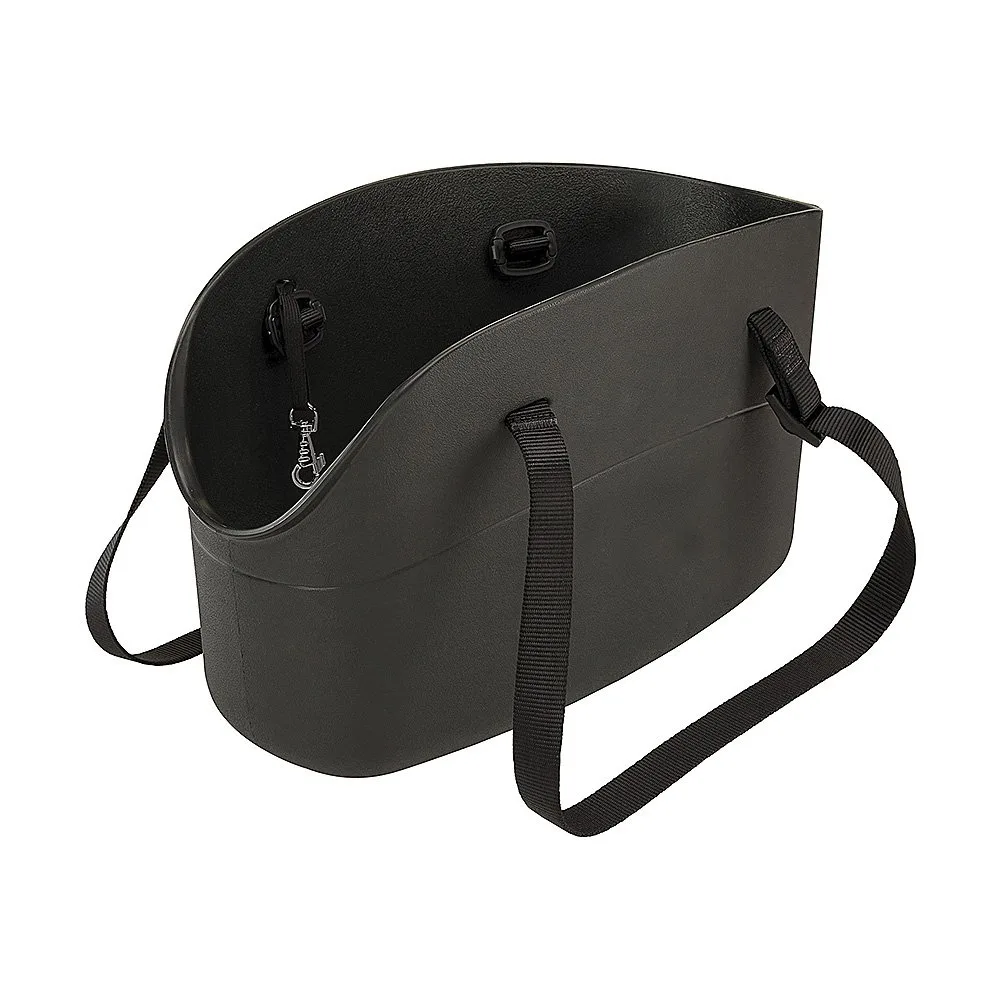
Graduation is one of the few pet bag categories with a genuinely split global calendar, and buyers serving more than one market should treat the two windows as separate programmes rather than as one extended season. Northern hemisphere ceremonies cluster from early May to mid-June. Southern hemisphere and some Asian academic calendars place ceremonies in November and December, and a growing share of online demand follows those calendars because the buyer base is international.
For a northern hemisphere May floor date, the working calendar runs backwards from late April arrival at the distribution centre: thirty to thirty-eight days of sea freight and handling, thirty-five to fifty days of bulk production, six to ten working days of sampling, and three to four weeks for artwork and quotation. That places the purchase order in February and the artwork conversation in January. Buyers who begin in March are already committed to air freight or to missing the window.
The southern hemisphere window is easier to serve logistically because it does not collide with the peak freight season, and it can share the same shell inventory as the northern run. That is a genuine advantage of the shared-shell structure: one shell production covers both hemispheres, and only the occasion components and the freight routing differ. Our production team schedules two finishing runs against one shell buy for buyers serving both windows.
Buyers should also note that the graduation window sits just ahead of the annual peak in container demand, which works in the category's favour. Bookings for May arrivals are materially easier to secure than bookings for August arrivals, and rates are typically lower. That advantage is worth using deliberately: a buyer who consolidates the graduation shell buy with the following school-season shell buy ships both ahead of the squeeze and avoids the rate spike that catches buyers who plan each season separately.
The reorder question has the same answer here as in every fixed-window category. With a seventy-five to ninety-five day replenishment cycle against a six-week selling window, a reorder cannot arrive in time. The correct plan is a conservative initial buy with a carry-over path, and the carry-over path should be designed into the product rather than improvised: the shell must be saleable without the occasion component, and the occasion component must be removable without leaving a visible mark.
Compliance and Safety on Decorative Motifs
Decorative motifs on pet bags sit in an awkward regulatory position. There is no pet-product-specific standard governing a tassel on a bag, but the general product safety framework and the retailer's own safety manual both apply, and both are enforced on the basis of hazard rather than on the basis of category. A detachable small part on a product used around animals is a hazard that most retail safety teams will flag regardless of what the product is called.
The practical approach is to specify against the hazard rather than against a named regulation. The three tests worth writing into the tech pack are a pull test on every attached decorative element at a defined force, a small-parts assessment on anything a pet could detach and swallow, and a sharp-point and sharp-edge check on any charm or metal element. These cost little, they are quick to run, and they are what a retail safety reviewer will ask for.
Chemical compliance follows the standard component list. Plated charms, coated cords, printed panels and dyed tassels each need a declaration, and California safe harbour levels published by the California Office of Environmental Health Hazard Assessment apply to the coated and plated items. Where the unit is marketed with child appeal, which is common in graduation gifting, the CPSC children's product limits published by the US Consumer Product Safety Commission become the reference standard and third-party testing by an accredited laboratory is expected.
Textile components are best covered by a recognised textile certification rather than by individual substance screens. An OEKO-TEX certificate on the shell and lining satisfies most European and an increasing share of North American retail buyers in a single document, and the standard is maintained by OEKO-TEX. For a low-volume occasion programme where the fixed cost of testing is spread over few units, the certificate route is usually cheaper than a full substance screen on every component.
Channel and Merchandising: Where Graduation Pet Bags Sell
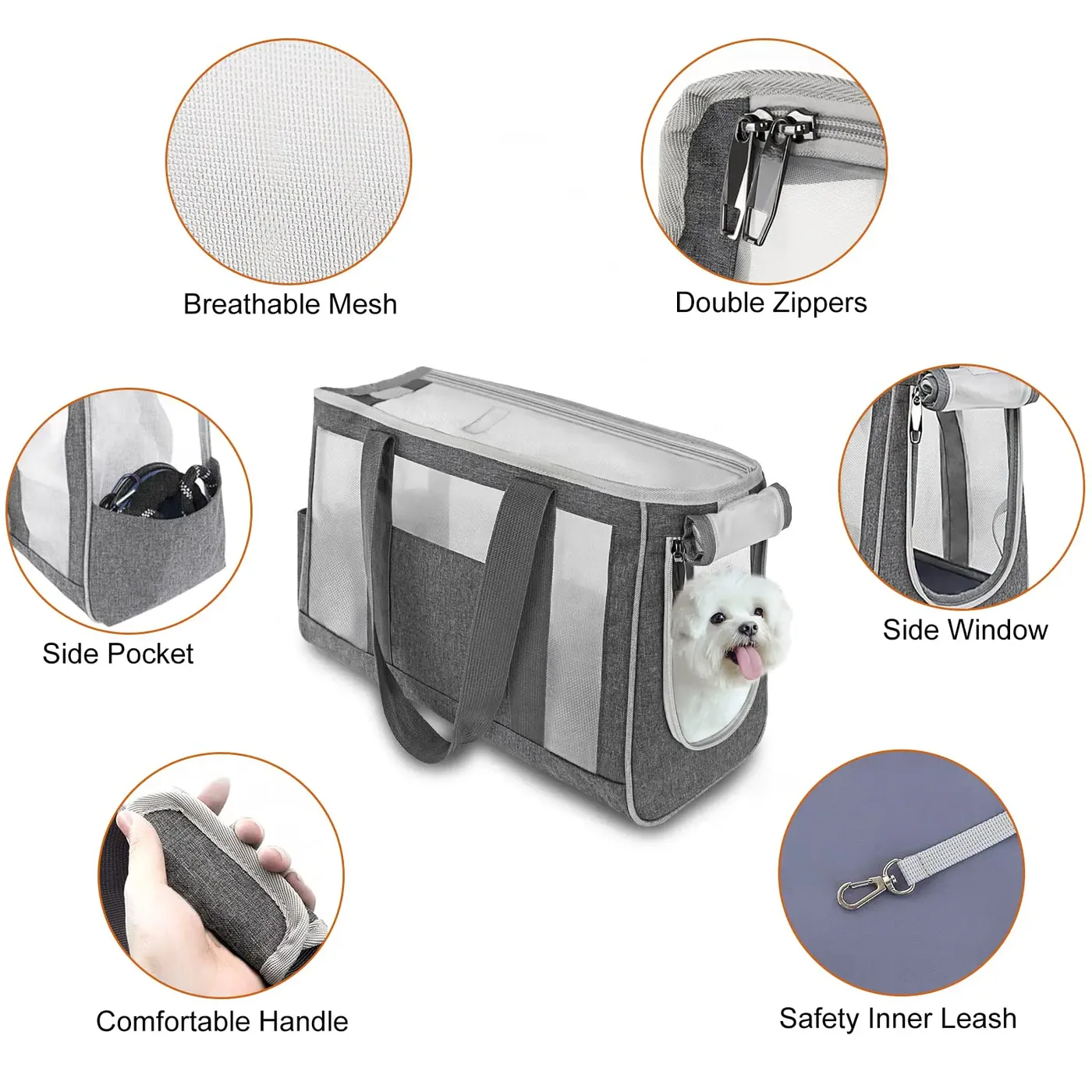
Graduation pet bags sell through a narrower set of channels than any other occasion category, and the placement decision should precede the specification. Three routes carry essentially all the volume, and they want different things.
The first is social and marketplace gifting, which is where the category is strongest. The purchase is triggered by a photograph, the buyer is not comparing specifications, and the decision is made on cuteness and on price. Units for this channel should be optimised for the photograph above all else: a legible motif on the front quarter panel, a silhouette that sits well beside a pet, and a price point that supports an impulse purchase. Documentation requirements in this channel are light.
The second is pet services: training schools, grooming salons and veterinary practices that run graduation or completion programmes for puppies and behavioural classes. This is the most underrated channel in the category and it produces the highest conversion rate, because the provider hands the product to a customer at the moment of achievement. Units for this channel should be durable and washable rather than precious, because they will be used rather than displayed, and they should support a co-branded label for the service provider.
The third is seasonal gift placement in pet specialty and card-and-gift chains. This route wants presentation and documentation: a rigid or semi-rigid box, a card, and a test report. It carries the highest price point and the strictest compliance review, and it is the only route where the bundle configuration consistently outperforms the standalone bag.
Buyers should resist the temptation to build one unit for all three. The photographic impulse unit and the durable service channel unit are different products, and the shared-shell structure makes running both affordable precisely because the body is common and only the finish differs.
Supplier Scorecard for Low-Volume Occasion Programmes
The scorecard for a low-volume occasion programme weights flexibility above scale. Component inventory management carries twenty-five percent, which specifically means the supplier holds the shared shell and applies occasion components on call-off rather than requiring a finished-goods minimum per occasion. Low-minimum finishing capability carries twenty percent. Calendar reliability carries twenty percent. Documentation carries fifteen percent. Sample accuracy carries ten percent. Price carries ten percent.
Flexibility earns the weighting it gets because it is the whole basis of the category economics. A supplier who insists on five hundred finished units per occasion converts a test into a commitment, and a buyer who accepts that has lost the advantage the shared-shell structure exists to create. Buyers should ask the question directly at quotation stage and should get the answer in writing, because it is the single term that determines whether the programme is viable.
Quality gates stay fixed regardless of order size. AQL 2.5 under general inspection level II with zero tolerance for critical defects, and for this category the critical list explicitly includes any detachable decorative element that presents an ingestion hazard. Attachment points on tassels, cords and charms should be pull-tested on a defined sample per lot rather than inspected visually, because a visual inspection will not detect an under-strength bar-tack.
Independent verification is proportionate to order size and should not be skipped on a small run simply because the order is small. A recognised body such as SGS can combine a reduced-level pre-shipment inspection with the motif pull testing and component screening in one appointment, which keeps the fixed verification cost sensible on a five hundred unit order. The production base behind this programme holds BSCI social compliance and ISO 9001 quality management across 4,950 square metres, 137 staff, 7 lines and 149 machines at 200,000 pieces per month, with certificates released at quotation stage. Terms are T/T 30/70 against FOB Xiamen with the balance released against the passed inspection report.
Why brands source here
- Pet bag programmes run since 2014; founding team in sewn goods since 2004
- SGS-verified production floor of 4,950 m² with 137 workers across 7 lines
- Monthly capacity of 200,000 units, audited to BSCI and ISO 9001
People Also Ask
Is there enough demand for graduation pet bags?
Yes, but it is thin and concentrated in a six-week window. The category works as an occasion variant on a shared shell rather than as a dedicated programme.
What triggers a graduation pet bag purchase?
Two motives: the pet finishing training, which drives gifting demand for smaller silhouettes, and the owner graduating, which drives functional demand for larger travel-capable formats.
How do I avoid leftover graduation stock?
Design the carry-over path in advance. The shell must be saleable without the occasion component, and the component must be removable without leaving a visible mark.
Can I reorder inside the graduation window?
No. The replenishment cycle of seventy-five to ninety-five days is longer than the six-week selling window, so the initial buy has to be final.
Do decorative motifs need safety testing?
They need hazard-based testing: a pull test on every attached element, a small-parts assessment, and a sharp-point check. A visual inspection will not detect an under-strength bar-tack.
Is certification cheaper than full substance screening?
Usually yes on low-volume runs. An OEKO-TEX certificate on shell and lining satisfies most retail buyers in one document at a lower fixed cost than screening every component individually.
Frequently Asked Questions
What is the MOQ for a graduation pet bag?
MOQ is 500 pieces per colourway on the shell. Occasion components such as badges, lining prints and labels carry a one hundred to one hundred fifty piece minimum, and printed cards have no minimum when produced digitally.
How do I test four occasions without four full orders?
Use a shared shell with swappable occasion components. One neutral body covers graduation, wedding, anniversary and memorial programmes, and the occasion-specific exposure stays under ten percent of unit cost.
How long does sampling take?
Sampling takes 6-10 working days once artwork, colour standard and motif attachment method are confirmed. Motif pull-test results should be approved before bulk cutting rather than after.
What is the bulk lead time?
Bulk runs 35-50 days. The first shipment under a shared-shell programme adds five to eight days because the shell is produced before occasion components are applied; later occasions are finishing-only runs.
What does a graduation pet bag cost FOB?
FOB Xiamen bands are USD 4.30-5.20 for a mortarboard tote, USD 5.00-5.90 for a diploma sling, USD 6.40-7.60 for a travel-capable backpack and USD 6.90-8.20 for a congratulations bundle at MOQ 500 per colourway.
Are tassels and charms safe on a pet bag?
Only with a specified attachment method. Every decorative element needs a bar-tacked anchor or an enclosed channel, sealed cord ends, and a defined pull-test force. Elements reachable from inside the bag are excluded.
Should the graduation year be printed on the bag?
Put it on the card or hangtag instead. Graduation merchandise retains some value into the following year, but keeping the year off the shell preserves the carry-over path entirely.
When should I order for a May graduation season?
The purchase order belongs in February, with the artwork conversation starting in January. The critical path is roughly seventy-five to ninety-five days plus artwork time.
Can one shell serve both hemispheres?
Yes. Northern and southern hemisphere ceremonies fall in different months, so one shell production can support two finishing runs with different occasion components and freight routing.
Which inspection standard applies?
AQL 2.5 at general inspection level II with zero tolerance for critical defects, including any detachable decorative element presenting an ingestion hazard. Reduced inspection levels are acceptable on small runs.
Where do graduation pet bags sell best?
Social and marketplace gifting is strongest, followed by pet services running training or grooming completion programmes. Seasonal gift placement in pet specialty and card-and-gift chains carries the highest price point.
How are setup costs handled on a small run?
Setup typically adds sixty cents to one dollar forty per unit at the minimum. Amortising the body setup across a shared-shell blanket quantity and keeping occasion components cheap is the standard mitigation.
Talk to QUANZHOU JUNYUAN BAGS about a wholesale pet bag order: MOQ 500 pieces per colourway, samples in 6-10 working days, bulk production in 35-50 days under AQL 2.5 inspection.
Get a free quote Request a sample