Pet College Bag: Student Style Sourcing Guide
A student-style pet college bag is a budget-led carry format built for dorm life, campus walking and weekend trips home, typically 22-34 litres at a retail band under 60 USD. Wholesale programs start at MOQ 500 pieces per colourway, sample in 6-10 working days per round, and run 35-50 days in bulk after approval.
This format is a cost-engineering exercise before it is a design exercise, because the buyer's price ceiling is set by the student market and the feature list is set by dorm life. Commercial floor is MOQ 500 pieces per colourway, because fabric, printing and trim are bought in tiers that only work at volume. Sample development runs 6-10 working days per round and student-style programs usually close in two rounds: one for the shell and feature set, one for print, colour and pack-out. Bulk production is 35-50 days after sample approval and deposit clearance, released only after an AQL 2.5 inspection with a written report. Terms are T/T 30/70, FOB Xiamen, with fabric and trim matched to a signed Pantone reference and approved in a controlled light box. The commercial discipline is to fix the retail price first and engineer backwards, because the segment will not pay for features it does not use. Three decisions carry the program: how much structure the bag really needs, how many pockets earn their cost, and whether the laptop sleeve - the feature students ask for - can be included without breaking the price. Plan the calendar against the academic year, not the gifting season, because the demand window is fixed and short.
Pet bag market size estimates vary by whether accessories are counted in, which matters when Pet Bag Types & Styles plans are built on a growth assumption. Start a pet bag business with one clear channel rather than three, and pet bag wholesale business economics improve fastest when the reorder cycle is shorter than the selling season.
The Student Segment: Demand Profile and Seasonality
The student buyer for a pet college bag is cost-sensitive, space-constrained and mobile. They have a small pet, a dorm room with limited storage, a campus to cross on foot, and a regular trip home that usually involves public transport. Every one of those facts is a specification constraint: low price, modest packed size, comfortable carry, and a format that works on a bus or a train.
What the segment does not buy is durability marketing. Students replace bags; they do not invest in them. Claims about ten-year service life are worth nothing at this price point, whereas a colour that looks current and a pocket layout that works for a phone, a wallet and a leash are worth a great deal. Buyers should allocate cost to the things a student touches every day rather than to the things a product specification sheet traditionally lists.
Seasonality is the sharpest in the pet bag category. Demand concentrates in the four to six weeks before the academic year begins and in a smaller secondary window at the start of the second term. Those are fixed dates, and a program that lands two weeks late is not late - it is unsold until next year. The calendar has to be built backwards from the start of term with a real buffer.
Channel fit is e-commerce first, then campus and stationery retail, then general merchandise. Social discovery matters disproportionately in this segment, which means the product has to photograph well and the listing has to state the numbers - pet weight, volume, empty weight - that a buyer compares before clicking.
Feature Set Students Actually Pay For
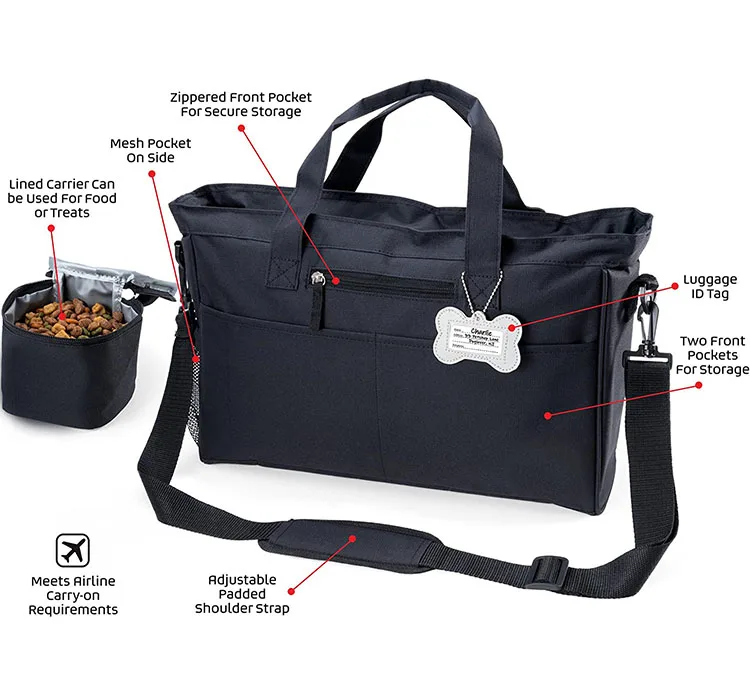
Feature lists in this segment are routinely padded with items that cost money and generate no perceived value. Four features earn their cost: a laptop or tablet sleeve, an exterior quick-access pocket, a wipeable lining in at least one compartment, and a comfortable harness with a chest strap. Two features rarely earn theirs: elaborate internal organisation and premium hardware finishes.
The laptop sleeve is the feature that most often determines whether the product sells, because the student is carrying one bag for two purposes. It costs a padded panel and a few operations, and it can be included at most price bands if it is specified as a sleeve rather than as a suspended, reinforced compartment. Specify the stated device size it fits, because that number is what appears in search behaviour.
The wipeable lining matters more than buyers expect. A bag used for a pet and for books will get dirty, and a lining that can be wiped rather than laundered fits dorm life better than one that requires a washing machine. Specify the coating by type with a stated rub or adhesion result, and keep the coated area to the compartment where it is actually needed rather than the whole interior.
Everything else should be questioned. Internal organisers add operations and cost and are frequently unused; a single well-sized pocket outperforms three small ones. Branded hardware looks premium in a photograph and adds cost that this price band cannot recover. The discipline is to justify each feature against a use case the student has, and to cut the rest before the first sample rather than after the first quote.
Material and Hardware at Entry Price Points
Material selection at this price band is about choosing the cheapest specification that survives the duty cycle, and the duty cycle for a student bag is moderate but rough: daily use, overloaded occasionally, set down on hard surfaces, dragged rather than lifted. The most common mistake is over-specifying fabric and under-specifying hardware.
A mid-grade polyester in the 400-600D range with a light PU backing is usually sufficient for the shell, and the saving against a heavier fabric funds better hardware. Lining fabric can be lighter still, with the coating doing the work in the compartment that needs it. Where the program wants a premium feel without a premium fabric cost, a textured or heather yarn gives perceived quality at a modest uplift.
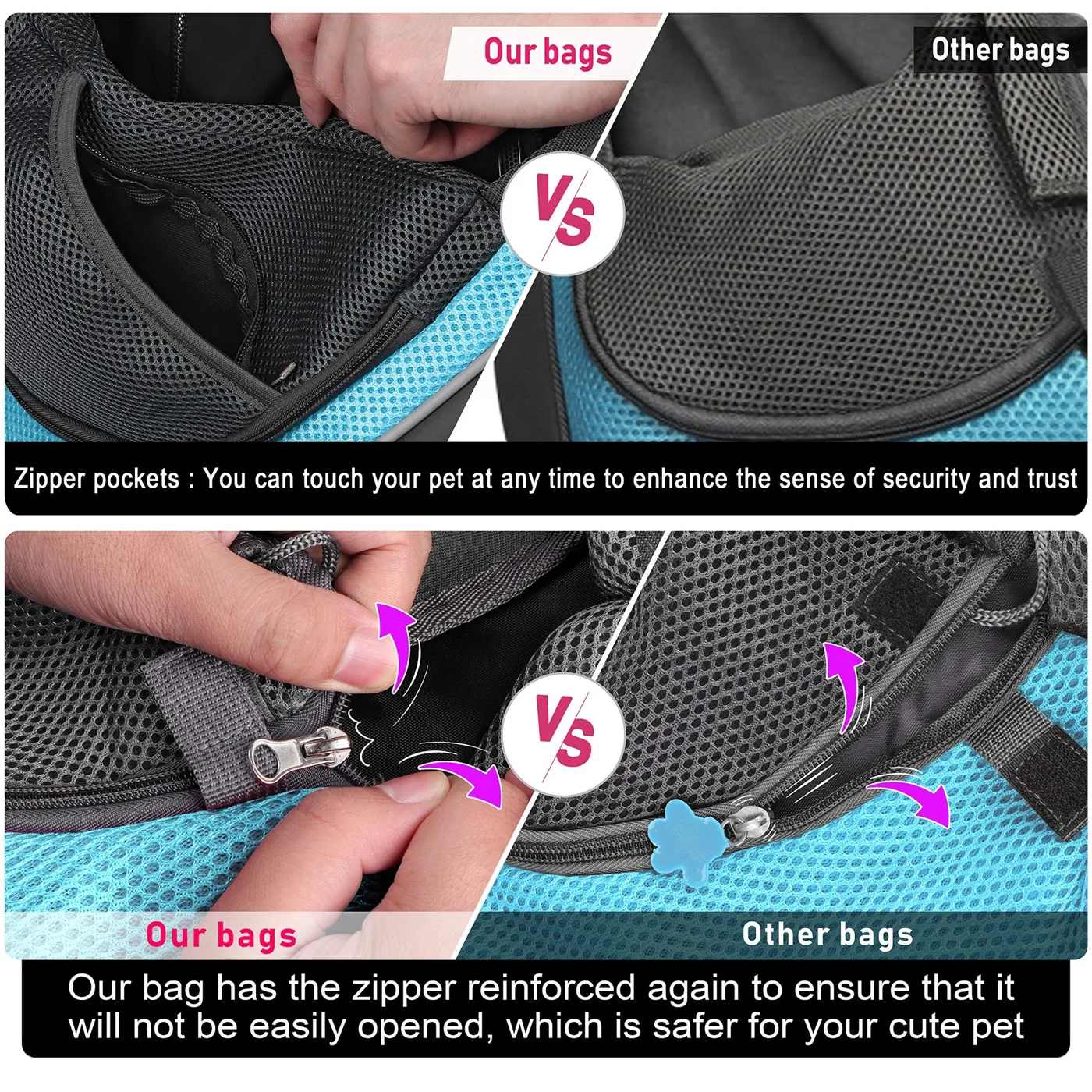
Hardware is where cost should not be cut. Zippers are the highest-frequency moving part in the product and the most common cause of a return; specify a named supplier part with a gauge and a cycle expectation. Buckles and adjusters should be specified by material and rating rather than by appearance. A saving of a few cents on a zipper produces a return that costs the whole unit price several times over.
Print and colour are the perceived-quality levers. A clean screen print in two or three spot colours reads better than a cheap-looking heat transfer with six colours, and it costs less. Specify print method and colour count deliberately, and reference AATCC test methods for colour fastness so the result is expressed in a form a retail compliance team recognises.
| Line | Over-specified | Right-sized | Saving | Risk of cutting |
|---|---|---|---|---|
| Shell fabric | 900D | 400-600D PU-backed | 6-10% | Low |
| Lining | Full coated | Coated in one compartment | 3-5% | Low |
| Zipper | Branded heavy gauge | Named part, rated gauge | 2-4% | High - do not cut below rating |
| Organisation | Three small pockets | One well-sized pocket | 4-6% | Low |
| Six-colour transfer | Two or three spot colours | 3-6% | Low | |
| Packaging | Printed box | Printed band and polybag | 2-4% | Low |
Cost Engineering to Hit a Target Retail Price
The working method for this segment is to fix the retail price first and engineer backwards through the margin structure, rather than designing a product and discovering its price. Start from the target retail, subtract the channel margin and the fulfilment or freight allocation, and the number that remains is the maximum landed cost. Everything after that is engineering against a fixed ceiling.
That method changes the conversation with the factory. Instead of asking for a cheaper version of a specified product, ask what specification is achievable at a stated landed cost - and ask it with the BOM broken out. Most of the answer comes from the levers in the table above, and a competent production team can usually find 12-20 percent without touching the features that sell the product.
Volume is the second lever and it is structural. At MOQ 500 pieces per colourway, fabric, print set-up and trim are all bought at the low end of their tiers, and the step to 1,000 or 1,500 units moves the unit cost more than any negotiation at fixed volume. Where the price target is genuinely out of reach, consolidating colourways is usually a better answer than cutting specification.
Freight deserves its own line in the model. A 22-34 litre bag is bulky relative to its value, so freight per unit is a meaningful share of landed cost and parcel-network weight thresholds are step changes rather than gradual. Model per carton and check the weight band boundary, because crossing it by fifty grams can cost more than saving two percent on fabric.
Where Not to Cut
Three lines should not be cut below rated specification: the zipper, the strap anchors and the pet restraint point. All three are safety-adjacent or failure-generating, and a saving of a few cents on any of them produces returns that cost several times the unit price.
The Four Numbers That Must Appear on the Listing
State the pet weight ceiling, the volume in litres, the empty weight and the largest device size the sleeve fits. Those four numbers answer the questions this segment actually asks, and listings that publish them sell through faster and return less than listings built on photography alone.
Sampling and Bulk Scheduling Around the Semester Cycle
Two sample rounds suit this format. Round one validates the shell, the feature set and - importantly - the empty weight against the target. Round two validates print, colour consistency across fabric, webbing and trim, and the packed carton. Each round runs 6-10 working days plus freight and evaluation, so four to six weeks is the realistic development window.
The semester calendar sets the schedule and it should be written down as dates rather than as durations. Start from the first week of term, subtract retail receiving time, subtract freight, subtract the 35-50 day bulk window, subtract four to six weeks of sampling, and then add a buffer for a re-test or a print correction. Programs that build this calendar in weeks rather than in dates are the ones that discover in August that their slot is gone.
Production slots tighten as the season approaches, which is an argument for placing earlier than the calculation strictly requires. A program that places a month early has negotiating room and a re-test buffer; a program that places on the calculated date has neither, and any slip becomes an air-freight decision at a cost the price band cannot absorb.
Release is conditional on an AQL 2.5 inspection with a written report. For this format, add a print-registration check and a completeness check, because a student-price product with a mis-registered logo is rejected by the channel and cannot be reworked economically.
Planning the Second Season While the First Ships
Begin the second-season brief while the first season is still selling, using the return reasons rather than the sales figures as the primary input. Returns tell you which specification was wrong; sales only tell you which colour was photographed best. A brief built on returns usually reaches target price in year two without changing the product's appearance.
Compliance, Labelling and Listing Requirements
Compliance for a student-style pet bag follows the general consumer product framework, with one recurring trap: the product resembles a school bag and some channels will ask whether it is intended for children. The answer depends on how it is styled, sized and marketed, and it should be settled before sampling rather than argued after production. The reference for United States obligations is the U.S. Consumer Product Safety Commission.
For European destinations, restricted substances run under REACH with the European Chemicals Agency as the reference, and a current test report matched to the fabric and trim references is what a compliance team will request. An OEKO-TEX certificate on the textile components is a fast way to answer the chemical question - see OEKO-TEX textile testing - and it costs far less than a delayed onboarding.
Labelling is straightforward but unavoidable: country of origin, fibre content, care instructions and any load or use warnings in the destination's format, approved before bulk cutting. For California destinations, review the Proposition 65 requirements before artwork is finalised, since warnings cannot be added after printing.
Listing requirements are the practical half of compliance in this segment. Marketplaces in this price band are competitive and enforce documentation on demand, so keep the material test reports, the sample approval form and the AQL 2.5 inspection report together by program and season. A listing challenged without documents available the same day is more often suspended than warned.
How to Brief a Student-Style Program Against a Price Ceiling
The most useful sentence in a student-segment brief is the landed cost ceiling, stated as a number with the assumed volume and Incoterm attached. Everything downstream - fabric grade, print method, pocket count, hardware specification - becomes a set of decisions made inside that constraint rather than a negotiation conducted after the fact.
Send the brief with the BOM structure requested explicitly: fabric, lining, coating, webbing, hardware, zipper, print, labour, packing and overhead as separate lines, with a note that the program will be engineered against the ceiling rather than discounted into it. That framing gets a materially better response than a request for a cheaper version of a specified product, because it gives the production team room to propose substitutions where they cost nothing.
Mark the non-negotiables and keep them to three or four. For this segment they are usually the zipper rating, the strap anchor pull, the stated device size the laptop sleeve fits, and the pet weight ceiling. Marking everything as critical produces a conservative quote and leaves no room for the engineering that actually gets the product to the target price.
Ask for two quotations against the same brief: one at 500 units per colourway and one at 1,500. The difference is the volume lever expressed in currency, and it is the number that decides whether the program should consolidate colourways rather than cut specification. Most student-segment programs find the answer there rather than in further design changes.
Finally, state the acceptance tests with figures: zipper cycles, strap anchor pull, colour fastness grade, empty weight and carton dimensions with units per carton. Written into the brief, they turn the first sample into a measured artefact, and they keep the second round focused on print and finishing rather than on structure.
Common Specification Mistakes in the Student Segment
The first recurring mistake is over-specifying the shell fabric while under-specifying the zipper. A heavier fabric survives abrasion marginally better and costs several percent more; a zipper that fails takes the whole product with it. At this price band the money belongs in the moving parts and the anchors, not in the denier count.
The second is a padded feature list copied from a premium product. Internal organisers, branded hardware and coated interiors throughout add cost that the student buyer does not perceive and will not pay for. Each feature should be justified against something the student does every day, and the ones that cannot be should be removed before the first sample rather than after the first quote.
The third is ignoring the parcel weight threshold. A bag that crosses a shipping band by a small margin costs more to deliver than a saving of two percent on fabric recovers, and the threshold is a step change rather than a slope. Check the packed weight against the band boundary at the brief stage, and if the product is close, engineer it under rather than over.
The fourth is treating the listing as an afterthought. In this segment the listing is the storefront, and it has to carry the pet weight ceiling, the volume, the empty weight and the stated device size. Products with those four numbers published sell through faster and return less than products with lifestyle photography and a paragraph of copy.
The fifth is placing to the calculated date rather than earlier. Production slots tighten as the semester approaches, and a program that places a month early has room for a print correction and a re-test. One that places on the calculated date has neither, and any slip becomes an air-freight decision at a cost the price band cannot absorb.
The cost of that slip is asymmetric in this segment. Air freight at a student price band consumes the entire gross margin and sometimes more, whereas placing a month early costs only the working capital of holding finished goods for a few additional weeks. Compared in those terms, early placement is almost always the cheaper decision, and it is the one experienced buyers in this segment make consistently.
Assortment and Replenishment Planning
Assortment for the student segment should be narrow and deep rather than broad and shallow. Two sizes and two colourways at 500 units each commits 2,000 units across four variants, which is usually enough to learn from and small enough to manage. A five-variant launch at the same total volume spreads the learning and raises the per-variant cost through print setup and trim minimums.
Size should follow pet weight in two steps - up to 5 kg and 5-9 kg - rather than three, because the student buyer's pet is usually small and the middle of a three-step ladder sells least. Colour should follow the season's palette rather than a fixed house palette, because the segment is trend-sensitive and a colour that looked right at sampling can be stale by the time the cartons land.
Replenishment planning should assume a short selling window and a hard end date. Order for the primary window, hold a modest buffer for the secondary term-start window, and plan to clear rather than to carry, because student styling dates quickly and leftover inventory in this segment rarely recovers its cost in a following year.
Where the range also carries a kids-style pet bag and a laptop-compatible work format, share fabric and trim buying across the three and differentiate on published capacity and pet weight ceiling. Consolidated trim buying is the single most reliable margin lever in this segment, and it is available to any program that plans its range as a family rather than as individual products. Consolidating a single fabric reference and a single trim package across three formats reduces the number of approvals, the number of test reports and the number of component minimums, and it concentrates volume where the price tiers actually respond. Buyers structuring a first assortment should also review the complete pet bag sourcing guide before fixing colourway counts.
One closing discipline separates the programs that work in this segment from those that do not: write the plan down as dates and as numbers before the first sample is ordered. The retail price, the landed cost ceiling, the colourway count, the in-warehouse date and the reorder trigger are five figures, and a program that knows all five at the briefing stage rarely needs to be rescued later.
Why brands source here
- Pet bag programmes run since 2014; founding team in sewn goods since 2004
- SGS-verified production floor of 4,950 m² with 137 workers across 7 lines
- Monthly capacity of 200,000 units, audited to BSCI and ISO 9001
People Also Ask
What makes a pet bag sell to students?
A price that fits the segment, a laptop sleeve, an exterior quick-access pocket, a wipeable lining and a colour that looks current - not durability marketing or premium hardware.
How much should a student-style pet bag weigh?
Set an empty-weight target on the brief and engineer to it. Every gram saved is capacity available for the pet and books within a comfortable carrying load.
Why does the semester calendar matter so much?
Because the demand window is fixed and short. A program that lands two weeks late is not late - it is unsold until the following academic year.
Should the bag have a laptop sleeve?
Yes, specified as a sleeve rather than a suspended reinforced compartment, with the stated device size published because that number drives search behaviour.
Is a coated lining worth it at an entry price?
Yes in one compartment. A lining that can be wiped rather than laundered fits dorm life better and costs far less than coating the entire interior.
How do I plan replenishment for a short season?
Order for the primary window, hold a modest buffer for the second term, and plan to clear rather than carry, because student styling dates quickly.
Frequently Asked Questions
What is the MOQ for a pet college bag program?
500 pieces per colourway. Fabric, print set-up and trim are bought in tiers that only work at volume, so the MOQ does not flex downward.
What volume suits a student-style pet bag?
22-34 litres, in two size steps - up to 5 kg and 5-9 kg. The middle of a three-step ladder sells least in this segment.
How long does sampling take?
6-10 working days per round, with two rounds typical: one for the shell and feature set, one for print, colour and pack-out.
What is the bulk production lead time?
35-50 days after sample approval and deposit clearance, with freight additional. Build the calendar as dates from the first week of term, not as durations.
Which inspection standard applies?
AQL 2.5 with a written report, extended with a print-registration check and a completeness check, since mis-registered logos cannot be reworked economically.
How do I hit a target retail price?
Fix the retail price first, subtract channel margin and freight allocation, and engineer the specification against the landed cost that remains rather than designing first and pricing afterwards.
Which features are worth their cost?
A laptop or tablet sleeve, an exterior quick-access pocket, a wipeable lining in one compartment, and a harness with a chest strap. Elaborate internal organisation and premium hardware finishes usually are not.
Where should I not cut cost?
The zipper, the strap anchors and the pet restraint point. All three are failure-generating or safety-adjacent, and cutting them produces returns costing several times the saving.
Is a student-style pet bag treated as a children's product?
Only if it is styled, sized or marketed for children under twelve. Settle that question before sampling, because the product resembles a school bag and channels will ask.
What payment and shipping terms are standard?
T/T 30/70 - 30 percent deposit, 70 percent before shipment - on FOB Xiamen. Alternative Incoterms can be quoted but change the landed cost model.
How many variants should a first season carry?
Two sizes in two colourways is usually right. A broader launch spreads the learning and raises per-variant cost through print set-up and trim minimums.
When is the demand window?
The four to six weeks before the academic year begins, with a smaller secondary window at the start of the second term. Both are fixed dates, and landing late means waiting a year.
Talk to QUANZHOU JUNYUAN BAGS about a wholesale pet bag order: MOQ 500 pieces per colourway, samples in 6-10 working days, bulk production in 35-50 days under AQL 2.5 inspection.
Get a free quote Request a sample