Pet School Bag: Kids Style Wholesale Guide
A kids-style pet school bag is a youth-scaled pet carry bag sold to families with children, and once it is styled or marketed for children it is assessed as a children's product with CPSIA obligations in the United States. Programs start at MOQ 500 pieces per colourway, sample in 6-10 working days per round, and run 35-50 days in bulk.
This is the one pet bag format where compliance, not cost, decides whether the program ships. If the product is styled, sized or marketed for children under twelve, United States rules treat it as a children's product and the evidence burden rises immediately. Commercial floor is MOQ 500 pieces per colourway, because the print set-up, trim package and testing regime do not scale down economically. Sample development runs 6-10 working days per round and kids-style programs usually need two rounds: one for scale and ergonomics, one for print, trim and labelling. Bulk production is 35-50 days after sample approval and deposit clearance, released only after an AQL 2.5 inspection with a written report. Terms are T/T 30/70, FOB Xiamen, with colour matched to a signed Pantone reference and approved in a controlled light box. Plan the test budget first, because children's-product testing is a fixed cost that does not amortise the way fabric does. Specify every trim component by reference with its own test report, since trim - not fabric - is where children's-product failures originate. Keep the pet weight ceiling low and honest: the intended user is a child, and the load limit is set by the child rather than by the bag.
Pet bag moq is quoted per colourway, not per order, so Pet Bag Types & Styles planning decides how many shades a launch can carry. A pet bag wholesale price that looks attractive at 500 units often shifts once the dye-lot minimum is added, and pet bag sample cost is normally credited back against the first production run.
Who the Kids-Style Pet Bag Actually Serves
A kids-style pet school bag is bought by an adult and used partly by a child, which is the defining commercial fact of the category. The adult is comparing it against a standard pet bag on price, safety and appearance. The child is comparing it against their own school bag on identity and colour. Programs that design only for the adult produce something sensible and unsellable; programs that design only for the child produce something appealing and non-compliant.
The realistic use case is a small pet - typically under 5 kg - carried by a child for short distances under adult supervision: a walk to a park, a visit to a groomer, a family outing. It is not a travel product and it should not be specified as one. That distinction matters because it sets the structural requirements: no chassis, no wheels in most cases, modest capacity, and a load limit driven by the child's strength rather than the bag's.
Channel placement follows the buyer. Mass retail, toy and gift channels, e-commerce marketplaces and back-to-school adjacency all work; airline and travel retail do not. The strongest adjacency is the school-season fixture, because the product visually belongs there and the adult shopper is already in a buying frame of mind.
One caution on positioning: the pet inside the bag is the reason for purchase, and the kids styling is the reason for choice. Listings that lead with styling and bury the pet fit convert worse than listings that lead with the pet weight range and show the styling second. That ordering also keeps the compliance narrative coherent, since the product remains a pet bag that happens to be styled for children.
CPSIA and Children's-Product Rules You Cannot Skip
If a pet bag is designed or intended primarily for children twelve years of age or younger, United States law treats it as a children's product and the obligations attach regardless of how the supplier describes it. The controlling framework is administered by the U.S. Consumer Product Safety Commission, and the practical requirements that affect a sewn soft-goods program are lead content limits, phthalate limits in accessible plasticised materials, tracking labels, and third-party testing by an accepted laboratory with a certificate issued against the finished product or its components.
The requirement buyers most often underestimate is the tracking label. A children's product needs a permanent label on the product and on the packaging carrying specific information that identifies the manufacturer, the location and date of production and the batch. That is an artwork and a production-control requirement, not a paperwork formality, and it has to be resolved before bulk cutting rather than during packing.
Third-party testing is a fixed cost with a schedule. Testing the finished product or accepting component-level results takes time, and the certificate has to be in place before the goods are offered for sale. Budget both the money and the calendar at the briefing stage. A program that discovers the requirement after production is finished has a warehouse of unsaleable stock, which is the worst outcome in this category.
European and other destinations add their own layers. Restricted substances run under REACH with the European Chemicals Agency as the reference, and California adds the Proposition 65 warning framework. For textile-specific evidence, an OEKO-TEX certificate on the fabric and trim is a fast way to answer the chemical question a retail compliance team asks first - see OEKO-TEX textile testing for the standard families available.
Sizing Down: Pet Weight, Child Strength and Bag Geometry
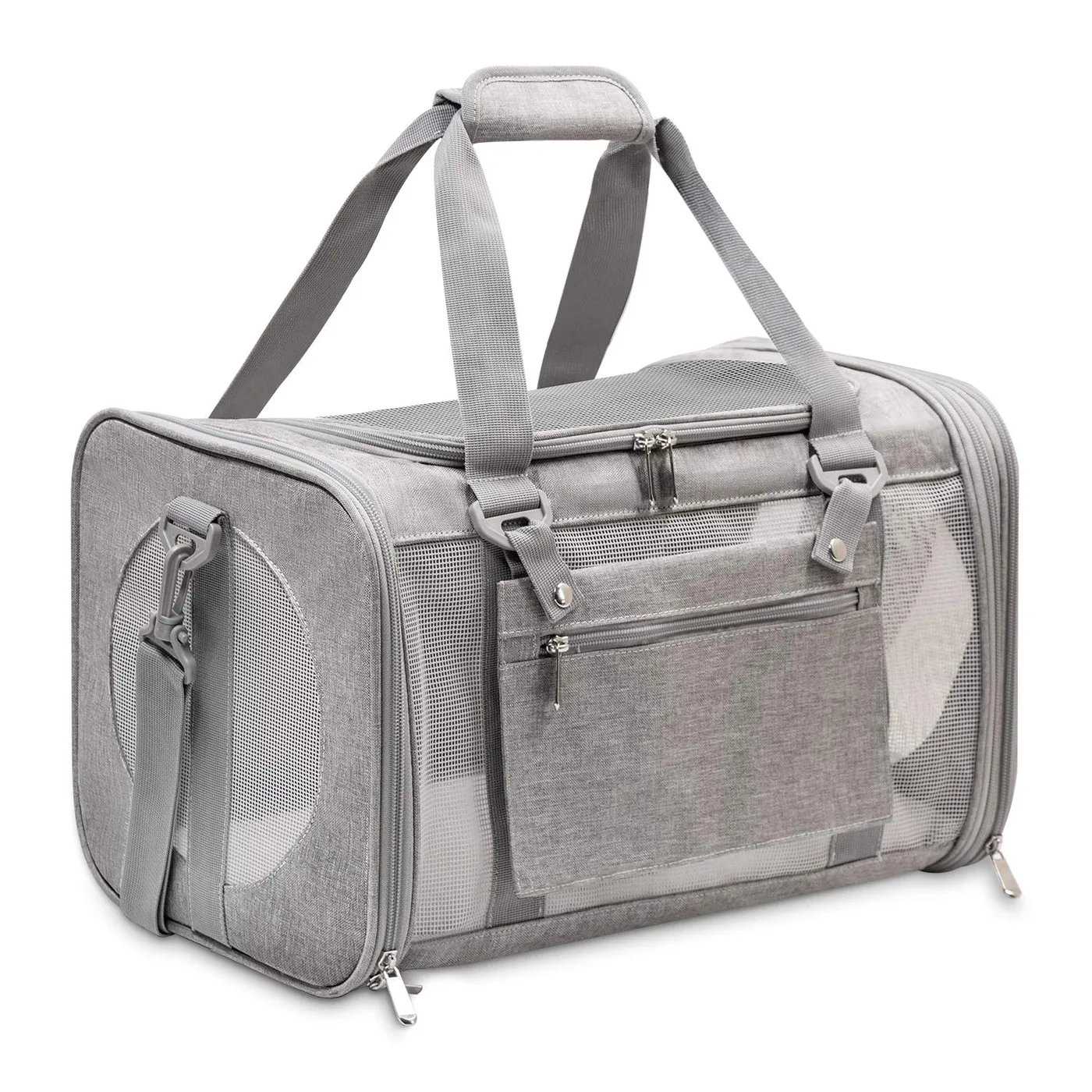
Sizing a kids-style pet bag means satisfying two constraints that pull against each other. The bag has to be big enough for the pet and small enough for the child, and there is a narrow band where both are true. In practice that band is a pet up to about 5 kg and a bag volume in the 12-20 litre range, with an empty weight kept as low as the structure allows.
Interior floor dimensions matter more than volume here. A pet needs enough floor to sit or lie, but a bag that is deep enough for a 6 kg animal is too tall on a child's back and shifts the load backward. Specify floor length and width first, then allow height only up to the point where the load centre stays close to the child's back.
Empty weight is the governing number. A child carrying a pet should be carrying a total load that is a small fraction of their body weight, and every hundred grams saved on the bag is a hundred grams of pet available. Set an empty-weight target on the brief - commonly under 900 grams for this format - and engineer to it by choosing lighter fabric, a thinner base insert and minimal hardware.
Strap geometry is the last sizing decision and the one most often copied from an adult product. Children need narrower strap spacing, shorter strap length and a chest strap positioned higher. Specify the adjustment range in centimetres and test the fit on a small user at the sample stage, because a harness copied from an adult bag will slide off a child's shoulders and the product will be returned as defective when it is simply mis-sized.
| Parameter | Target | Why it matters | Evidence required |
|---|---|---|---|
| Pet weight ceiling | up to 5 kg | Set by the child, not the bag | Stated on product and listing |
| Volume | 12-20 L | Keeps load centre near the back | Dimensional check |
| Empty weight | under 900 g | Leaves load capacity for the pet | Weighed sample record |
| Lead content | Within CPSIA limits | Children's-product obligation | Third-party test report |
| Phthalates | Within limits | Applies to accessible plasticised parts | Third-party test report |
| Tracking label | On product and package | Identifies maker, place, date, batch | Approved artwork |
Testing: Small Parts, Drawstrings, Lead and Phthalates
Four test areas dominate children's-product assessment for a sewn pet bag, and each has a design consequence that is cheaper to address before sampling than after. Small parts: any component that can detach and fit within the small-parts cylinder is a hazard, which rules out decorative buttons, rivets with weak retention and any glued-on embellishment. Specify sewn or heat-bonded decoration instead, and require a pull test on every applied component.
Drawstrings are the second area and they are a design decision rather than a material one. Drawstrings in the head and neck area of a children's upper-body garment are a known hazard; while a pet bag is not a garment, the same caution should govern any cord that runs near a child's neck. The safe specification is no cord in the upper region at all - use elastic loops, magnetic closures or a zip instead.
Lead and phthalates apply to substrates and to accessible coatings and plasticised components. The practical control is procurement discipline: buy fabric and trim from suppliers who can produce current test reports matched to the exact reference being used, and require written notice before any substitution. Substitution without notice is the mechanism by which a compliant sample becomes a non-compliant production batch.
The fourth area is the finished-product verification itself. Commission third-party testing against the applicable limits on the pre-production sample and keep the certificate with the program file. Where an internal bench test can answer a question - pull strength on an applied component, for instance - use it for iteration and reserve the laboratory for the formal record. Reference ASTM standards for the mechanical test methods and SGS for independent testing and inspection.
Trim Is the Risk, Not the Fabric
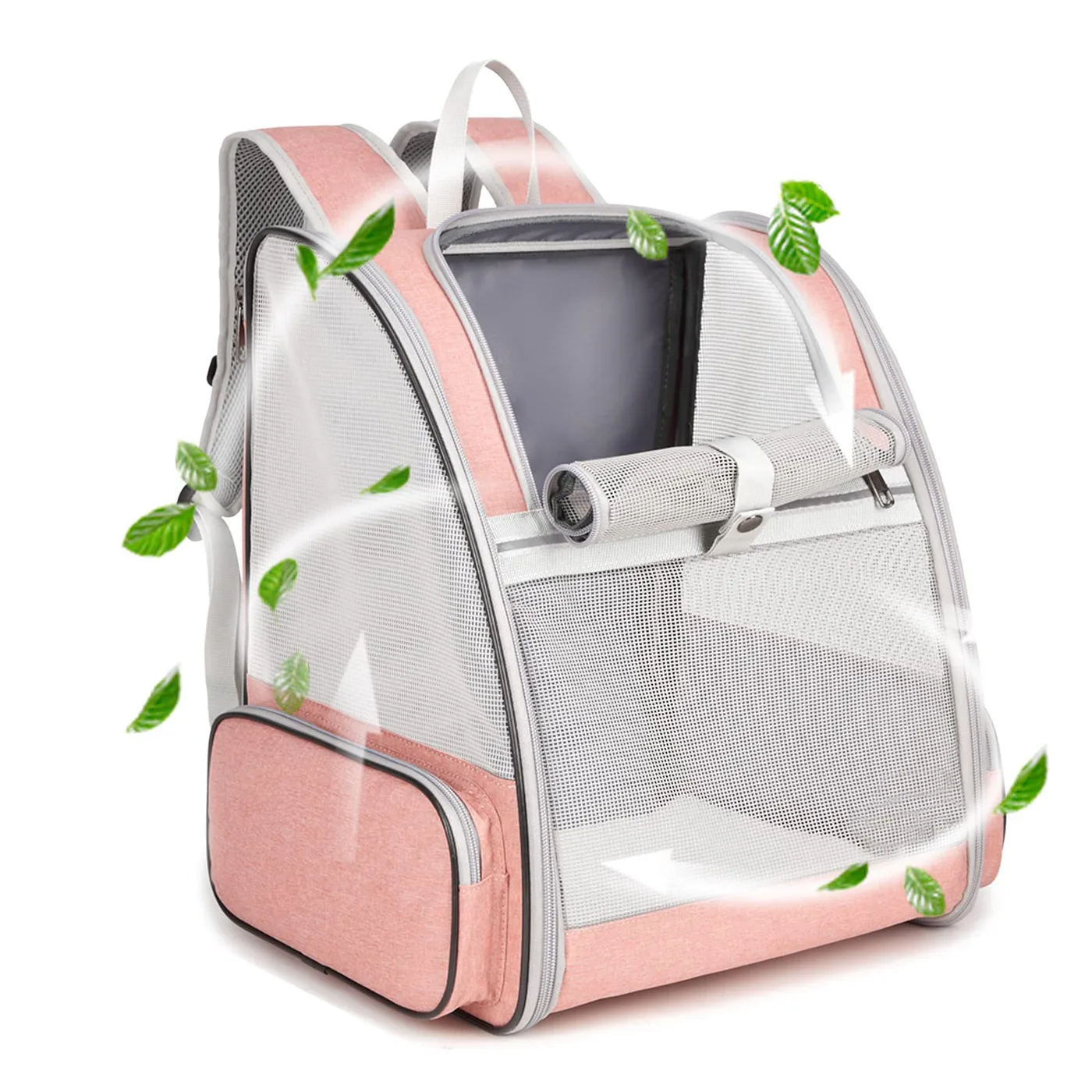
Compliance failures in sewn children's products almost always originate in trim - zipper pulls, coatings on hardware, printed patches and plastic components - rather than in the body fabric. Buy trim from suppliers with current matched reports and treat every trim reference as a controlled item with its own approval.
Colour, Print and Licensing Considerations
Kids styling lives or dies on colour and print, and the commercial risk sits in two places: colour-fastness performance and intellectual property. Both are resolvable at the briefing stage and both are expensive to resolve later.
Colour-fastness matters because children's products are washed, wiped and dragged. Specify a fastness grade for washing, rubbing and light, and reference AATCC test methods so the result is expressed in a form a retail compliance team recognises. A print that bleeds in the first wash produces a complaint about the whole product, and bleeds are a specification failure rather than a printing accident.
Print method selection follows volume and colour count. Screen print is durable and cost-effective for flat colour at volume; heat transfer handles photographic artwork and gradients but has a different durability profile; digital print suits short runs and high colour counts. At MOQ 500 pieces per colourway, screen print is usually the right answer for simple artwork and transfer is right for complex artwork - and the choice should be made before the artwork is finalised, not after.
Licensing is the commercial risk. Character artwork, school-crest-style marks and anything resembling a known brand require written permission, and marketplaces enforce this aggressively. The safe wholesale position is original artwork created for the program, held with proof of authorship, or artwork the buyer supplies with a documented licence. Never accept a supplier's suggestion to use a familiar character "because everyone does".
Colourway strategy should be conservative in the first season. Two or three colourways at 500 units each is enough to learn which direction the market prefers, and it keeps the testing and artwork budget focused. Adding colourways multiplies both the print set-up cost and the number of items that need their own test evidence.
Cost Structure at Youth-Friendly Price Points
Youth price bands are unforgiving because the adult buyer has a reference price in mind from the school-bag category, and the pet bag version has to land near it. That compresses the margin and makes cost engineering the central activity of the program rather than a late-stage negotiation.
The cost levers, in order of effect: fabric grade and coating, print method and colour count, hardware specification, and pack-out. Fabric is the largest line and the easiest to over-specify; a mid-grade polyester with a light coating usually meets the duty cycle for this product. Print colour count is the second lever and it is almost always over-specified - each additional spot colour adds set-up and registration cost at 500 units.
Testing cost behaves differently from every other line in the category: it is largely fixed and it does not amortise with volume in the way fabric does. That means the testing cost per unit at 500 pieces is several times what it is at 3,000 pieces, and it is a structural argument for fewer colourways and higher volume per colourway in this format specifically.
Pack-out deserves attention because youth products sell on shelf impact. A printed hangtag or a shaped card costs a small amount and can carry the pet weight range, the age guidance and the compliance information in one place. Budget for it, because a product that looks unfinished at the shelf does not get a second look regardless of price.
Where the Money Goes in a Kids-Style Program
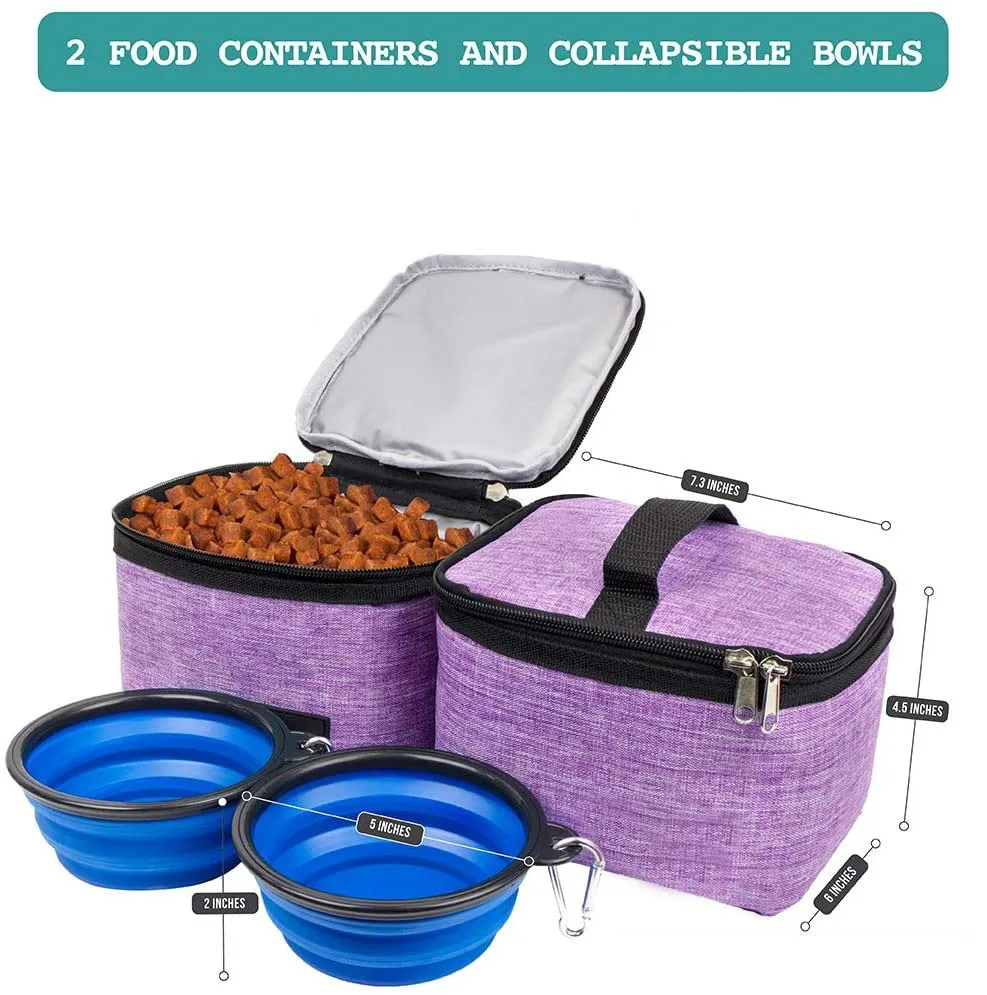
Rank the cost lines by size and you will usually find fabric first, testing second and print third. The mistake is cutting fabric to protect the testing budget: fabric is the line that can be reduced safely if the trim and the print are specified well, and testing is the line that cannot be reduced at all without losing the channel.
Sampling, MOQ and Colourway Strategy
Plan two sample rounds. Round one validates scale and ergonomics: does the bag sit correctly on a child, does the pet fit, is the empty weight on target, and are the straps adjustable across the intended age range. Round two validates print, trim, labelling and packaging, including the tracking label artwork. Each round runs 6-10 working days plus freight and evaluation, so four to six weeks is realistic.
Ballast the sample with a weighted load at the stated maximum pet weight and have a child or a small-framed adult wear it. A bag that photographs beautifully and sits badly on a small user will be returned, and the return will be recorded as a quality defect rather than a fit issue.
Colourway strategy at 500 pieces per colourway should be deliberately narrow in the first season. Two colourways commits 1,000 units; three commits 1,500. Because each colourway carries its own print set-up and its own test evidence, the incremental cost of a third colourway is higher than buyers expect, and the incremental learning is lower.
Bulk runs 35-50 days after sample approval and deposit clearance, with release conditional on an AQL 2.5 inspection and a written report. For children's products, extend the plan with a trim-integrity check - pull every applied component - and a labelling check confirming the tracking label is present and legible on both the product and the package. Missing or illegible tracking labels are a compliance failure, not a cosmetic one.
Working the Testing Budget Into the Calendar
Children's-product testing is the item most often left out of the schedule and it is frequently the longest lead-time activity in the whole program. It runs in parallel with sampling, not after it, and it needs the pre-production sample built from bulk materials - which means the material references have to be locked earlier than they would be for an adult product.
Practical sequencing: lock fabric and trim references at the end of round one, commission component-level evidence immediately, build the pre-production sample, then commission finished-product testing. Running that sequence in parallel with the 35-50 day bulk window is possible, but only if the references were locked early, and any substitution after locking restarts the evidence rather than just the sewing.
Budget the cost as a fixed program expense rather than as a per-unit cost, and recognise that it does not amortise with volume the way fabric does. That is a structural argument for fewer colourways at higher volume per colourway in this format specifically, and it is the reason a two-colourway first season usually produces better unit economics than a four-colourway one.
Channel Requirements: Toy, Mass and E-Commerce Pack-Out
Channel requirements for kids-style pet bags are stricter than for any other pet bag format, and they differ sharply between channels. Toy and mass retail typically require their own compliance documentation package in addition to the statutory one, often with a specific certificate format and a specific submission window that opens months before the season. Missing that window is equivalent to missing the season.
E-commerce marketplaces require documentation on demand rather than on schedule, but they enforce it more abruptly. Have the children's-product certificate, the tracking-label artwork and the material test reports ready to upload, and keep them by program and season. A listing challenged without those documents available within a day is frequently suspended rather than warned.
Pack-out requirements diverge. Mass retail wants a shelf-ready presentation with the pet weight range and age guidance legible from the fixture, and it will specify carton count and cube. Marketplace fulfilment wants individual polybag, a scannable barcode and a carton built for a parcel network. Both want the compliance information visible on the retail package, not only inserted as a loose sheet.
Age guidance is the last item and it is worth stating explicitly. Publishing a recommended age range - for example, suitable for children aged six and above with adult supervision - sets expectations, supports the safety narrative, and gives the customer service team a clear answer when a question arrives. Programs that omit it tend to receive the questions anyway, without a prepared answer.
The same principle applies to the pet side of the specification. State the pet weight ceiling, the interior floor dimensions and the ventilation open area, and keep those three numbers identical across the product label, the package and the listing. Divergence between them is a common source of marketplace challenges, and it is entirely avoidable with one approved set of figures used everywhere.
Building the Range: Adjacency and Replenishment
The kids-style pet bag performs best as part of a family range rather than as a standalone novelty. A shared colour story across a kids-style bag, a student-style bag and an adult format lets a retailer merchandise one family and lets a buyer consolidate trim and fabric purchasing across three products - which is where the real margin in this segment comes from.
Seasonality follows the school calendar. Demand builds in the weeks before the academic year and in the gifting window, and both are fixed dates rather than flexible ones. Work backwards from the in-warehouse date through freight, the 35-50 day bulk window, four to six weeks of sampling and - critically - the testing schedule, which runs in parallel and can be the longest item on the critical path.
Replenishment should be planned conservatively for a first season. Order to the colourway count you can test properly, hold a small buffer, and use the sell-through data to decide whether the second season expands sizes, colourways or both. Programs that expand before they have data carry inventory into the off-season, and youth-styled inventory dates faster than neutral styling.
Where the line already includes a pet tote format or a hands-free pet backpack, keep the kids-style product visually distinct on the fixture and differentiated in the listing on pet weight ceiling and age guidance. Without that separation the three cannibalise each other, and the cheapest one wins on price rather than on fit.
Order and quality terms
- MOQ 500 pieces per colourway; samples in 6-10 working days
- Bulk production 35-50 days after approval; AQL 2.5 inspection standard
- T/T 30/70 terms, FOB Xiamen, full document set per shipment
People Also Ask
Can a pet bag be marketed to children safely?
Yes, provided it is specified, tested and labelled as a children's product, with the pet weight ceiling set by the child rather than by the bag.
What empty weight should a kids pet bag target?
Commonly under 900 grams. Every gram saved on the bag is capacity available for the pet within a child's safe carrying load.
Do I need original artwork for kids styling?
Yes. Character and brand artwork requires written permission and marketplaces enforce it aggressively. Commission original artwork and keep proof of authorship.
How do I keep print from bleeding in the wash?
Specify fastness grades for washing, rubbing and light, reference AATCC methods, and test the printed pre-production sample rather than the fabric alone.
Which channel is hardest to onboard for this format?
Toy and mass retail, because they require their own compliance package with a certificate format and a submission window that opens months before the season.
Should a kids pet bag be part of a larger range?
Yes. Sharing a colour story and trim buying across kids, student and adult formats is where the margin in this segment actually comes from.
Frequently Asked Questions
Is a kids-style pet bag legally a children's product?
If it is designed or intended primarily for children twelve or younger, yes, and CPSIA obligations attach regardless of how the supplier describes it. Confirm the assessment before sampling, not after production.
What is the MOQ for a kids-style pet bag program?
500 pieces per colourway. Print set-up, the trim package and the testing regime do not scale down economically below that volume.
What testing is required before selling in the United States?
Lead content, phthalates in accessible plasticised materials, third-party testing by an accepted laboratory with a certificate, and a permanent tracking label on both product and packaging.
How much pet weight should a kids-style bag carry?
Up to about 5 kg. The load limit is set by the child rather than by the bag, and publishing a higher figure invites an incident.
How long does sampling take?
6-10 working days per round, with two rounds typical - one for scale and ergonomics, one for print, trim and labelling.
What is the bulk production lead time?
35-50 days after sample approval and deposit clearance, with freight additional. Testing runs in parallel and can be the longest item on the critical path.
Which inspection standard applies?
AQL 2.5 with a written report, extended with a trim pull check and a labelling check confirming the tracking label is present and legible.
Why is trim the biggest compliance risk?
Because lead and phthalate failures originate in coatings on hardware, zipper pulls and printed patches rather than in body fabric. Buy trim with current matched reports and treat every reference as controlled.
Are drawstrings allowed on a children's pet bag?
Cords near a child's neck should be avoided entirely. Use elastic loops, magnetic closures or a zip instead, and remove the hazard at the design stage.
How many colourways should a first season carry?
Two or three. Each colourway carries its own print set-up and its own test evidence, so the incremental cost is higher and the incremental learning lower than buyers expect.
What payment and shipping terms are standard?
T/T 30/70 - 30 percent deposit, 70 percent before shipment - on FOB Xiamen. Alternative Incoterms can be quoted but change the landed cost model.
When should I place an order for the school season?
Work backwards from the required in-warehouse date through freight, 35-50 days of bulk, four to six weeks of sampling and the testing schedule, then add a buffer.
Talk to QUANZHOU JUNYUAN BAGS about a wholesale pet bag order: MOQ 500 pieces per colourway, samples in 6-10 working days, bulk production in 35-50 days under AQL 2.5 inspection.
Get a free quote Request a sample