Pet Picnic Bag: Outdoor Style Buying Guide for Wholesale Orders
A wholesale pet picnic bag should be specced at 22-30 L with a welded insulated compartment of 6-9 L holding temperature for 4-6 hours, a food-contact-compliant lining, a rigid 4 mm base and a separate pet cavity rated 5-9 kg. Expect USD 10.40-18.60 FOB Xiamen. Orders run at MOQ 500 pcs per colourway, sample in 6-10 working days and ship 35-50 days after approval under AQL 2.5.
Executive Summary
This guide covers the picnic-positioned pet bag: a hybrid product that carries food and an animal in the same shell. That combination introduces a requirement most pet bags never face - the food compartment has to satisfy food-contact rules - and it is where most programmes in this category get into trouble.
Our production team runs these programmes at MOQ 500 pcs per colourway, with mixed colourways permitted inside one order. Samples take 6-10 working days from tech pack confirmation and bulk runs 35-50 days after sample approval. Shipments are offered to AQL 2.5 pre-shipment inspection with third-party inspectors accepted, on T/T 30/70 against FOB Xiamen.
Three decisions shape the outcome: whether the insulated compartment is welded or stitched, which food-contact declaration the lining can support, and how the bag stays open and stable on uneven ground. A fourth deserves equal weight: which channel the SKU is built for. Gifting and outdoor retail want different things from the same shell, and a product designed to satisfy both usually satisfies neither at the price either channel expects.
Pet bag lead time is quoted from sample approval, not from enquiry, and Pet Bag Types & Styles choices are the main variable inside that window. Pet bag production time stretches when a colourway is added late, so pet carrier lead time and pet bag wholesale cost should be agreed in the same email.
Defining the Picnic Pet Bag and Where It Sells
A picnic-positioned pet bag is an outdoor lifestyle product that combines a food-carrying compartment with a pet-carrying cavity in one structured shell. It is bought for parks, festivals, gardens and weekend drives rather than for commuting or travel, and it is frequently purchased as a gift. Those two facts - outdoor use and gifting - drive the specification in opposite directions from a technical travel bag.
The channel profile is unusually broad, which is both the opportunity and the risk of the category. Garden-centre and homeware retailers, gift and hamper companies, outdoor-lifestyle marketplaces and subscription boxes all buy picnic pet bags, and each has a different price expectation and a different tolerance for technical specification. A buyer who tries to serve all four with one build usually ends up with a product that is too expensive for the gift channel and too plain for the outdoor channel.
- Gift and hamper: USD 45-70 retail, presentation matters more than performance.
- Homeware and garden retail: USD 55-85 retail, wants stable structure and a cleanable surface.
- Outdoor lifestyle: USD 70-110 retail, wants genuine thermal performance and durable materials.
- Marketplace: USD 39-65 retail, wins on photography and on review volume.
The practical recommendation is to fix the channel before fixing the spec. If the primary channel is gifting, spend the budget on packaging, colour and branding and keep the insulated compartment simple. If it is outdoor retail, spend it on welded seams, insulation thickness and hardware. Attempting both at once produces a mid-priced product that no channel champions.
One further commercial point specific to this category: picnic bags are among the most photographed products in a pet lifestyle range, and they are frequently bought as presents. That means the unboxing experience and the out-of-box silhouette carry more weight than in almost any other SKU, and a bag that arrives crushed in its carton has already lost its most important moment.
Finally, note the seasonal shape. Picnic sells from late spring to early autumn with a strong Mother's Day and gifting spike, which is a longer window than beach but still a window. Plan the buy against a forecast and plan the markdown in advance, in the same way as any seasonal programme.
Insulated Compartment Design and Thermal Performance
The insulated compartment is the reason a customer pays for a picnic bag rather than a tote, so it is the part worth specifying properly. Performance here has three drivers: insulation thickness and type, seam construction, and the quality of the closure. Of these, seam construction is the one most often overlooked and the one that most often fails.
A stitched insulated compartment leaks thermally at every needle hole and, worse, leaks liquid. A welded compartment - high-frequency welded TPU-laminated fabric with sealed seams - holds temperature properly and contains a melted ice pack. The cost difference of USD 1.40-2.60 per unit is the single best-value upgrade available in this category, and it is also the basis of any credible leak-proof claim in the listing.
| Option | Insulation | Hold time | Cost impact |
|---|---|---|---|
| Stitched lining, 3 mm foam | PE foam | 1.5-2.5 h | baseline |
| Stitched lining, 6 mm foam | PE foam | 2.5-3.5 h | + USD 0.55-0.95 |
| Welded TPU, 6 mm foam | Closed-cell PE | 4-6 h | + USD 1.40-2.60 |
| Welded TPU, 8 mm + reflective layer | PE + aluminium film | 6-9 h | + USD 2.20-3.80 |
Hold time should be specified as a measured result with the test conditions written down: a stated volume of water at a stated starting temperature, a stated ambient temperature, and a stated end temperature. "Keeps food cold" is not a specification. "Holds 4 kg of food at or below 8 degrees Celsius for five hours from a 4 degree start at 25 degrees ambient" is a specification, and it is the difference between a claim you can defend and one you cannot.
Closure quality is the third driver and the cheapest to fix. A welded compartment with a zip that does not close fully has no thermal performance at all. Specify a #8 coil zip with a full-length fabric garage and a puller that is easy to operate while holding the bag steady, and test the sample with a thermometer rather than with a hand.
Volume is the last decision: 6-9 L is the working range. Below 6 L the compartment will not hold a realistic picnic load for two people; above 9 L it dominates the bag and compromises the pet cavity. Get this balance wrong and the product fails as either a food bag or a pet bag, whichever side was squeezed.
Food-Contact Compliance for Linings and Insulation
This is the section most picnic pet bag programmes skip, and it is the one that creates real legal exposure. Any surface intended to come into contact with food is a food-contact material in both the United States and the European Union, and it carries a documentation obligation that a generic bag supplier may not volunteer.
In the US, food-contact substances are regulated through the Food and Drug Administration's food-contact notification and clearance framework, and the practical buyer requirement is a written statement that the lining and insulation materials are compliant for the intended use, supported by the material supplier's declaration. In the EU, the framework regulation on food-contact materials applies, and member states add their own requirements - German buyers, in particular, will ask for LFGB-style test evidence.
The practical approach is to buy the declaration with the material. Certified food-contact linings and insulation foams are available at a modest premium, and specifying them at design stage costs USD 0.20-0.60 per unit. Retrofitting a compliance statement after production means either re-ordering material or shipping without a document that a retailer is entitled to ask for.
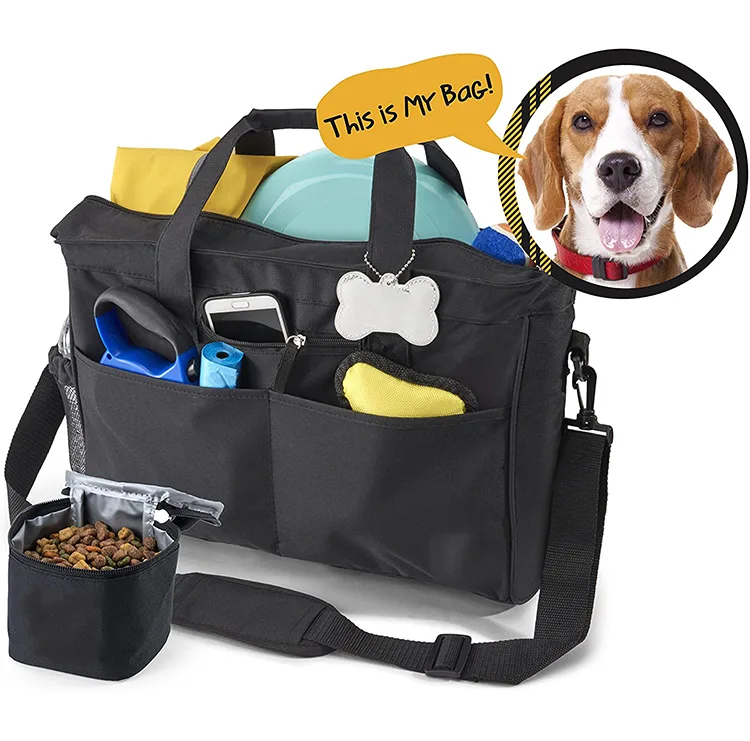
- Lining: certified food-contact, welded rather than stitched where it forms the food cavity.
- Insulation foam: closed-cell, with a supplier declaration for food-contact use.
- Adhesives: declared, because they sit between layers of a food-contact assembly.
- Zip tape and puller: inside the food cavity, so they need to be part of the declaration.
- Printing inks: only on the outside of any surface that may touch food.
Chemical substance restrictions apply alongside food-contact rules. In the EU, REACH restrictions are administered by the European Chemicals Agency, and coatings, adhesives and inks are the components typically examined. In the US, state-level exposure requirements such as California's Proposition 65 apply in parallel with federal rules.
The safest copy position is deserving of a sentence: state that the insulated compartment is intended for packaged food and ice packs, and avoid implying that unwrapped food should be placed directly against the lining unless the material declaration supports it. That single sentence in the instruction insert removes a category of complaint that is otherwise almost inevitable.
What to ask the supplier for, in writing
Ask for four documents before placing the order: a material declaration for the lining and foam naming the applicable regulation, a test report for overall migration or its national equivalent, a declaration covering adhesives and inks used in the assembly, and confirmation that the declaration covers the specific lot being produced. A supplier who can produce all four within a week is a supplier whose material chain is already under control.
A fifth document is the one buyers forget: confirmation that the declaration covers the production lot rather than the development sample. Material suppliers change formulations and certificate scope lapses, and a declaration dated eighteen months before the production date will be questioned at retail onboarding.
It is also worth asking how the declaration handles the assembled article. Food-contact compliance is assessed on the finished article in contact with food, not on the raw material in isolation, so the assembly - adhesives, seam construction and any printing inside the cavity - has to be consistent with what was declared. A welded cavity built from certified material is straightforward; the same material assembled with an undeclared adhesive is not.
The fifth document is the one buyers forget: confirmation that the declaration covers the production lot, not just the development sample. Material suppliers change formulations and certificate scope lapses, and a declaration dated eighteen months before the production date will be questioned at retail onboarding.
It is also worth asking how the declaration handles the assembled article. Food-contact compliance is assessed on the finished article in contact with food, not on the raw material in isolation, so the assembly - adhesives, seam construction, any printing inside the cavity - has to be consistent with what was declared. A welded cavity built from certified material is straightforward; the same material assembled with an undeclared adhesive is not.
Structure, Stability and the Standing-Open Problem
A picnic bag has to do something almost no other bag in the range does: stand upright and stay open on grass, gravel or a picnic blanket while the owner unpacks it. Most pet bags are carried, set down briefly and closed. This one is a temporary piece of furniture, and customers judge it accordingly.
Stability starts with the base. A 4 mm laminated board with a footprint that is not less than 60% of the bag's length dimension, plus five moulded feet, will stand on uneven ground. A narrower base will tip the moment a pet shifts weight or a bottle is set inside. The feet matter more than buyers expect: without them, damp grass transfers immediately through the base panel.
Staying open is a separate problem with a separate answer. A stiffened top lip - a 2 mm foam insert in the perimeter of the opening, or a light wire frame in a welded channel - holds the mouth of the bag open so it can be loaded one-handed. Without it, the panels fold inward every time and the customer has to hold the bag open with one hand while packing with the other, which is precisely the moment they decide the product is badly designed.
- Base: 4 mm laminated board, footprint at least 60% of bag length, five feet.
- Top: stiffened perimeter lip, holds open under its own stiffness.
- Divider: rigid panel between the food cavity and the pet cavity, not a fabric sleeve.
- Centre of gravity: below the midpoint when both cavities are loaded.
- Handles: two roots set close to the vertical centreline so the bag lifts level.
Load separation deserves emphasis because it is the safety-critical element. The food cavity and the pet cavity must be divided by a rigid, cleanable panel. A fabric divider allows a pet's weight to deform the food compartment and allows liquids and crumbs to migrate in both directions, which is both a hygiene problem and a review problem.
Test the standing-open behaviour on grass, not on a bench. A bag that performs on a flat surface can fail completely on soft ground, and the customer's first use is almost always on grass.
Material and Cleanability for Outdoor Food Use
Outdoor food use is messy by definition: spilled drinks, greasy packaging, condensation from ice packs, grass stains and the occasional accident. Material selection should assume that the lining will be wiped, not washed, and that the exterior will be set down on damp ground.
For the exterior, 600D polyester with a durable water-repellent finish is the entry point and 900D is the working default. A canvas exterior looks right for the category and performs poorly: it absorbs spills, stains and dries slowly. If the brand position requires canvas, treat it with a finish and accept that the care instructions will be spot-clean only, and put that on the hangtag.
For the interior, the requirement is a wipe-clean coated lining that is also food-contact compliant, which narrows the field and is why this decision belongs early in development. Pale linings photograph beautifully and show every mark; a mid-tone that hides staining is the more practical choice for a product that will meet tomato sauce.
Abrasion and colour-fastness behaviour should be measured to a named standard. AATCC textile test methods are the usual reference for abrasion, rubbing and colour fastness, and a test report that cites a method number is enforceable in a way that an adjective is not.
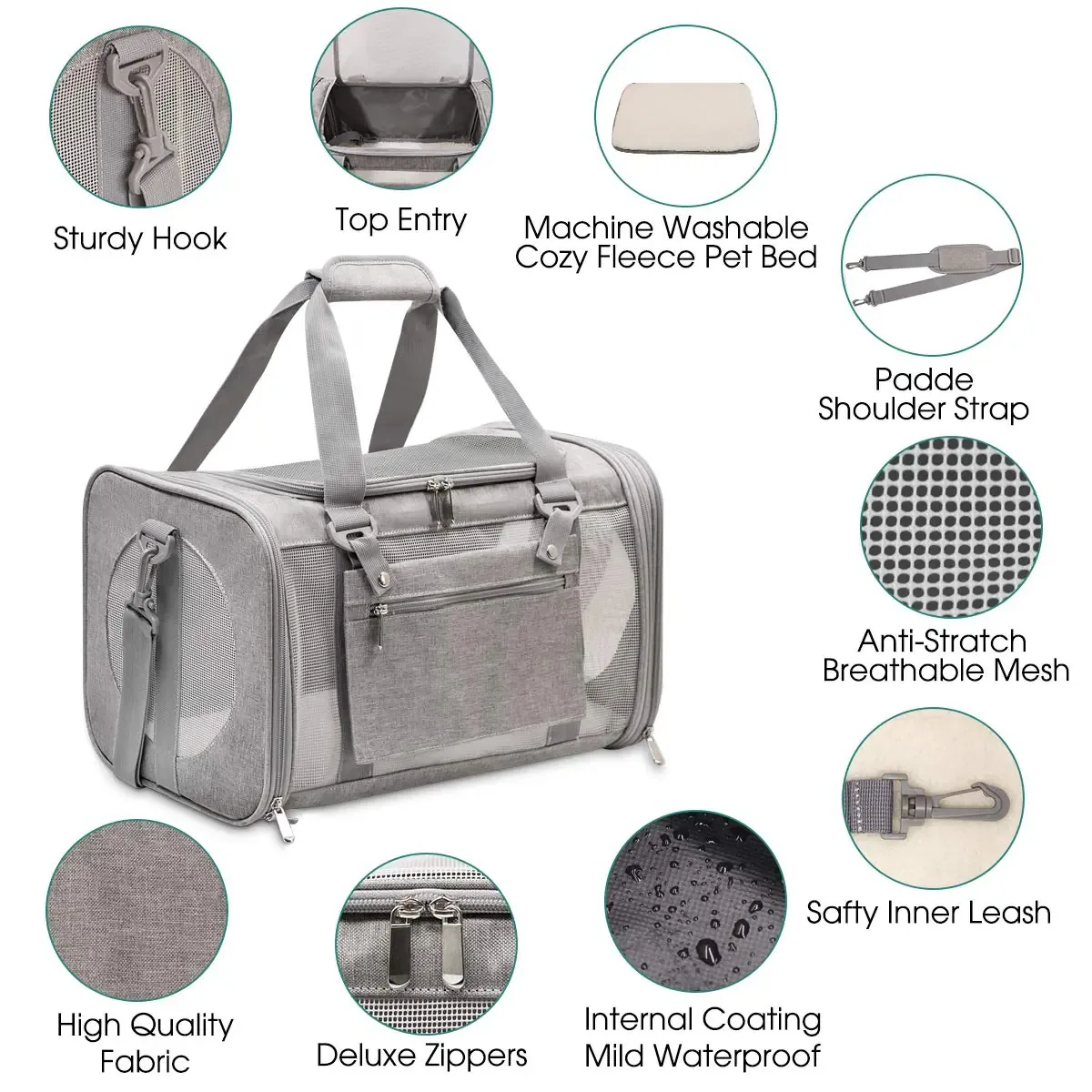
- Exterior: 600D or 900D polyester, DWR finish, TPU-backed for dimensional stability.
- Food cavity: welded food-contact lining, wipe-clean, no exposed stitch holes.
- Pet cavity: coated base pad, removable, closed-cell foam only.
- Mesh: PVC-free coated polyester where claw resistance allows.
- Hardware: matte nickel or antique brass, corrosion-tested for outdoor use.
- Thread: polyester, not cotton, so it does not wick moisture into seams.
One detail that pays back disproportionately: specify a removable, washable base pad in the pet cavity and a removable, welded liner in the food cavity. Two components that come out and rinse are the difference between a bag that lasts years and one that is retired after a season.
Bottle and bowl management
Two small components decide much of the practical experience of a picnic bag: where the bottle goes and where the bowl goes. Both sound trivial and both generate complaints when they are wrong.
A bottle should live in an external pocket with a drained base, never inside the food cavity beside the ice. An internal bottle sweats, wets the food and raises the cavity temperature every time it is taken out. An external pocket with a mesh base and a drainage grommet solves all three problems for a few cents.
A collapsible bowl should have a dedicated flat pocket rather than being loose in the main cavity, because a bowl loose among food packaging is a bowl the owner cannot find one-handed while holding a dog. Specify the pocket dimension to the bowl supplied, and consider shipping the bowl with the bag - it is a high-margin accessory that improves the first-use experience measurably.
A third component deserves a decision: where the ice pack goes. It belongs in the food cavity, in a sleeve or pocket that keeps it away from direct contact with the lining, because a frozen pack resting on a welded seam for hours is a condensation and stiffness problem. A small internal sleeve costs cents and prevents a damp patch that customers interpret as a leak.
Finally, specify the drainage path for the wet pocket explicitly. A bottle pocket with a mesh base and no grommet simply holds the water it collects, which is worse than no pocket at all. One grommet at the lowest corner of each wet pocket is the minimum, and it should be positioned relative to the assembled base rather than by eye on the pattern.
Cost Structure and Price Banding
A picnic pet bag is a two-product build in one shell, and its cost structure reflects that. Buyers benchmarking it against a single-cavity pet bag of similar size will find the quote high; benchmarking it against a comparable insulated food bag plus a pet bag is the honest comparison.
| Build level | Food cavity | Base | FOB band | Target retail |
|---|---|---|---|---|
| Entry | Stitched, 3 mm foam, 6 L | 3 mm board, no feet | USD 10.40-12.80 | USD 39-55 |
| Mid | Welded TPU, 6 mm foam, 7 L | 4 mm board, five feet | USD 13.20-16.40 | USD 59-85 |
| Premium | Welded, 8 mm plus reflective, 9 L | Moulded tray, standing lip | USD 16.80-22.50 | USD 89-125 |
For a mid build around USD 14.80, the split is: shell and lining fabric 28-34%, insulation and welding 13-18%, hardware 11-15%, board and structure 9-12%, labour 21-26%, packaging 5-8% - higher than average because gifting channels want presentation - and factory margin 8-12%. Welding tooling is a first-order cost that does not repeat on reorder.
Packaging carries more weight here than in most categories. A gift-channel picnic bag in a printed sleeve or a box with an insert can add USD 0.85-2.10 to FOB and several points to perceived value, and it also increases carton volume, which pushes freight. Model the freight effect before committing: a boxed bag ships at materially worse density than a polybagged one.
The saving levers, in order of safety: consolidating volume, reducing colourways, standardising hardware, simplifying packaging, and only then reducing insulation thickness. Cutting the welded compartment back to stitched saves USD 1.40-2.60 and removes the leak-proof claim, which for this category is the claim most likely to drive the purchase.
Freight deserves an explicit line for this SKU because it is bulky and rigid. A 26 L structured bag with a welded compartment does not compress, so volumetric weight will govern air freight and influence LCL sea freight. Get packed carton dimensions at quoting stage and model both modes before fixing retail.
MOQ, Sampling and the Gifting Calendar
The working minimum is MOQ 500 pcs per colourway, and picnic programmes benefit from the mixed-colourway structure because gifting channels want several colour names. Three colourways at 500 each, sharing one body colour with different trim and packaging, gives three gift SKUs from one dye lot.
Sampling takes 6-10 working days per round after tech pack sign-off, and this category reliably needs two: the first to validate thermal performance and standing behaviour, the second to validate colour, branding and packaging. A thermal test on the first sample is worth insisting on - hold a measured water load and log the temperature curve rather than trusting the insulation data sheet.
| Milestone | Target | Note |
|---|---|---|
| Channel and price point fixed | September | Determines welded versus stitched |
| Tech pack locked | October | Includes food-contact material selection |
| Structure and thermal sample | November | Thermal curve measured and logged |
| Branding and packaging sample | December | Golden sample sealed |
| Bulk production | December to January | 35-50 days |
| Freight and receipt | February to March | Ahead of the spring window |
The gifting spikes within that window - Mother's Day in most markets, plus graduation and summer wedding season - are fixed dates that cannot move. A programme that misses the Mother's Day receipt date does not recover it by discounting, because the occasion passes. Build the calendar backwards from the occasion, not forwards from the sample.
Reorders are faster because tooling and patterns exist: production is still 35-50 days, but the sampling phase collapses to a single confirmation round of 5-8 days. Buyers running a family of outdoor SKUs - picnic, beach and camping - should consolidate production slots to share fabric buys and one inspection booking.
Pre-shipment inspection at AQL 2.5 should include weld integrity in the food cavity, standing stability, and divider rigidity on the critical-defect list. Those three are specific to this SKU and none of them appears on a generic bag checklist.
Compliance, Documentation and Marketplace Risk
A picnic pet bag carries the documentation load of two product categories at once: a consumer textile product and a food-contact article. Plan both sets at quoting stage, because a food-contact declaration cannot be produced retroactively for a material that was never certified.
For the US, general consumer-product obligations and recall traceability sit with the US Consumer Product Safety Commission, and the buyer-side requirement is a batch code on the product plus retained production records. California exposure warnings are administered by OEHHA; coatings, inks and adhesives are the components most often asked about. Food-contact materials sit under a separate federal framework, and the practical requirement is a supplier declaration naming the applicable clearance.
For the EU, REACH restrictions are administered by the European Chemicals Agency, and the food-contact framework regulation applies to the insulated cavity. German and French buyers in particular will ask for national-level test evidence rather than a general statement.
- Batch code on the product; production record retained for 24 months.
- Fibre composition and country of origin in the importing market's format.
- Food-contact declaration for lining, foam, adhesives and inks in the food cavity.
- Instruction insert: weight rating, thermal guidance, packed-food statement, tether use, cleaning.
- Test reports: thermal hold, abrasion, colour fastness, hardware corrosion, chemical screens as requested.
- Carton marking and barcode to the retailer's receiving specification.
Marketplace risk in this category centres on the thermal claim. "Keeps food cold for six hours" is a specific, testable claim and it will be tested - by reviewers with thermometers, if not by the marketplace. Either commission the test and quote the result with its conditions, or write the copy conservatively. Overstating thermal performance is the fastest route to a review profile that suppresses the listing.
On the manufacturing side, an ISO 9001 quality management system keeps repeat seasons consistent, and independent verification through SGS testing and inspection gives the retail buyer a recognised name on the file. Our production network operates under that system, with pre-shipment inspection performed per shipment rather than per year.
Why brands source here
- Pet bag programmes run since 2014; founding team in sewn goods since 2004
- SGS-verified production floor of 4,950 m² with 137 workers across 7 lines
- Monthly capacity of 200,000 units, audited to BSCI and ISO 9001
People Also Ask
How long does a picnic pet bag keep food cold?
A welded compartment with 6 mm closed-cell foam holds 4-6 hours; adding a reflective layer and 8 mm insulation extends that to 6-9 hours. Stitched compartments typically manage 2-3 hours at best.
Can you put food and a pet in the same bag?
Yes, provided a rigid cleanable divider separates the cavities so pet weight cannot deform the food compartment and liquids cannot migrate between them.
What size picnic pet bag is best?
22-30 L total with a 6-9 L insulated compartment. Below 6 L the food cavity is impractical; above 9 L it compromises the pet cavity.
How do you clean an insulated pet bag?
Wipe the welded lining rather than washing it, remove and rinse the base pad separately, and air the bag open with ventilation panels exposed. Avoid any absorbent foam in either cavity.
Is a canvas picnic bag practical?
It looks right and performs poorly: canvas absorbs spills, stains and dries slowly. If the brand requires it, specify a finish, a removable coated pad and spot-clean-only care instructions.
When should a spring picnic order be placed?
Lock the tech pack in October and start bulk in December or January for a February or March receipt, working backwards from the gifting occasions in the window.
Why do picnic bags cost more than totes?
Because they are two products in one shell: a welded insulated food cavity plus a structured pet cavity with a rigid divider, five feet and a standing lip.
Frequently Asked Questions
What defines a pet picnic bag?
A structured 22-30 L shell combining a welded insulated food compartment of 6-9 L with a separate pet cavity rated 5-9 kg, divided by a rigid cleanable panel and stable enough to stand open on grass.
Should the insulated compartment be welded or stitched?
Welded. Stitched compartments leak thermally at every needle hole and leak liquid outright. Welded TPU-laminated construction costs USD 1.40-2.60 more per unit and is the basis of any credible leak-proof claim.
What thermal performance should be specified?
Specify a measured result with conditions: for example, holding a stated load at or below 8 degrees Celsius for five hours from a 4 degree start at 25 degrees ambient. Test the sample with a thermometer and log the curve.
Does the lining need food-contact certification?
Yes. Any surface intended to touch food is a food-contact material in both the US and the EU. Certified linings and foams cost USD 0.20-0.60 more per unit and cannot be retrofitted after production.
What is the MOQ for a pet picnic bag?
MOQ is 500 pcs per colourway with mixed colourways permitted in one order. Three colourways sharing one body colour with different trim is a common gifting structure.
How long do samples and bulk take?
Samples take 6-10 working days per round and two rounds are normal. Bulk production runs 35-50 days after sample approval, plus 30-45 days for sea freight and customs.
How do you keep the bag standing open?
A 4 mm laminated base with a footprint of at least 60% of the bag length, five moulded feet, and a stiffened perimeter lip at the opening that holds under its own stiffness.
How much does a wholesale pet picnic bag cost?
USD 10.40-12.80 FOB Xiamen for an entry build, USD 13.20-16.40 for a mid welded build, and USD 16.80-22.50 for a premium build with a moulded tray and standing lip.
Is packaging more important for this SKU?
Yes, particularly for gifting channels. A printed sleeve or box adds USD 0.85-2.10 to FOB and improves perceived value, but it also worsens carton density, so model the freight effect.
What inspection standard applies?
AQL 2.5 with a defect list specific to this SKU: weld integrity in the food cavity, standing stability and divider rigidity all belong on the critical list.
What thermal claim is safe to publish?
Only one you have tested. Publish the measured hold time with its conditions, or write the copy conservatively. Overstated thermal performance is the fastest route to a damaging review profile.
Which documents do homeware and gift retailers require?
The standard retail pack - batch code, fibre composition, origin, instruction insert and test reports - plus food-contact declarations for the insulated cavity and packaging to their receiving specification.
Talk to QUANZHOU JUNYUAN BAGS about a wholesale pet bag order: MOQ 500 pieces per colourway, samples in 6-10 working days, bulk production in 35-50 days under AQL 2.5 inspection.
Get a free quote Request a sample