Pet Back to School Bag: Seasonal Wholesale Sourcing Guide
A wholesale pet back to school bag programme starts at MOQ 500 pieces per colourway, costs USD 4.60-8.90 FOB Xiamen per unit, and needs 35-50 days of bulk production after a 6-10 working day sample cycle. Orders for an August shelf date must be released by early April to clear the peak-season freight squeeze. Shipments release only after an AQL 2.5 pre-shipment inspection.
Back to school is a retail calendar event rather than a pet industry event, and that single fact governs how the category is sourced. The window runs roughly six weeks from late July, the shelf space is contested by stationery, apparel and electronics buyers who have deeper budgets, and the pet bag programme either arrives on time inside that window or is irrelevant. There is no second chance, because school-season demand collapses in September.
The specification logic follows from the setting. Campus and dorm use means collapsible storage, laptop-adjacent organisation and a silhouette that reads as student gear rather than as pet gear. Buyers who commission a novelty school-themed bag consistently underperform buyers who commission a credible campus bag with a light seasonal cue, and the gap shows up in sell-through rather than in unit cost. Ordering runs at MOQ 500 pieces per colourway, and a six-week window makes breadth more valuable than depth.
Three risks dominate the planning. The freight market peaks in the same weeks as the selling season, so container bookings must be made early. Licensing exposure on school names and mascots is real and enforceable, so unauthorised collegiate marks must be excluded from artwork. Child-appeal marketing pulls the unit toward CPSIA obligations, so positioning should be decided before artwork is drawn. Standard timing applies: sampling at 6-10 working days, bulk at 35-50 days, inspection at AQL 2.5 with zero tolerance for critical defects, T/T 30/70 against FOB Xiamen, and production through an SGS-verified production base running 7 lines, 149 machines and 200,000 pieces per month under BSCI and ISO 9001.
Pet bag market size is reported three different ways depending on whether carriers, travel bags and accessories are bundled, so Pet Bag Types & Styles planning should pick one definition and stay with it. Pet bag market report figures are useful for board decks and of little use for MOQ planning.
Back to School as a Retail Window: Timing and Space Competition
Back to school is the second largest retail season in most Western markets, and pet accessories are a fringe participant in it. That status has consequences that a pet-category buyer may not anticipate. The shelf space, the endcap placement and the promotional calendar are all allocated months in advance by category managers whose primary business is stationery and apparel, and a pet bag programme enters that allocation as a guest.
Practically, this means the buyer's real deadline is not the selling season but the line review. Most mass and mid-tier retail accounts run back-to-school line reviews in the first quarter, and a programme that is not presented with samples in hand at that review does not get space. Working backwards, samples in hand in February means artwork and specification finalised in December, which means the development conversation starts in the autumn of the preceding year. Our production team routinely begins school-season development two calendar years ahead of the selling window.
The window itself is short and front-loaded. The majority of school-season pet bag volume sells in the final ten days of July and the first three weeks of August, with a steep decline after the first week of September. Promotional mechanics concentrate the demand further: tax-free weekends and dorm-move-in periods create spikes that a flat replenishment plan will not serve. Buyers should plan inventory to arrive at the distribution centre in late June and be on shelf before the first promotional weekend, not merely before the semester starts.
The table below shows the four configurations that carry school-season pet bag volume, priced FOB Xiamen at MOQ 500 pieces per colourway for repeat orders.
| Configuration | Campus use case | Size (cm) | Pet weight | FOB band (USD) | Seasonal cue |
|---|---|---|---|---|---|
| Collapsible campus tote | Dorm storage | 40 x 22 x 28 | Up to 6 kg | 4.60 - 5.60 | Printed lining |
| Organiser backpack | Campus carry | 42 x 25 x 32 | Up to 9 kg | 6.10 - 7.30 | Contrast piping |
| Laptop-adjacent sling | Library and class | 36 x 19 x 26 | Up to 5 kg | 5.40 - 6.50 | Woven label |
| Dorm move-in bundle | Gift and starter | Box 44 x 30 x 11 | Up to 6 kg | 7.40 - 8.90 | Card and tag set |
Two observations matter for planning. The seasonal cue column is deliberately thin, because the successful school-season unit reads as campus equipment with a pet function rather than as a themed novelty. And the bundle configuration, while carrying the highest unit value, is the slowest turning of the four, which makes it a margin play for accounts with gift placement rather than a volume play for the main assortment.
Collegiate and School Marks: Licensing Exposure Buyers Must Avoid
The most expensive mistake available in this category is putting a school name, mascot or colourway combination on a pet bag without a licence. Collegiate marks are actively enforced, the rights holders monitor marketplaces, and the exposure is not limited to a takedown notice. Unauthorised use can trigger seizure of goods at import, destruction orders, and claims that exceed the value of the order by a wide margin.
The legal mechanism is straightforward: a university name and mascot are registered trademarks, and using them on commercial merchandise without a licence is infringement regardless of intent. Collegiate licensing in the United States is administered through central agencies that represent institutions collectively, and the enforcement reach extends to online listings. A buyer who assumes that a small order or a foreign supplier provides insulation is mistaken on both counts.
The safe specification is a generic campus aesthetic. Colour blocking, preppy patterns, notebook-print linings, pencil-pouch detailing and a woven label carrying the buyer's own brand all deliver the school-season read without touching a protected mark. Our production team flags any artwork file containing a mascot silhouette, a school seal, a stadium name or an institution-specific colour pairing, and returns it to the buyer before sampling starts.
One further consideration applies to the licensed route: royalty economics change the entire cost model. A collegiate licence typically carries a royalty expressed as a percentage of wholesale or retail value, plus reporting obligations and, in many cases, a minimum annual guarantee. On a five dollar FOB unit that is retailed near thirty dollars, a royalty in the high single digits consumes a share of margin comparable to the entire freight and duty line. Buyers should model the royalty against the price point before applying, because a programme that is viable at a premium retail price can be unviable at a mass price once the royalty is applied.
Where a buyer genuinely wants licensed collegiate merchandise, the correct path is to secure the licence first and then bring the artwork to production, not the reverse. Licensed programmes run through approved suppliers, carry royalty reporting obligations, and require the production facility to be registered with the licensing agency. That is a legitimate business, but it is a different business from a general wholesale pet bag programme, and the lead time from licence application to first shipment is measured in months rather than weeks. Buyers should decide which business they are in before committing deposit.
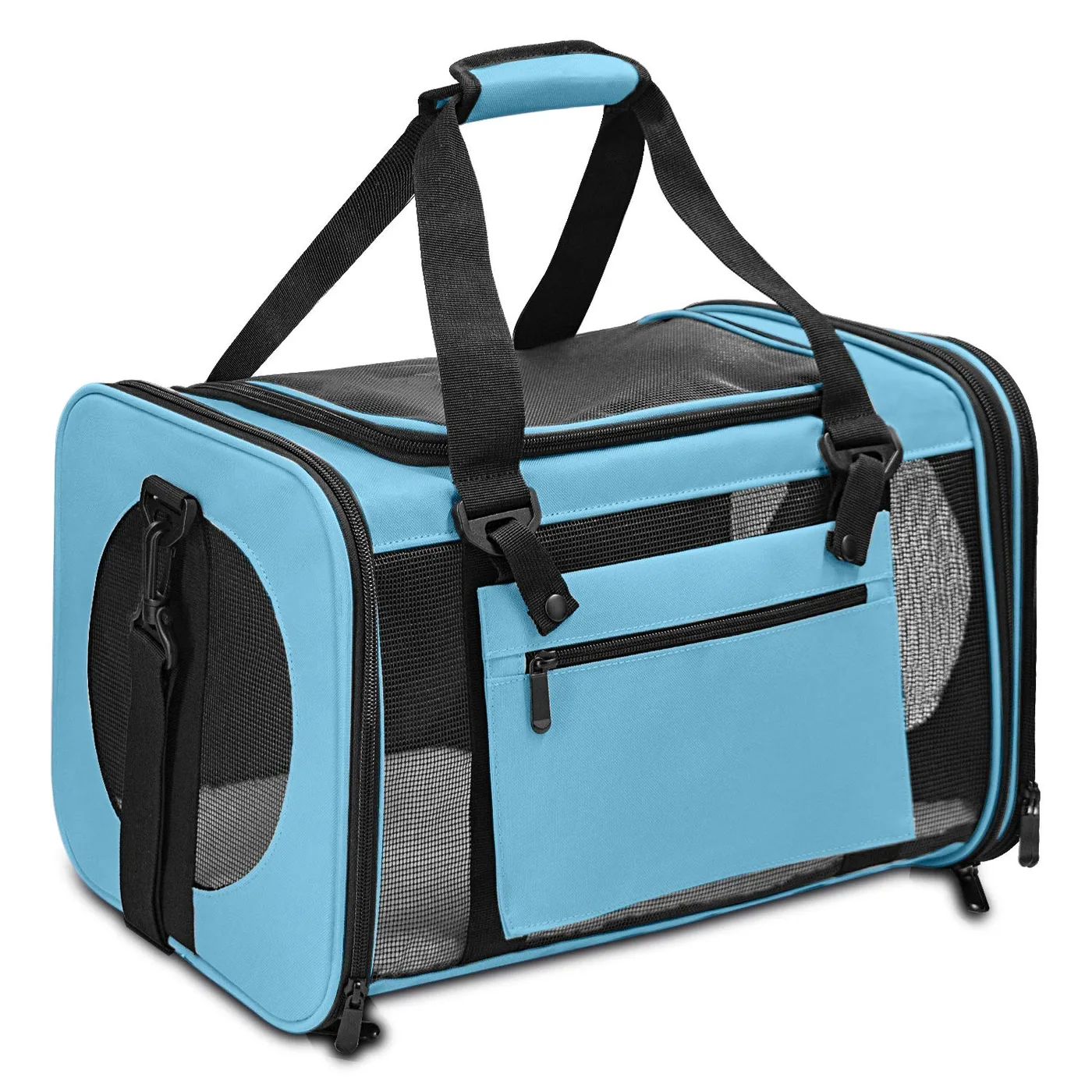
Product Configuration for Dorm and Campus Use
Campus and dorm use imposes a specification that differs sharply from the general pet bag assortment. Space is constrained, the unit is stored rather than displayed, and it shares a small room with a person who did not choose to live with pet equipment. Every one of those conditions points to a different design priority than the one that governs a suburban pet owner purchase.
Collapsibility is the first priority. A dorm room has no floor space for a rigid carrier, so a unit that folds flat to under ten centimetres of depth is materially more useful than one that holds its shape. The construction cost of collapsibility is modest, typically a removable baseboard and a lighter frame, and it reduces the packed carton volume by thirty to forty percent, which cuts freight per unit at the same time. Buyers should specify the folded depth explicitly, because it is the dimension that determines whether the product fits under a bed.
Organisation is the second priority and the cheapest to deliver. Interior slip pockets, a key clip and a separate compartment for waste bags cost under a dollar in aggregate and lift the perceived value substantially when the unit is photographed open. Because school-season buyers shop organisation features, the pocket specification should be written into the tech pack rather than left to the sample stage.
Odour and cleanability are the third priority, and they are the least discussed. A pet bag living in a dorm room needs a wipeable lining and a washable removable pad, because the alternative is a roommate complaint. The specification is a polyurethane-backed lining with a sealed seam at the base and a removable pad with a washable cover. The cost impact is roughly sixty to ninety cents per unit, and it is the difference between a four-star review and a two-star review in this channel.
Silhouette closes the configuration. The unit should read as student equipment: clean lines, muted or preppy colour blocking, minimal external branding. A pet bag that announces itself as pet equipment with cartoon graphics and paw prints will not be carried onto campus by the target buyer, regardless of its functional quality.
Cost Structure and Price Bands Against School-Season Competition
School-season pet bags are priced against a competitive set that includes general student bags, and that comparison is unforgiving. A student can buy a competent laptop backpack for under thirty dollars retail in the same store, and a pet bag has to justify a comparable or higher price on additional function. Buyers who price to cost-plus rather than to the competitive set discover the problem at the shelf.
FOB Xiamen bands for the category run USD 4.60-8.90 as shown earlier. Landed cost adds sea freight at USD 0.48-0.72 per unit in a consolidated container, duty at the applicable rate, and destination handling. The resulting landed cost supports retail price points from USD 24.99 for the collapsible tote to USD 49.99 for the organiser backpack, which is broadly where the competitive set sits and where the category can hold its own on feature comparison.
The cost structure inside the unit is dominated by three blocks. Shell fabric and lining account for roughly a quarter of FOB and barely flex with volume. Hardware, webbing and trim account for a fifth and flex the most through setup amortisation. Cutting, sewing and finishing labour account for around thirty percent and flex only through line efficiency, which is why the school-season configurations with interior organisation carry a labour premium that does not reduce at higher volumes.
The margin lever that actually works in this category is freight consolidation rather than unit price negotiation. Because the selling window is fixed and early, buyers have every incentive to ship one consolidated container rather than three partial ones, and the saving runs eighteen to twenty-six percent of freight cost. On a programme of three thousand units at a half-dollar freight cost per unit, consolidation returns roughly three hundred dollars of margin for a decision that costs nothing to make, which compares favourably with a one or two percent unit price concession obtained after a week of negotiation.
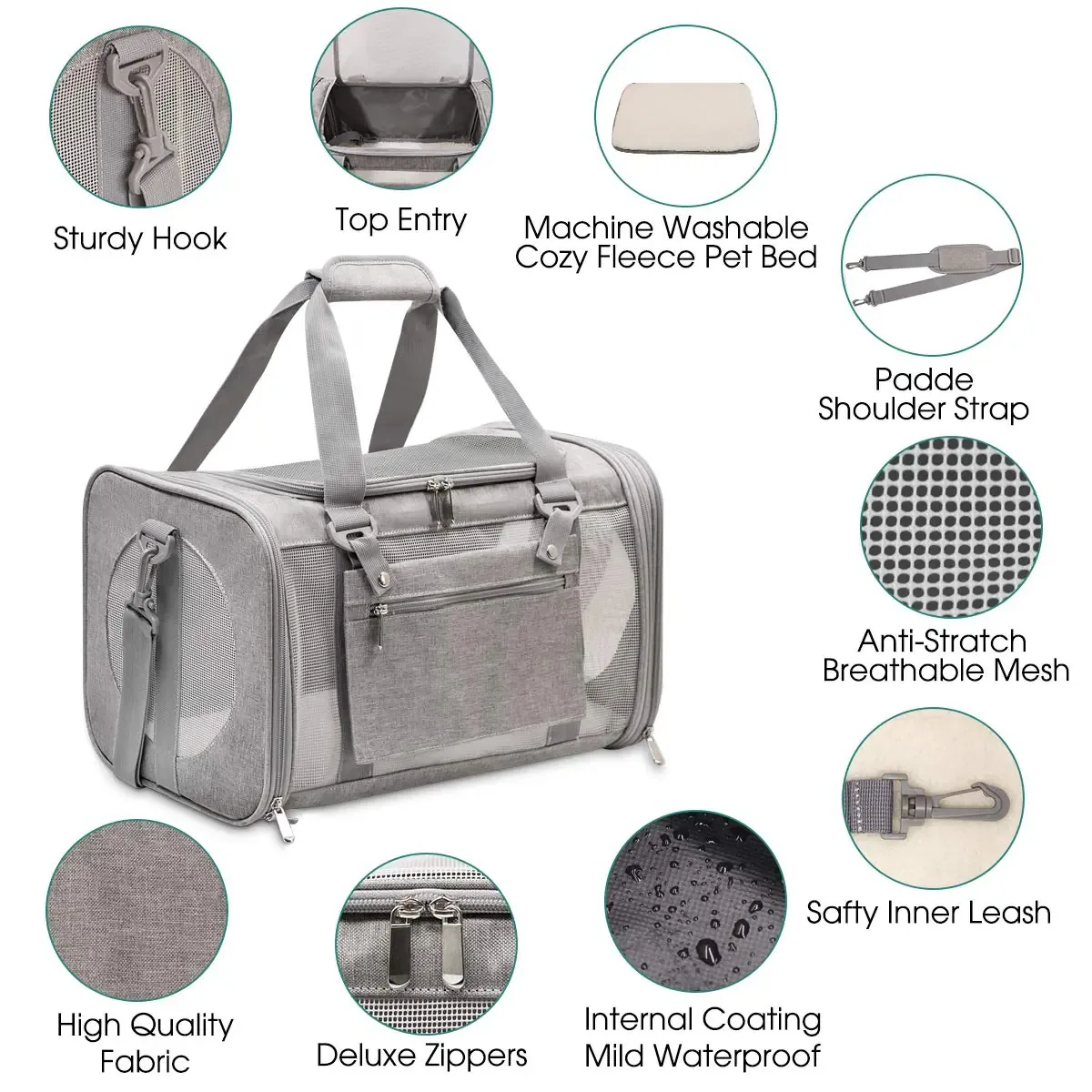
MOQ Strategy and Assortment for a Six-Week Window
MOQ is 500 pieces per colourway, and in a six-week window the relevant question is not how to reach the minimum but how little depth to commit per variant. The arithmetic of a short window favours breadth over depth: three variants at five hundred units each will outsell one variant at fifteen hundred units, because the buyer's risk of a single wrong bet is spread and because school-season shoppers respond to choice.
Colourway selection should follow the campus aesthetic rather than the pet aisle. Two colourways carry most school-season volume: a neutral base such as charcoal, navy or oat, and a single accent colourway that delivers the seasonal read. A third colourway is justified only where the account has the shelf space for a three-way planogram. Buyers adding a fourth are almost always adding a markdown.
Size and format splits deserve the same discipline. The recommended opening structure for a first school-season programme is fifty percent on the collapsible tote, thirty percent on the organiser backpack and twenty percent on the sling, with the bundle held as a separate gift placement. That structure reflects where the volume actually is and keeps the highest-cost configuration at the smallest commitment.
Buyers should also negotiate the reorder question explicitly. In a six-week window, a reorder is only useful if it can arrive inside the window, and with a seventy-five to ninety-five day replenishment cycle it cannot. The honest conclusion is that school-season inventory is a single-shot commitment, and the correct strategy is a conservative initial buy with a planned carry-over path rather than a reorder option. Our production team specifies carry-over compatible shells for exactly this reason: leftover school-season stock should be re-panelable into the general assortment rather than marked down.
Production Calendar: Clearing the Peak-Season Freight Squeeze
The school-season programme collides with the annual peak in container freight demand, and this is the most common cause of a missed window. Exporters across every category push volume toward the same summer sailing dates, container space tightens, rates rise, and bookings that take ten days in a slack month take three weeks in peak season. A buyer who plans the production cycle correctly and the freight cycle loosely will still miss the shelf date.
The working calendar runs backwards from a late June arrival at the distribution centre. Allow thirty-five to forty-five days for peak-season sea freight and destination handling, thirty-five to fifty days for bulk production, six to ten working days for sampling, and three to four weeks for artwork, specification and quotation. That places the artwork release in February and the purchase order in March, with container bookings opened twenty-one to twenty-eight days before the cargo-ready date rather than the ten days that works off-peak.
Rate exposure is the second freight issue. Peak-season rates from Xiamen to the US West Coast can run well above off-peak levels, and the difference on a forty-foot high-cube container is material when expressed per unit on a five-dollar bag. Buyers with volume should consider an annual rate agreement or a fixed-rate booking rather than spot exposure, and should treat the freight quote as a component of the product cost decision rather than as an afterthought applied after the price is agreed.
The fallback when the sea window is missed is expensive but occasionally justified. Air freight at USD 5.40-7.20 per kilogram adds roughly USD 2.20-3.00 to a typical unit, which destroys margin on a mid-price configuration and is broadly defensible only on a high-value bundle. Buyers should model this before the season rather than during it, and should set a decision date in advance: if the cargo is not ready by a named date, the programme converts to carry-over rather than to air.
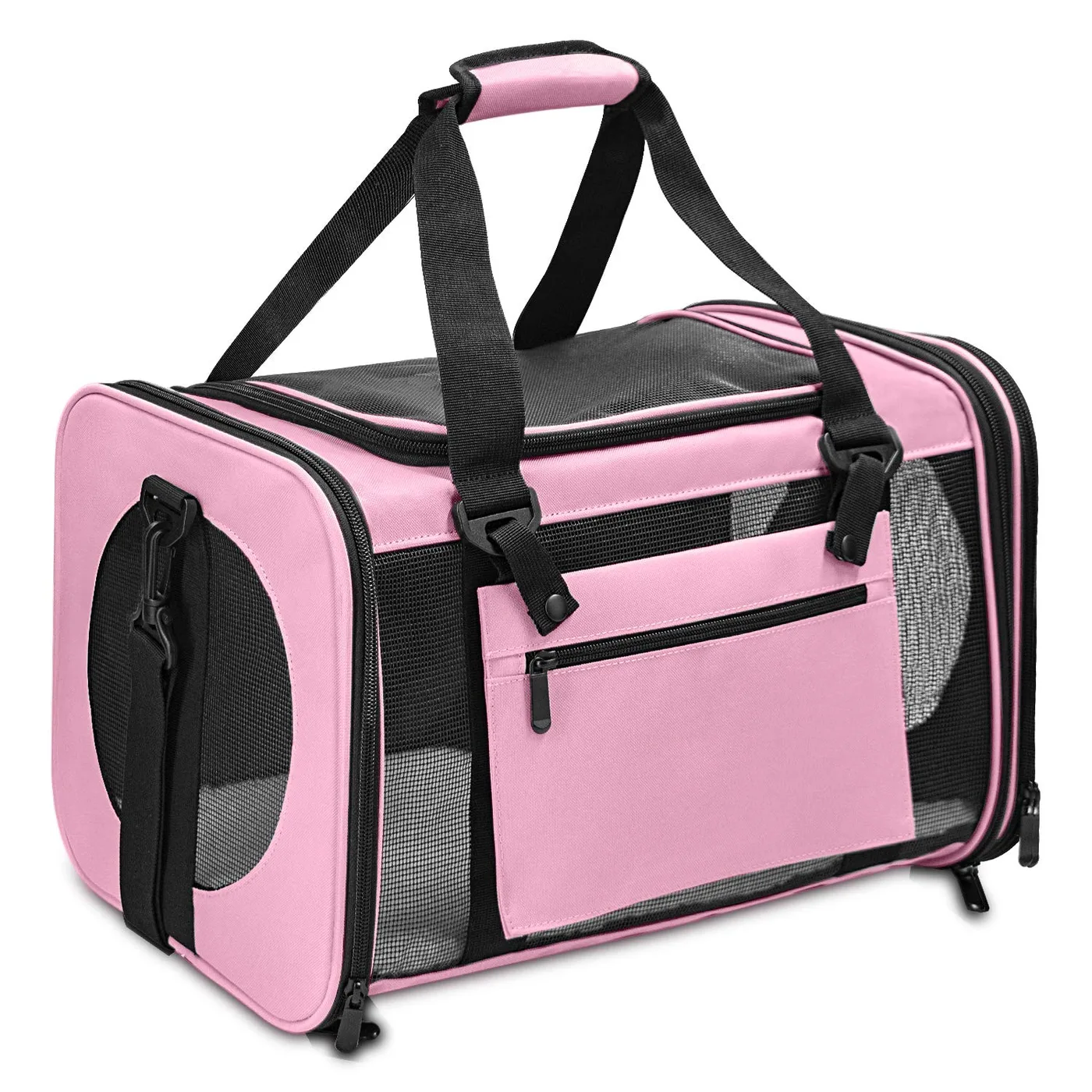
Compliance: Child-Appeal Rules, Labelling and Documentation
School-season merchandise sits adjacent to children's products in a way that no other pet bag category does, and the regulatory question follows from positioning rather than from construction. A pet bag is not a children's product by nature, but a pet bag marketed with child appeal, sold in a children's aisle, or priced and packaged for a child purchaser can be treated as one. That determination brings lead and phthalate limits and third-party testing obligations with it.
The practical approach is to make the positioning decision deliberately. A unit aimed at college students with pets is an adult product and can be documented as such. A unit with cartoon graphics, bright primary colours and a price point under fifteen dollars reads as a children's product, and the US Consumer Product Safety Commission publishes the applicable limits and the accredited laboratory list. Buyers in the second category should test to CPSIA limits from the outset, because retrofitting compliance after a customs hold costs more than the programme.
Chemical screening otherwise follows the standard component list. Coated linings, printed panels, webbing and plated hardware each need a declaration and, for California, a Prop 65 assessment against the safe harbour levels published by the California Office of Environmental Health Hazard Assessment. Physical test methods referenced in vendor manuals are typically named standards, and the ASTM International library covers the seam strength, abrasion and colour fastness methods that most chains accept by citation.
Documentation closes the order. Country-of-origin marking must satisfy US customs rules, the tracking label must be present and legible, and carton markings must reconcile to the packing list and commercial invoice. Because school-season goods frequently ship as part of a larger seasonal container, buyers should confirm that carton numbering is sequential across the whole container rather than restarting per style, which is a small detail that causes disproportionate delays at destination distribution centres.
Supplier Scorecard for School-Season Programmes
School-season suppliers are judged on one capability above all: delivering into a fixed window against a congested freight market. Peak-season delivery performance carries thirty percent of the scorecard. Freight booking capability carries twenty percent, which specifically means the supplier holds carrier relationships and can secure space. Specification continuity carries fifteen percent, documentation carries fifteen percent, communication carries ten percent, and price carries ten percent.
The freight criterion deserves explanation because buyers rarely evaluate it. A supplier with strong carrier relationships can secure space in a market where an importer booking directly cannot, and that capability is worth more than a small price concession in the one season where being late means being unsold. Buyers should ask directly what booking lead time the supplier needs and what carrier contracts they hold, and should treat a vague answer as a negative signal.
Quality gates are unchanged and non-negotiable: AQL 2.5 under general inspection level II, zero tolerance for critical defects, in-line inspection at twenty and eighty percent completion on peak-season orders. Critical defects in school-season units centre on the collapsible mechanism, the interior organiser attachments and the removable pad closure, all of which are features that a general pet bag does not have and that a general inspection checklist may not cover. Buyers should add these lines to the inspection worksheet explicitly.
Independent verification is recommended, and a recognised body such as SGS can combine pre-shipment inspection with component screening under one appointment. Social compliance documentation matters more in this season than in others because school-season merchandise attracts scrutiny on labour standards in the supply chain, and the production base behind this programme holds BSCI social compliance and ISO 9001 quality management across 4,950 square metres, 137 staff, 7 lines and 149 machines at 200,000 pieces per month. Terms are T/T 30/70 against FOB Xiamen with the balance released against the passed inspection report.
Order and quality terms
- MOQ 500 pieces per colourway; samples in 6-10 working days
- Bulk production 35-50 days after approval; AQL 2.5 inspection standard
- T/T 30/70 terms, FOB Xiamen, full document set per shipment
People Also Ask
How early should I plan a back to school pet bag programme?
Begin development two calendar years ahead for licensed or chain placements, and release artwork in February of the selling year for a general wholesale programme. Retail line reviews happen in the first quarter.
Do pet bags sell during the back to school season?
Yes, but as a fringe participant. Volume concentrates in the final ten days of July and the first three weeks of August, then declines steeply after the first week of September.
What makes a pet bag suitable for dorm living?
Collapsibility to under ten centimetres of folded depth, interior organisation, a wipeable lining and a washable removable pad. Odour control matters because the unit shares a small room.
Can I use school colours without a licence?
Generic colour blocking is safe; an institution-specific colour pairing combined with a mascot or name is not. Artwork containing a seal, stadium name or mascot silhouette should be rejected before sampling.
How do I price a school-season pet bag competitively?
Against the student bag competitive set rather than against cost-plus. Landed cost supports USD 24.99 to USD 49.99 retail, and feature comparison has to justify the price against a general laptop backpack.
What is the biggest risk in a school-season programme?
Missing the window. Peak-season freight congestion is the usual cause, and because the window is six weeks a late arrival cannot be recovered by reordering.
Frequently Asked Questions
What is the MOQ for a back to school pet bag?
MOQ is 500 pieces per colourway. In a six-week window the recommendation is three variants at the minimum each rather than one variant at three times the depth, because breadth spreads the risk of a wrong bet.
When should the purchase order be released?
Artwork should be released in February and the purchase order in March for a late June arrival at the distribution centre. Peak-season container bookings need twenty-one to twenty-eight days of lead time.
How long do samples take?
Sampling takes 6-10 working days once artwork, colour standard and the collapsible mechanism specification are confirmed. Samples for a school-season line review should be in hand before the retailer's first-quarter review.
Can I put a university name or mascot on the bag?
Only with a licence. Collegiate names and mascots are registered trademarks, enforcement extends to online listings, and unauthorised use can trigger seizure and destruction orders that exceed the order value.
What is the bulk production lead time?
Bulk runs 35-50 days. Collapsible mechanisms and interior organiser work push toward the long end, so the specification should be frozen early to protect the freight booking.
What does a back to school pet bag cost FOB?
FOB Xiamen bands are USD 4.60-5.60 for a collapsible tote, USD 5.40-6.50 for a laptop-adjacent sling, USD 6.10-7.30 for an organiser backpack and USD 7.40-8.90 for a dorm bundle at MOQ 500 per colourway.
Does CPSIA apply to school-season pet bags?
It depends on positioning. A unit marketed to college students is an adult product; a unit with cartoon graphics and a low price point reads as a children's product and should be tested to CPSIA limits from the outset.
What inspection standard is used?
AQL 2.5 at general inspection level II with zero tolerance for critical defects. The collapsible mechanism, organiser attachments and pad closure should be added to the worksheet because general checklists omit them.
Is air freight a viable fallback if the sea window is missed?
Rarely. Air adds roughly USD 2.20-3.00 per unit, which destroys margin on a mid-price configuration. The better plan is a carry-over compatible shell and a named decision date for converting to carry-over.
How should leftover school-season stock be handled?
Through a carry-over compatible shell that can be re-paneled into the general assortment. Because the replenishment cycle is longer than the selling window, reordering inside the season is not realistic.
What colourways sell in the school season?
A neutral base such as charcoal, navy or oat carries most volume, plus one accent colourway for the seasonal read. A third colourway is justified only where the account has three-way planogram space.
Why is freight booking capability part of supplier selection?
Because peak-season container space is the binding constraint in this category. A supplier with carrier relationships can secure space when an importer booking directly cannot, which is worth more than a small price concession.
Talk to QUANZHOU JUNYUAN BAGS about a wholesale pet bag order: MOQ 500 pieces per colourway, samples in 6-10 working days, bulk production in 35-50 days under AQL 2.5 inspection.
Get a free quote Request a sample